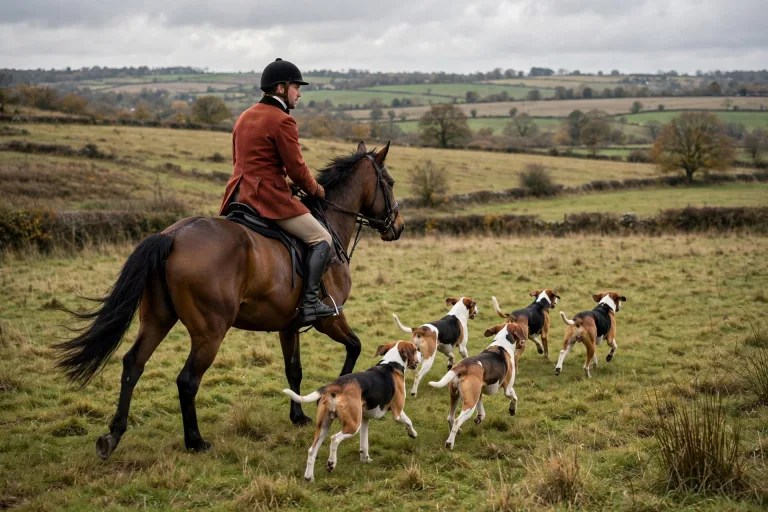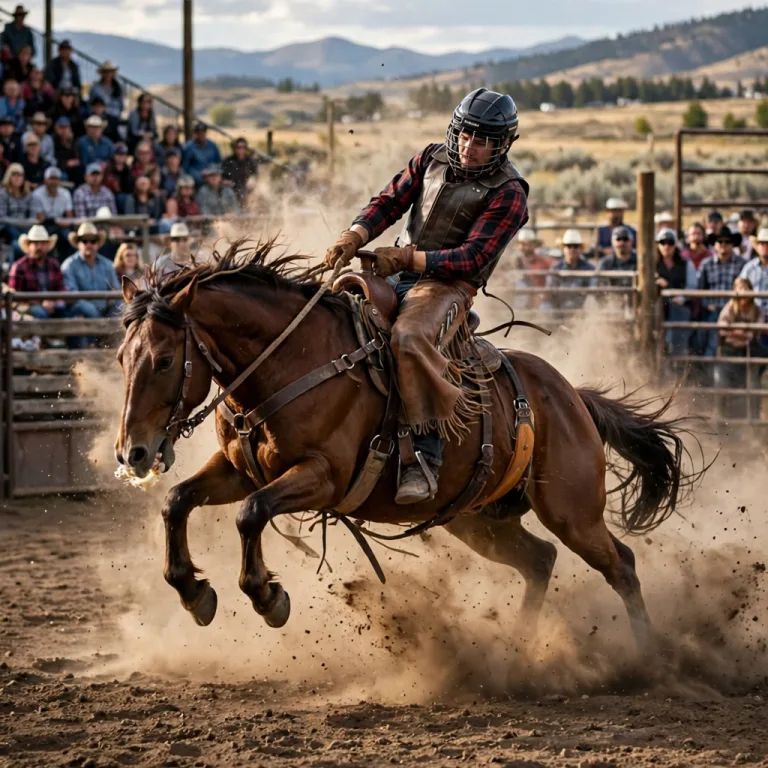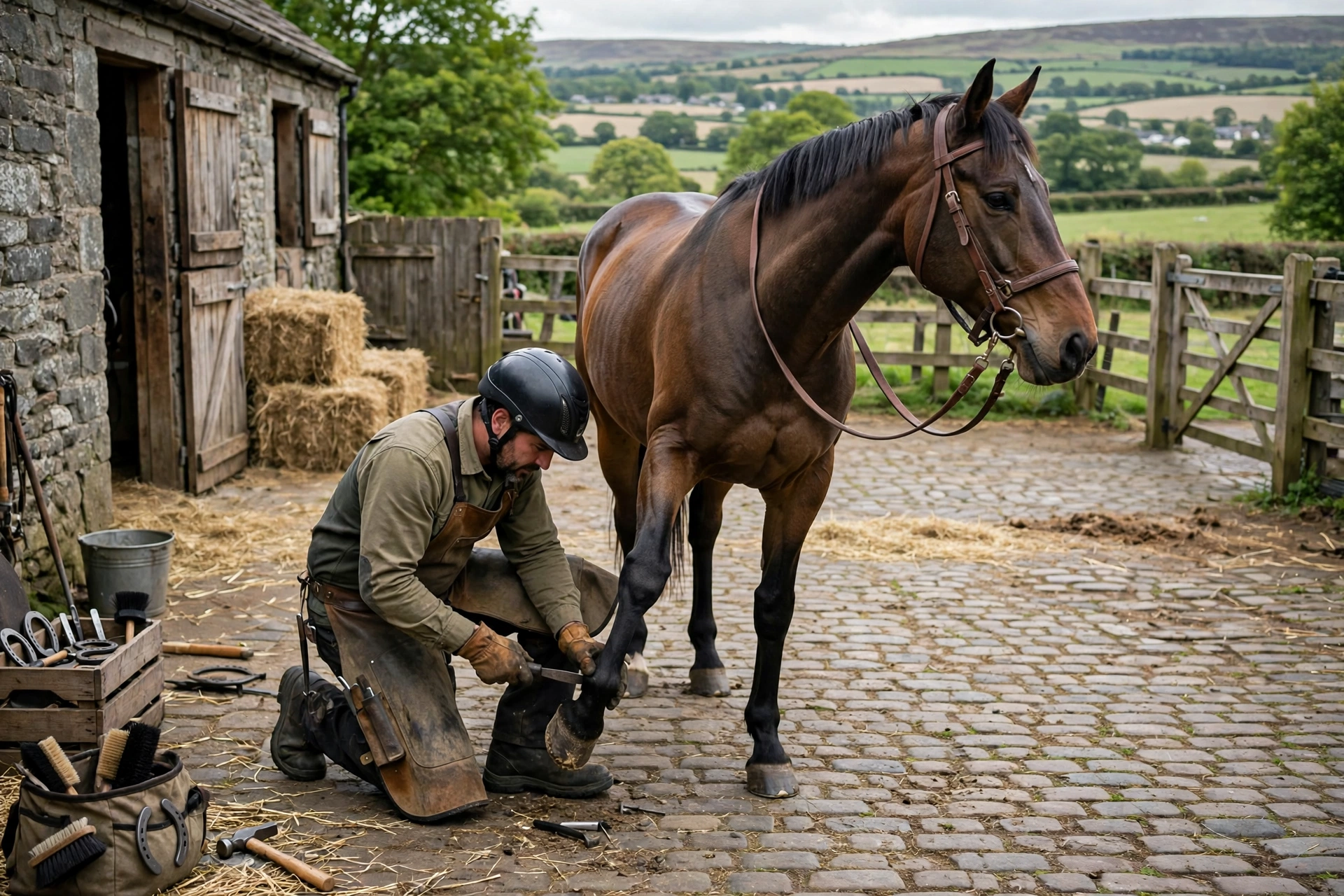
A helmet for farriers is a helmet worn by a farrier while shoeing and trimming horses to protect the head from kicks, falling tools, and knocks in the stable and the forge, and in general terms every farrier should wear one that fits well and stays in place while they work close to a horse. A farrier spends the working day bent over a horse’s hoof, with their head near the animal’s legs, and that is a place where a sudden kick or a slip can happen without warning. A helmet is a simple piece of safety equipment for a job that puts the head in harm’s way all day long.
Farriery is skilled, physical work, and it takes place in tight spaces. The farrier works in a stable, a yard, or a forge, often with a horse that is restless, tired, or nervous, and often with hot metal, heavy tools, and an anvil close by. A helmet gives the farrier protection in that setting, and it also helps them to work with confidence, knowing that a knock to the head will not end their working day.
Why do farriers need a helmet?
Farriers need a helmet because horses are large, strong animals, and even a calm horse can kick out without warning. A farrier holding a horse’s leg is close to the hooves, and a kick to the head can be a serious injury. In general terms, a helmet gives the farrier a hard shell and a shock-absorbing lining between their head and a hoof, a tool, or a hard surface, and that protection matters every time they pick up a foot.
There is also the risk of a fall. A horse that pulls away suddenly can drag a farrier off balance, and a slip on a wet yard or a straw-covered floor can send them to the ground. A helmet protects the head in that fall, and it also protects against knocks from low beams, stable doors, and the anvil. A farrier who works alone, travelling from yard to yard, has even more reason to wear one, because there may be nobody nearby to help if something goes wrong.
What kind of helmet is best for farriers?
The best helmet for farriers is, in general terms, a light, close-fitting helmet with a hard outer shell, a secure chin strap, and a fit that works with the bent-over posture of the job. Many farriers use a riding helmet or a light work helmet, because those helmets are comfortable, well ventilated, and made to cope with knocks. The key points are a snug fit, good ventilation, and a strap that holds the helmet in place when the farrier bends down and stands up again and again.
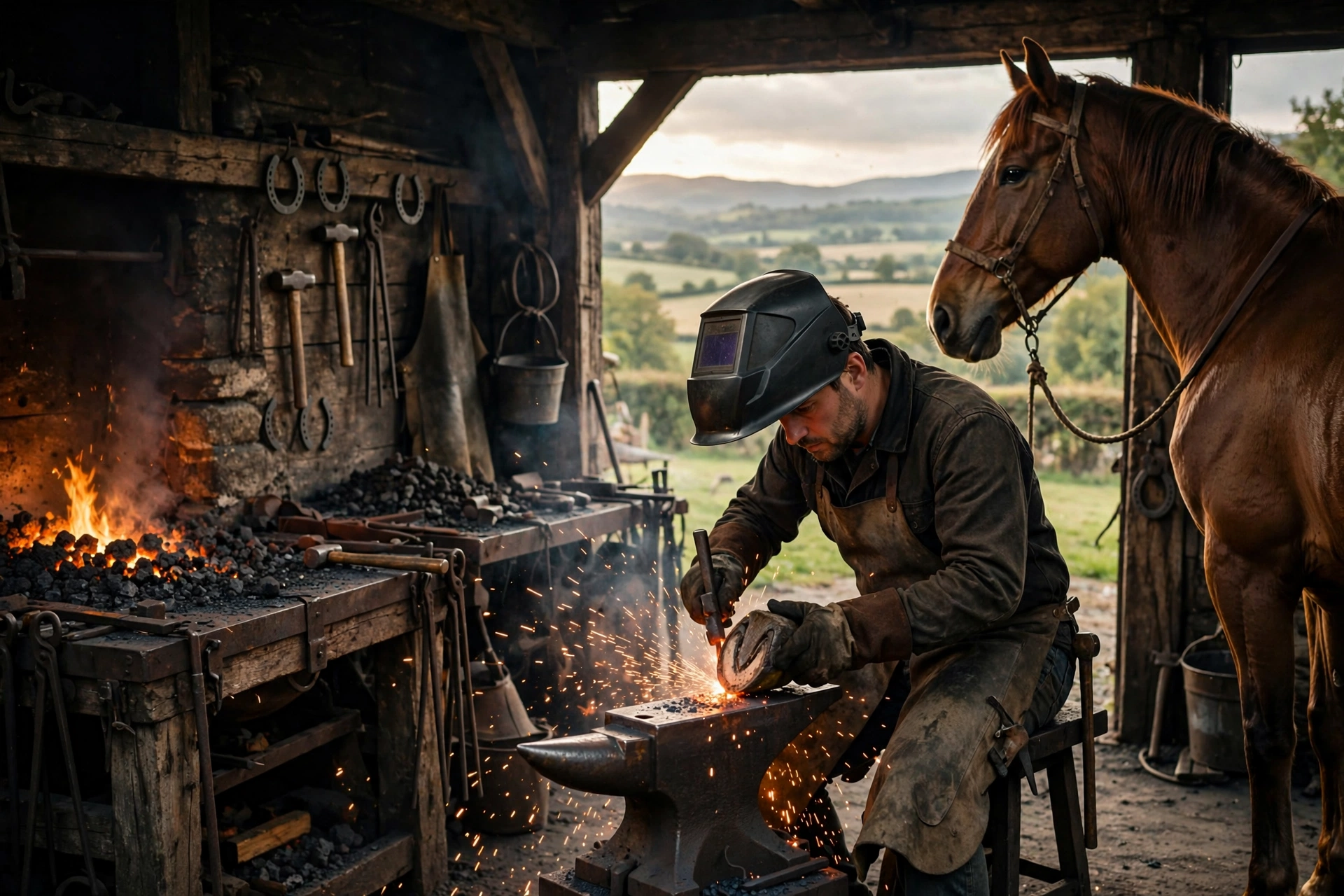
The helmet should also cope with the heat of the forge and the dust of the stable. A helmet used near hot metal should not soften or warp, and it should be easy to wipe clean after a day’s work. Vents that let air in without letting in too much dust are useful, and a lining that can be removed and washed is a practical feature. A helmet that is too heavy or too hot will become a distraction during a long day of shoeing, so comfort matters as much as protection.
How should a helmet for farriers fit?
A helmet for farriers should fit snugly, sit level on the head, and stay in place when the farrier bends over a hoof, stands up, or turns quickly. The helmet should cover the forehead and the top of the head, and the chin strap should be fastened securely every time the farrier is working with a horse. A strap that is left loose lets the helmet slip forward over the eyes at the worst moment, and a helmet that slides around is worse than no helmet at all.
The fit should be checked in the working position, bent over, rather than only standing upright in front of a mirror. The helmet should not press on the forehead when the farrier looks down, and it should not block their view of the hoof. The farrier should also check that the helmet does not block their hearing, because a farrier needs to hear the horse, the owner, and any warnings from the yard.
What should a farrier check before starting work?
Before starting work, a farrier should check the helmet for cracks, dents, or damage to the shell, and should look at the lining, the strap, and the buckle to make sure they are sound and working. A helmet that has been dropped onto concrete, or that has taken a kick from a horse, should be looked at with care, and in general terms a helmet that has taken a serious impact should be replaced rather than used again. The damage may not be easy to see, so the farrier should think honestly about what the helmet has been through.
The farrier should also check that the helmet is clean and dry, that the lining has no loose parts, and that the strap buckle fastens and releases smoothly. A quick check at the start of the day is better than finding a problem halfway through shoeing a difficult horse. The helmet is only one part of staying safe around horses, and it works best when the farrier also takes care with handling, positioning, and the condition of the tools.
How should a farrier’s helmet be looked after?
A farrier’s helmet should be looked after with regular cleaning and sensible storage, in the same way as any work helmet. After a day in the stable and the forge, the farrier should wipe the outside clean, brush off dust and hoof trimmings, and let the helmet dry naturally away from direct heat. Strong heat, such as a forge or a hot vehicle, can harm the materials in a helmet over time, so a cool, dry place is a better choice for storage.
The helmet should be kept where it will not be knocked about, sat on, or used as a shelf for tools, because a hard knock can damage it even when no crack is visible. A helmet bag in the van is a simple way to protect it between yards. Farriers who are choosing a new helmet may also want to learn about features that can help in a fall or a kick, including a system designed to reduce rotational forces, such as MIPS, which is found in some helmets made for riding and work. A well-kept helmet, worn on every job, gives a farrier the best chance of a safe working day around horses.
Do all farriers wear a helmet?
No, not all farriers wear a helmet, but more do now than in the past, and many farriery schools and associations recommend it. A farrier who works close to horses’ legs has good reason to wear one.
Can a riding helmet be used for farriery?
Yes, in general terms a riding helmet that fits well and is in good condition is often suitable for farriery. The key points are fit, ventilation, and a secure chin strap.
When should a farrier’s helmet be replaced?
A farrier’s helmet should be replaced after a hard impact or a kick, or when it no longer fits well, shows damage, or has been worn for a long time. When in doubt, replace it rather than keep working in it.

Olivia
Writer at Helmet Today, covering helmet reviews, fit and riding safety.