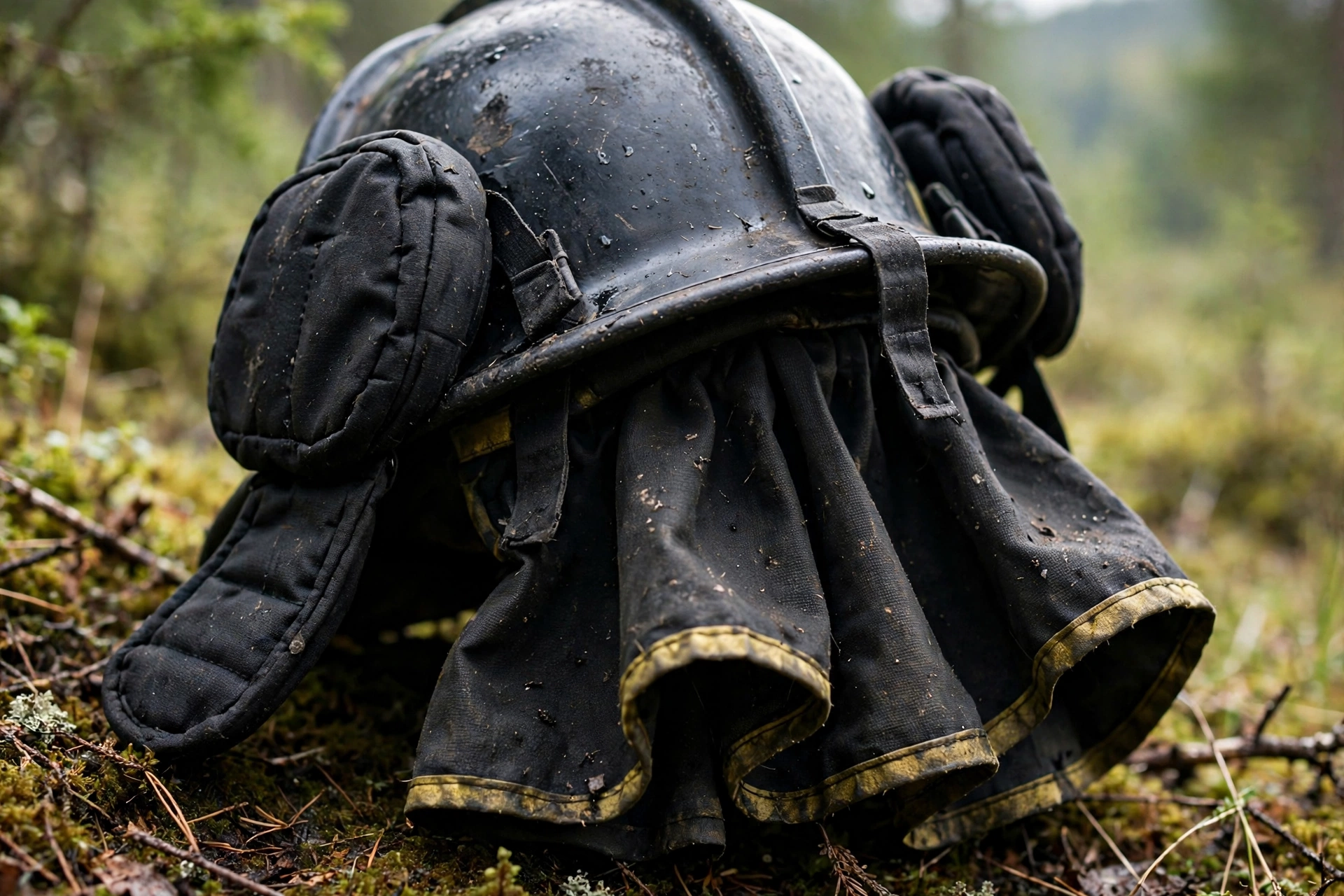
Fire helmet ear covers and neck curtains are flaps of fire-resistant fabric that hang from the sides and back of the helmet, shielding your ears, neck, and jawline from heat, embers, steam, and falling debris. In general terms, they close the gap between the helmet’s brim and the top of your turnout coat, which is exactly where burns and ember strikes most often happen.
They look like simple add-ons, but they do serious work, and they are often misunderstood or neglected. This guide explains what each part does, how they attach, and how to keep them in good condition.
What Do Ear Covers Do?
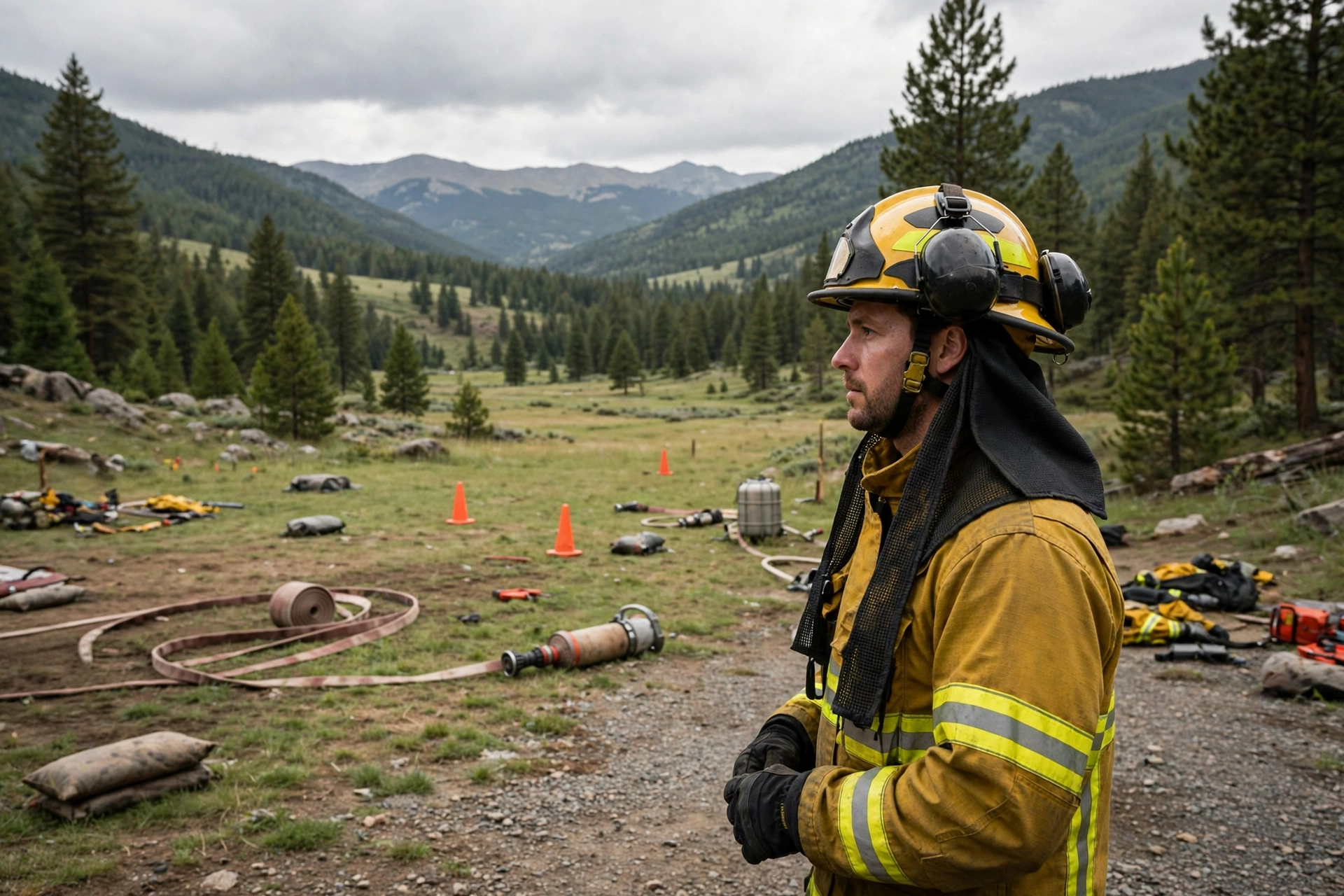
Ear covers hang from the sides of the helmet over the ears and the jawline. Their job is to protect the ears, the side of the face, and the upper neck from radiant heat, direct flame contact, embers, and hot debris. Ears are vulnerable because they stick out, have thin skin, and are hard to cover with a coat collar alone. A good ear cover closes that gap.
Ear covers are usually made from fire-resistant fabric, sometimes with multiple layers or a quilted construction for insulation. On traditional-style helmets they are often long, shaped flaps; on modern helmets they may be shorter and more closely fitted to the shell. Covers that are too short leave the jawline exposed, so check that yours reach far enough to overlap the coat collar when the helmet is worn normally. Some are integrated into the helmet’s design, while others are detachable and replaceable. Either way, they should hang evenly on both sides and not interfere with hearing, radio earpieces, or the fit of a breathing apparatus mask.
What Does a Neck Curtain Do?
The neck curtain, sometimes called a cape or shroud, hangs from the back of the helmet down over the neck and upper back. It protects the back of the neck from heat, embers, and debris falling from above — the kind of debris that a rear brim alone cannot fully stop. It also shields the gap between the helmet and the coat collar, which otherwise leaves the neck exposed when you bend forward or look up.
On structural helmets, neck curtains are usually substantial, made from the same fire-resistant fabrics as turnout gear, and long enough to overlap the coat collar. On wildland helmets, the equivalent is a lighter shroud, designed for embers and sun rather than intense heat. The principle is the same in both cases: cover the neck, which is one of the most commonly burned areas in firefighting. A neck curtain that is too short, missing, or tucked inside the coat is not doing its job.
How Do Ear Covers and Neck Curtains Attach?
Attachment methods vary by helmet maker and model. Common systems include press studs, hook-and-loop fasteners, clips, or a combination, with the covers fitting into a channel or slot around the helmet’s lower edge. Some helmets have the covers sewn or riveted in place as part of the shell assembly, in which case replacement means replacing the whole unit or having it serviced.
Whatever the system, the covers should sit securely and evenly, without gaps at the sides or back. Check the fasteners regularly: studs loosen, hook-and-loop loses grip when clogged with soot, and clips crack. A cover that flaps loose or hangs on one side will not protect evenly, and a loose cover can catch on equipment or fall off at the wrong moment. If your helmet’s covers are detachable, practise removing and refitting them so you can do it quickly and correctly.
How Do You Care for Ear Covers and Neck Curtains?
Care follows the same rules as turnout gear. After a call, brush off loose soot and debris, and clean the covers according to your department’s procedures and the maker’s instructions — usually a gentle wash, not harsh solvents or high heat, which can damage fire-resistant treatments. Let covers dry fully before the helmet goes back on the rack, since damp fabric stored in a closed space can develop mould and odour.
Inspect covers each time you inspect the helmet. Look for thinning fabric, holes, frayed edges, broken studs, and worn hook-and-loop. Heat damage shows as stiffening, discolouration, or a brittle feel. A cover that has been scorched or has lost its flexibility has lost some of its protective value and should be replaced. Soot and grime also build up in the folds and seams of covers, so pay attention to those spots during cleaning — trapped debris can stiffen fabric over time and hide small tears that would otherwise be easy to spot. Because covers are replaceable on many helmets, replacing a worn cover is a small job that restores full protection.
When Should Ear Covers or a Neck Curtain Be Replaced?
Replace covers when inspection shows damage that cleaning cannot fix: holes, tears, significant thinning, heat stiffening, or failed fasteners. Also replace them if they no longer fit the helmet properly — for example, after a helmet change, since covers are often model-specific and a cover from one helmet may not fit another correctly.
Departments usually set a replacement schedule or criteria for soft goods like covers, alongside the helmet inspection regime. Following that schedule is simpler than judging each cover from scratch, and it keeps the whole crew’s protection consistent. Keep a spare set of covers at the station if your helmets use detachable ones: a helmet waiting on a replacement cover is a helmet out of service. If you are learning about helmet technology, reading about what MIPS is for helmets can help you understand one of the features you may see listed on modern helmets.
Frequently Asked Questions
Q: Can I wear a fire helmet without ear covers?
A: In general terms, you should not: the ears and neck would be exposed to heat and embers. If covers are damaged or missing, replace them before the helmet goes back into service.
Q: Do ear covers block hearing?
A: They can muffle sound slightly, but well-designed covers balance protection with hearing, and radio earpieces are made to work with them. If hearing is badly affected, check the fit or whether the covers are the right model for your helmet.
Q: Are neck curtains the same on wildland and structural helmets?
A: No. Structural neck curtains are heavier and built for intense heat, while wildland shrouds are lighter and built for embers and sun. Each matches the hazards of its role.

Olivia
Writer at Helmet Today, covering helmet reviews, fit and riding safety.