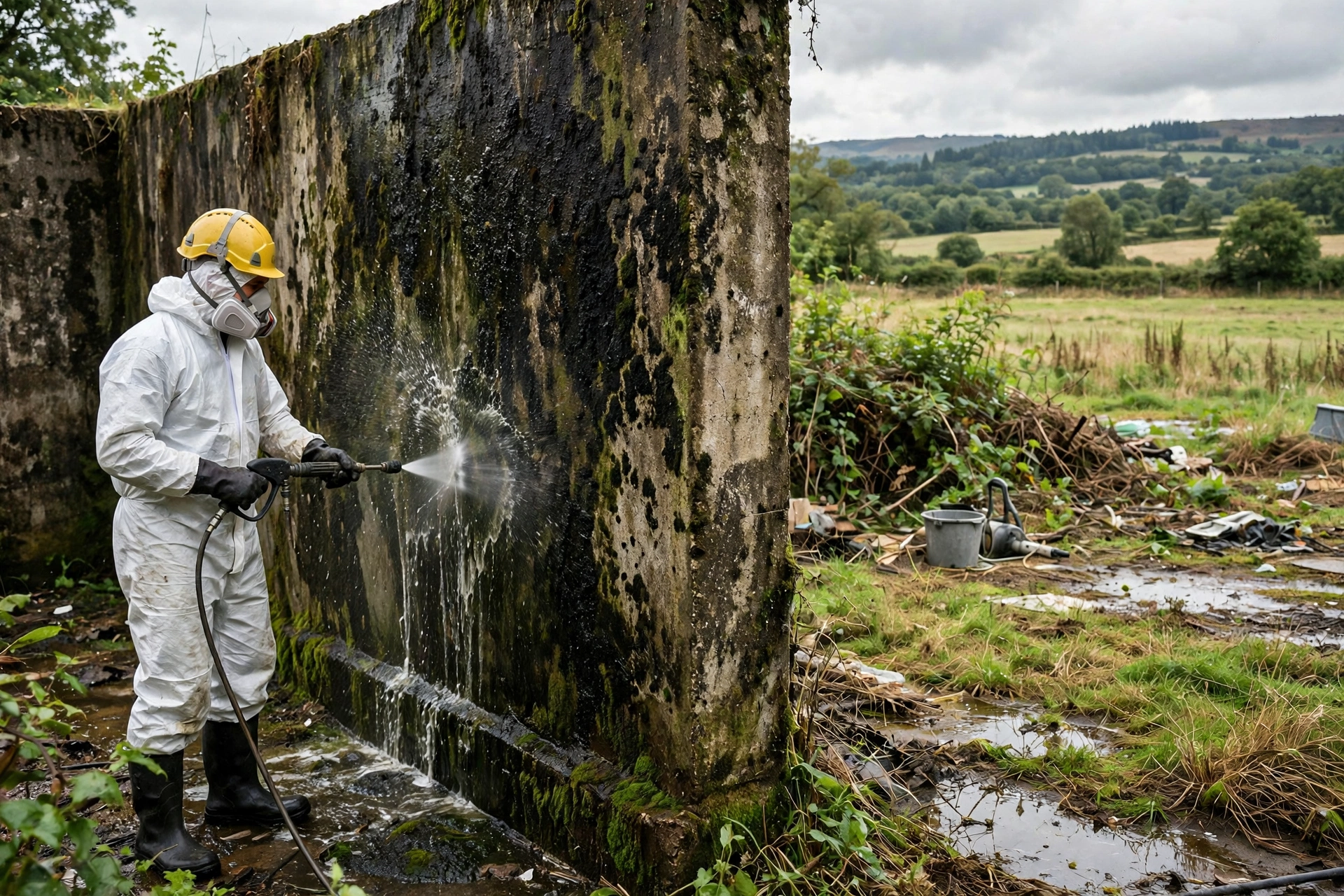
A helmet for mould remediation workers is a safety helmet, usually a hard hat, worn to protect the head from knocks and falling debris while cleaning up mould in buildings. In general terms, mould remediation means removing mould growth from walls, ceilings, and other surfaces, often in damp, damaged, or neglected buildings where the structure itself can be unsafe. The helmet protects the worker’s head from falling plaster, loose fixtures, and low beams while they work.
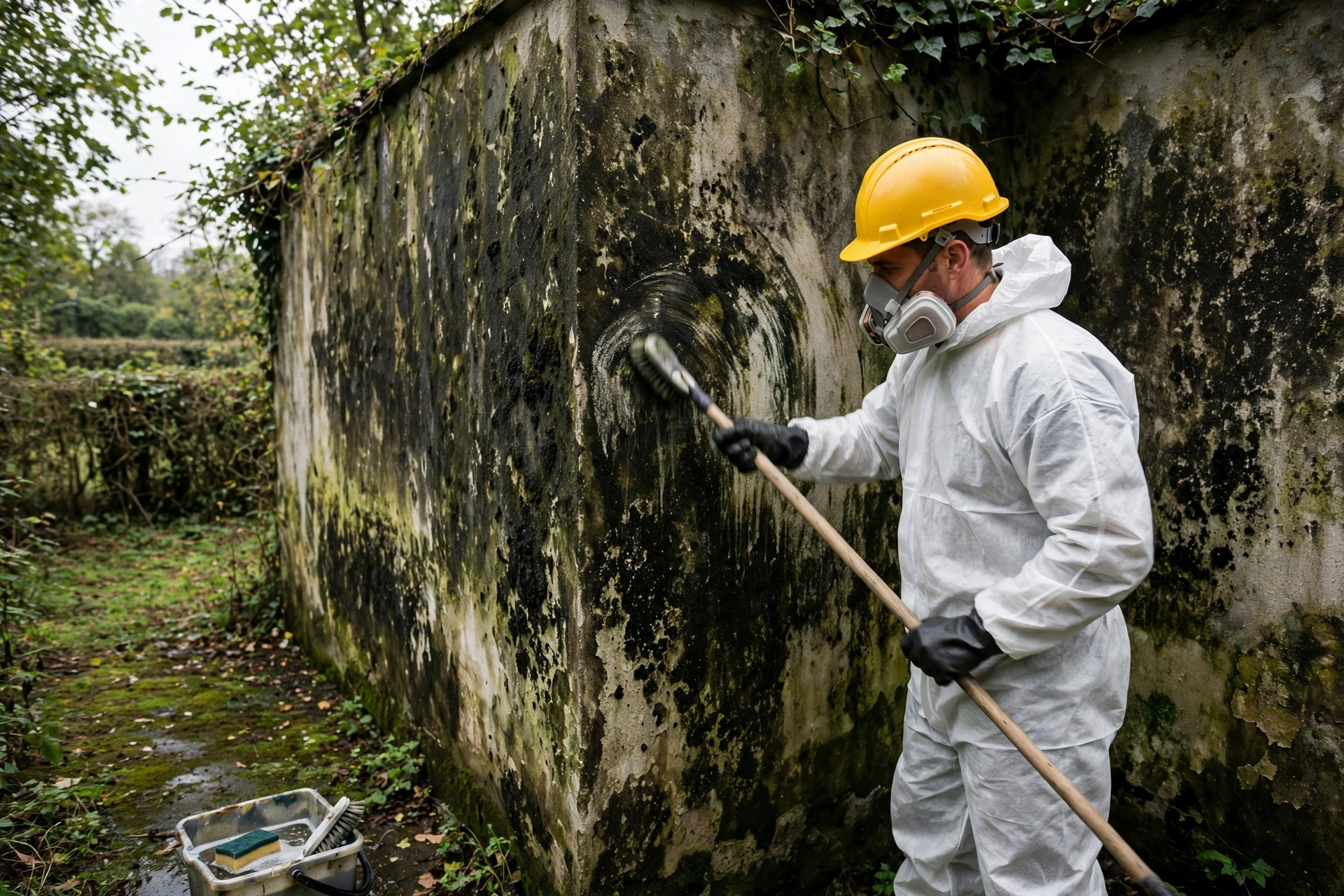
Mould remediation work takes place in places that are often in poor condition: leaking roofs, flooded basements, and rooms where damp has weakened the ceiling. The worker is usually wearing a mask, gloves, and protective clothing as well, because mould spores and cleaning chemicals are a health risk. The helmet is part of that same protective kit, covering the risk to the head while the worker focuses on the job.
Do mould remediation workers have to wear a helmet?
Whether a mould remediation worker has to wear a helmet depends on the site and its safety rules, and in general terms many remediation jobs do require one. The employer or the site manager is responsible for assessing the risks, and where there is a risk of falling objects, low ceilings, or head injuries, a safety helmet is usually part of the required kit. The worker should follow the rules for their own site, even if workers on another job work without one.
Some jobs require a helmet only in certain areas, such as under a damaged ceiling or in a room where demolition is taking place, while others require one for the whole job. In general terms, a worker who is removing ceiling panels, working under scaffolding, or clearing a flooded basement is more likely to need a helmet all the time. If the site rules are unclear, the safest step is to ask the supervisor and wear the helmet until the answer is clear.
What type of helmet is best for mould remediation?
The best helmet for mould remediation is usually a standard industrial safety helmet, often called a hard hat, that fits well and is comfortable to wear for a full shift. These helmets have a hard outer shell and a suspension system inside that holds the shell away from the head, and that gap helps to absorb the force of an impact. In general terms, a light helmet with good ventilation suits a worker who spends hours in a warm, damp building, while a helmet with a short brim suits a worker who needs a clear view upwards when checking a ceiling.
The helmet also has to work with the rest of the protective kit, especially the mask or respirator and the goggles. Choose a helmet that does not press on the mask straps or push the goggles out of place, and check that the whole setup can be worn together comfortably for a long shift. Some helmets come with slots for ear defenders or a visor, and those extras can be useful in noisy or dusty work. A chin strap is worth considering for workers who climb ladders or work in awkward positions, because it stops the helmet falling off at the wrong moment.
How does a mould remediation helmet protect the worker?
A mould remediation helmet protects the worker by putting a hard shell over the head, so a falling piece of plaster, a loose fixture, or a knock against a low beam hits the shell rather than the skull. In general terms, the shell spreads the force of an impact, and the suspension inside absorbs some of that energy, so less force reaches the head. The helmet is most useful in buildings that are damaged or being stripped out, where the risk of falling debris is highest.
The helmet also gives some protection when the worker is moving through tight spaces, such as lofts, crawl spaces, and basements, where the head is close to joists, pipes, and nails. Some helmets include a system designed to reduce rotational forces in a fall, such as MIPS, which is an extra feature to look for, although it is more common in sports helmets than in industrial ones. Whatever the design, the helmet’s job is the same: to take the force of a knock that would otherwise reach the head directly.
How should a mould remediation worker wear a helmet?
A mould remediation worker should wear a safety helmet level on the head, with the suspension adjusted so the helmet sits firmly without rocking or slipping. The brim should sit just above the eyebrows, and the helmet should not tip forward over the eyes or slide back when the worker looks up at a ceiling. In general terms, a helmet that is worn tilted back or pushed up like a cap is not doing its job, because the shell is no longer over the part of the head it is meant to protect.
The chin strap, if the helmet has one, should be fastened snugly enough to hold the helmet in place, but not so tight that it is uncomfortable. Hair should be tucked inside, and nothing should be stored between the shell and the suspension, because even a small object in that gap can change how the helmet works in an impact. The helmet should be checked against the mask and goggles before work starts, so the worker knows the whole setup fits together and stays in place.
When should a mould remediation helmet be replaced?
A mould remediation helmet should be replaced if it has taken a heavy knock, if the shell is cracked, dented, or faded, or if the inside suspension is worn or damaged. In general terms, a helmet that has absorbed an impact has done its job, and it should not be kept in use, even if the damage looks small. The shell can be weakened in ways that are hard to see, and a weakened shell may not protect the head in a second impact.
Helmets also wear out with time, heat, and sunlight, and a helmet that has been used in damp, chemical-heavy work may need replacing sooner. Clean the shell with mild soap and water after each job, and check it regularly for cracks, soft spots, and frayed straps. If the helmet no longer fits well, or if the suspension has lost its spring, it is time for a new one. A helmet is cheap compared with the injury it prevents, so there is no reason to stretch its life.
Is a hard hat the same as a safety helmet?
In general terms, yes, the two terms are used for the same type of industrial head protection. A hard hat is the common name for a safety helmet with a hard shell and a suspension system inside, worn on construction sites and during remediation work.
Can a mould worker wear a bump cap instead of a helmet?
A bump cap protects against light knocks on low beams and pipes, but it is not a substitute for a safety helmet where there is a risk of falling objects. If the site requires a safety helmet, a bump cap does not meet that requirement.
Does the helmet protect against mould spores?
No, a helmet protects the head from knocks and falling debris, not from mould spores. Protection against spores comes from the mask or respirator, the goggles, and the protective clothing worn with the helmet.

Olivia
Writer at Helmet Today, covering helmet reviews, fit and riding safety.