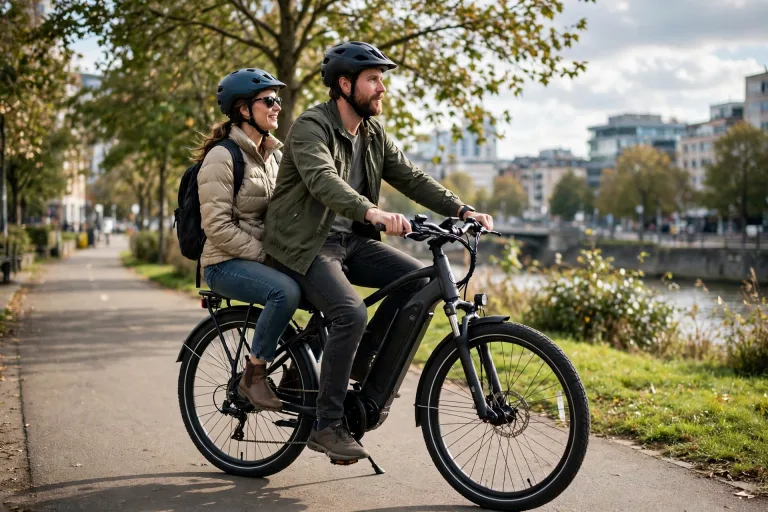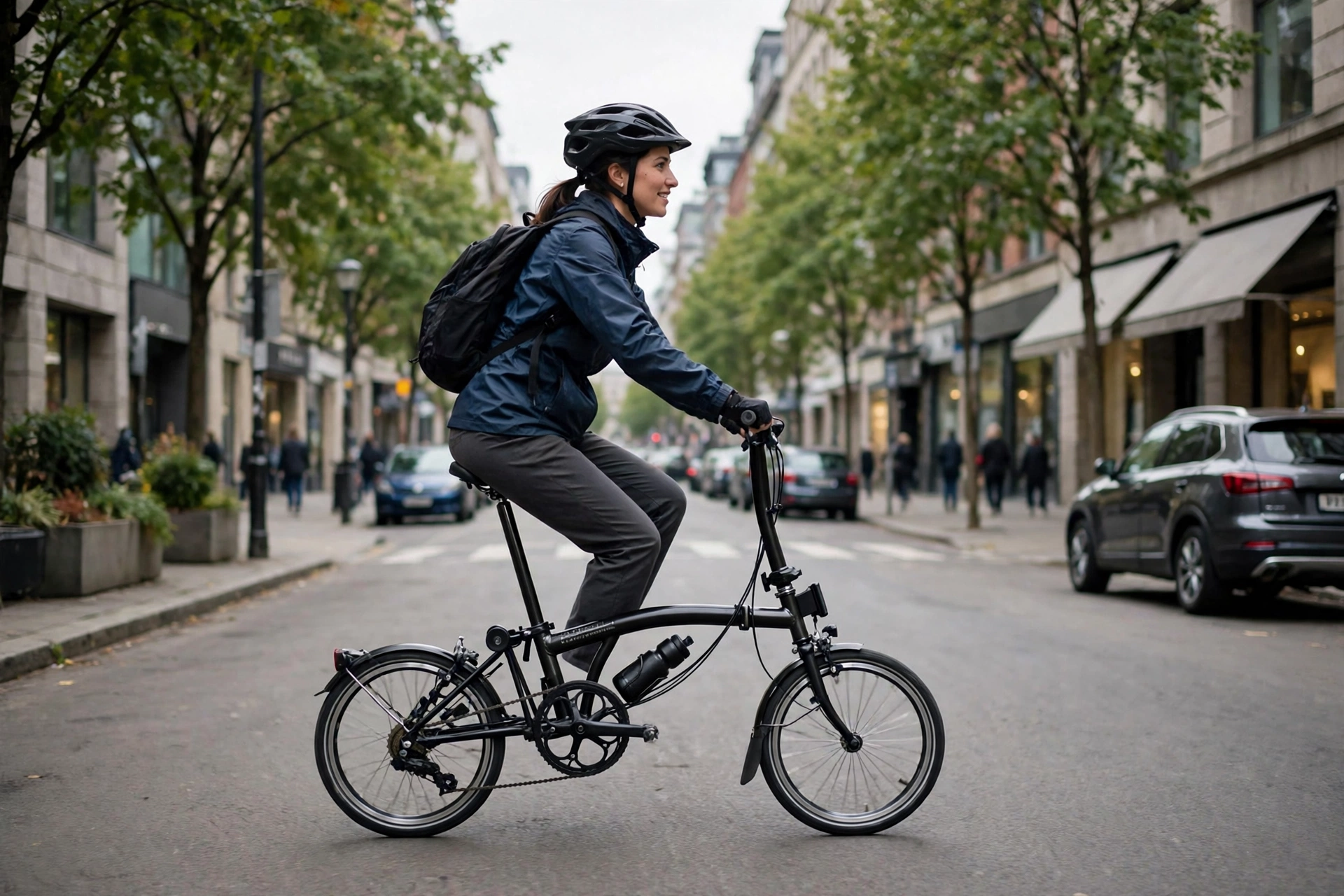
A helmet for folding bike commuters is a light, compact bike helmet that protects the head on the ride to work and is easy to carry, store, or fold away once the bike is folded. In general terms, folding bike commuters ride through city traffic, often mixing cycling with a train or a bus, and the helmet has to work for the ride and then disappear into a bag, a locker, or under a desk. A helmet that is light, comfortable, and easy to carry is one the commuter will actually wear every day.
Folding bikes are made for short urban trips, and the riders who use them are often cycling in busy streets, stopping and starting at lights, and sharing the road with cars and buses. The helmet is the commuter’s main protection in that traffic, and it is worn because a fall or a collision in the city can happen at low speed and still cause a serious head injury. A good commuter helmet is one that fits the journey, not just the ride.
What makes a good helmet for folding bike commuters?
A good helmet for folding bike commuters is light, well ventilated, and easy to carry, with a fit that stays comfortable on a short urban ride. Weight matters more for a commuter than for a weekend rider, because the helmet is carried as well as worn, and a heavy helmet is one that gets left at home. In general terms, a helmet with good vents keeps the head cool in summer traffic, and a helmet with a simple one-handed fit system is easy to adjust while standing on a platform or at a bike rack.
Look for a helmet with a visor or a peak that shields the eyes from low sun and rain, and a rear light clip or reflective details that help other road users see you in traffic. Some commuter helmets fold or collapse to half their size, which is handy for a folding bike rider who is short on space, but a standard compact helmet that fits in a bag is fine for most commuters. The helmet should also work with a cap or a thin hat underneath in cold weather, since commuting happens all year round.
Do folding bike commuters need a helmet?
Whether a folding bike commuter needs a helmet depends on where they ride, and in general terms many cities and countries do not require a helmet by law for adult cyclists. But the law is only part of the story: city traffic is busy, the roads are shared with large vehicles, and a fall at even a modest speed can cause a head injury. Most safety advice for urban cycling recommends a helmet, and most regular commuters wear one.
Some commuters skip the helmet because the ride is short or the route is on a quiet cycle path, but a short ride can still involve a junction, a pothole, or a car door opening without warning. In general terms, the helmet is most useful exactly when the ride feels routine, because that is when attention drops and mistakes happen. A commuter who wears a helmet every day builds a habit that protects them on the days when it matters most.
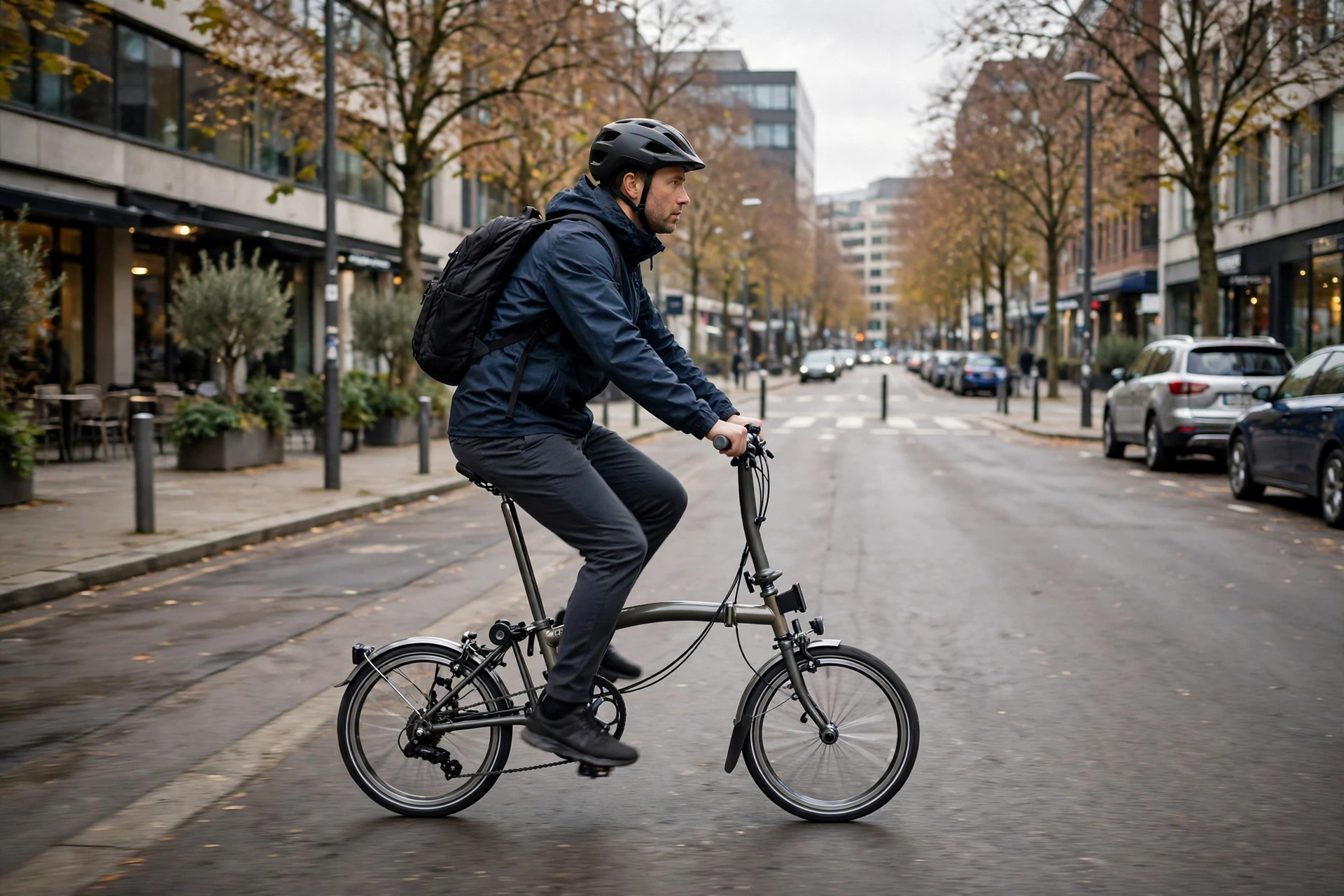
How should a commuter helmet fit?
A commuter helmet should fit snugly all around the head, with no gaps and no pressure points, and it should stay in place when the rider shakes their head or looks over their shoulder. The helmet should sit level, covering the forehead, and the straps should form a neat shape around the ears, with the buckle fastened firmly under the chin. In general terms, a helmet that rocks or slides is too loose, and a helmet that gives a headache within minutes is too tight.
The fit is especially important for a commuter, because the helmet is put on and taken off several times a day, and a helmet that is fiddly to adjust will soon be left in the bag. Choose a helmet with a simple dial or cradle at the back that can be adjusted with one hand, and check the fit with any hat you wear in winter. Some helmets include a system designed to reduce rotational forces in a fall, such as MIPS, which is an extra feature worth considering for a rider who shares the road with traffic every day.
Can a folding bike helmet fold too?
Some helmets for folding bike commuters do fold or collapse, and in general terms they are designed to pack flat or to fold in half so they fit in a bag alongside the folded bike. A folding helmet is a clever piece of kit for a commuter who carries everything in one bag, and it solves the problem of what to do with a bulky helmet on a crowded train. But a folding helmet is not the only option, and many commuters are happy with a standard compact helmet that fits in a pannier or a rucksack.
A folding helmet should meet the same safety standard as a normal bike helmet, and it should fit just as well when it is unfolded and worn. Check that the folding mechanism locks firmly into place before you ride, and that the helmet feels solid once it is on your head. If the helmet feels flimsy or loose, it is not the right one, however neatly it folds. For most commuters, a light standard helmet that is easy to carry is a simpler and cheaper choice than a folding one.
How do I look after a commuter helmet?
To look after a commuter helmet, store it away from heat and direct sun, clean it with mild soap and water, and check it regularly for cracks, dents, and worn straps. A helmet that lives in a bag or a locker can pick up knocks, so check the shell and the liner each week, and replace any part that is damaged. In general terms, a helmet that has been in a crash should be replaced, even if the damage looks small, because the liner may have absorbed energy that you cannot see.
Keep the vents clear of mud and leaves, and let the helmet dry naturally after a wet ride rather than putting it on a radiator. If the helmet starts to smell, remove the pads if they come out and wash them, or wipe them with a damp cloth. A helmet that is clean and comfortable is one you will wear every day, and that is the whole point of a commuter helmet.
Is a folding bike helmet different from a normal bike helmet?
In general terms, no, a folding bike commuter can wear a normal bike helmet. Some helmets are made to fold or collapse for easy carrying, but a standard light, compact bike helmet works just as well for most commuters.
Do I need a helmet on a folding bike?
It depends on where you ride, since helmet laws for cyclists vary by place. In general terms, a helmet is recommended for city commuting, because traffic, junctions, and potholes can cause a fall at any speed.
Can I carry my helmet in my bag?
Yes, a helmet can be carried in a bag, a pannier, or a locker when you are not riding. In general terms, protect it from heavy knocks in the bag, and check it regularly for damage.

Olivia
Writer at Helmet Today, covering helmet reviews, fit and riding safety.