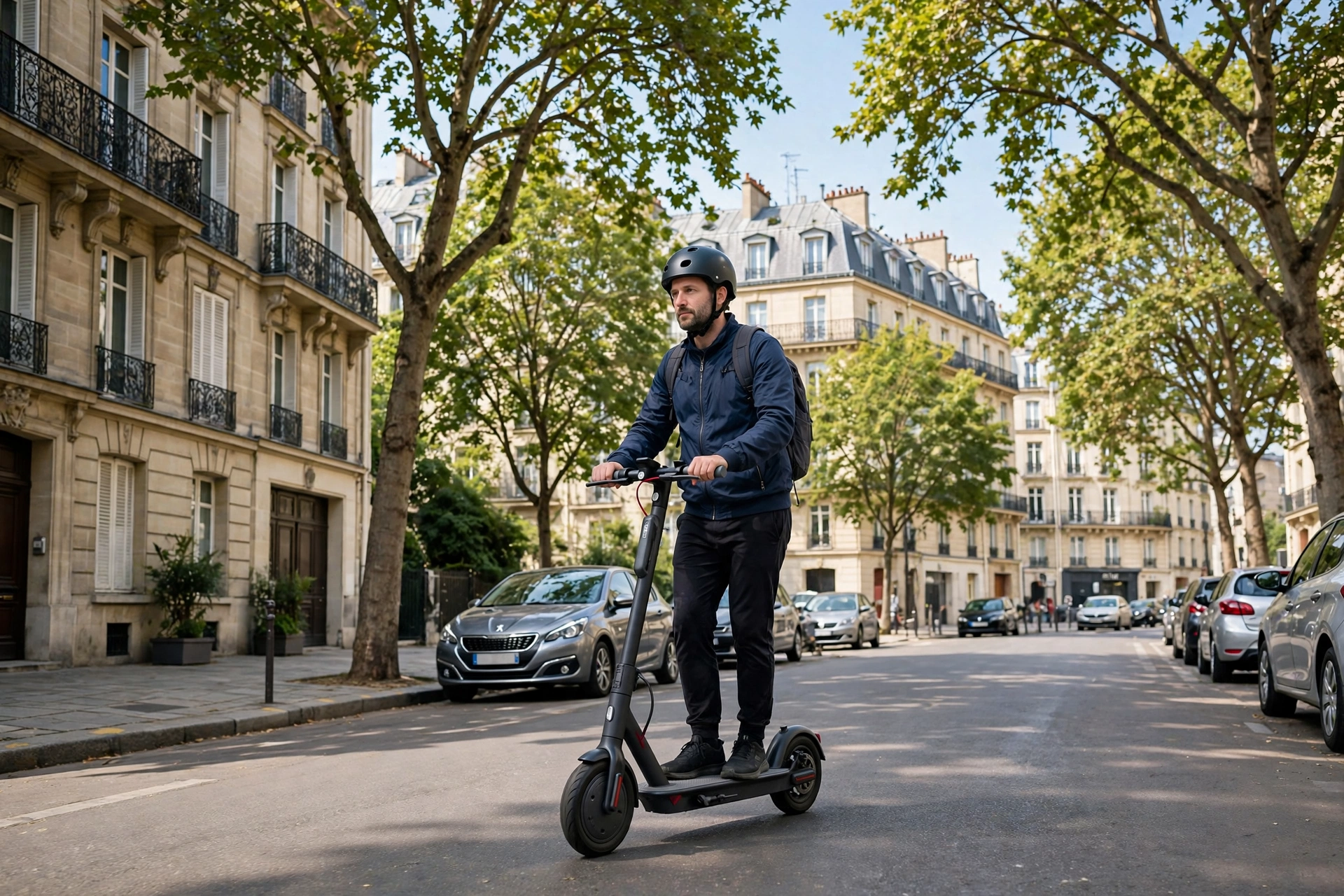
Helmet laws for e-scooters in France, in general terms, treat helmets as commonly required or strongly recommended for certain riders, with the exact expectation depending on the type of e-scooter, the rider’s age, and where the scooter is ridden. In general terms, France takes e-scooter safety seriously, and a helmet is widely seen as part of riding responsibly, even where the rules leave room for judgement. Anyone planning to ride an e-scooter in France should check the current rules before setting off, because the rules can change and can differ between towns and cities.
E-scooters have become a familiar sight in French cities, used by commuters, visitors, and delivery riders. They are quick, quiet, and easy to hire, which makes them tempting to ride without thinking about safety gear. But a fall from an e-scooter at speed can cause a serious head injury, and a helmet is the simplest protection a rider can wear. Understanding the rules in general terms helps a rider make a sensible choice, and it also helps visitors avoid an awkward surprise when they hire a scooter on holiday.
Are helmets required on e-scooters in France?
In general terms, helmets are commonly required for some e-scooter riders in France and recommended for others, with the details depending on the scooter’s speed and power and on the rider’s age. Faster and more powerful scooters are generally treated more strictly, and younger riders are generally expected to wear helmets. For ordinary hire scooters ridden by adults, a helmet is widely recommended even where it is not strictly required, because the risk of a head injury in a fall is real at any speed.
The picture is not the same everywhere in France. Some cities and towns have their own local rules for shared scooters, and hire companies often have their own terms asking riders to wear a helmet. In general terms, a rider should not assume that the rules in one city match the rules in another. The safest approach is simple: wear a helmet whenever you ride an e-scooter in France, whether or not the rules in that place strictly require it. That way, the rider is protected and does not need to worry about the fine detail of the local rules.
What kind of helmet suits an e-scooter rider in France?
A helmet for e-scooter riding in France should be light, well-ventilated, and comfortable enough to wear on a city journey. In general terms, a standard bike helmet is a practical choice for most riders, because it is designed for the speeds e-scooters travel at and it is easy to carry when the scooter is parked. A skate-style helmet is another option, since it sits lower and covers more of the back of the head, which some riders prefer. Either type works, provided it fits well and is in good condition.
For faster scooters, a sturdier helmet may be worth considering, since the forces in a fall rise with speed. In general terms, a helmet with a little more coverage and a secure chin strap gives extra confidence at higher speeds, and a helmet with a visor or good coverage can also help against wind and rain. What matters most is fit: a helmet that slides about will not protect the head properly, so the rider should adjust the straps and check that the helmet sits level and stays put when they shake their head gently. A helmet that is comfortable is also one a rider will actually wear.
What other rules apply to e-scooter riders in France?
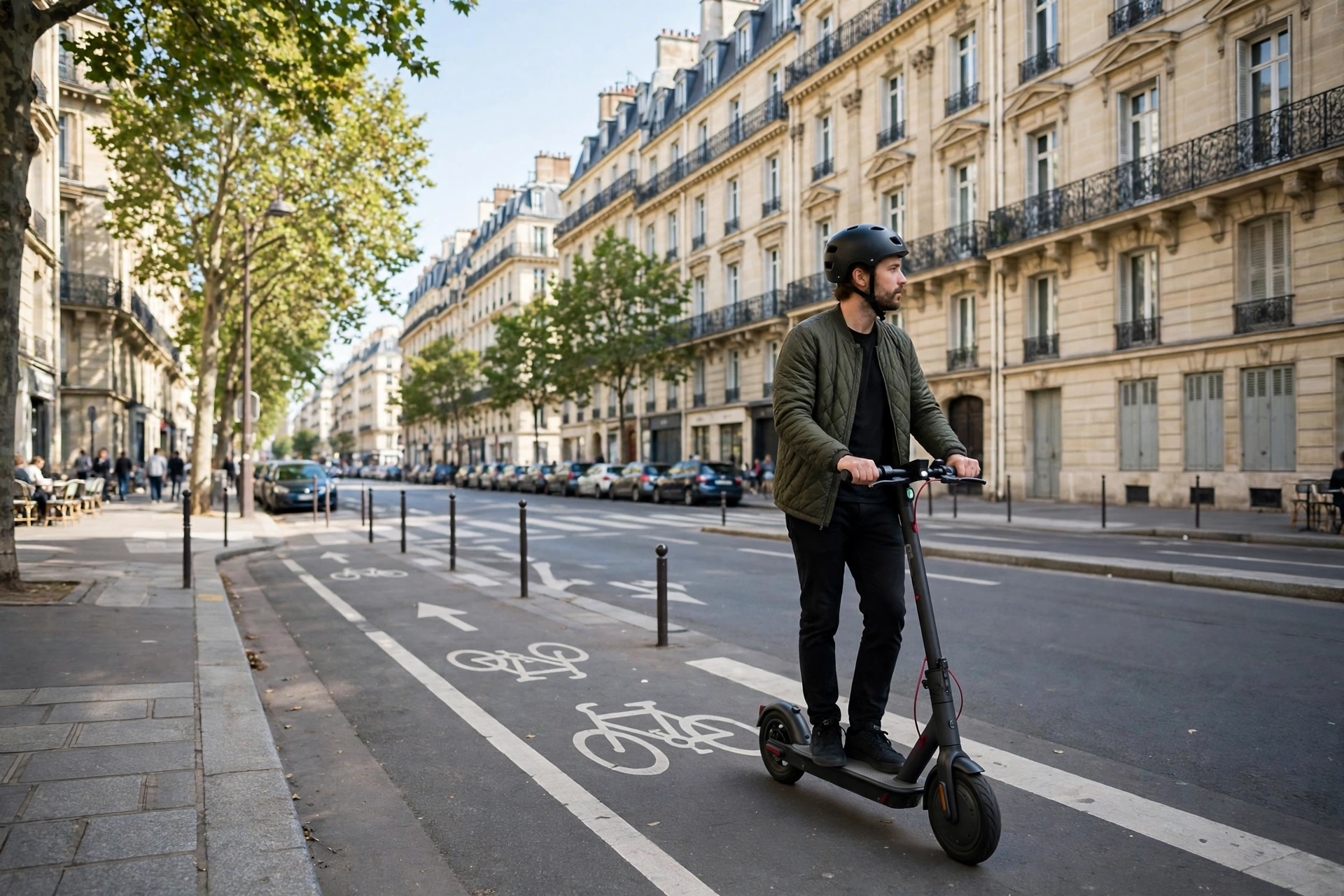
In general terms, e-scooter riders in France are expected to follow the rules of the road, much like cyclists. That means riding on the road or in cycle lanes where allowed, keeping to the correct side, giving way at junctions, and not riding on pavements where that is not allowed. Riders are generally expected to be of a certain age, to ride alone rather than carrying a passenger, and to keep their attention on the road rather than on a phone. These are general expectations, and the details can vary, so a rider should check the current rules for the place they are riding in.
Other rules often cover the scooter itself. In general terms, e-scooters used on public roads are expected to have working lights, brakes, and a horn or bell, and to be kept to sensible speeds. Hire scooters are usually fitted with these features, but a rider should still check the lights and brakes before setting off, especially at night. Riding after drinking is treated seriously, as it is for other road users. In general terms, the safest way to ride is to treat the e-scooter as a real road vehicle: follow the rules, watch for other traffic, and wear a helmet.
How can visitors ride e-scooters safely in France?
Visitors hiring an e-scooter in France should start by checking the hire company’s terms and the local rules for the city they are in. In general terms, the hire app will usually set out the key rules, and it may offer a helmet or suggest where to get one. It is also worth planning the route in advance, choosing roads with cycle lanes where possible and avoiding busy junctions until the rider is used to the scooter.
Riding carefully matters as much as the rules. E-scooters have small wheels, so potholes, tram tracks, and wet surfaces can catch a rider out. In general terms, a rider should keep both hands on the handlebars, brake gently, and slow down well before a turn. Some helmets include a system designed to reduce rotational forces in a fall, such as MIPS, which is a feature worth knowing about when choosing a helmet for e-scooter riding. A helmet, a careful speed, and attention to the road are the three things that most reduce the risk of a bad fall.
What happens if an e-scooter rider does not wear a helmet in France?
In general terms, a rider who does not wear a helmet where one is required may face a fine, and may also find that their insurance does not cover them as fully after an accident. The exact consequences depend on the place and the circumstances, so no specific figure can be given here. Beyond any fine, the more important consequence is the risk itself: a fall without a helmet can cause a head injury that a helmet would have softened or prevented.
The practical advice is straightforward. Wear a helmet on every e-scooter ride in France, whether or not the local rules strictly require it for that rider. A helmet is a small thing to carry, and on an e-scooter it is the most useful piece of safety gear a rider can own.
Do I need a helmet to ride an e-scooter in France?
In general terms, helmets are commonly required for some riders, such as younger riders and riders of faster scooters, and recommended for others. The safest choice is to wear one on every ride.
Can I use a bike helmet on an e-scooter in France?
Yes, in general terms a well-fitting bike helmet is a practical choice for e-scooter riding, because it is light, ventilated, and designed for the speeds e-scooters travel at.
Are the e-scooter rules the same all over France?
Not exactly. In general terms, the broad rules are national, but towns and cities can have their own local rules for shared scooters, so check the rules for the place where you are riding.

Olivia
Writer at Helmet Today, covering helmet reviews, fit and riding safety.