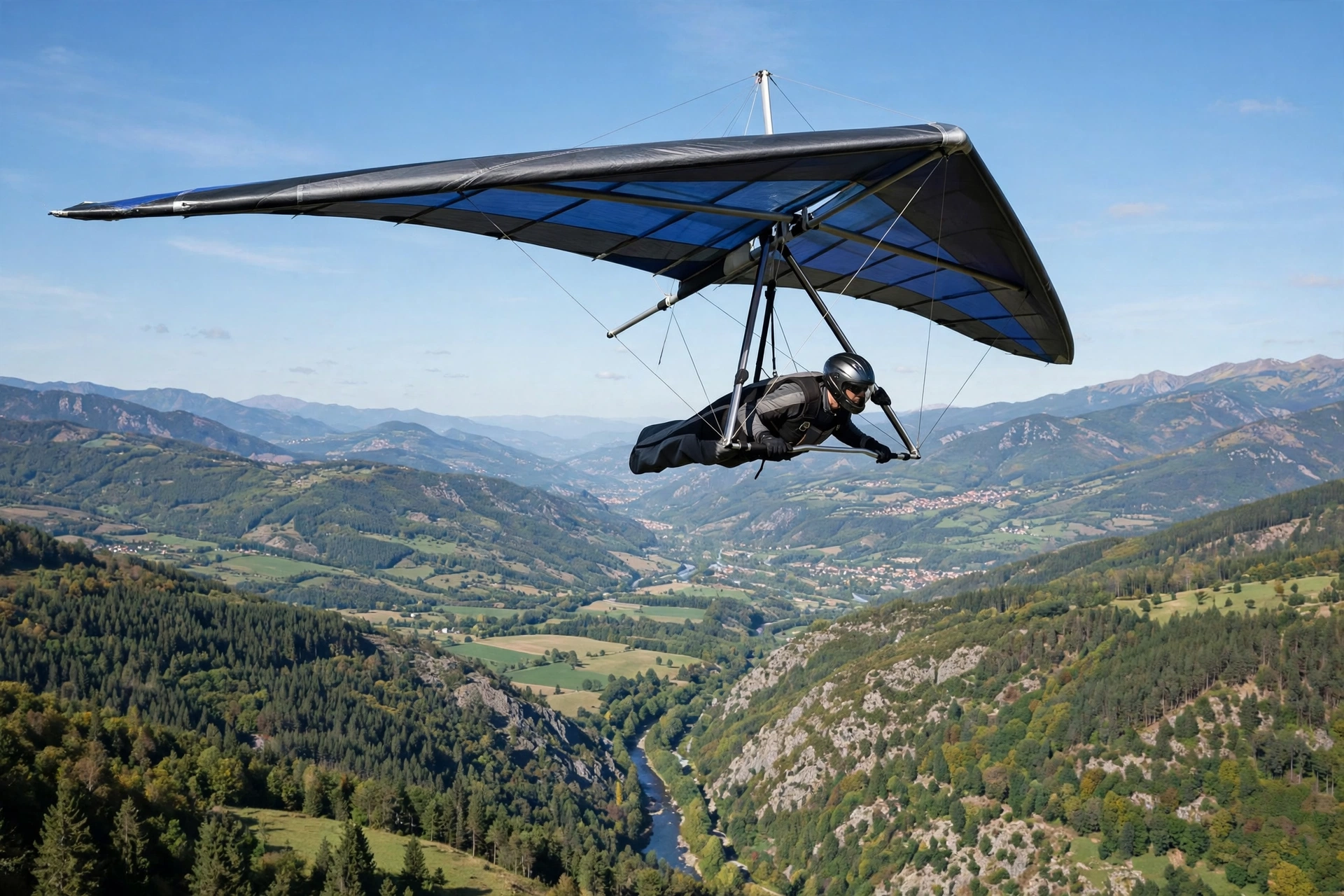
In general terms, a hang gliding helmet should be a light, well-ventilated, full-coverage helmet that fits snugly, protects the back and sides of the head, lets you hear your variometer and radio, and is certified for air sports — with a visor or goggles to shield your eyes in flight. Hang gliding puts you prone, head-first, in the airflow, so your helmet works harder than in almost any other air sport.
Hang gliding is unlike paragliding in one important way: the pilot flies lying prone in a harness, suspended below a rigid wing, with the head forward and exposed. That position shapes everything about the helmet — its coverage, its aerodynamics, and its field of view — and it means a helmet borrowed from another sport is rarely a good substitute.
Why Does Hang Gliding Need a Specialist Helmet?
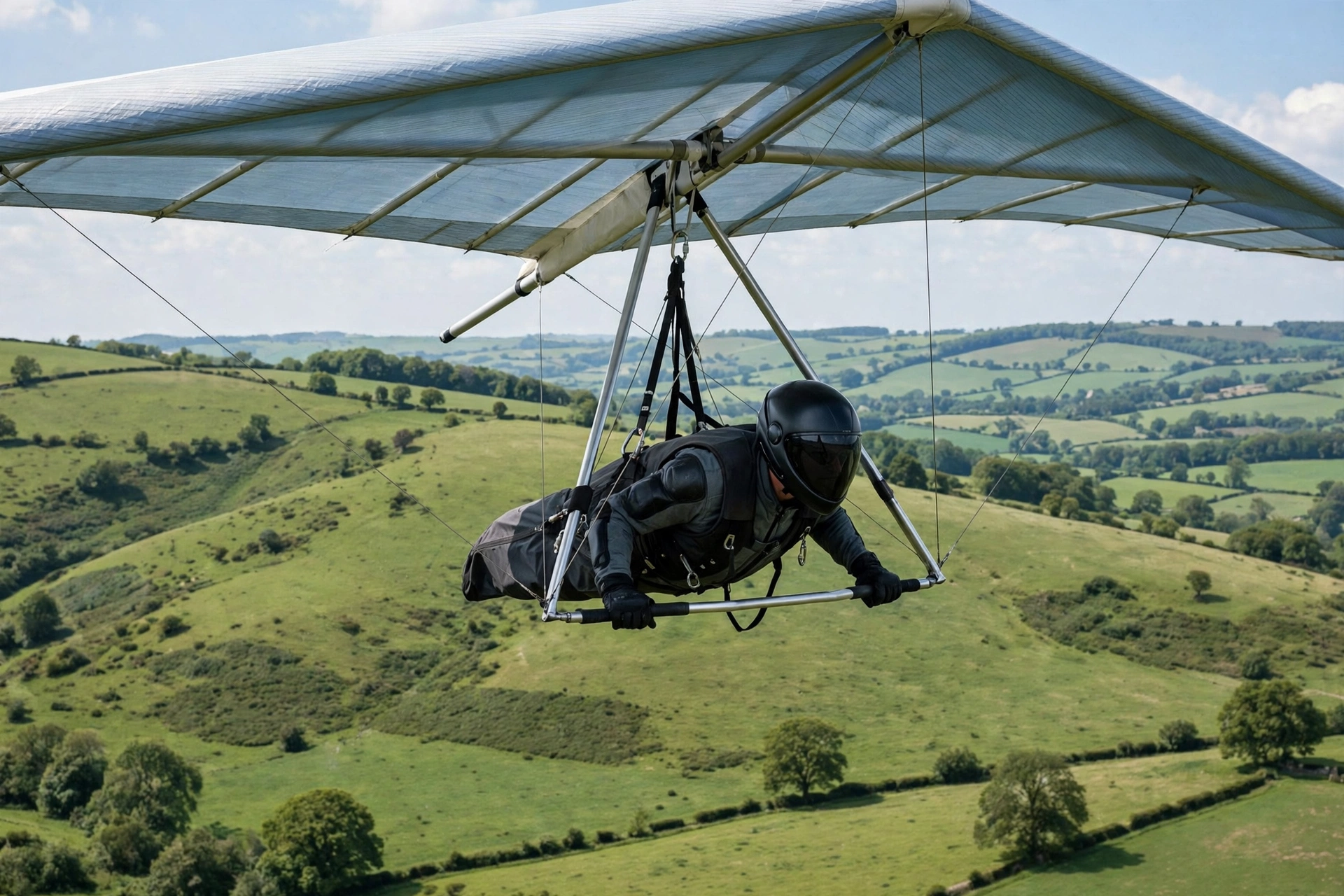
The prone position is the key. A hang glider pilot’s head is the leading edge of the whole aircraft, facing directly into the airflow, with no windscreen or cockpit around it. The helmet must therefore be aerodynamic, so it does not buffet or drag in the wind, and it must protect the face and head from wind, insects, rain, and debris at flying speed.
Coverage matters more than in paragliding, where the pilot sits upright. A hang gliding helmet should cover the back and sides of the head thoroughly, since a hard landing or a ground-handling accident can strike the head from any angle. Many hang gliding helmets are full-face or have extended rear coverage for exactly this reason, protecting areas an open paragliding helmet leaves exposed.
Launching and landing add their own risks. A hang glider launch involves running down a slope with a heavy wing overhead, and a landing involves flaring to a stop on your feet — or, if it goes wrong, on your knees or chest. In both cases the head can strike the ground, the control frame, or the wing itself, and a helmet with good all-round coverage is the protection that matters.
What Should You Look for in a Hang Gliding Helmet?
Start with coverage and fit. The helmet should sit level, cover the forehead and the back of the head, and stay firmly in place when you shake your head hard. The chin strap should be snug, and the cheek pads should touch evenly. Try the helmet on in a prone position if you can — lying face-down on a bench, for example — since a helmet that fits standing up can feel very different when you are horizontal.
Aerodynamics come next. Look for a smooth shell with no protrusions that could catch the wind, and a visor that sits flush when closed. Some hang gliding helmets have a distinctive streamlined shape, longer at the back, which reduces drag in the prone position. That shape looks unusual on the ground but makes a real difference in the air, reducing neck strain over a long flight.
Field of view is equally important. A hang gliding pilot needs to see the wing above, the ground below, and other pilots all around, all while lying prone. A helmet with a wide visor opening and minimal obstruction at the edges gives the best view, and a visor that opens easily with gloves on is a practical bonus for adjusting ventilation or clearing fog in flight.
Full-Face or Open-Face for Hang Gliding?
Full-face helmets are the most common choice for hang gliding, and for good reason. They protect the chin, jaw, and face, which are exposed in the prone position, and they shield the eyes from wind and debris without needing separate goggles. A full-face helmet also keeps the face warmer on a long, cold flight at altitude.
Open-face helmets are lighter and cooler, and some experienced pilots prefer them for the better hearing and ventilation. But they leave the face exposed, which matters in the prone position, where the face meets the airflow first. A pilot who chooses open-face should always wear goggles, and should accept the reduced face protection as a trade-off.
For beginners, full-face is usually the better choice. It offers the most protection while you are learning to launch, fly, and land, and it removes the need to manage goggles separately. As you gain experience, you can decide whether the lighter, cooler open-face style suits your flying — but most hang glider pilots stay with full-face for the protection it offers.
What About Hearing, Radio, and Instruments?
Hearing matters in hang gliding just as in paragliding. Your variometer beeps to tell you when you are climbing in a thermal, and your radio connects you to instructors and fellow pilots. A helmet that blocks those sounds makes you a less aware pilot, so look for a design that keeps the ears reasonably open or has space for earphones.
Full-face helmets make hearing trickier, since the ear cups cover the ears more fully. Some hang gliding helmets address this with thin ear padding, speaker pockets, or cut-outs for radio earpieces. If you fly with a radio, bring your earpiece when you try helmets on and check that it fits and sounds clear inside the helmet you are considering.
The variometer is usually mounted on the control frame or worn on the body, so its sound must reach your ears through the helmet. Test this before you buy if you can: play a beeping sound nearby and check you can hear it with the helmet on. A helmet that muffles your variometer is a helmet that will make thermal flying harder.
How Do You Choose and Care for a Hang Gliding Helmet?
Choose from a hang gliding or air-sport specialist, not a general sports shop. A specialist will know the certification standards for air sports, the fitting quirks of prone flying, and which helmets work with the radios and instruments hang glider pilots actually use. Try several helmets on, in the prone position if possible, and choose by fit and comfort, not by looks.
Check the certification label inside the helmet, and make sure it is certified for air sports rather than for a different activity. A helmet designed for another sport may not offer the coverage or impact protection a hang glider pilot needs, and its shape may not suit the prone position at all.
Care for the helmet as you would any air-sport helmet: store it indoors, out of sunlight, away from fuel and solvents, and in a bag that protects the visor. Clean the visor and lining regularly, check the chin strap and fittings before each flight, and replace a helmet that has taken a hard knock. And remember that fit is what makes any helmet’s protection work — including systems that address angled impacts, as explained in this guide to what MIPS means for helmets.
Frequently Asked Questions
Q: Can I use a paragliding helmet for hang gliding?
A: In general terms, it is not ideal — paragliding helmets are designed for an upright seated position, while hang gliding needs more coverage and aerodynamics for prone flight. Use a helmet made for hang gliding.
Q: Do I need a visor on a hang gliding helmet?
A: A visor or goggles are strongly recommended. Your face meets the airflow directly in the prone position, so eye protection from wind, insects, and rain is essential.
Q: How long does a hang gliding helmet last?
A: In general terms, several seasons with good care, but sun, age, and any hard knock all count. Check the manufacturer’s guidance and replace a helmet that has been heavily impacted.

Olivia
Writer at Helmet Today, covering helmet reviews, fit and riding safety.