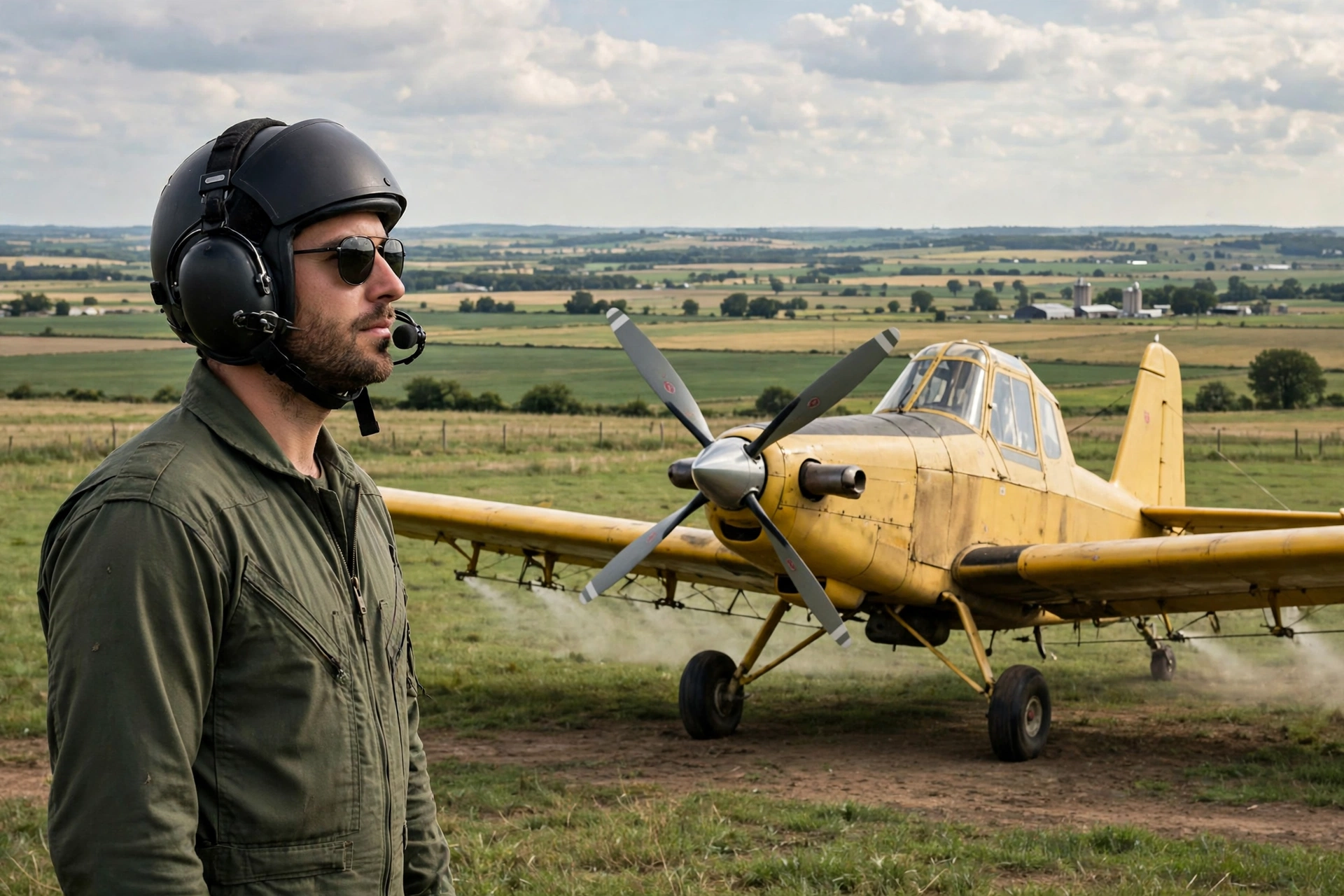
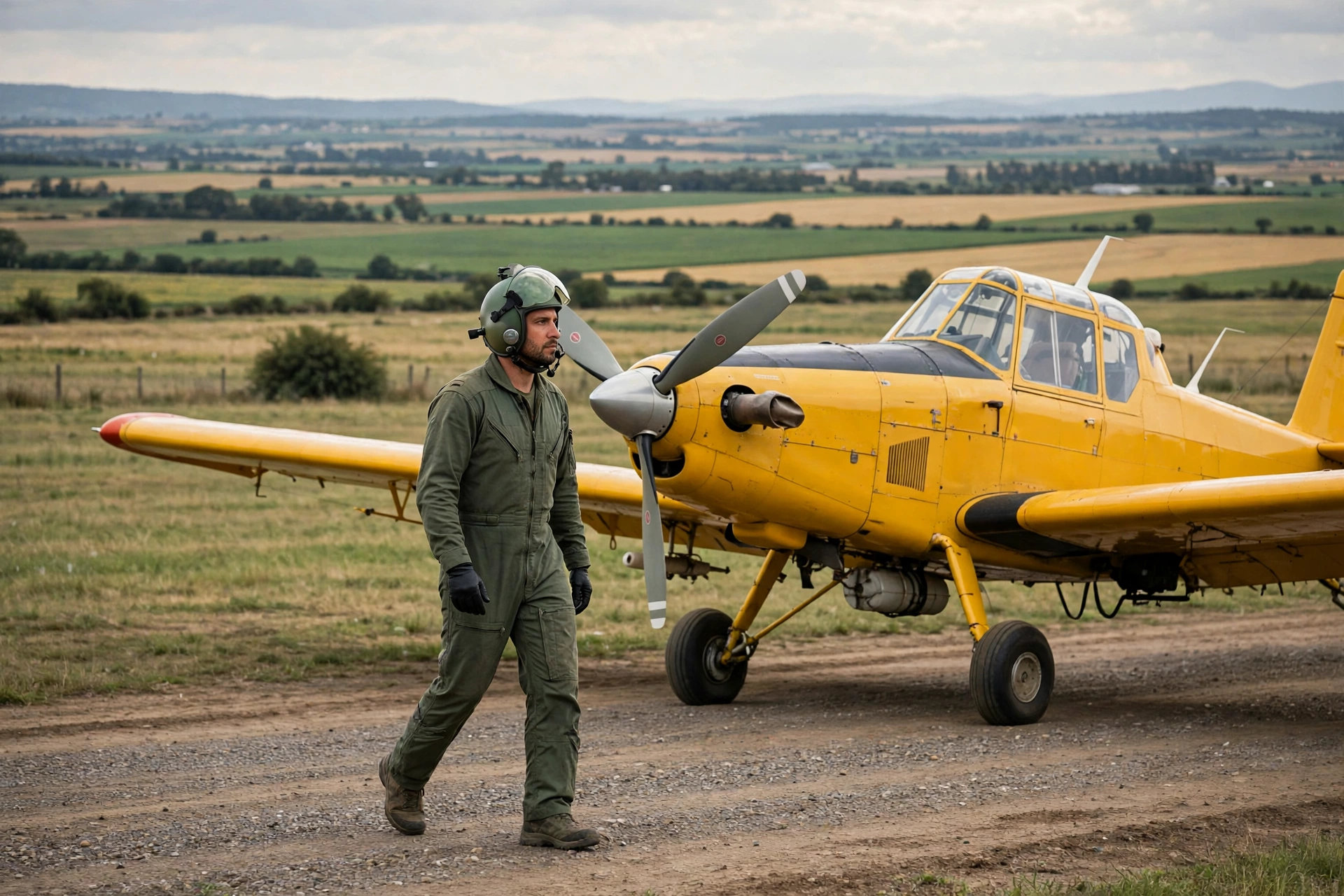
In general terms, aviation helmets are widely used by crop dusters and agricultural pilots because ag flying is low, fast, and exposed to spray, dust, and obstacles — and a helmet with a visor, hearing protection, and communication built in suits that work far better than a headset alone. For many ag operators, the helmet is standard equipment, not an optional extra.
Agricultural flying is unlike most other flying. The aircraft works at low altitude over fields, turns sharply at the end of each run, and flies through its own spray and dust. The pilot works long days in the season, often in heat, and lands on rough strips. Equipment that suits a leisurely cruise at altitude does not necessarily suit that environment, and the helmet is a good example.
Why Do Ag Pilots Wear Helmets?
The main reason is protection in a low-level working environment. Ag aircraft fly close to the ground, trees, power lines, and field obstacles, and they operate from rough strips where a hard landing or a runway excursion is more likely than at a paved airfield. A helmet protects the head in exactly those situations, where a headset offers nothing.
Spray and debris are a second reason. Ag aircraft dispense chemicals, fertiliser, or seed, and the pilot flies through drift, dust, and particles thrown up from the field. A helmet with a visor shields the eyes and face from that material, which matters for both comfort and vision. Clear vision is essential when flying low and turning sharply at the end of a run.
Noise and communication are a third reason. Ag aircraft are loud, and pilots fly long hours, so hearing protection matters for long-term hearing health. A helmet combines that protection with a built-in microphone and ear cups, so the pilot can communicate with ground crew and other aircraft while staying protected. One unit covering all three needs is practical in a busy cockpit.
What Makes an Ag Helmet Different?
An ag helmet is, in essence, a flight helmet adapted to agricultural work. The shell and liner provide impact protection, the visor protects the face and eyes, and the communication system connects to the aircraft radios. What differs is the emphasis: visor sealing against spray, ventilation for hot working days, and durability for rough-field use all matter more in ag flying than in some other roles.
Visor choice is particularly important. A clear visor suits early mornings and late evenings, while a tinted visor helps in bright midday sun. Some ag pilots carry both and swap as light changes. The visor must seal well enough to keep spray and dust out of the eyes, and it must be easy to clean between runs, since a smeared visor impairs vision at low altitude.
Durability also matters. Ag helmets get knocked around in dusty cockpits, bounced on rough strips, and exposed to chemicals and sun. A helmet that is easy to clean, with a lining that can be refreshed and a visor that can be replaced, will last better in that environment than a delicate model. Check spare parts availability before buying, since visors and liners are consumables in ag work.
How Do Ag Pilots Cope With Heat and Long Days?
Heat is a real challenge. Ag seasons bring long days in warm weather, and a helmet adds warmth on top of an already hot cockpit. Ventilation is therefore a key feature to check when choosing an ag helmet, and pilots often look for helmets that vent well without letting spray and dust straight into the eyes.
Habits help as much as equipment. Taking the helmet off between loads, wiping the visor and lining, and drinking water regularly all make long days more manageable. A helmet that is comfortable for an hour but miserable after six is a poor choice for ag work, so pilots should judge comfort over a full working day, not a short trial.
Weight matters over long days too. A lighter helmet strains the neck less during the constant head movement of ag flying — looking for obstacles, checking the field, and turning at the end of each run. When two helmets offer similar protection, the lighter one is usually the better ag choice, provided fit and communication are equally good.
What Should an Ag Pilot Check Before Buying?
Fit comes first, as always. The helmet should sit level, stay put, and feel snug without pressure points, and the ear cups should seal for noise protection. Try the helmet in a cockpit if possible, and check vision in all directions, since ag flying demands constant scanning for obstacles and field boundaries.
Communication compatibility is next. The helmet must match the aircraft’s intercom and radio system, and the microphone must work clearly over engine noise. Test it with the ground crew as well as in the air, since ag operations depend on clear ground communication for loading, timing, and safety.
Finally, check maintenance and support. Can you get replacement visors, liners, and ear seals easily? Does the manufacturer support the model for ag use? A helmet that cannot be maintained in the field will spend time out of service during the busiest part of the season, which is exactly when it is needed most.
Are Helmets Required for Ag Flying?
In general terms, requirements vary with the operator, the country, and the type of operation. Many ag operators require helmets as company policy, and some clients or contracts expect them, even where no general rule mandates them. A pilot joining an ag operation should check its operations manual and ask the chief pilot before assuming either way.
Even where helmets are not formally required, most experienced ag pilots wear them. The combination of low altitude, obstacles, spray, and rough strips makes the case for head protection unusually clear, and pilots who have flown ag work for years tend to treat the helmet as part of the job, like the flight suit and boots.
For a pilot new to ag flying, the sensible approach is to wear a helmet from the start and learn to work with it, rather than treating it as something to adopt later. Comfort with the helmet, the visor, and the communication system becomes second nature quickly, and that familiarity pays off on busy days. The same principle applies to every helmet: protection only works when the helmet fits and is worn on every flight, including systems for angled impacts, as explained in this guide to what MIPS means for helmets.
Frequently Asked Questions
Q: Do all crop duster pilots wear helmets?
A: In general terms, most do, and many operators require them as company policy. Requirements vary by operator and country, so check the operation’s manual, but helmet use is the norm in ag flying.
Q: Why not just wear a headset for ag flying?
A: A headset protects hearing and carries communication, but it offers no impact protection and no face protection against spray and debris. Ag flying’s low altitude and rough-field work make those extra protections valuable.
Q: How do ag pilots keep visors clear during spraying?
A: By choosing a visor that seals well, wiping it between runs, and carrying a spare or a cleaning cloth in the cockpit. A smeared visor impairs low-altitude vision, so keeping it clear is part of the pre-flight and between-run routine.

Olivia
Writer at Helmet Today, covering helmet reviews, fit and riding safety.