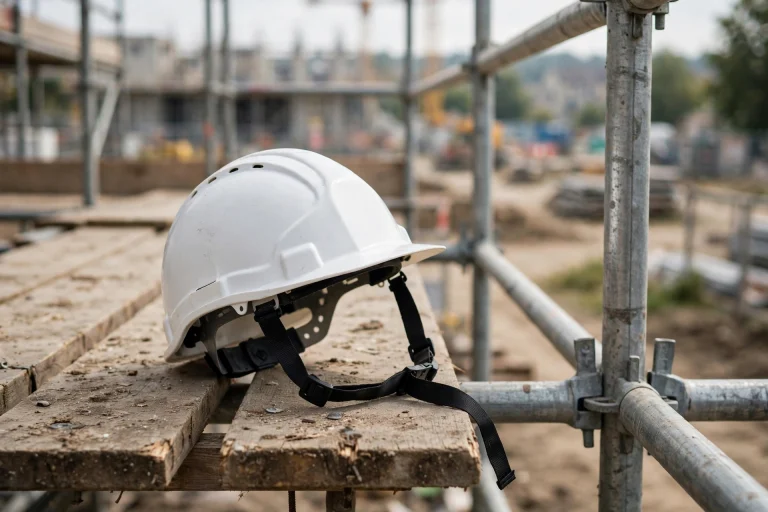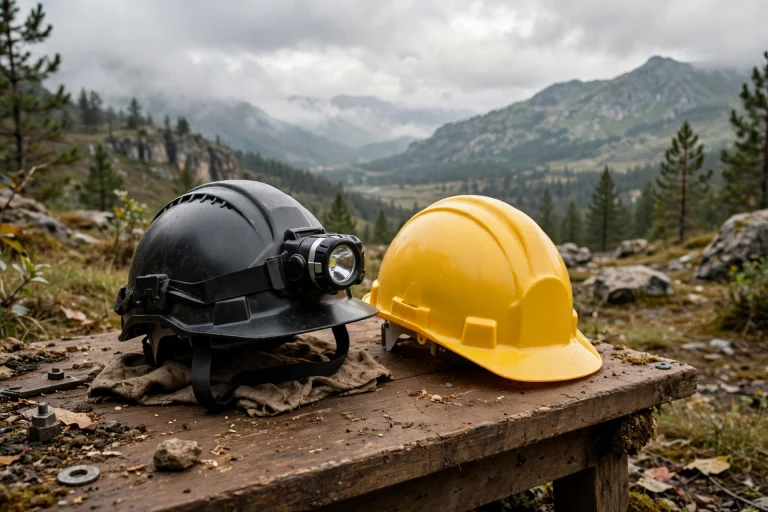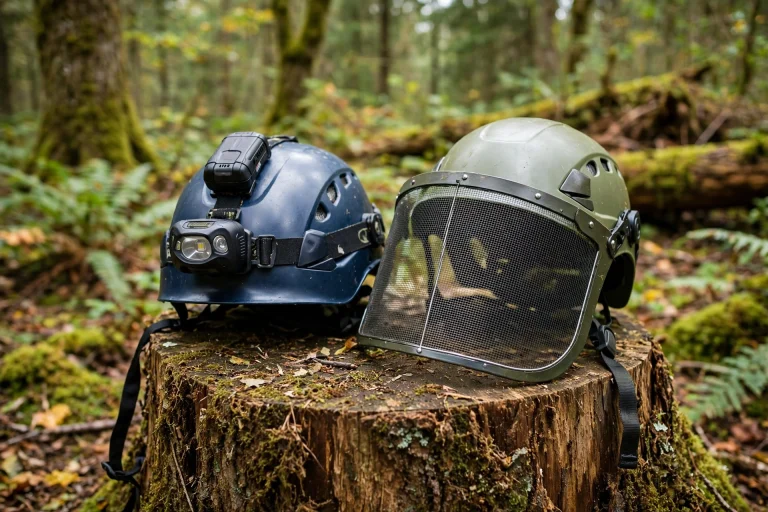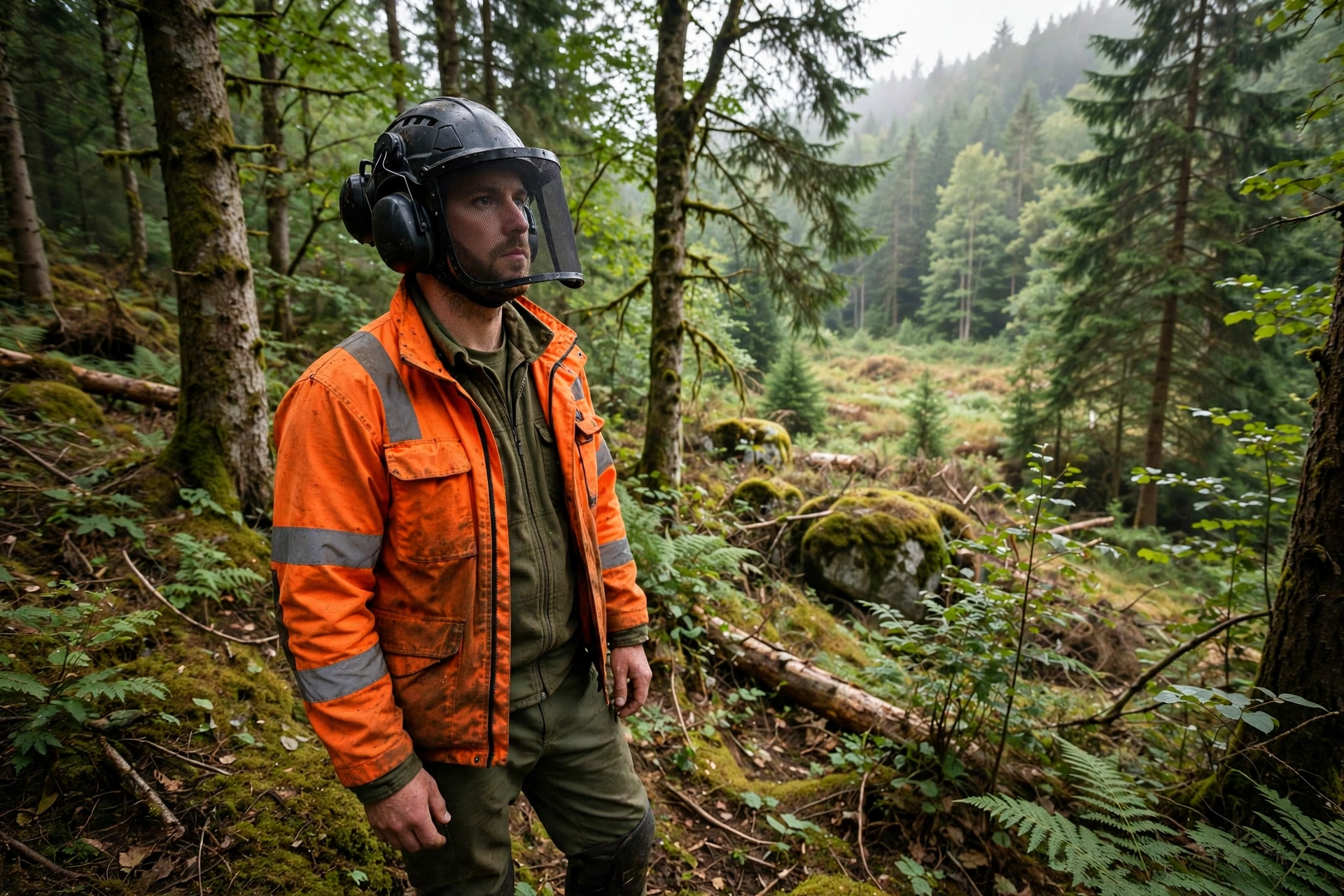
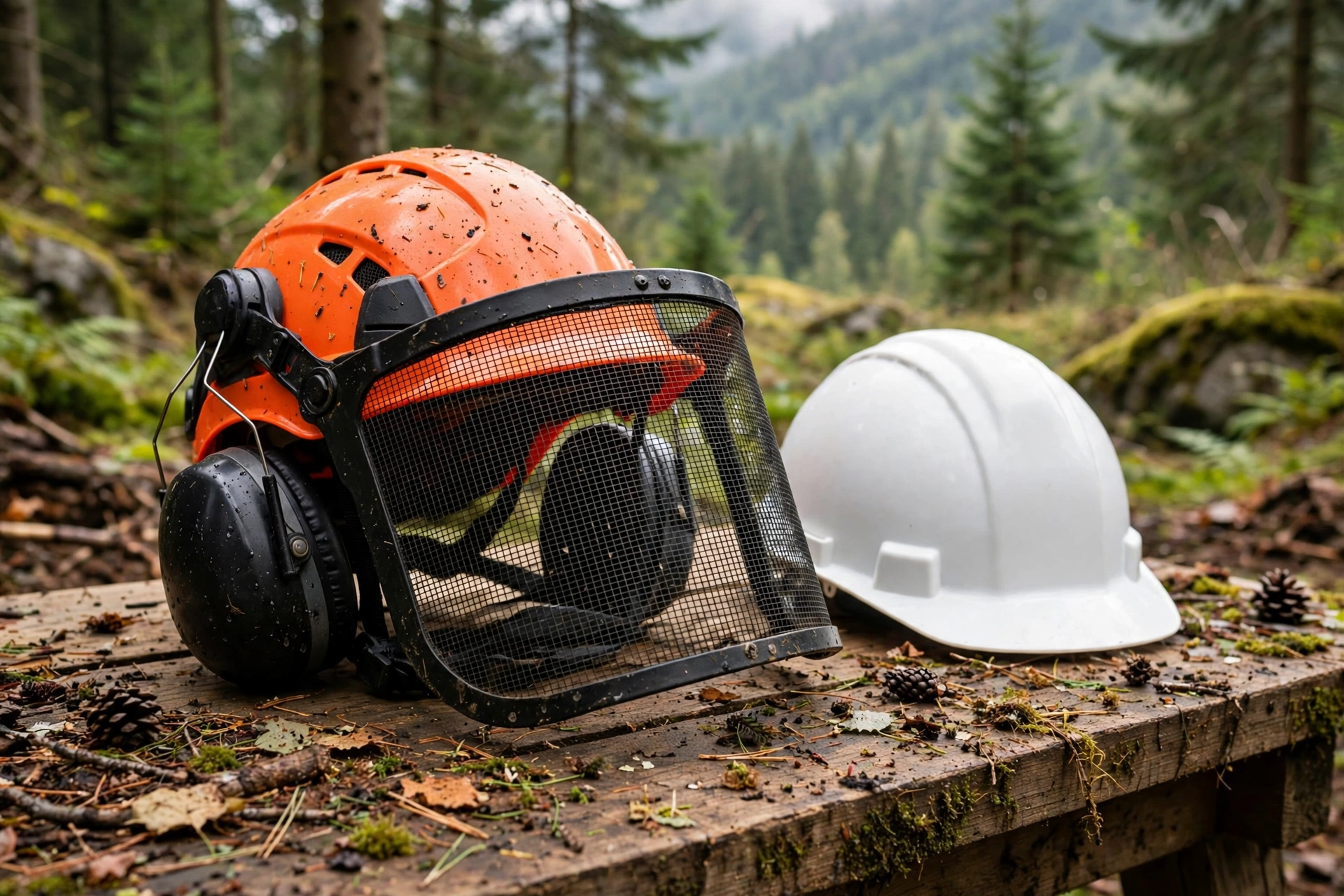
The main difference is the job they are built for: a forestry helmet is designed for chainsaw and tree work, with face and hearing protection and a secure chin strap, while a construction hard hat is designed for falling-object protection on building sites, usually without face or hearing protection fitted as standard. In general terms, they look similar from a distance, but their fittings, standards, and intended hazards are quite different.
People often ask whether one can substitute for the other, especially when a helmet is needed for a one-off job. The answer depends on the hazards involved, and getting it wrong can leave important risks uncovered. This guide compares the two properly.
How Do Forestry Helmets and Hard Hats Differ in Design?
A forestry helmet is a system, not just a shell. It typically combines a helmet shell with a mesh or clear visor that protects the face from flying wood chips, ear defenders that protect hearing from chainsaws, and often a chin strap that keeps the whole unit in place when looking up or bending. The visor and ear defenders are usually mounted to the helmet and can be flipped up or swung away when not needed.
A construction hard hat is usually just the shell and suspension, designed to protect the top of the head from falling objects such as tools, materials, and debris. It may have slots for accessories, and ear defenders or visors can sometimes be added, but they are not part of the standard package. The hard hat’s brim — full brim or front peak — is designed to deflect falling objects and shed water, and its suspension is built for all-day wear on site.
What Hazards Is Each One Built For?
Forestry work combines several hazards at once: falling branches, flying chips from cutting, chainsaw noise, and the risk of a tree or limb striking the head. A forestry helmet addresses all of these together, which is why the visor and ear defenders are integral rather than optional. The chin strap matters because forestry workers look up constantly — at the canopy, at falling limbs — and a helmet without a chin strap can fall off at exactly the wrong moment.
Construction work centres on falling objects, and hard hats are designed and tested primarily for that hazard, including top impact and, in some models, side impact. Construction sites also involve other hazards — dust, noise, eye hazards — but these are usually addressed with separate protective equipment chosen for the task, rather than built into the helmet. A hard hat is one part of a site’s protective equipment system, not the whole system.
Do They Meet the Same Standards?
Not exactly. Hard hats are tested against standards written for industrial head protection, which focus on impact and penetration from falling objects and, in some cases, electrical insulation. Forestry helmets are tested against standards that cover the helmet as a system or that address the specific hazards of forestry work, and the visor and ear defenders have their own standards for eye and hearing protection.
The label inside each helmet states which standard it meets, and that label is the reliable guide. A helmet that meets an industrial hard hat standard has not necessarily been tested as a forestry system, and a forestry helmet has not necessarily been tested for every construction hazard. In general terms, the standard tells you what the helmet was designed and tested to do — so match the standard to the work, not just the shape of the shell.
Can You Use a Hard Hat for Forestry Work?
A plain hard hat without a visor and ear defenders leaves two major forestry hazards uncovered: flying chips to the face and chainsaw noise to the ears. If a hard hat is fitted with compatible forestry visor and ear defender attachments, and the combination is approved for that use, it may serve — but the key word is compatible. Attachments must be designed for that helmet model, and the combination should be checked against the relevant standards.
Simply clipping any visor onto any hard hat is not enough, since a poorly fitting visor can leave gaps, and ear defenders that do not seal properly do not protect hearing. Also remember that ear defenders and visors need regular inspection themselves: a cracked visor or a perished ear cushion protects far less than it appears to. For regular forestry work, a purpose-built forestry helmet system is the simpler and safer choice, because its parts are designed to work together and have been tested together. For a one-off task, check with your safety officer rather than improvising.
Can You Use a Forestry Helmet on a Construction Site?
A forestry helmet may be acceptable on a construction site if it meets the site’s head protection requirements, but there are practical issues. The mesh visor can reduce visibility and may not suit dusty or fine-particulate work, and the ear defenders may be unnecessary or may muffle site communication and warning sounds. Site rules often specify a particular type of hard hat, and a forestry helmet may not match that specification.
There is also the question of the standard: a forestry helmet tested for forestry hazards may not carry the same industrial head protection rating a site requires. Before using a forestry helmet on site, check the site’s rules and the helmet’s labelling. In general terms, the right helmet for a job is the one specified for that job’s hazards, not simply the nearest helmet available. If you are learning about helmet technology, reading about what MIPS is for helmets can help you understand one of the features you may see listed on modern helmets.
Frequently Asked Questions
Q: Is a forestry helmet just a hard hat with extras?
A: In general terms, it starts from a similar shell but is a complete system: the visor, ear defenders, and chin strap are integral parts designed and tested to work together for forestry hazards.
Q: Do I need a chin strap on a construction hard hat?
A: Not always, but chin straps are increasingly used on sites where work at height, wind, or bending makes a helmet likely to fall off. Many modern hard hats offer a chin strap as an option.
Q: Which is better for general yard work at home?
A: It depends on the task. For chainsaw work, a forestry helmet system is the right choice. For general DIY with falling-object risk but no chainsaw, a hard hat with separate eye and hearing protection may suit better.

Olivia
Writer at Helmet Today, covering helmet reviews, fit and riding safety.