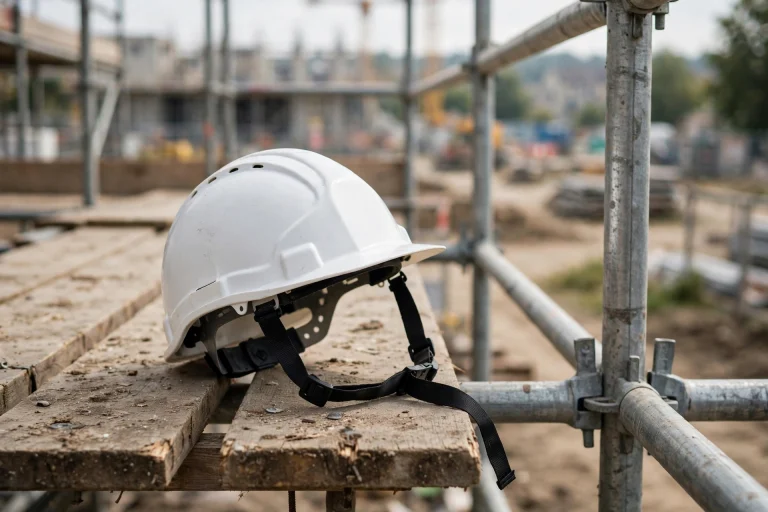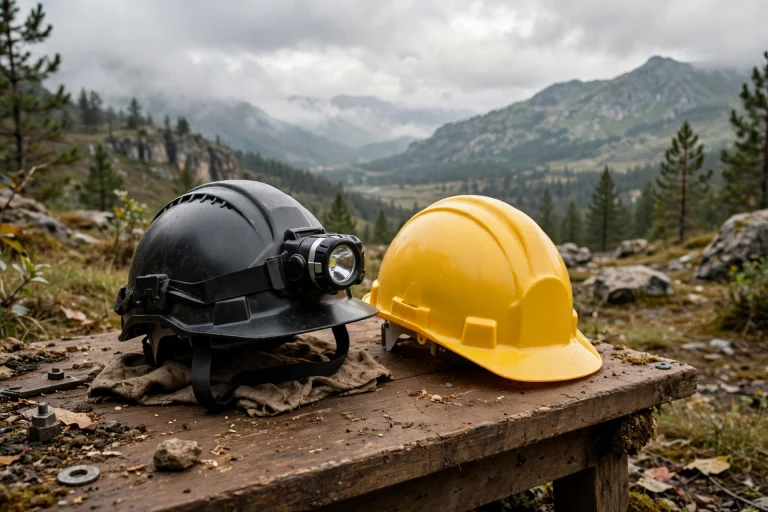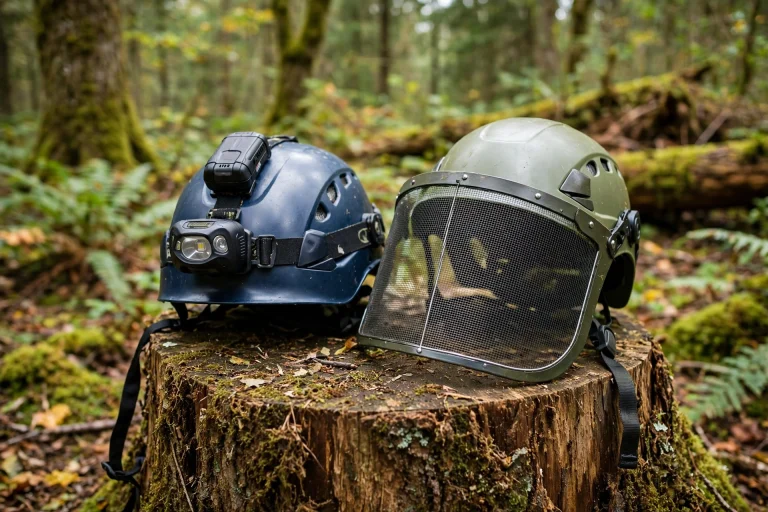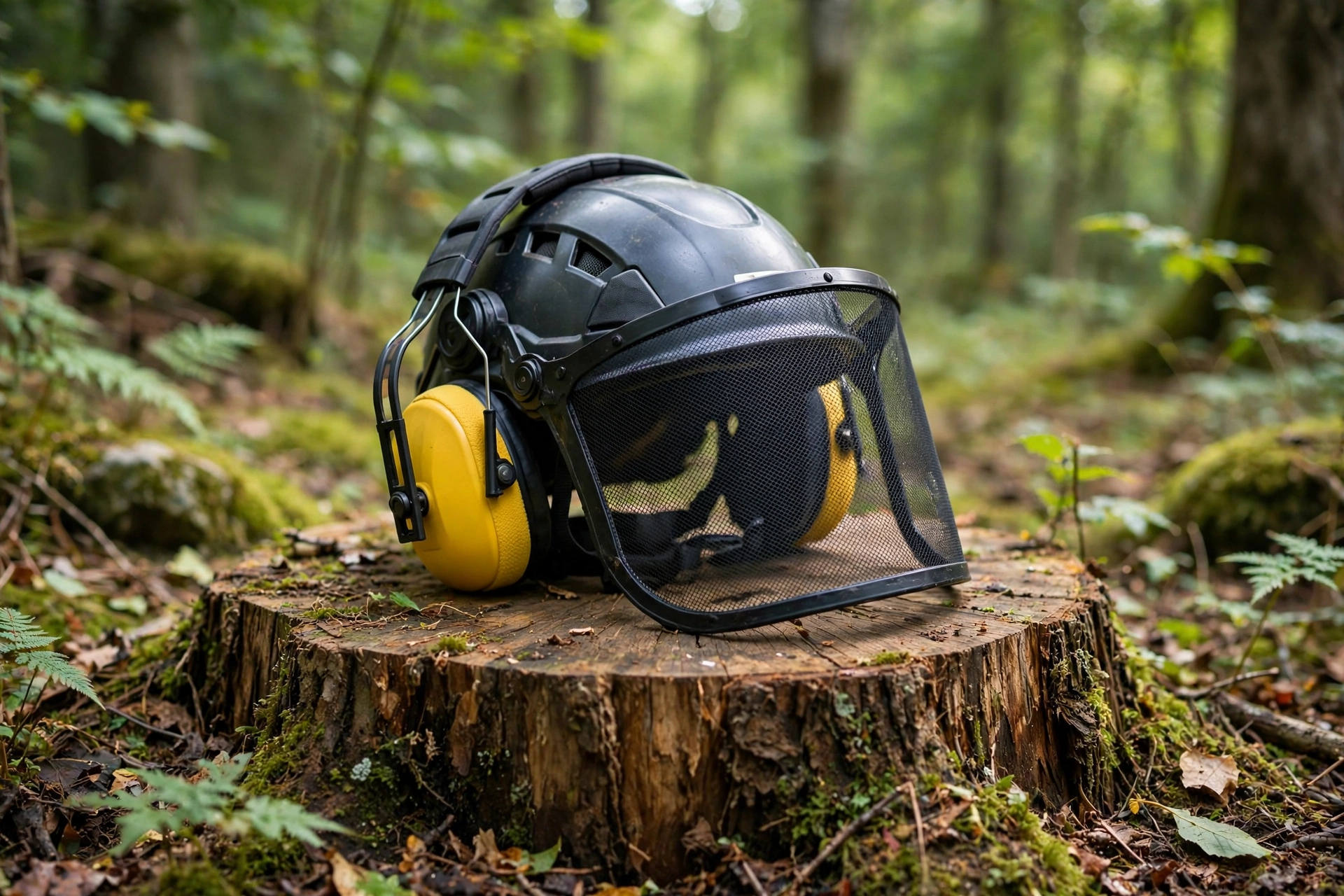
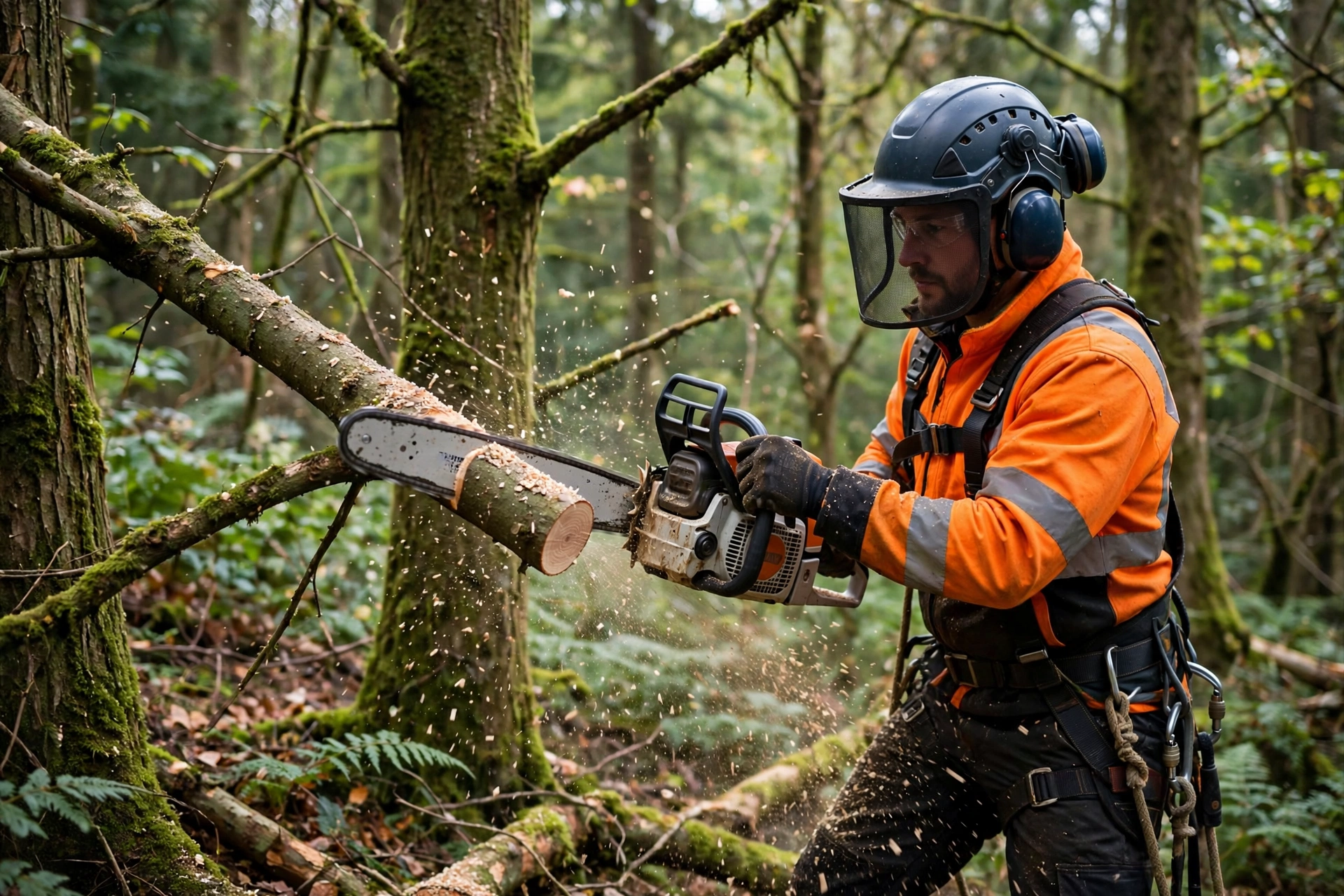
An arborist helmet with a visor and ear muffs is a single head-protection system that combines three jobs: impact protection from above, face and eye protection from flying debris, and hearing protection from chainsaws and chippers. In general terms, it is built for tree work, where a climber or ground worker faces falling branches, sawdust, and loud equipment at the same time. Instead of wearing three separate pieces of kit that can slip or clash, the helmet carries the visor and ear muffs on mounts built into the shell, so everything stays in place while you move through a canopy or around a work site.
The key idea is integration. The visor usually flips up and down on side pivots, and the ear muffs slide or pivot on the same mounting points. That means you can raise the visor for a clear view when you are walking between trees, then drop it before cutting, without taking the helmet off or juggling separate safety glasses and ear defenders. For ground crew working near a chipper, the same setup keeps ears covered while the mesh or clear visor blocks chips and dust.
What Does Each Part of an Arborist Helmet Protect?
The shell itself guards against impacts from falling twigs, branches, and tools dropped from above. In general terms, arborist helmets are designed with a lower profile and a chin strap that keeps the helmet on your head even when you look up, bend, or work at an angle. This matters in tree work because a helmet that falls off when you tilt your head back is no use at all. Many shells also include ventilation slots, which help on hot days, although some workers close them in winter or in wet conditions.
The visor protects the face and eyes. Mesh visors are common in tree work because they do not fog up and they let air through, which is a real benefit during hard physical work. Clear visors give a sharper view and block fine dust better, but they can fog in humid weather. The visor is there to stop chips, sawdust, and small branches from reaching your eyes and face while you cut, chip, or clear brush.
The ear muffs protect hearing around chainsaws, chippers, and blowers. Because they are mounted to the helmet, they sit in the same position every time you lower them, which gives a more consistent seal than loose ear defenders that can shift as you move. A good seal matters, because hearing protection only works when the cups sit flat against the sides of your head, without gaps caused by hair, hats, or straps.
How Do You Choose the Right Visor Type?
Start with the work you do most. If you spend most of your time cutting and chipping, a mesh visor is often the practical choice, since it resists fogging and stands up to flying chips. If you work in dusty conditions, such as dry brush clearing or stump grinding, a clear visor may suit you better because it blocks fine particles that can pass through mesh. Some helmets accept both types, so you can swap the visor to match the job.
Check how the visor moves. It should flip up smoothly with one hand and stay put in the raised position, so it does not drop down unexpectedly while you are climbing or walking. It should also sit far enough from your face that it does not press on your nose or interfere with safety glasses worn underneath, which many workers still use for extra eye protection. In general terms, a visor that is awkward to move will end up left up, which defeats its purpose.
Look at the visor’s coverage too. A wider visor protects more of the face, while a narrow one may leave gaps where chips can sneak in. If you wear prescription glasses, try the helmet on with them before you commit, since some visor shapes sit awkwardly over spectacle frames.
How Should the Ear Muffs Fit and Work?
Ear muffs on an arborist helmet should lower easily and seal flat against your head. Test them with the helmet on and the chin strap fastened, since the strap and the suspension can change how the cups sit. If the cups press hard on your ears or leave a gap at the bottom, adjust the mounting arms, which usually allow some height and angle adjustment. A poor seal lets noise in and can make the muffs uncomfortable over a long shift.
Keep the ear cushions in good shape. Cracked or flattened cushions break the seal and let noise leak in. In general terms, cushions are a wear item and should be replaced when they harden, crack, or no longer sit flat.
What Should You Check Before Each Use?
Before you start work, run a short check over the whole system. Look at the shell for cracks, dents, or deep scratches, and check that the suspension and chin strap are intact and adjusted. Flip the visor up and down to make sure it moves freely and locks in position, and check the visor itself for cracks, heavy scratches, or mesh damage that could block your view or let debris through.
Check the ear muffs next. Lower them and feel for a snug, even seal, and look at the cushions for wear. If the helmet has taken a hard knock, it is wise to take it out of service and inspect it properly, since damage is not always visible from the outside.
Finally, make sure the whole system fits together comfortably. A helmet that pinches, slides, or feels top-heavy will distract you and may get adjusted or removed at the wrong moment. If you are comparing helmets, learning about different liner systems can also help; for example, reading about what MIPS for helmets means explains one way modern helmets manage rotational forces in a fall or impact.
How Do You Care for the Helmet, Visor, and Muffs?
Clean the shell with mild soap and water and let it air dry, and wipe the visor clean after dusty or sappy work so your view stays clear. Mesh visors can be brushed clean, while clear visors should be wiped gently to avoid scratching. Store the helmet somewhere cool and dry, out of direct sunlight, since heat and UV can age the shell and the ear cushions over time.
Avoid hanging the helmet by its chin strap for long periods or tossing it in the back of a truck with sharp tools, since both can damage the shell or bend the visor mounts. If you carry the helmet in a bag, keep the visor in the lowered or protected position so it does not get scratched by other kit. Small habits like these extend the life of the whole system and keep each part working as intended.
Frequently Asked Questions
Q: Can you wear safety glasses under an arborist helmet visor?
A: In general terms, yes. Many workers wear safety glasses under a mesh visor for extra eye protection, but check that the glasses sit comfortably and do not push the visor out of position.
Q: Do the ear muffs work when the visor is raised?
A: Yes. The visor and ear muffs move independently on most helmet systems, so you can raise the visor for a clear view while keeping the muffs lowered for hearing protection.
Q: How often should you replace an arborist helmet?
A: Follow the maker’s guidance and replace the helmet after a serious impact or when the shell, suspension, or mounts show wear. In general terms, regular inspection matters more than any fixed calendar date.

Olivia
Writer at Helmet Today, covering helmet reviews, fit and riding safety.