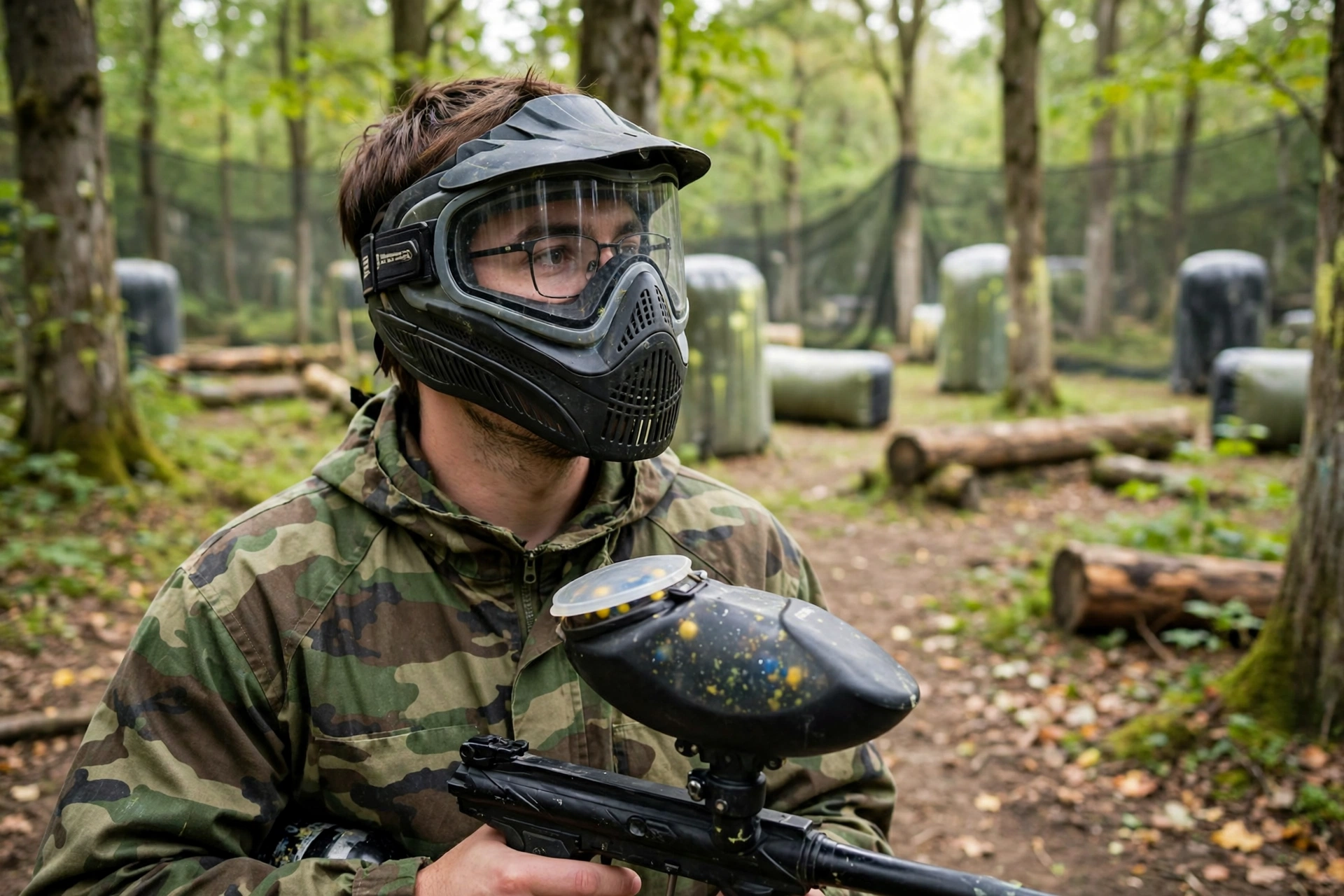
A paintball mask for players who wear glasses needs a frame with enough room for the glasses inside, foam that seals around the temples, and a lens that will not press the glasses into your face. In general terms, the best options are masks designed with a glasses-friendly interior, or masks paired with an insert that holds prescription lenses behind the mask lens. What does not work well is squeezing ordinary glasses into a tight mask and hoping for the best.
Glasses wearers face two problems in paintball: fit and fogging. Glasses add a second lens that can fog independently of the mask lens, and their arms create gaps in the foam seal that let breath reach both lenses. This guide covers the options that actually work, and how to test a setup before game day.
Can You Wear Normal Glasses Inside a Paintball Mask?
Sometimes, but it depends on the mask and the glasses. A mask with a roomy interior, soft foam, and a wide frame can accept slim glasses frames without pressing them into your temples or nose. A tight mask with firm foam will squeeze the glasses, cause pressure headaches, and leave gaps where the arms pass through the foam.
Even when glasses fit, they can shift during play. Running, diving, and turning your head can slide glasses down your nose inside the mask, and you cannot reach in to push them back up during a game. Glasses with a snug fit and a sports strap or retainer cord stay in place far better than loose everyday frames. If your glasses slide on dry land, they will slide worse inside a mask, so test them during movement rather than standing still.
There is also a safety consideration. Ordinary glasses are not rated as eye protection, and they can break under impact. They sit behind the mask lens, which does the real protective work, but a broken glasses frame inside a mask is still a hazard. That is one reason many players move to a more purpose-built solution, and why a mask with a properly rated lens should never be swapped for glasses alone.
What Is a Prescription Lens Insert?
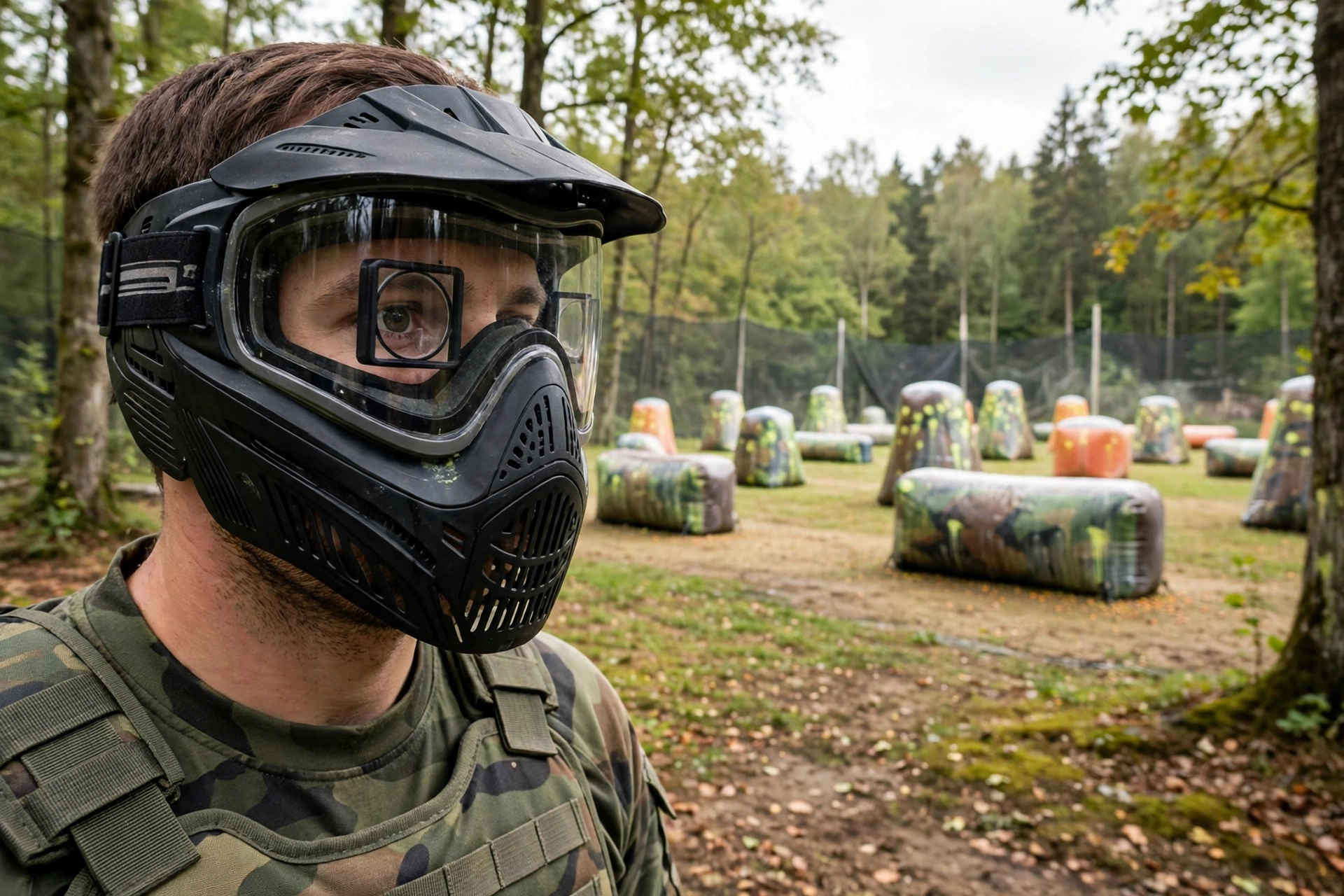
A prescription lens insert is a small frame that clips inside the mask and holds lenses made to your prescription, sitting just behind the mask lens. In general terms, it is the most popular solution among regular glasses-wearing players, because it removes the problems of arms, pressure points, and sliding frames in one move.
Inserts are mask-specific or use a universal clip design, so check compatibility with your mask before buying. You take the insert to an optician or order it with your prescription, and the lenses are made to fit the insert frame. The result is vision correction that moves with the mask, stays in place during play, and leaves the foam seal intact, since there are no arms breaking the seal.
The downside is cost and lead time: an insert plus prescription lenses costs more than wearing glasses you already own, and you need to plan ahead rather than buying the night before a game. For players who play regularly, though, the comfort and clarity usually justify it.
How Do You Stop Glasses Fogging Inside a Mask?
Fogging is the hardest problem for glasses wearers, because now two lenses can fog instead of one. The same principles apply: a thermal mask lens, clear vents, and good foam seal all reduce the moisture reaching both lenses. Anti-fog treatment can be applied to the glasses as well as the mask lens, but check that the product is safe for your glasses coatings first.
Fit helps more than products. If the foam seals well, your breath is directed down and out instead of washing over your glasses. Some players find that a mask with a fan unit solves glasses fogging when nothing else does, because the fan moves air across both lenses continuously. It adds weight and batteries, but for a player who otherwise cannot see, it is a game-changer worth trying.
Contact lenses are another option worth mentioning. Many glasses wearers switch to contacts for paintball days specifically to avoid the fogging and fit problems. That is a personal choice involving eye care, not a paintball decision, but it is the simplest fix for players who already wear contacts comfortably. Talk to your optician first if you have never worn contacts, since fit and comfort vary from person to person.
What Should You Check When Trying a Mask With Glasses?
Try the mask and glasses together, and wear them for more than a quick shop mirror check. Walk around, bend down, turn your head sharply, and see whether the glasses press, slide, or lift the foam away from your face. Check the sides especially: the arms are where gaps form, and gaps are where breath escapes upward onto the lens.
Check your field of view as well. Some mask and glasses combinations narrow your peripheral vision, which matters in a game where threats come from the sides. If the combination feels like looking through a tunnel, try a different mask shape or an insert instead. If you also wear a helmet for other sports, reading about what MIPS is for helmets can help you understand protective features on helmets, which is a separate question from mask fit but part of choosing protective gear wisely.
Finally, bring a spare. A second pair of glasses, a spare insert, or a microfibre cloth in your pocket can rescue a game day if your first setup fogs or breaks. Glasses wearers who plan for problems enjoy paintball far more than those who discover them on the field.
Frequently Asked Questions
Q: Can I wear contact lenses under a paintball mask instead?
A: Yes, many players do, and contacts avoid the fit and fogging problems of glasses entirely. Make sure your mask lens still provides full eye protection, since contacts themselves offer none.
Q: Will any paintball mask fit over glasses?
A: No. Masks vary in interior room and foam softness, and tight masks press glasses into your face. Look for masks described as glasses-friendly, or use a prescription insert, and always test the combination before a game.
Q: Do prescription inserts work with thermal lenses?
A: In general terms, yes. The insert sits behind the mask lens and works with any lens type, including thermal lenses, which still help by keeping the mask lens itself clearer.

Olivia
Writer at Helmet Today, covering helmet reviews, fit and riding safety.