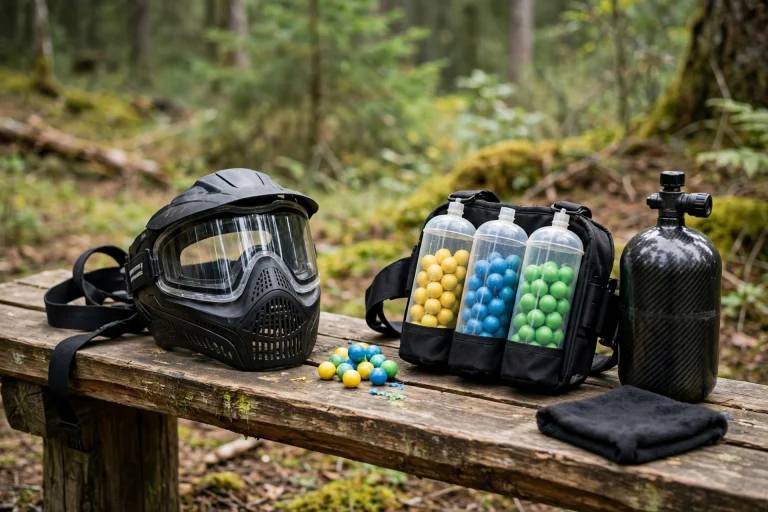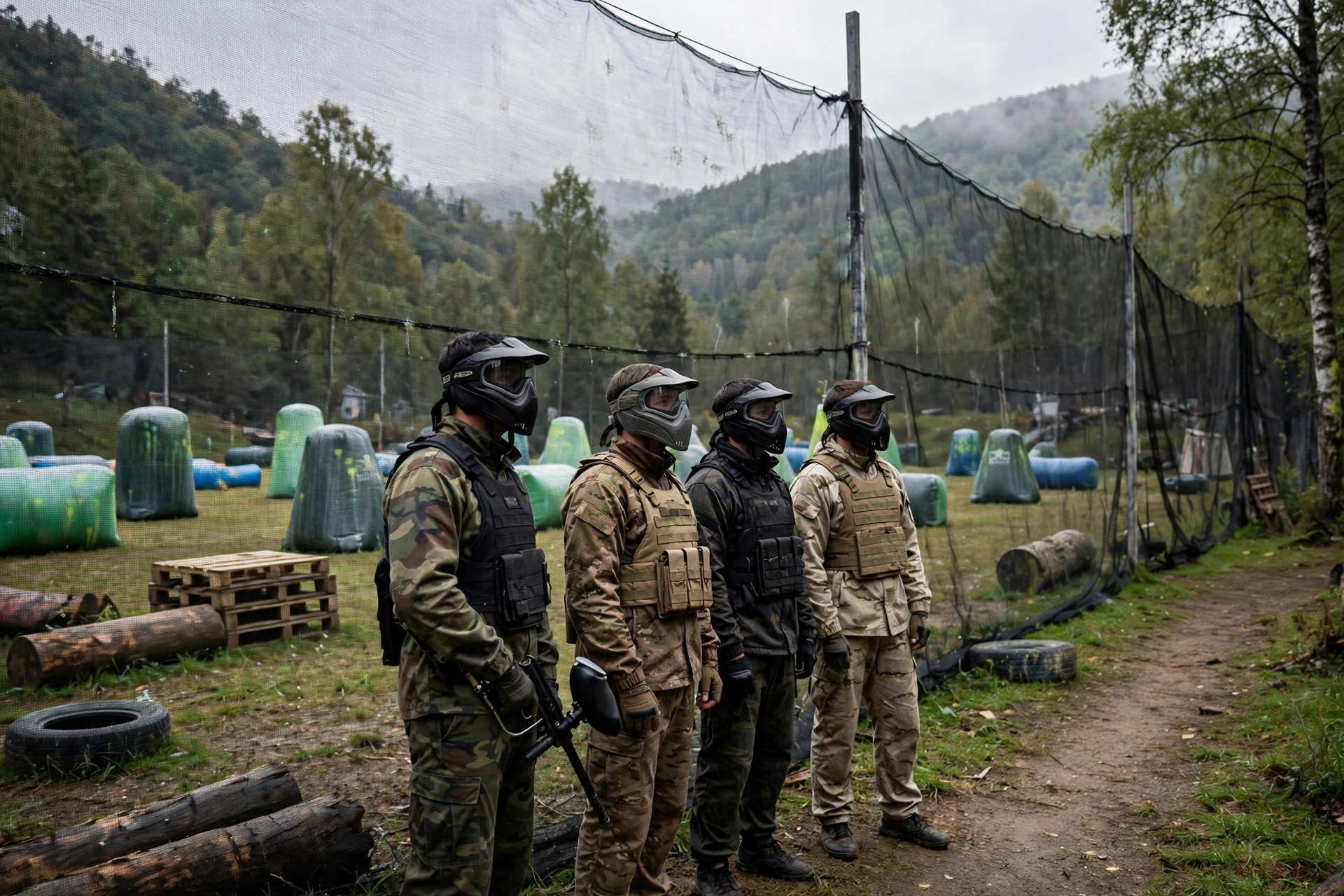
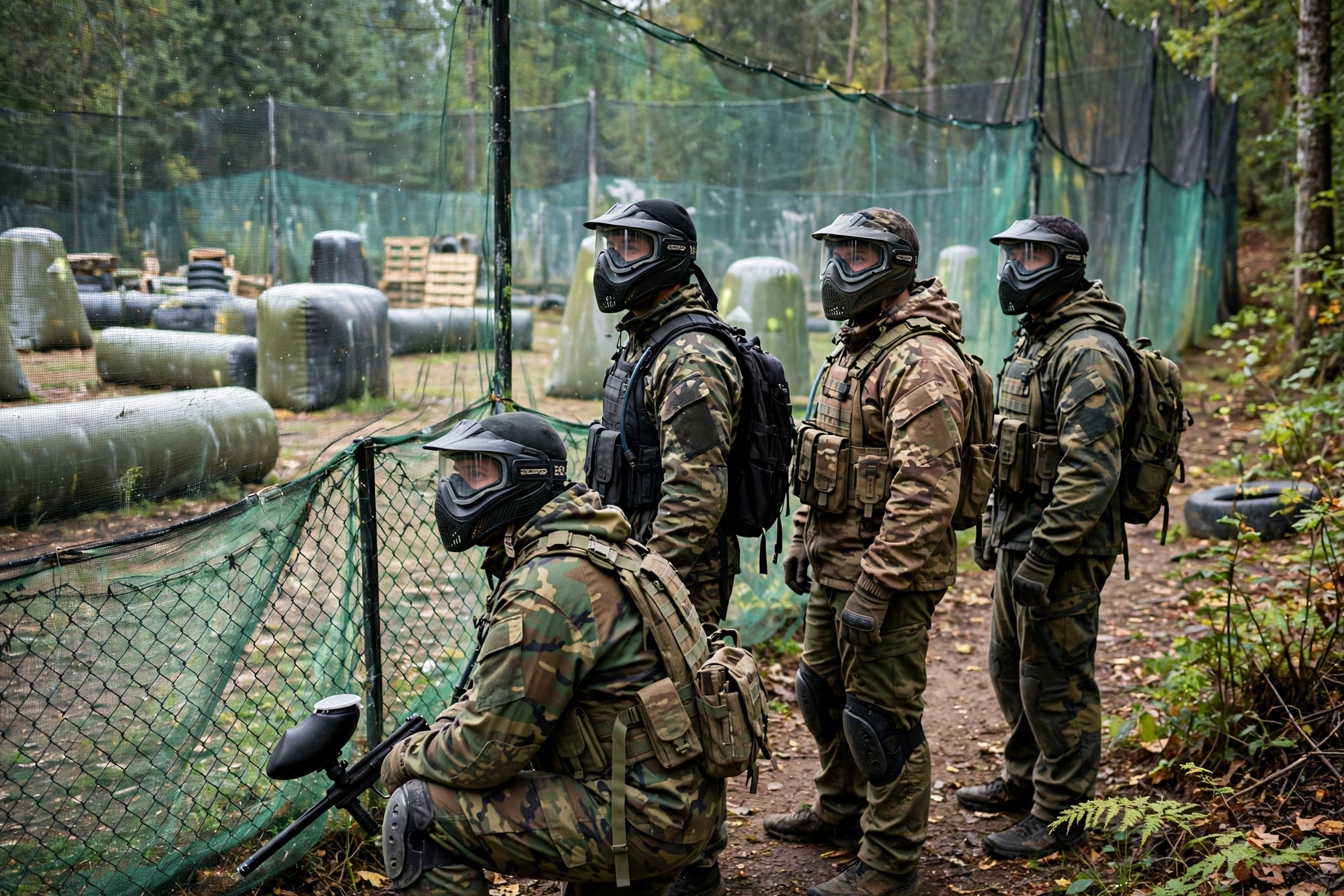
Yes, in general terms paintball fields require full face masks for everyone on the playing field, including players, referees, and anyone else inside the netted area. A full face mask that covers the eyes, face, and ears is the standard safety requirement at organised fields, and most fields will not let you onto the field without one.
This guide explains what fields usually require, why the rule is so strict, and what to check before you arrive so you are not turned away at the gate.
Why Do Paintball Fields Require Full Face Masks?
Paintballs travel fast enough to cause serious eye injury, and the face, ears, and jaw are all exposed in a game played at close range behind bunkers. A full face mask protects all of that at once: a rigid lens over the eyes, a lower face section over the mouth and jaw, and coverage over the ears. That is why fields treat the mask as non-negotiable rather than a recommendation.
The rule also protects the field itself. A single serious eye injury is a far worse outcome for a field than a strict mask policy, so fields enforce the rule consistently, for beginners and experienced players alike. Referees are trained to stop play when a mask comes off, and many fields treat lifting a mask on the field as an instant removal from the game.
Insurance and industry practice reinforce the same standard. In general terms, organised fields follow the same basic safety model: no mask, no play, no exceptions for spectators who wander inside the netting.
What Counts as an Acceptable Full Face Mask?
An acceptable mask is a purpose-made paintball mask with a lens rated for paintball impact, full coverage of eyes, ears, and lower face, and a strap system that keeps it in place during play. The lens should be free of cracks and deep scratches, and the mask should fit snugly without rocking or lifting when you move.
What does not count, in general terms, is improvised eye protection. Safety glasses, sunglasses, ski goggles, or a helmet visor on its own do not cover the full face, and most fields will not accept them as a substitute. A paintball mask is a single integrated unit, and fields check it as a unit.
Rental masks are available at most fields, and they meet the same standard as bought masks. If you are trying paintball for the first time, a rental mask is a perfectly good way to meet the rule without buying gear first. Just check the rental lens for scratches before you head out, and ask for another one if it is not clear.
Do the Mask Rules Apply to Referees and Spectators Too?
Yes. Referees spend the whole game inside the field, often close to the action, so they wear full face masks for the entire game. The same applies to photographers, coaches, or anyone else a field allows inside the netting during play.
Spectators watching from outside the netting are in a different position, because the netting itself is the barrier between them and the game. Fields set their viewing areas behind netting for exactly this reason. If a spectator steps inside the netting for any reason, the mask rule applies to them immediately.
Players waiting in a staging area or dead zone are usually outside the live firing area, but the safest habit is to keep your mask on until you are clearly out of the field. Many fields ask players to keep masks on in the dead zone too, because a stray ball can still reach it.
Can You Ever Lift Your Mask on the Field?
In general terms, no. Lifting your mask during live play is the one rule that fields enforce most strictly, because the moment a mask comes off, the protection is gone. Fogging, a slipped strap, or a paint splatter on the lens are all frustrating, but none of them is a reason to lift the mask while balls may still be flying.
If your mask fogs or slips, call for a referee, signal that you need help, and wait for play to be paused or for a referee to escort you out. Experienced players plan for this: an anti-fog lens, a well-fitted strap, and a quick wipe between games prevent most of the situations that tempt someone to lift a mask mid-game.
Fields that catch a player lifting a mask will usually remove that player from the game, and repeat offences can mean removal for the day. It is worth remembering that the rule protects the player who breaks it more than anyone else.
What Should You Check Before Visiting a Paintball Field?
Check the field’s own rules before you travel, because details vary from field to field. In general terms, fields publish their mask and safety rules on their website or in a booking confirmation, and a quick read avoids surprises. Look in particular for rules about mask types, minimum age, and whether rental masks are included.
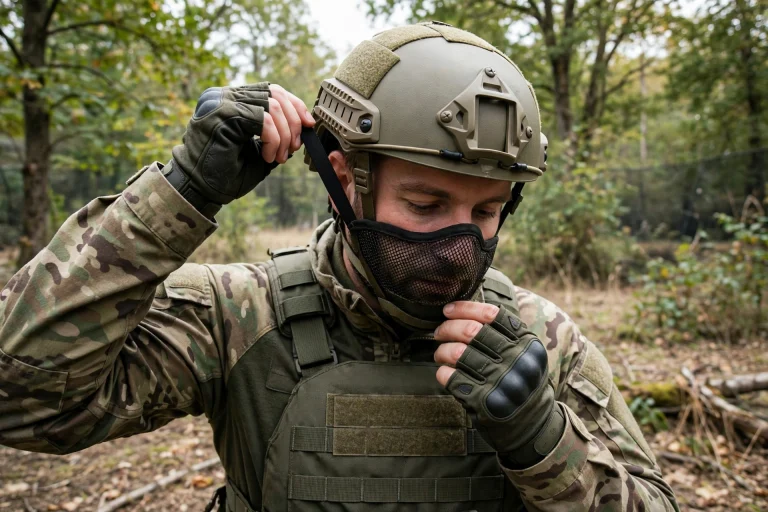
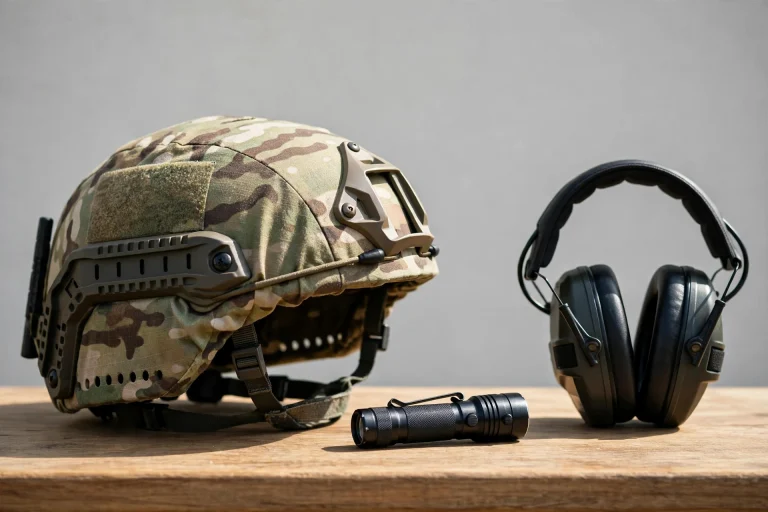
Check your own mask the night before: lens clarity, strap condition, foam condition, and fit. A mask that fits well and stays fog-free is a mask you will not be tempted to lift. And remember that the mask is only one part of staying safe: a well-fitting mask works best as part of a complete setup, and modern impact protection such as rotational-impact systems like MIPS shows how far helmet design has come in reducing the forces that reach your head in an angled impact.
Arrive early enough for the safety briefing, even if you have played before. Briefings cover that field’s exact mask rules, boundaries, and referee signals, and they are the fastest way to learn what that particular field expects.
Frequently Asked Questions
Q: Do all paintball fields require full face masks?
A: In general terms, yes. Organised fields require a full face paintball mask for everyone inside the playing area, and most will not allow play without one. Always check the specific field’s rules before you go.
Q: Can I wear my own mask instead of a rental?
A: Yes, in general terms fields allow your own paintball mask as long as it is a purpose-made full face mask with an undamaged lens and a secure fit. Staff may inspect it before play.
Q: What happens if my mask fogs up during a game?
A: Keep the mask on, signal a referee, and wait for help or a pause in play. Never lift the mask during live play to clear fog, even briefly.

Olivia
Writer at Helmet Today, covering helmet reviews, fit and riding safety.