Airsoft helmet accessories like rails and covers let you mount lights, cameras, ear protection, and night vision, and protect the helmet shell from scratches, paint, and weather. In general terms, rails are the mounting system and covers are the protection and camouflage layer, and together they turn a plain helmet into a base for the rest of your kit. The trick is choosing accessories that suit how you actually play, not loading the helmet with everything available.
A bare airsoft helmet does its basic job well, but most players soon want to add something: a light for indoor games, ear defenders for comfort, a camera to record games, or a cover to break up the helmet’s outline outdoors. This guide explains the main accessory types and how to choose between them.
What Are Helmet Rails and How Do They Work?
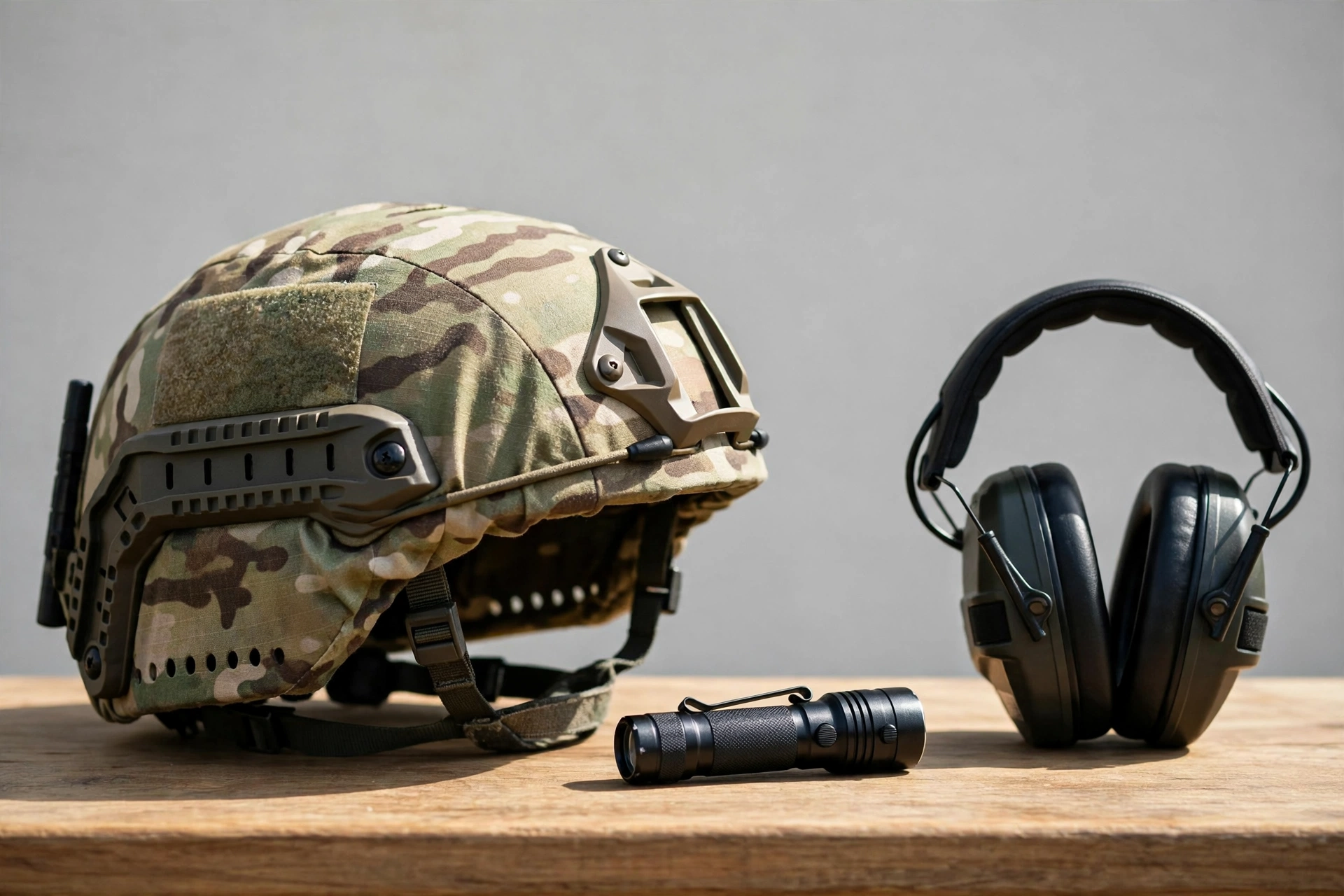
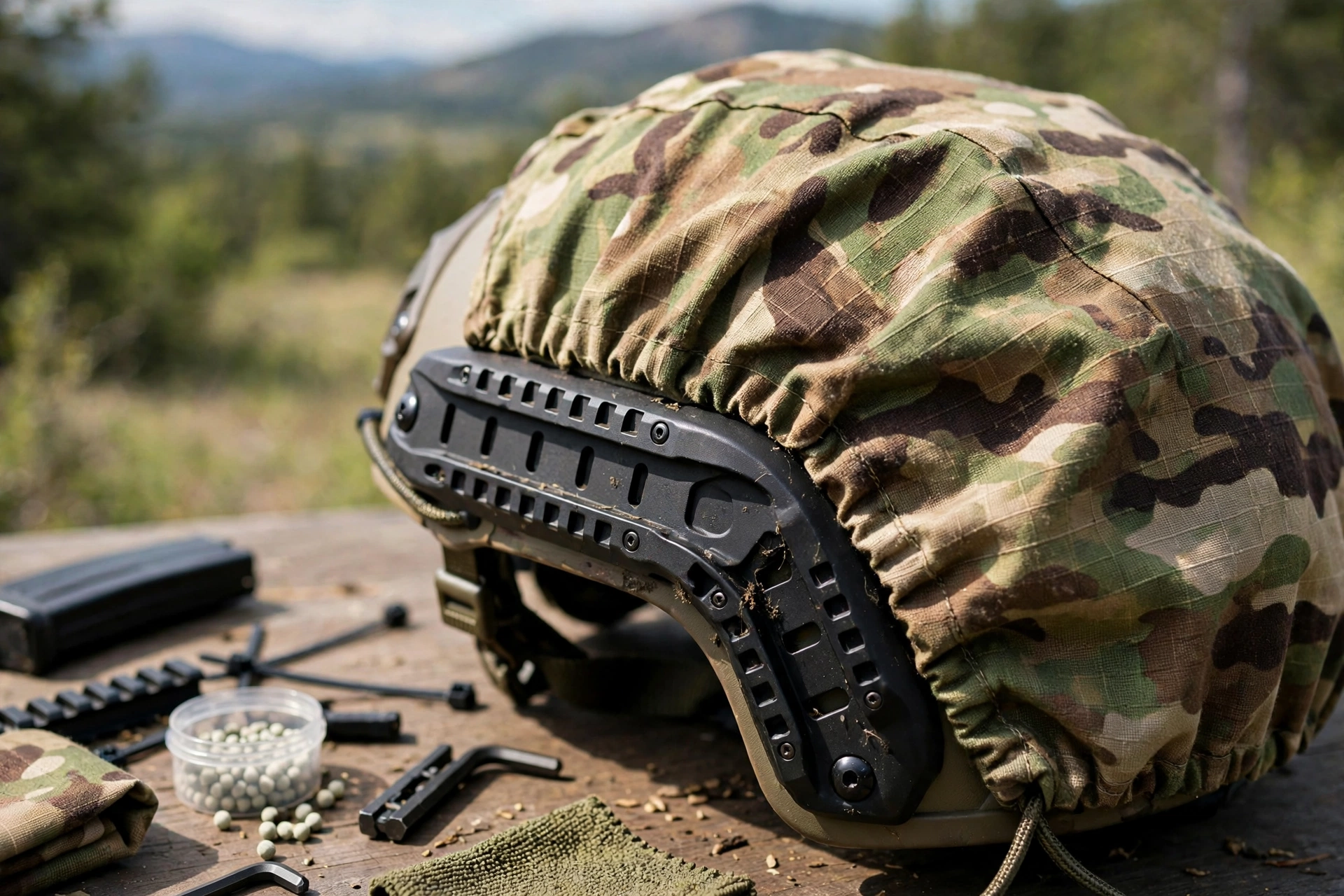
Helmet rails are the slotted strips on the sides of many airsoft helmets, and they are the standard way to attach accessories without drilling or gluing. Accessories either slide into the rail and lock, or clamp to it with an adapter. The two common rail styles are not always interchangeable, so an accessory made for one style may need an adapter to fit the other.
Rails are used for ear defenders, lights, and cameras most often. Ear defenders clip to the rails with adapters that set their height and angle, lights mount to the side or front rail for hands-free illumination, and cameras use rail mounts or top mounts depending on the angle you want. The advantage of rails is flexibility: you can add, remove, or move accessories between games without tools, and reconfigure the helmet as your style of play changes.
The downside is weight and snagging. Every accessory adds grams to the sides or front of the helmet, and a helmet loaded with gear pulls unevenly and catches on branches and door frames. Add accessories one at a time, play a game with each, and keep only the ones you actually use. A helmet that feels balanced on the table can feel very different after an hour of running.
What Do Helmet Covers Do?
A helmet cover is a fabric sleeve that fits over the shell, and it serves three purposes: camouflage, protection, and attachment. Outdoors, a cover in a pattern that matches your environment breaks up the helmet’s smooth outline far better than a bare shell. Indoors, a plain cover in a dark colour does the same job of reducing shine and glare.
Covers also protect the shell from scratches, paint, and scuffs, which keeps a helmet looking better and can preserve its resale value. Many covers add loops or hook-and-loop panels for attaching patches, lights, or small pouches, turning the cover itself into extra mounting space. Some covers include a mesh or fabric section over the top vents, which keeps out rain and debris while still allowing airflow.
Fit matters: a cover made for your helmet model fits snugly and stays put, while a loose universal cover bunches, slips over the rails, and blocks accessories. Check that the cover leaves your rails, mounts, and vents accessible before you commit to it, and test it with your accessories fitted, since a cover that works on a bare helmet may not work once rails are loaded.
What Other Accessories Are Worth Considering?
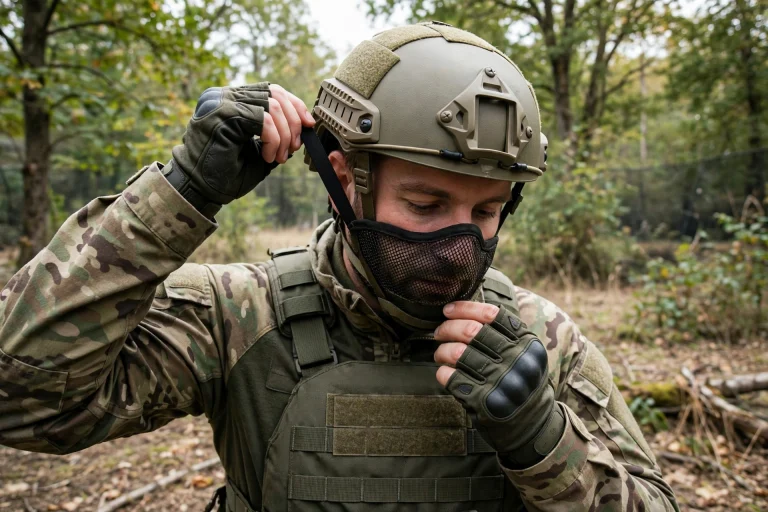
Beyond rails and covers, the most useful accessories are a front mount for a camera or light, a counterweight pouch for the back, and a chin strap upgrade. A front mount puts a camera or night vision device where it looks where you look, which is ideal for recording games. A counterweight balances a heavy front accessory so the helmet does not tip forward, which causes neck strain over a long day.
Padding and retention upgrades are less visible but often more valuable than gadgets. Better internal pads improve comfort and fit, and a good chin strap keeps the helmet in place during fast movement. Players who spend on a light before fixing a slipping helmet have their priorities backwards: fit first, accessories second.
Communication headsets are another common addition, and they usually integrate with rail-mounted ear defenders or sit under the helmet. If you use a radio, check that the headset, the ear defenders, and the helmet all fit together before buying, since three separate systems can easily conflict. A headset that pushes your ear defenders out of position, or a helmet that squeezes the headset against your ears, will be abandoned quickly no matter how good the radio itself is.
How Do You Choose Accessories Without Overloading Your Helmet?
Start from your games, not from a catalogue. An indoor player needs a light and ear protection; a woodland player needs camouflage and hearing; a player who records games needs a camera mount. List what you actually do in a game, then buy accessories that serve those moments, and skip the rest.
Weigh the helmet as you add accessories. Pick it up, put it on, and move in it — run, crouch, look up — before adding the next item. If the helmet pulls to one side, tips forward, or snags, rebalance it or remove something. A helmet that is uncomfortable will be worn less willingly, and an accessory that makes you slower is not an upgrade.
If you also wear helmets for cycling, climbing, or other sports, reading about what MIPS is for helmets can help you understand a protective technology that appears across many helmet types. The same rule applies everywhere: accessories should support the helmet’s protective job, never compromise it by blocking vents, loosening the fit, or adding weight the wearer cannot manage.
Frequently Asked Questions
Q: Do all airsoft helmets have rails?
A: No. Many modern airsoft helmets have side rails, but simpler or older models may not. Check your helmet’s specification, and remember that a helmet without rails can still take covers, pads, and strap upgrades.
Q: Will any cover fit my helmet?
A: In general terms, covers made for your helmet model fit best. Universal covers can work, but they may bunch, slip, or block rails and vents, so check the fit before relying on one in a game.
Q: Are helmet accessories just cosmetic?
A: Some are, but many are practical: rails mount lights and ear protection, covers add camouflage and shell protection, and counterweights balance heavy front mounts. Choose accessories that serve a real purpose in your games.

Olivia
Writer at Helmet Today, covering helmet reviews, fit and riding safety.