In general terms, yes — some police officers do wear ballistic helmets, but not all officers and not all the time: they are typically worn for specific operations or situations where the risk assessment calls for them, rather than as everyday uniform. A patrol officer on a routine shift usually wears no helmet at all, while officers in specialist or public-order roles may wear one as part of their protective equipment.
Police use of helmets varies a lot by country, force, and role, and it is easy to get a misleading picture from news footage, which tends to show the most dramatic situations. This guide explains, in general terms, when police wear ballistic helmets, when they wear other types, and why the choice depends on the task.
Which Police Roles Wear Ballistic Helmets?
Ballistic helmets are most associated with specialist police roles: firearms units, tactical teams, and officers responding to incidents involving weapons. In those roles, the helmet is part of a wider set of protective equipment, chosen because the assessed risk includes fragments or projectiles. The helmet is worn for the operation, not for the whole shift, and it is put on when the situation calls for it.
Public-order policing is a different case. Officers policing protests or crowd events often wear a different type of helmet, designed mainly for thrown objects and blows rather than ballistic threats. These helmets usually have a visor to protect the face, and they are built for a different set of hazards. The distinction matters: a helmet designed for public order is not necessarily a ballistic helmet, and a ballistic helmet without a face visor is not necessarily suited to public-order work. Each is matched to its own risk assessment.
Why Don’t All Police Officers Wear Helmets on Patrol?
For routine patrol work, the assessed risks are usually different. Officers on foot patrol or in vehicles are more likely to need mobility, hearing, communication, and a visible, approachable presence than head protection against projectiles. A helmet adds weight, heat, and bulk, and it can make communication harder and reduce peripheral vision — real drawbacks on a long shift where the ballistic risk is assessed as low.
That is why helmet use in policing is generally task-based rather than universal. Equipment is issued and worn according to the risk of the specific operation, and officers are trained to select and wear it for that operation. The same officer might wear no helmet on patrol, a public-order helmet at a crowd event, and a ballistic helmet on a firearms operation, all in the same working week. In general terms, the helmet follows the risk, not the uniform.
Public-order helmets also tend to be worn for longer continuous periods than ballistic helmets, since a crowd event can last many hours. That affects their design: they often have better ventilation and a visor that can be raised when the immediate risk drops, allowing the officer to communicate and drink without removing the helmet. The balance between protection and endurance is a constant theme in police equipment, and it is why different helmets exist for different duties rather than one helmet for everything.
What Do Police Ballistic Helmets Look Like?
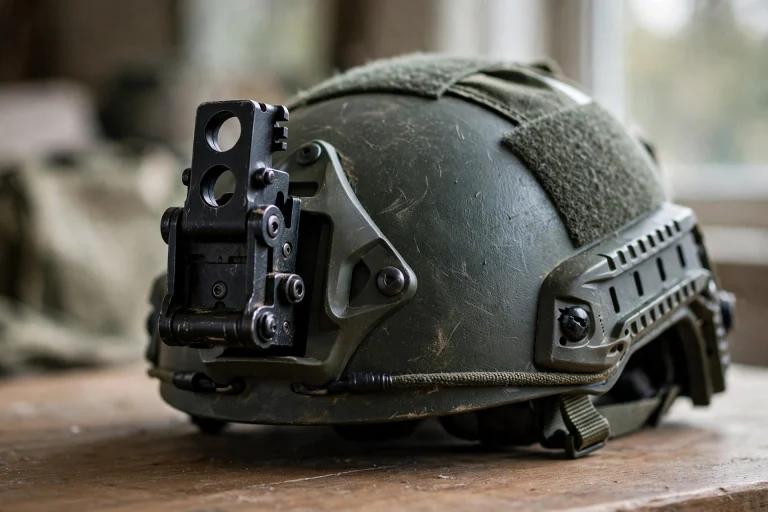
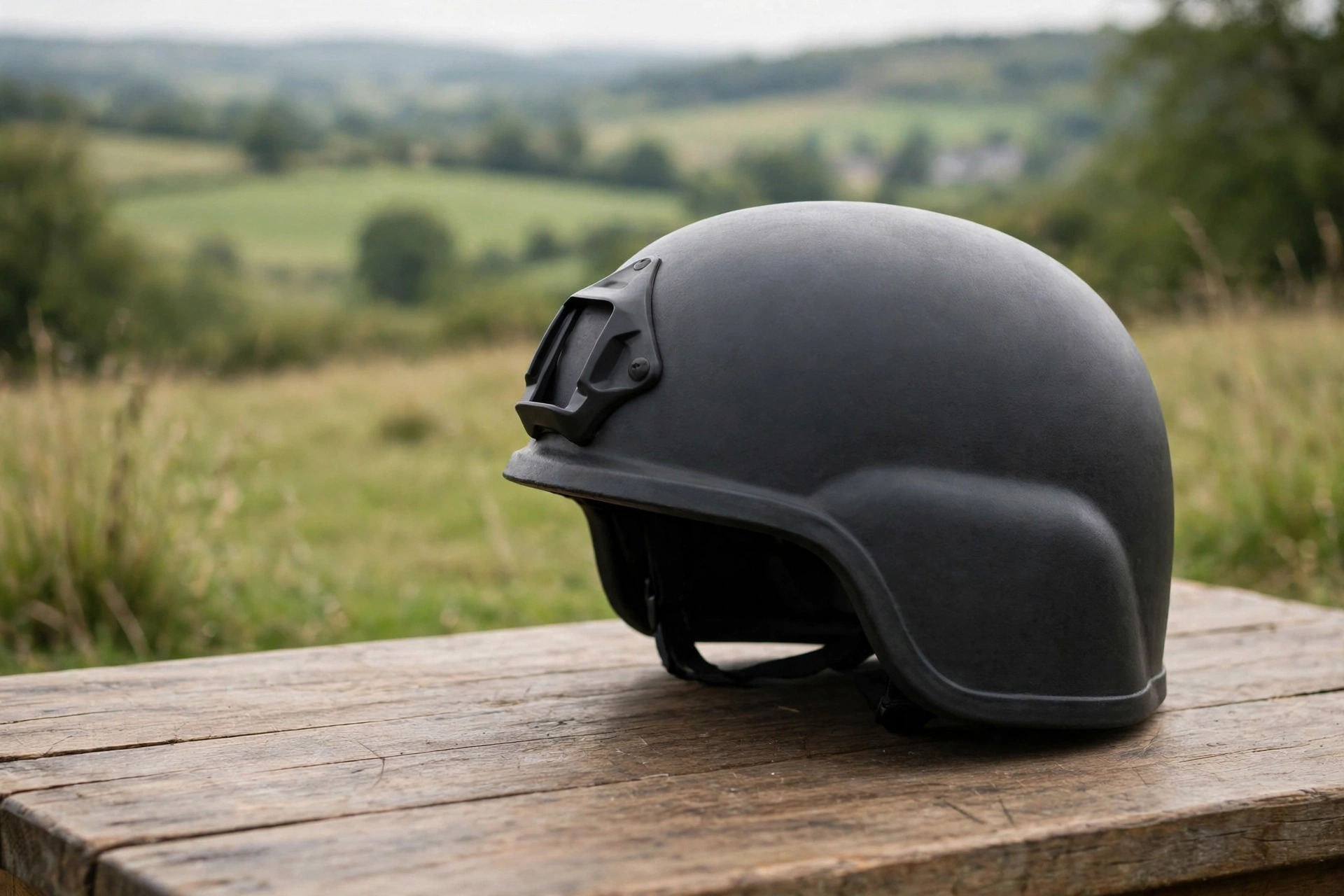
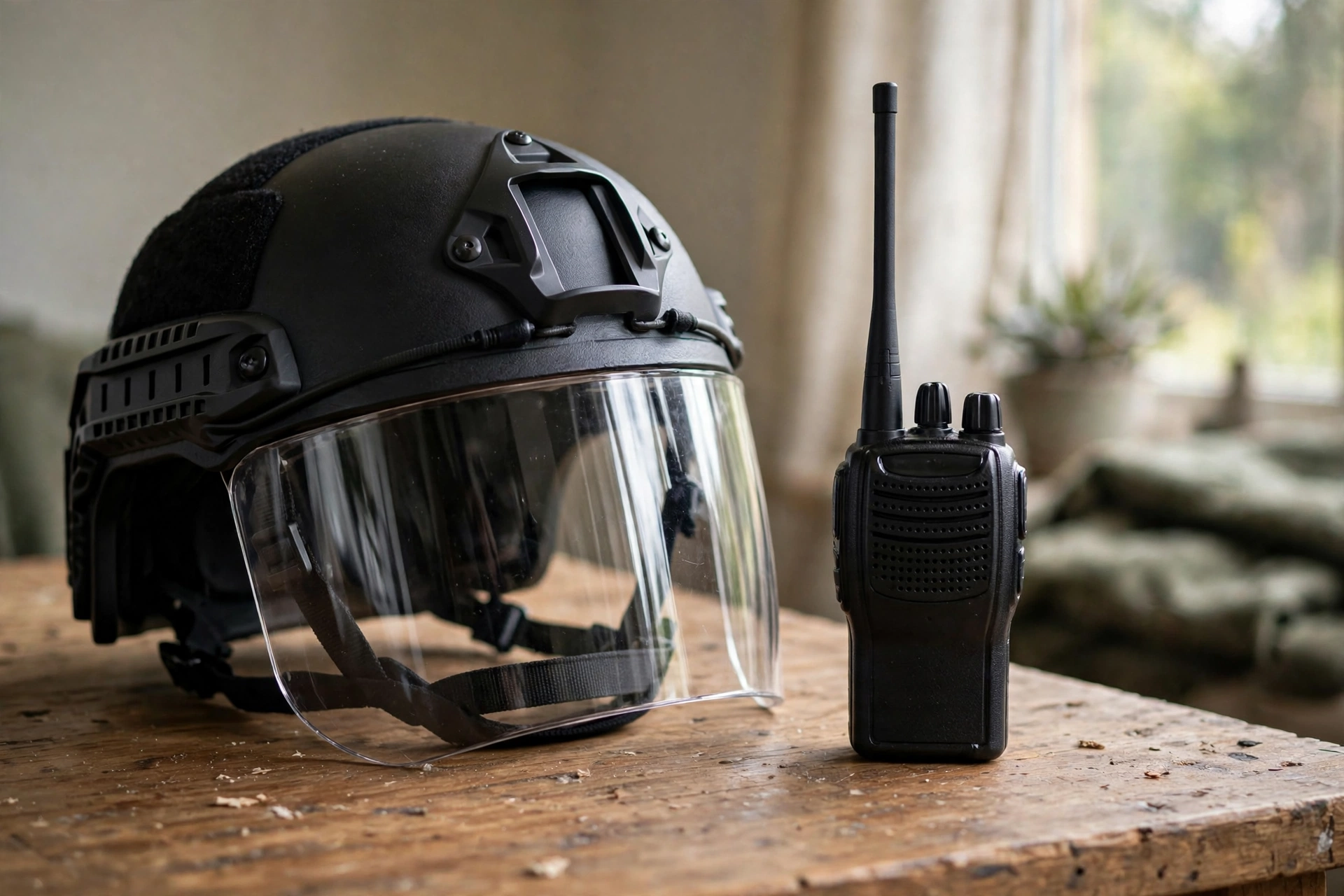
Police ballistic helmets are broadly similar to military ballistic helmets: a hard shell, internal padding, and a retention system, often with side rails for lights or cameras and a front mount for accessories. Some are full-cut, covering more of the side and rear of the head, while others are cut higher above the ears to allow better hearing and easier use of communication headsets. The cut is a trade-off between coverage and the ability to hear, communicate, and move comfortably.
They are usually a plain dark colour, and may carry markings identifying the force or unit. Covers are sometimes fitted to change the appearance, protect the shell, or carry identification. As with all ballistic helmets, the shell is designed to reduce the risk from certain threats within its rating, and it is only one part of the officer’s protective equipment — body armour, eye protection, and hearing protection may be worn alongside it, depending on the operation.
Are Police Helmets the Same as Military Helmets?
They are similar in construction but not necessarily identical. Police and military users face different threat profiles, different working environments, and different rules about appearance and identification. A police helmet may be chosen for compatibility with police radios, cameras, and vehicle use, while a military helmet may prioritise different accessory mounts or coverage. Both, however, are built around the same basic idea: a layered shell, padding, and retention, tested against a defined set of threats.
Some helmet features appear in both worlds. For example, some modern helmets include a low-friction layer intended to reduce rotational forces in angled impacts; reading about what MIPS is for helmets can help you understand that kind of feature in general terms. The key point is that police and military helmets are both selected through their own procurement and risk processes, so two helmets that look alike may still be specified quite differently.
Do Police Officers Get to Choose Their Own Helmet?
In general terms, no — police helmets are issued equipment, not personal purchases. Forces select helmets through procurement, issue them to the relevant roles, and train officers in their use, fitting, and care. Officers are usually expected to wear the issued helmet for the operations it is specified for, and to report damage or fit problems rather than substituting their own equipment.
That system exists for a good reason: the force needs to know that every helmet in use meets the same standard, has been inspected, and is within its service life. A personally bought helmet, however good, would not be part of that inspection and replacement system. The same principle applies to other protective equipment — standardisation and maintenance matter as much as the design of the helmet itself.
Frequently Asked Questions
Q: Do police officers wear helmets every day?
A: In general terms, no. Most patrol officers wear no helmet on routine duties; helmets are worn for specific operations where the risk assessment calls for them.
Q: Is a police riot helmet the same as a ballistic helmet?
A: Not necessarily. Public-order helmets are designed mainly for thrown objects and blows and often have a face visor, while ballistic helmets are designed for fragments and projectiles. Some helmets combine features, but they are specified for different hazards.
Q: Why do some police helmets have cameras or lights attached?
A: Side rails and mounts let officers attach lights, cameras, and communication equipment to the helmet, keeping their hands free and the equipment stable during an operation.

Olivia
Writer at Helmet Today, covering helmet reviews, fit and riding safety.