SPIN is a helmet technology that uses silicone pads inside the helmet to reduce the twisting forces that reach your head in an angled crash. The name stands for Shearing Pad INside, and the pads are designed to shear — slide slightly — when the helmet is hit at an angle, absorbing some of the rotational energy before it reaches your brain. It is one of several systems that address rotational impact, alongside better-known names in the same field.
This guide explains how SPIN works, how it differs from other rotational-impact systems, which helmets use it, and whether it should influence your buying decision.
What Is Rotational Impact, and Why Does It Matter?
Most real crashes are not straight-on hits. A cyclist who falls usually hits the ground at an angle, and that angled impact creates a twisting force on the head as well as a direct force. The brain is sensitive to twisting motion, and researchers believe rotational forces contribute significantly to concussion and other brain injuries.
Traditional helmet testing focused mainly on straight-line impacts: drop a helmet onto a flat surface and measure how much force gets through. That testing improved helmets enormously, but it did not capture the twisting part of real crashes. Newer systems like SPIN were developed to address that gap.
The practical point is simple: a helmet that only handles straight impacts is doing half the job. Any system that also reduces rotational forces is tackling the part of a crash that older designs largely ignored.
How Does SPIN Technology Actually Work?
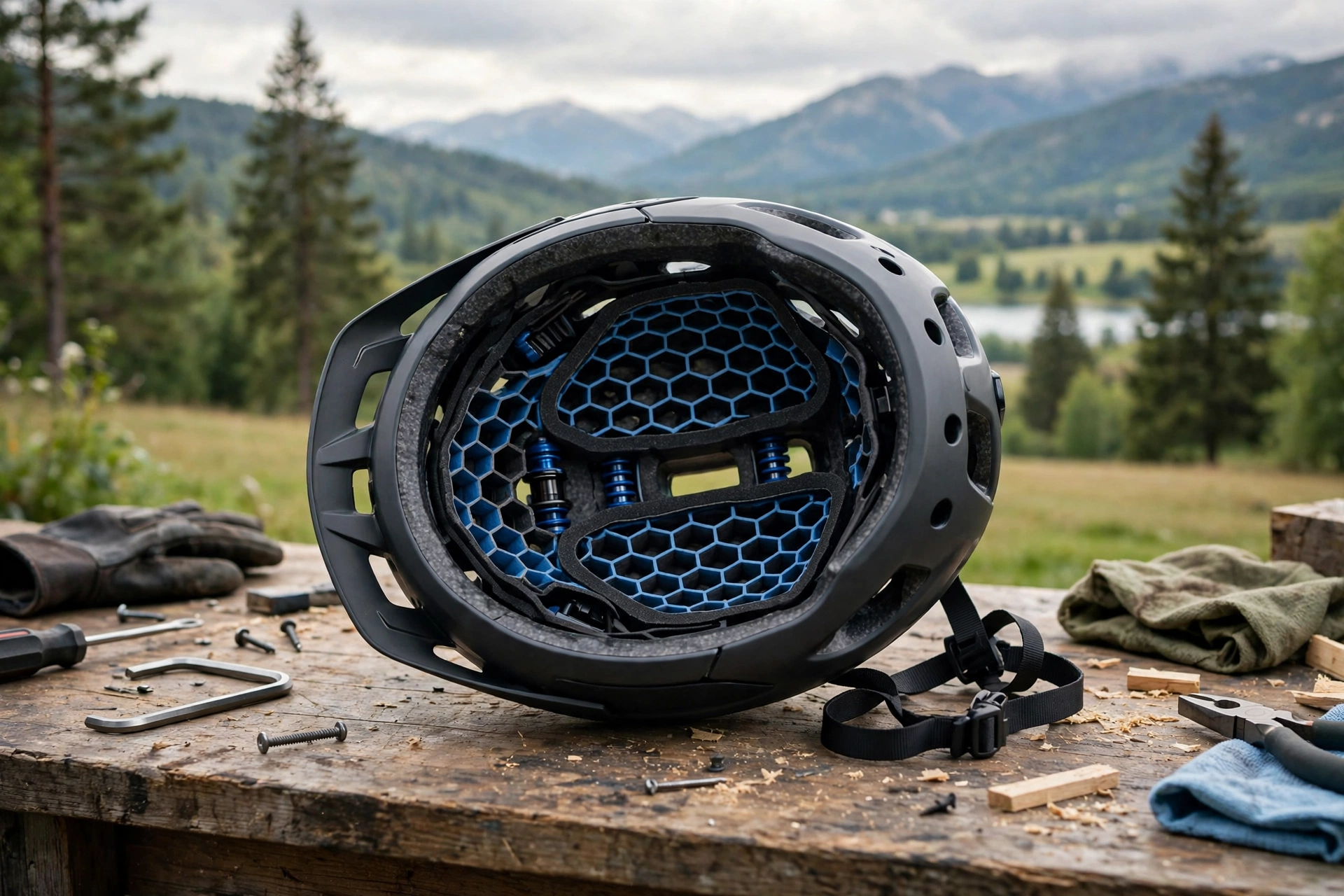
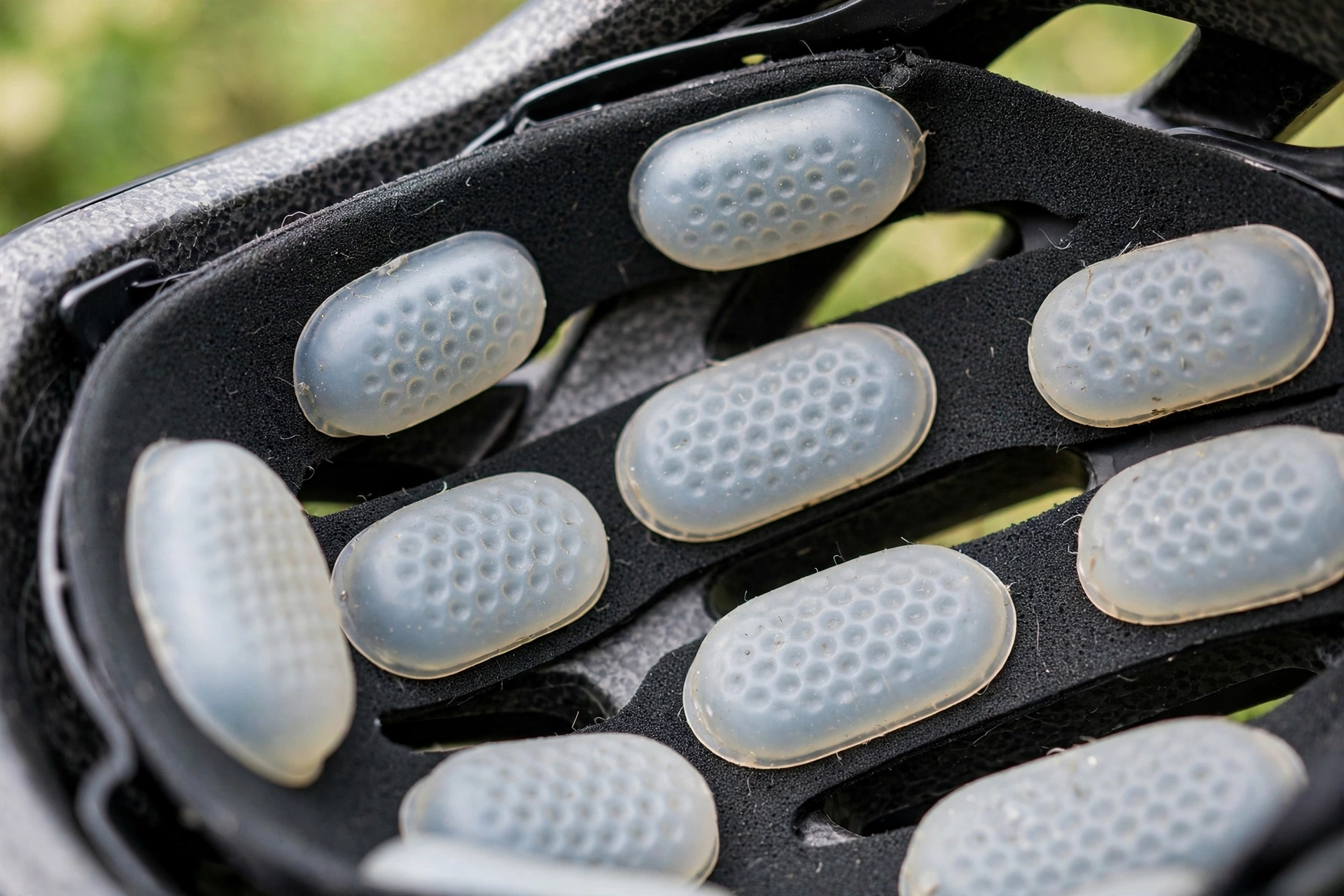
Inside a SPIN helmet, small pads made of a special silicone gel are placed between the helmet’s liner and the padding that touches your head. In normal riding these pads feel like ordinary padding. In an angled impact, the pads shear — they deform sideways — which lets the helmet move slightly relative to your head instead of gripping it and twisting it.
That small sliding movement matters. By allowing a few millimetres of relative motion, the pads absorb some of the rotational energy and reduce the twisting force transmitted to the brain. The effect is measured in milliseconds, but that is the timescale on which crash injuries happen.
The pads are also designed to work across repeated small movements without wearing out in normal use. Unlike a foam liner that crushes permanently in a crash, the silicone pads are part of the helmet’s everyday comfort system as well as its crash system, so they do not need replacing after ordinary riding.
How Is SPIN Different From MIPS and Other Systems?
SPIN and other rotational-impact systems share the same goal — reduce twisting forces — but they do it differently. Some systems use a low-friction layer that lets the whole helmet shell slide relative to the head, while SPIN uses individual silicone pads that shear at specific points. The result is similar in principle, but the feel, weight, and construction differ.
One practical difference is integration. Because SPIN pads double as comfort padding, a SPIN helmet can feel much like a conventional helmet to wear, with no separate slip layer to notice. Some riders prefer that simplicity, while others prefer systems they can see and understand at a glance.
Testing results also vary by helmet model, not just by system. Two helmets using the same technology can perform differently because shell shape, foam density, and coverage all matter too. The technology name on the box is one factor among several, not a guarantee on its own.
Which Helmets Use SPIN Technology?
SPIN is associated with a particular helmet maker and appears in that maker’s cycling range, from road and mountain bike helmets to commuter models. It is not a licensed system fitted across many brands, which is a key difference from some competing technologies that appear in helmets from dozens of manufacturers.
That narrower availability has a practical consequence: if you want SPIN specifically, your choice of helmet models is limited to that maker’s range. If you prefer another brand’s fit or styling, you may find a comparable rotational-impact system under a different name instead.
When shopping, check the product description and look inside the helmet for the distinctive silicone pads. A reputable retailer should be able to confirm whether a given model includes SPIN or a different rotational-impact system.
Should SPIN Influence Which Helmet You Buy?
In general terms, a rotational-impact system is a genuine plus, and SPIN is a credible example of one. If you are choosing between two helmets that fit equally well, and one has SPIN or a comparable system while the other does not, the one with the system is the better choice on safety grounds.
But fit still comes first. A helmet with the best impact technology in the world protects you poorly if it sits crooked, wobbles, or gets left at home because it is uncomfortable. Try helmets on, adjust the straps, and choose the one that fits your head shape and stays put.
It also helps to understand the wider field of rotational-impact protection before you buy. The best-known system in this area is explained in plain language in this guide to MIPS helmet technology, which covers how slip-layer systems work and what to look for when comparing helmets.
It is also worth asking how a SPIN helmet is tested. Independent test labs that simulate angled impacts have published results for many helmet models, and those results let you compare helmets on measured performance rather than marketing claims. A helmet that scores well in independent angled-impact testing, fits you properly, and carries a recognised safety certification is a strong choice whatever rotational system it uses. The technology name matters less than the combination of fit, certification, and measured performance — and SPIN helmets that tick all three boxes are easy to recommend on that basis.
Frequently Asked Questions
Q: What does SPIN stand for?
A: SPIN stands for Shearing Pad INside. It refers to the silicone pads inside the helmet that shear sideways in an angled impact to reduce twisting forces on the head.
Q: Does SPIN replace the foam liner in a helmet?
A: No. SPIN works alongside the foam liner, which still absorbs the direct impact force. The pads add rotational protection on top of the foam’s straight-line protection.
Q: Do I need to replace SPIN pads after normal use?
A: No. The pads are part of the helmet’s everyday padding and do not wear out in normal riding. After any crash, however, the whole helmet should be inspected and usually replaced.

Olivia
Writer at Helmet Today, covering helmet reviews, fit and riding safety.