In general terms, a helmet emergency contact sticker is a small, durable label on the outside or inside of a helmet that gives first responders the information they need if you are injured and cannot speak — typically your name, an emergency contact number, and key medical notes. It is cheap, simple, and potentially very valuable in the minutes after a crash.
After a serious crash, the people who reach you first need answers fast: who you are, who to call, and whether you have conditions or allergies that change treatment. If you are unconscious or confused, you cannot give those answers yourself. A sticker on your helmet speaks for you, and it is placed exactly where responders are already looking.
What Is a Helmet Emergency Contact Sticker?
A helmet emergency contact sticker — sometimes called an ICE sticker, from “in case of emergency” — is a small label designed to survive weather, sweat, and abrasion. It is usually made from waterproof vinyl or a similar tough material, with space for a few lines of handwritten or printed information. Some are simple blank labels; others are pre-printed forms with labelled fields.
The idea is borrowed from medical alert practices, but adapted to helmets. Responders are trained to look for identification, and a helmet is often the first thing they handle at a crash scene. A sticker on the helmet puts your details where they will be seen early, rather than buried in a wallet or a locked phone.
Stickers come in a few styles. Some stick to the outside of the shell, where they are most visible. Some go inside the helmet, under the liner or on the cheek pad, where they are protected from weather but harder to spot. Some riders use both: a visible outer sticker pointing to fuller details inside. The best choice depends on how much information you want visible to strangers.
What Information Should It Include?
Keep it short and useful. Your name, one or two emergency contact names with phone numbers, and any critical medical information — such as allergies, diabetes, epilepsy, or medication that affects emergency treatment — cover the essentials. Blood type is sometimes included, though responders will verify it themselves before any transfusion.
Do not overload the sticker. A long list of conditions, insurance numbers, or personal details is hard to read in a hurry and raises privacy concerns if the helmet is lost or stolen. Stick to what a responder needs in the first minutes: who you are, who to call, and what could change their immediate treatment.
Write clearly and durably. Use a waterproof pen or a printed label, not an ordinary pen that smears in rain or sweat. Check the writing regularly — stickers fade, peel, and get scuffed — and replace a sticker that has become hard to read. A sticker with an outdated phone number is worse than no sticker if it sends responders to the wrong person.
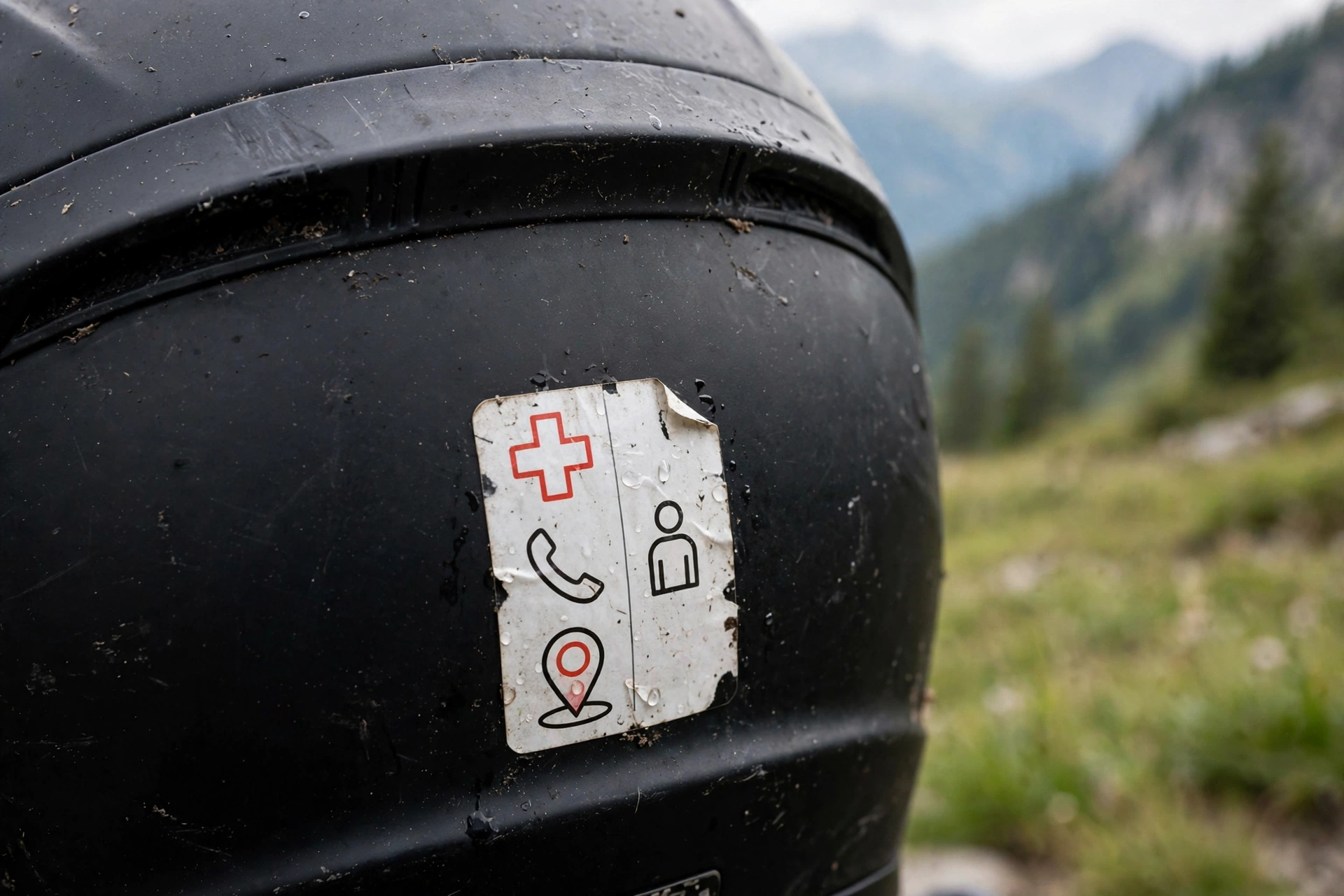
Where Should You Place the Sticker?
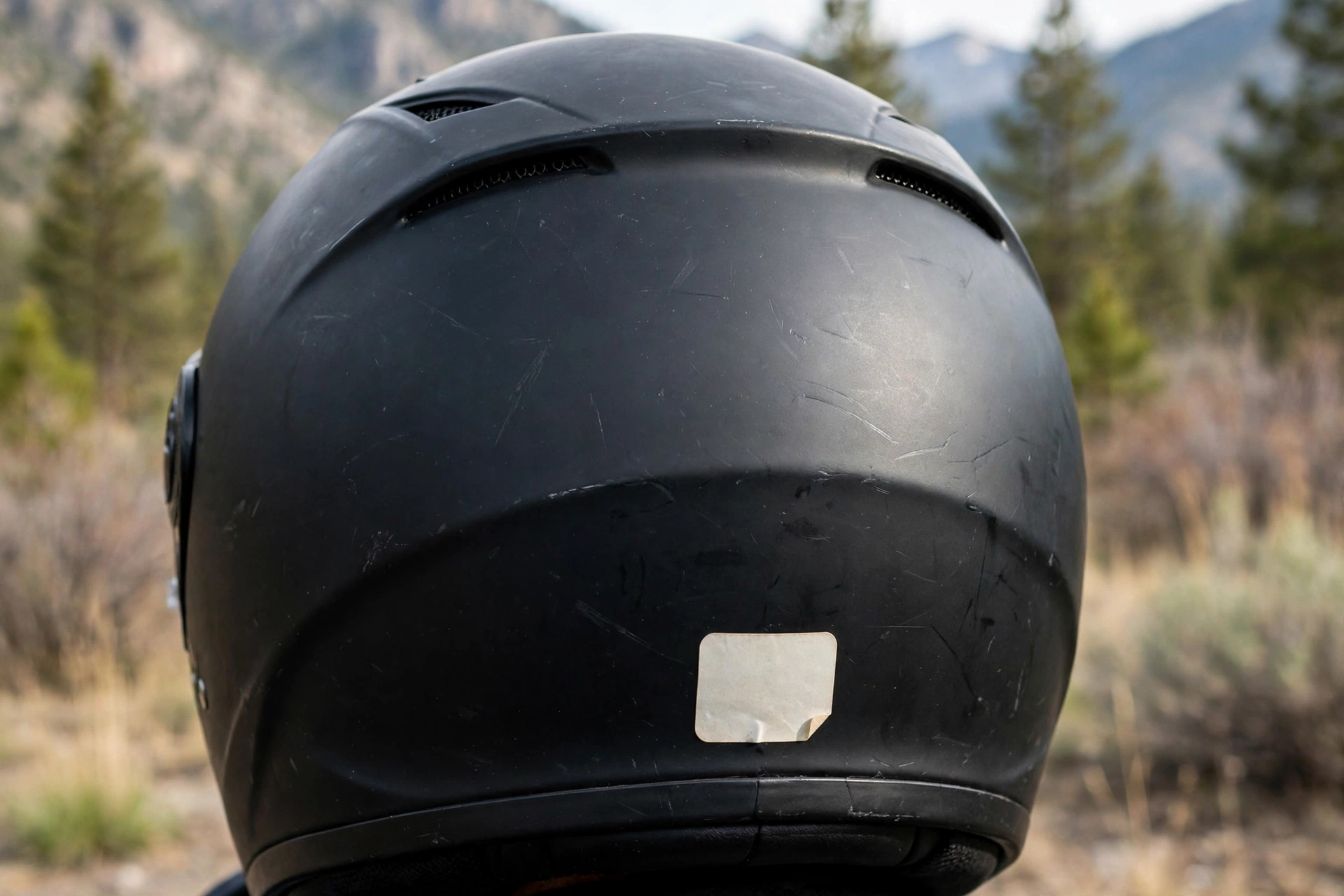
The most common placement is the back or side of the shell, where it is visible when the helmet is lying on the ground or being held. Some riders place it near the base of the shell, where it is less likely to be scraped off in a slide but still easy to find. Avoid placing it over vents, visor mechanisms, or certification labels.
An inside placement suits riders who prefer privacy. A sticker inside the helmet, on the liner or under a cheek pad, is protected from weather and less visible to strangers, but responders may not find it quickly. If you choose inside placement, consider adding a small outer marker — such as a star or a standard emergency symbol — that signals responders to look inside.
Whatever placement you choose, tell your regular riding partners where it is. If you ride in a group, your friends are often the first people at your side, and knowing where your details are saves precious minutes. A sticker nobody can find helps nobody.
Do Emergency Stickers Replace Medical ID?
No — a sticker complements, rather than replaces, other forms of identification. A medical bracelet or necklace stays with you even if your helmet is removed, damaged, or separated from you, and it is a format medical staff recognise instantly. A phone emergency contact is useful too, though a locked phone may be inaccessible at the scene.
The strength of the helmet sticker is its position. It is on the equipment responders handle first, and it does not depend on battery, signal, or a device being unlocked. Used together — sticker, medical ID, and phone emergency contacts — the three cover different scenarios and increase the chance that someone finds your details quickly.
Privacy is the trade-off to weigh. A sticker on the outside of a helmet is visible to anyone who picks it up, including strangers at a café stop. Most riders accept that trade, since the information is limited to a name and a contact number, but if it bothers you, use an inside placement or a sticker that shows only a symbol and a short instruction to look inside.
How Do You Make or Buy One?
Buying is easy: emergency contact stickers for helmets are widely sold online and in motorcycle and cycling shops, often in packs, and they are inexpensive. Pre-printed versions have labelled fields that prompt you for the right information, which helps you avoid forgetting a key detail.
Making your own is equally simple. A waterproof adhesive label, a permanent waterproof pen, and a clear protective overlay will do the job. The advantage of making your own is control over the size, wording, and placement; the disadvantage is durability, since a home-made label may peel or fade faster than a purpose-made vinyl sticker.
Whichever route you take, test it. Stick it on, wear the helmet for a few rides, and check that it stays put, stays readable, and does not interfere with the helmet’s fit, vents, or straps. A sticker is a tiny addition to a helmet, but like every addition, it should not compromise the protection underneath — protection that includes systems for angled impacts, as explained in this guide to what MIPS means for helmets. Small, cheap, and potentially life-saving: there is little reason not to add one.
Frequently Asked Questions
Q: Should I put my full address on a helmet emergency sticker?
A: In general terms, no — a name and an emergency contact number are enough for first responders. A full address adds privacy risk without helping immediate treatment, so leave it off.
Q: Will a sticker survive a crash?
A: A good vinyl sticker usually survives, especially if placed away from the areas most likely to scrape along the ground. Even if the outer sticker is damaged, an inside sticker or medical ID can still carry your details.
Q: Do first responders actually look for helmet stickers?
A: Responders are trained to look for identification and medical information, and a clearly placed sticker on a helmet is easy to spot. It is not guaranteed to be found, which is why combining it with a medical ID and phone emergency contacts is the safest approach.

Olivia
Writer at Helmet Today, covering helmet reviews, fit and riding safety.