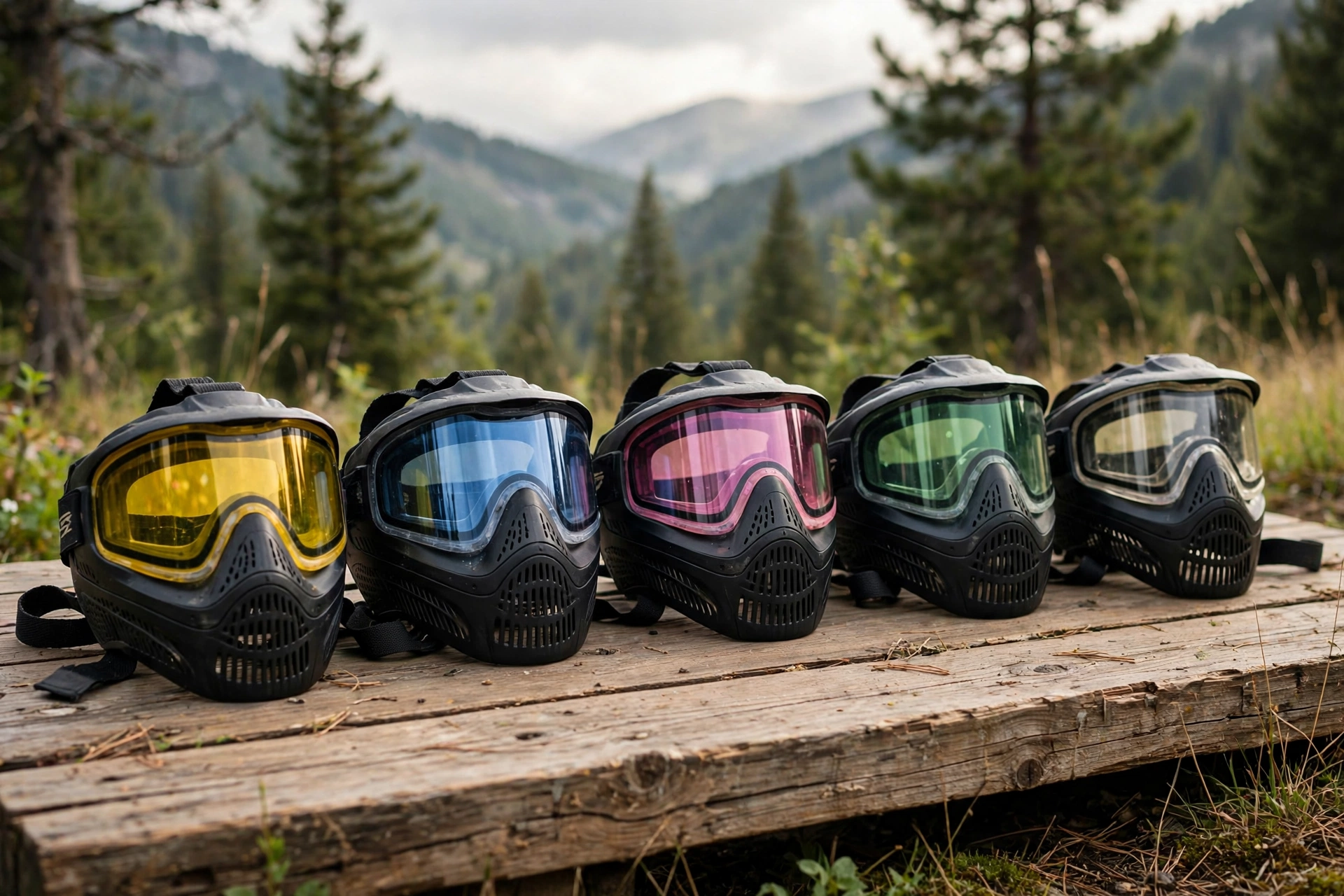
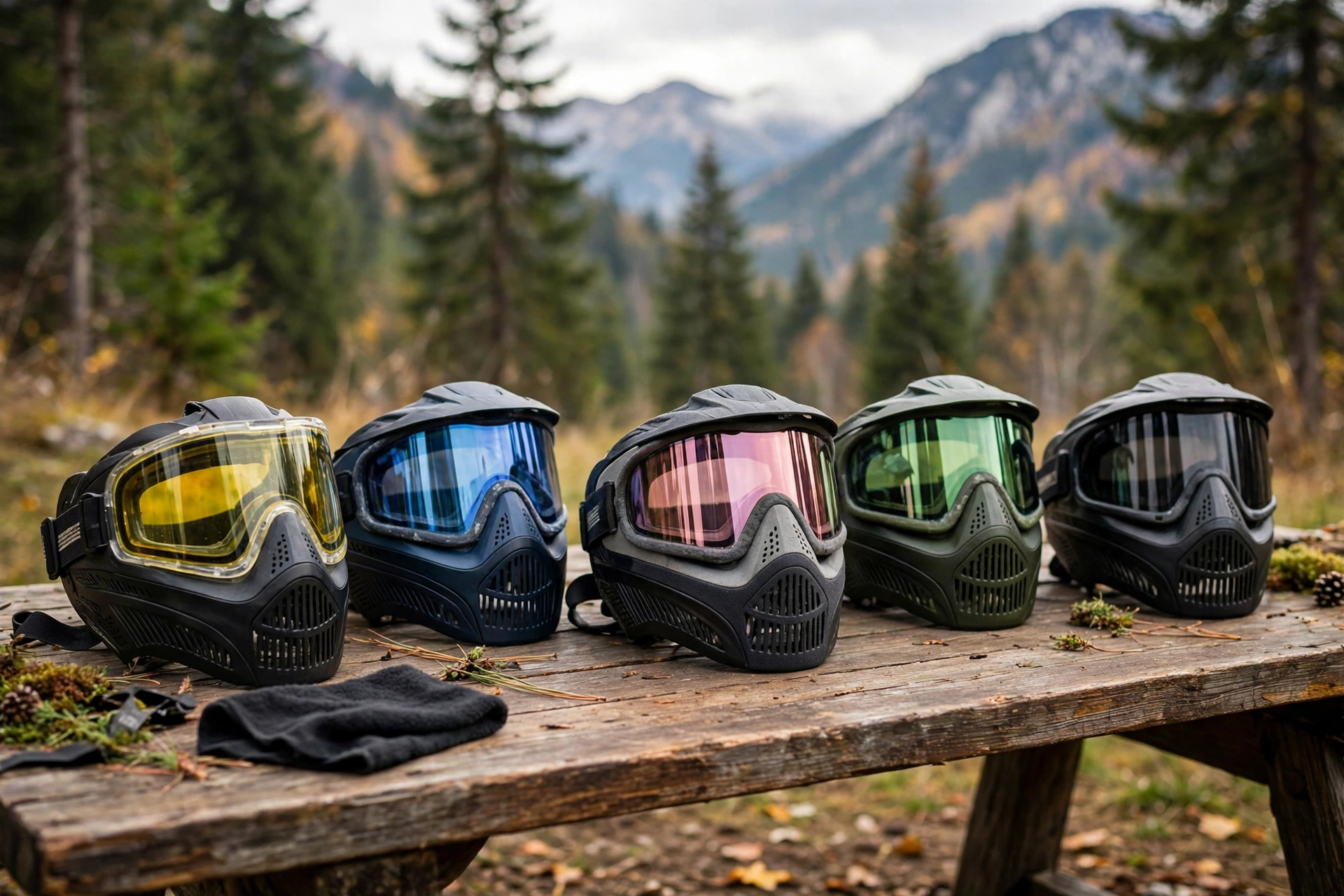
In general terms, paintball mask lenses come in several types — clear, tinted, mirrored, amber, and thermal — and the right one depends on light conditions, because each lens type balances brightness, contrast, and fog resistance differently. Choosing well means seeing opponents clearly without squinting, straining, or fogging up mid-game.
Your mask lens is your window onto the game. A lens that is too dark in shade hides opponents; a clear lens in bright sun leaves you squinting; a lens that fogs turns the game into guesswork. Yet many players buy a mask and never think about the lens again, even though swapping lenses is one of the simplest upgrades in paintball.
Why Do Paintball Mask Lenses Come in Different Types?
Paintball is played in wildly varying light. A bright midday field, a wooded course in dappled shade, an indoor arena under artificial lights, and a dull overcast morning all demand different things from a lens. One lens cannot be ideal for all of them, so makers offer a range, each tuned for particular conditions.
Lenses differ in three main ways: how much light they let through, how they handle glare and contrast, and how they resist fogging. A dark tint cuts brightness but also cuts detail in shade. An amber tint boosts contrast but changes colour perception. A thermal lens adds a second layer to fight fog. Understanding these trade-offs is the key to choosing well.
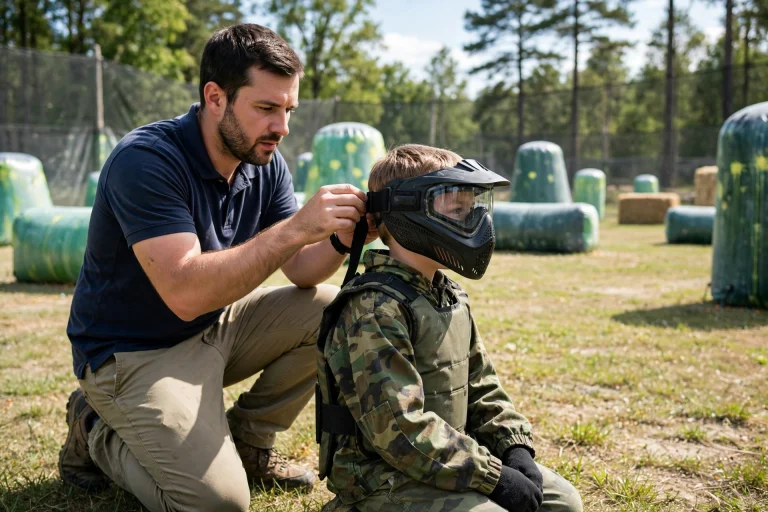
Fit matters too. Lenses are made for specific mask models, and a lens that does not seat properly in the frame can leak, shift, or pop out — all dangerous in a game where eye protection is non-negotiable. Always buy lenses made for your exact mask model, and never play with a lens that does not lock securely into place.
What Are the Main Paintball Lens Types?
Clear lenses are the baseline. They let through nearly all light, giving true colours and maximum detail, which makes them ideal for indoor play, overcast days, and wooded courses in shade. Their weakness is bright sun, where they offer no glare reduction and can leave you squinting.
Tinted and mirrored lenses cut brightness for sunny conditions. Smoke and grey tints reduce light evenly without distorting colours much, while mirrored coatings reflect extra light and glare away from the eyes. Mirrored lenses also hide your eyes from opponents, which some players like for the intimidation factor, though that is a side benefit rather than a safety feature.
Amber and yellow lenses boost contrast, making it easier to pick out shapes and movement in low light, shade, or overcast conditions. They warm up the view and can make a dull field look brighter, which is why they are popular for woodsball and evening games. They are less suited to bright sun, where they do not cut enough light.
Thermal lenses are defined by construction, not tint. A thermal lens has two layers with a sealed air gap between them, like double glazing, which insulates the inner layer from cold outside air and dramatically reduces fogging. Thermal versions exist in clear, tinted, and amber forms, and for most players a thermal lens is the single most valuable upgrade available.
Which Lens Is Best for Bright vs Low Light?
For bright sun, choose a smoke, grey, or mirrored lens. These cut glare and brightness, reduce squinting, and let you track opponents across open, sunlit ground. A mirrored lens adds extra glare reduction, which helps on fields with reflective surfaces or when facing into low sun.
For low light, shade, or indoor play, choose a clear or amber lens. Clear gives the truest view and the most detail when light is scarce. Amber boosts contrast, which helps you spot movement in woods or shadows, though it does shift colours — a trade most low-light players accept happily.
For mixed conditions — a field that moves between sun and shade, or a day with changing cloud — a light tint or a clear thermal lens is the safest compromise. Carrying a spare lens is even better: swapping lenses between games takes a minute or two, and it lets you match the lens to the light instead of compromising all day.
How Do You Care for Paintball Lenses?
Clean lenses gently and only when needed. Rinse with clean water to remove paint and dirt first, since wiping a dirty lens dry is what scratches it. Then wash with a mild soap or a lens cleaner, rinse again, and pat dry with a soft microfibre cloth. Never use paper towels, solvents, or abrasive cloths on a lens.
Protect the inner surface especially carefully. On a thermal lens, the inner layer carries the anti-fog treatment, and aggressive cleaning or touching damages it. Handle lenses by the edges, avoid wiping the inside unless it is dirty, and never apply aftermarket anti-fog sprays to a thermal lens unless the maker approves — they can ruin the factory treatment.
Store lenses and masks away from heat and direct sunlight. A hot car, a sunny windowsill, or a radiator can warp lenses and degrade coatings over time. A mask bag or a cool shelf keeps lenses in good shape between games, and a spare lens in a soft pouch is worth carrying to the field.
When Should You Replace a Paintball Lens?
Replace a lens when it is scratched, cracked, or no longer seals properly in the frame. Scratches scatter light and reduce clarity, which matters most in low light, and a cracked lens is a safety failure — it must not be used in play under any circumstances. Even a small crack can spread under impact.
Replace a thermal lens when it fogs persistently despite proper care. Thermal lenses lose their anti-fog performance as the inner treatment wears or the seal between layers fails. If a lens that used to stay clear now fogs every game, its working life is over, and no amount of cleaning will restore it.
Replace lenses on a schedule too, not just on visible damage. Regular players often replace lenses at least once a season, since micro-scratches and coating wear accumulate gradually and are easy to overlook. A fresh lens is inexpensive compared with the rest of your kit, and clear vision is the foundation of both performance and safety — just as, in helmet sports generally, the whole protection system matters, including liners that manage angled impacts, as explained in this guide to what MIPS means for helmets. See clearly, play safely.
Frequently Asked Questions
Q: Can I use a tinted paintball lens indoors?
A: In general terms, it is not recommended — a tinted lens cuts light you need indoors, making it harder to see opponents and obstacles. Use a clear lens indoors and save tints for bright outdoor play.
Q: Are mirrored paintball lenses just for looks?
A: No — mirrored coatings genuinely reflect glare and reduce brightness in sunny conditions, in addition to hiding your eyes. They are a functional choice for bright fields, not only a style choice.
Q: How do I stop my paintball lens fogging?
A: A thermal lens is the most effective solution, since its double-layer construction prevents condensation. Keep the inner surface clean and untouched, ensure good airflow around the mask, and avoid wiping the inside while playing.

Olivia
Writer at Helmet Today, covering helmet reviews, fit and riding safety.