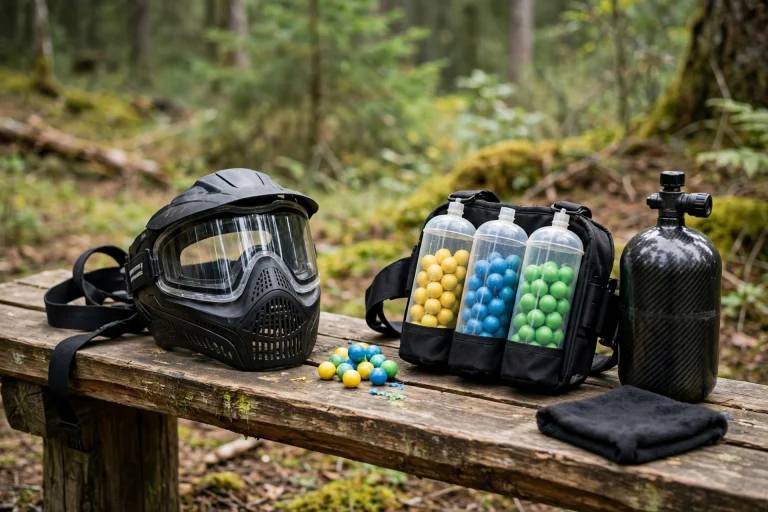
You stop a paintball mask fogging by keeping warm, moist air away from the inside of the lens and giving that air somewhere to go. In general terms, that means a lens that fits your face well, vents that stay clear, and an anti-fog treatment applied before you play. No single trick works on its own: fogging is caused by the difference between your warm breath and skin and a cooler lens, so the fix is a combination of fit, airflow, and lens care.
Fog is one of the most frustrating problems in paintball because it strikes at the worst moment. You push into a bunker, your breathing quickens, and suddenly you cannot see the player you are trying to spot. Lifting the mask to wipe the lens is not a safe option during play, so prevention matters far more than cure. This guide covers why masks fog, what to do before a game, and what to do when fog appears mid-game.
Why Does a Paintball Mask Fog Up?
A paintball mask fogs for the same reason a bathroom mirror fogs after a hot shower. Your breath and your skin give off warm, moist air, and when that air meets a cooler lens surface, the moisture condenses into tiny droplets. Those droplets scatter light, and your view turns milky. The effect is worse on cool mornings, in humid weather, and during hard play, when you breathe faster and sweat more.
Several things make fogging worse. A mask that sits loosely lets your breath rise straight up behind the lens instead of channelling it out through the vents. Foam that is worn, compressed, or damp holds moisture against your face and feeds the problem. Vents blocked by a headwrap, a hood, or paint splatter trap humid air inside the mask. And a scratched or dirty lens gives condensation more places to grip, so fog forms faster and clears more slowly.
Understanding this helps because every fix targets one part of the process: reducing the moisture reaching the lens, changing the lens surface so droplets cannot form, or moving air through the mask faster. The best results come from combining all three approaches.
How Can You Stop Fog Before the Game Starts?
Start with the lens itself. If your mask accepts a thermal lens — two panes sealed together with an insulating gap — use one, because the inner pane stays closer to your face temperature and fogs far less readily. Clean the lens the night before with a soft microfibre cloth, and avoid touching the inside of the lens with bare fingers, since skin oils attract moisture.
Apply an anti-fog treatment to the inside of the lens before you play, following the product instructions exactly. In general terms, most treatments work by spreading moisture into a thin, transparent film instead of letting it bead into droplets. Let the treatment dry fully before you put the mask on, and do not wipe the inside of the lens afterwards, or you will remove the coating you just applied. Reapply on a schedule that matches how often you play, not just when fog returns.
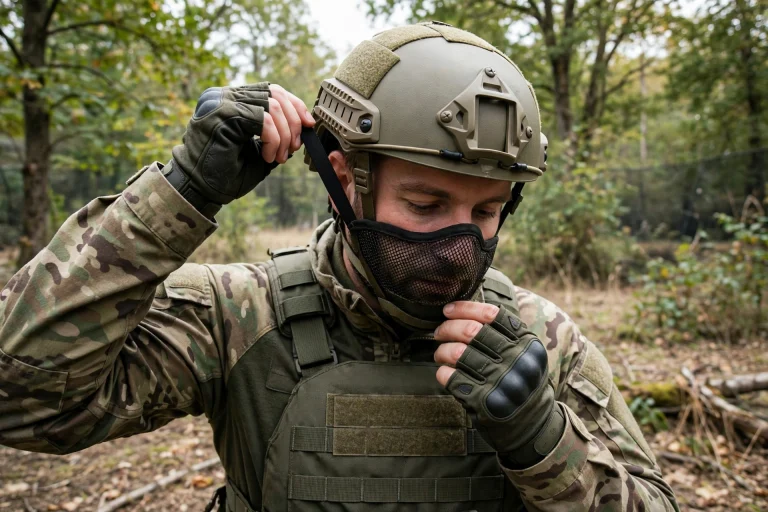
Check the mask fit and foam before you leave home. The foam should seal gently all around your face without gaps at the cheeks or forehead, and the strap should hold the mask snug without squeezing. Try the mask on with everything else you will wear, and make sure none of it covers the vents.
What Should You Do If Your Mask Fogs Mid-Game?
If fog appears during a game, do not lift or remove your mask on the field. That is a safety rule at every organised site, and it exists because a paintball to an unprotected eye can cause serious injury. Instead, move to cover, slow your breathing, and let the vents do their work. Breathing slowly through your nose, where your mask allows it, sends less warm air upward than fast mouth breathing.
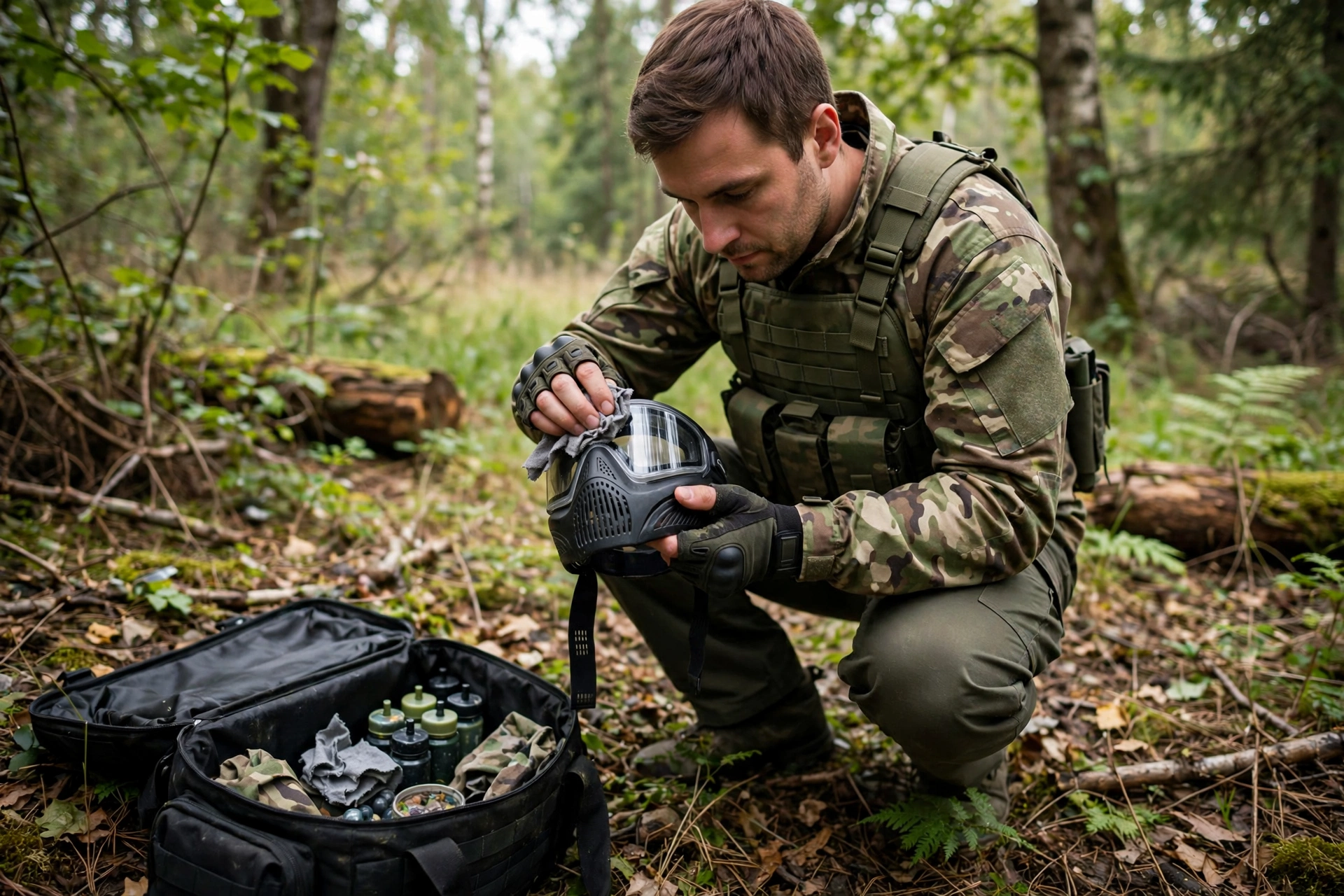
Between games, wipe the inside of the lens gently with a clean, dry microfibre cloth kept in a pocket or pouch, and check whether the foam is soaked with sweat. In general terms, damp foam is a common cause of repeated fogging across a day, so drying out or swapping a foam insert between games can make the next game noticeably clearer.
Does a Thermal Lens Really Help With Fogging?
Yes, in general terms a thermal lens is the single most effective upgrade against fogging. A single-pane lens has one surface that cools quickly in cold or damp air, so condensation forms easily. A thermal lens sandwiches a sealed air gap between two panes, and that gap insulates the inner pane, keeping it closer to the temperature of the air inside the mask. Fog still can form in extreme humidity, but it forms later and clears faster.
Thermal lenses need care of their own. Never separate the panes, never use harsh cleaners or paper towels on the inner pane, and store the mask somewhere the lens will not be scratched or crushed. A damaged seal lets moisture between the panes, and once that happens the lens can fog from the inside in a way no wipe or spray will fix. If your lens fogs between the panes, it is time to replace it.
Some players combine a thermal lens with a fan unit, a small battery-powered fan that pushes air across the lens. Fans add weight and need batteries, but for players who fog badly even with a thermal lens, they can be the difference between playing and sitting out. If you also play sports where a helmet is worn rather than a mask, reading about what MIPS is for helmets can help you understand another kind of protective technology you may see listed on helmets.
How Do Fit and Ventilation Affect Fogging?
Fit and ventilation are the quiet partners of any anti-fog treatment. A mask that seals well directs your breath downward and out through the lower vents instead of letting it wash over the lens. That is why foam condition matters so much: foam that has gone flat with age leaves channels for breath to escape upward, and no spray can compensate for a poor seal.
Ventilation works best when air can actually move. Keep the vents clean and unblocked, and avoid wearing a thick balaclava or scarf that seals the bottom of the mask shut. Some players find that a thin, breathable headwrap worn above the mask line works better than a hood pulled up over it.
Frequently Asked Questions
Q: Does anti-fog spray damage a thermal lens?
A: In general terms, a spray made for lenses should be safe, but harsh cleaners and abrasive cloths can damage the inner pane or its coating. Use products made for paintball or sports lenses, follow the instructions, and never rub the inner pane hard.
Q: Why does my mask fog even with a thermal lens?
A: Usually the cause is fit, blocked vents, or soaked foam letting breath reach the lens, or extreme humidity overwhelming the lens. Check the seal, clear the vents, dry the foam, and reapply anti-fog treatment before assuming the lens is faulty.
Q: Can I wipe the inside of my lens during a game?
A: No. Never lift or remove your mask on the field to wipe the lens. Move to cover, slow your breathing, and if you cannot see safely, leave the field with your mask on and clean the lens in the safe zone.

Olivia
Writer at Helmet Today, covering helmet reviews, fit and riding safety.