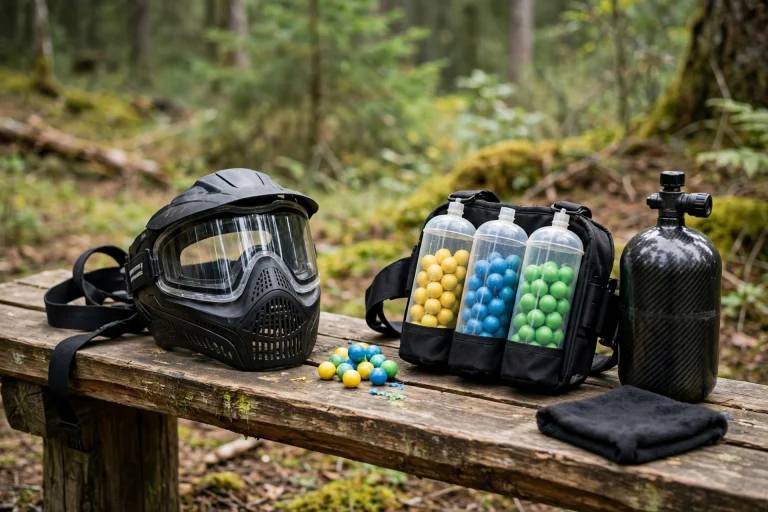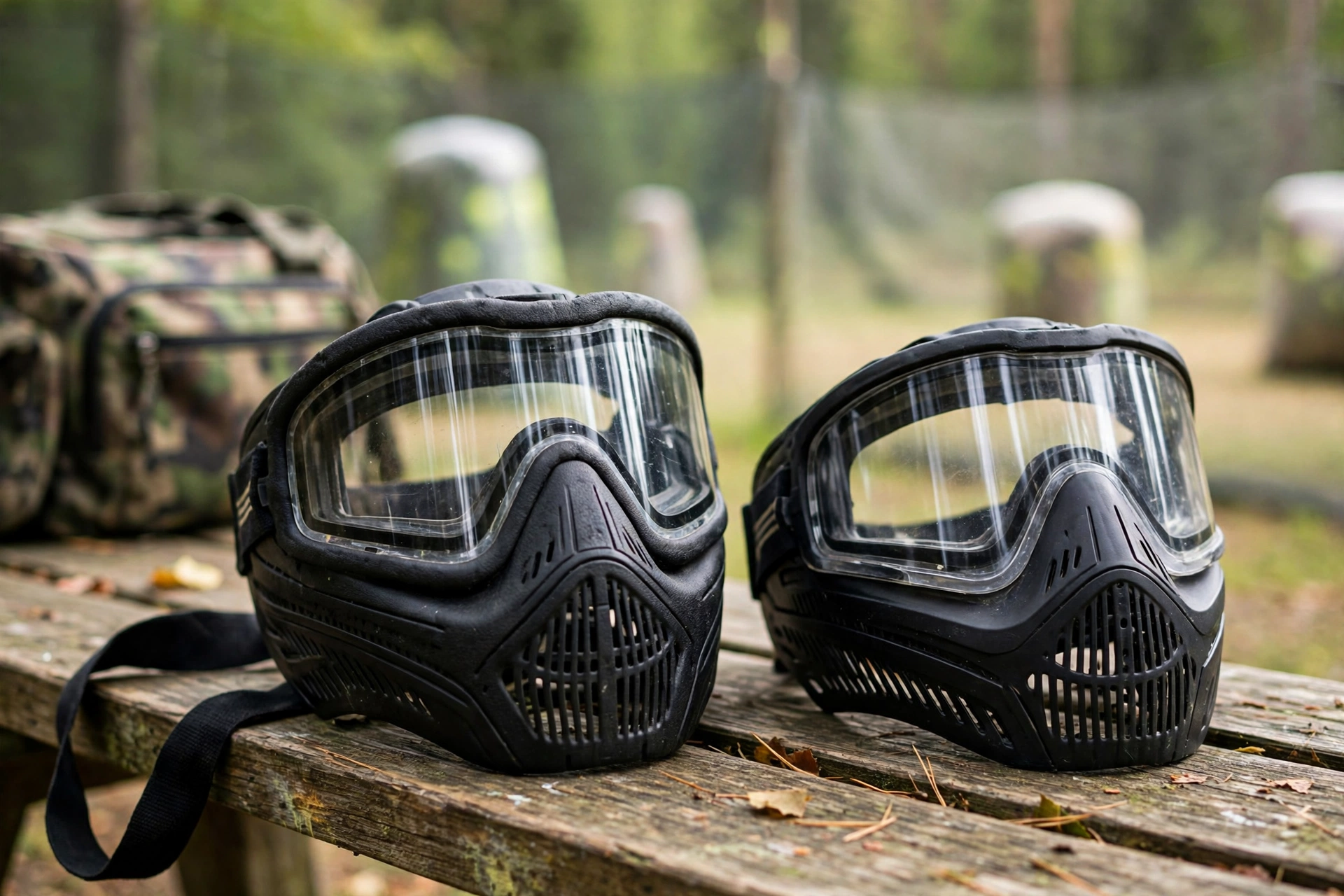
A thermal paintball lens fogs far less than a single pane lens, because its sealed double-pane design keeps the inner pane warmer, but it costs more and needs gentler care. A single pane lens is cheaper and simpler, and it can be fine for short games in mild weather, but it cools quickly and fogs readily when your breath meets cold air. For most regular players, the thermal lens is the better choice.
Choosing between the two is really a choice about how much fogging bothers you and how often you play. A player who plays once in summer sunshine may never notice the difference, while a player who plays through autumn and winter will notice it every game. This guide explains how each lens works, where each one struggles, and how to decide which suits you.
How Does a Single Pane Paintball Lens Work?
A single pane lens is exactly what it sounds like: one sheet of material between your eyes and the field. It is light, inexpensive, and easy to replace, which is why many entry-level masks ship with one. In mild, dry conditions it gives a clear view, and because there is only one pane, there is nothing to delaminate and no seal to fail.
The weakness of a single pane is temperature. The pane sits between warm, humid air on the inside and cooler air on the outside, and its single surface quickly drops toward the outside temperature. When your warm breath reaches that cool surface, moisture condenses into droplets, and the lens fogs. Anti-fog sprays help by spreading moisture into a film, but on a cold or humid day they only delay the problem rather than solving it.
Single pane lenses also tend to be the lenses players wipe most often, and every wipe is a chance to scratch the surface. Scratches scatter light and give condensation more grip, so a heavily wiped single pane lens can fog worse over time. For occasional play in good weather, that trade-off is acceptable; for regular play, it becomes a recurring frustration.
How Does a Thermal Paintball Lens Work?
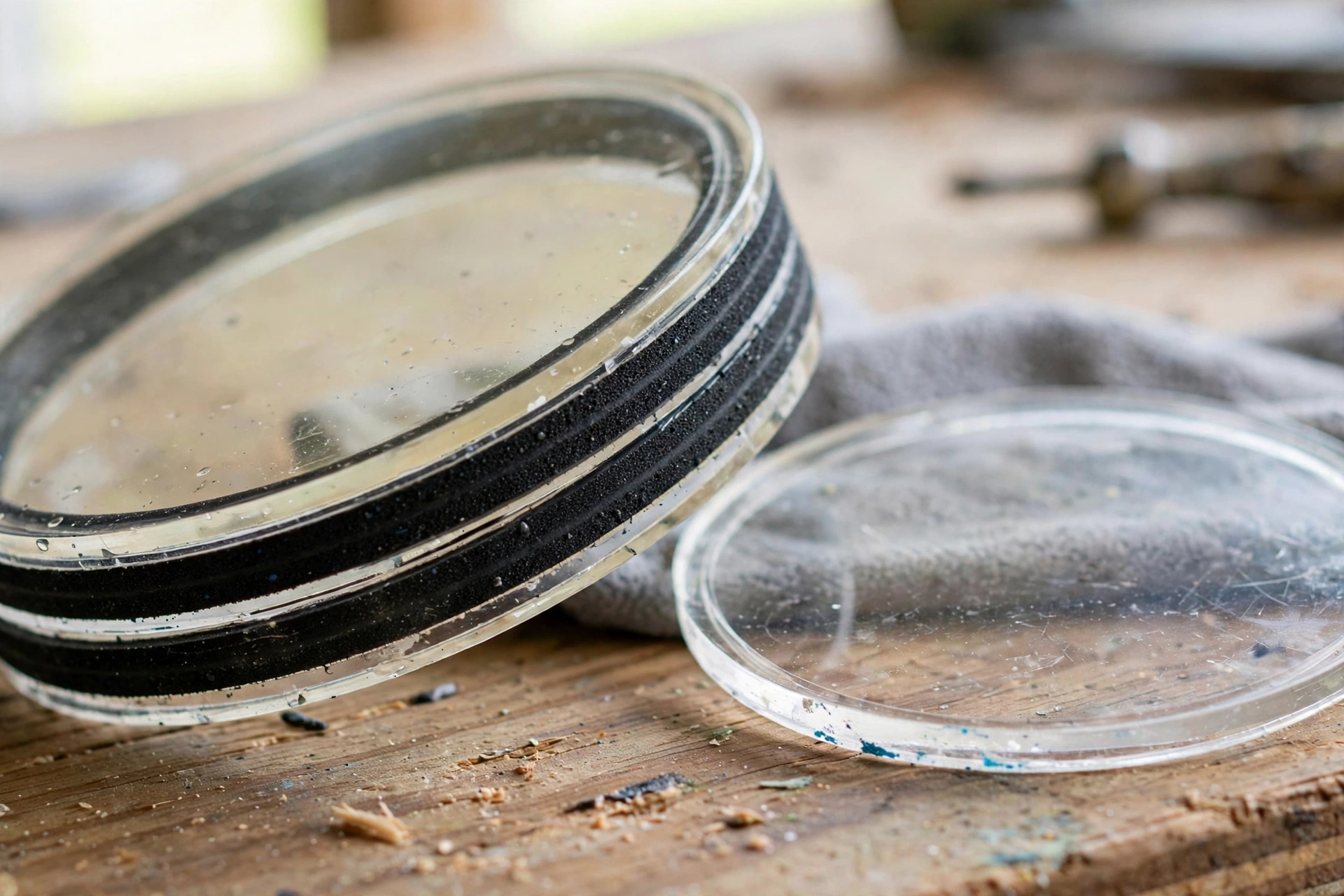
A thermal lens uses two panes with a sealed gap of air between them, much like double glazing in a house window. The outer pane faces the weather, the inner pane faces your face, and the trapped air insulates one from the other. The inner pane therefore stays closer to the temperature of the air inside the mask, and condensation forms far less readily.
That insulation is why thermal lenses are the standard recommendation for players who struggle with fogging. In general terms, a thermal lens does not make fogging impossible — extreme humidity and soaked foam can still overwhelm it — but it pushes the point at which fog appears much further into a game, and fog that does form tends to clear faster once airflow improves.
The sealed gap is also the thermal lens’s vulnerability. If the seal fails, moisture gets between the panes and fogs the lens from the inside, where no cloth or spray can reach it. That is why thermal lenses must be cleaned gently, stored carefully, and replaced when the seal is damaged rather than repaired with improvised fixes.
Which Lens Is Better for Cold or Humid Weather?
In cold or humid weather, the thermal lens wins clearly. Cold air chills a single pane fast, and humid air supplies plenty of moisture to condense on it, so a single pane lens in winter conditions can fog within minutes of a hard run. A thermal lens resists that combination because its inner pane stays warmer, and most players who switch in winter notice the difference immediately.
Humidity deserves a special mention, because it defeats even good lenses when the air is saturated. On a very humid day, any lens can mist, and the difference is one of degree: the thermal lens mists later and lighter.
For summer play in dry heat, the gap narrows. A single pane lens may stay clear for a whole game, and the thermal lens’s advantage is smaller. Even then, a thermal lens has one quiet benefit: it is usually the lens that comes with better masks, so buying thermal often means buying a better mask overall, with better foam and ventilation to match.
What Do Thermal Lenses Cost and How Long Do They Last?
Thermal lenses cost more than single pane lenses, in general terms noticeably more, because they are more complex to make and must be sealed precisely. That higher price buys fog resistance, not invulnerability: a thermal lens still scratches, still ages, and still needs replacing when its seal fails or its surface is damaged. Treat the extra cost as paying for clearer vision across a season, not as a one-time purchase for life.
Lifespan depends on care. A thermal lens cleaned with a soft microfibre cloth, stored in a case or bag where it cannot be scratched, and never cleaned with harsh chemicals can last through many games. A lens tossed loose into a gear bag, wiped with a sleeve, or cleaned with paper towels will degrade much faster. The same is true of single pane lenses, but the thermal lens has more to lose, since a damaged seal ends its fog-fighting advantage entirely.
When you price the choice, think about replacement lenses as well as the first one. Some masks have cheap, widely available thermal replacements, while others use lenses that are harder to find.
Which Lens Should You Choose?
Choose a thermal lens if you play regularly, play in cool or humid weather, or have struggled with fogging before. It is the most reliable single upgrade a fog-prone player can make, and it works alongside anti-fog treatments rather than replacing them. For a player building a regular kit, it is money well spent.
Choose a single pane lens if you play rarely, always in mild weather, and want to keep costs down, or if you are buying a first mask for a younger player who may outgrow it. Accept that you will need anti-fog spray, good fit, and realistic expectations on colder days, and plan to upgrade if fogging starts spoiling games.
Either way, fit matters as much as the lens. A thermal lens in a poorly fitting mask will still fog, and a single pane lens in a well-fitting mask with clear vents can perform surprisingly well. If you play other helmet sports too, reading about what MIPS is for helmets can help you understand the protective features listed on helmets, which are a different kind of lens-free protection question. Start with the lens that matches how and where you play, and upgrade when your games tell you to.
Frequently Asked Questions
Q: Can I upgrade a single pane mask to a thermal lens?
A: In general terms, yes if the mask maker sells a thermal lens for your exact mask model. Lenses are model-specific, so check compatibility before buying, and never force a lens from a different mask into the frame.
Q: How do I know if my thermal lens seal has failed?
A: Fog or moisture appearing between the two panes, where you cannot wipe it from either side, is the clear sign. A failed seal cannot be fixed by cleaning, so the lens needs replacing.
Q: Do thermal lenses affect vision or tint?
A: A clear thermal lens should not noticeably change your view compared with a clear single pane lens. Tinted or mirrored thermal lenses reduce brightness like any tinted lens, so choose a tint that suits the light you usually play in.

Olivia
Writer at Helmet Today, covering helmet reviews, fit and riding safety.