Clean a paintball mask after a game by removing paint and dirt gently, washing the foam and strap, and letting everything dry fully before storage. In general terms, a quick clean straight after play takes only a few minutes and stops paint drying onto the lens, foam going sour, and straps stiffening with grime. A mask that is cleaned regularly also lasts longer and stays clearer on the field.
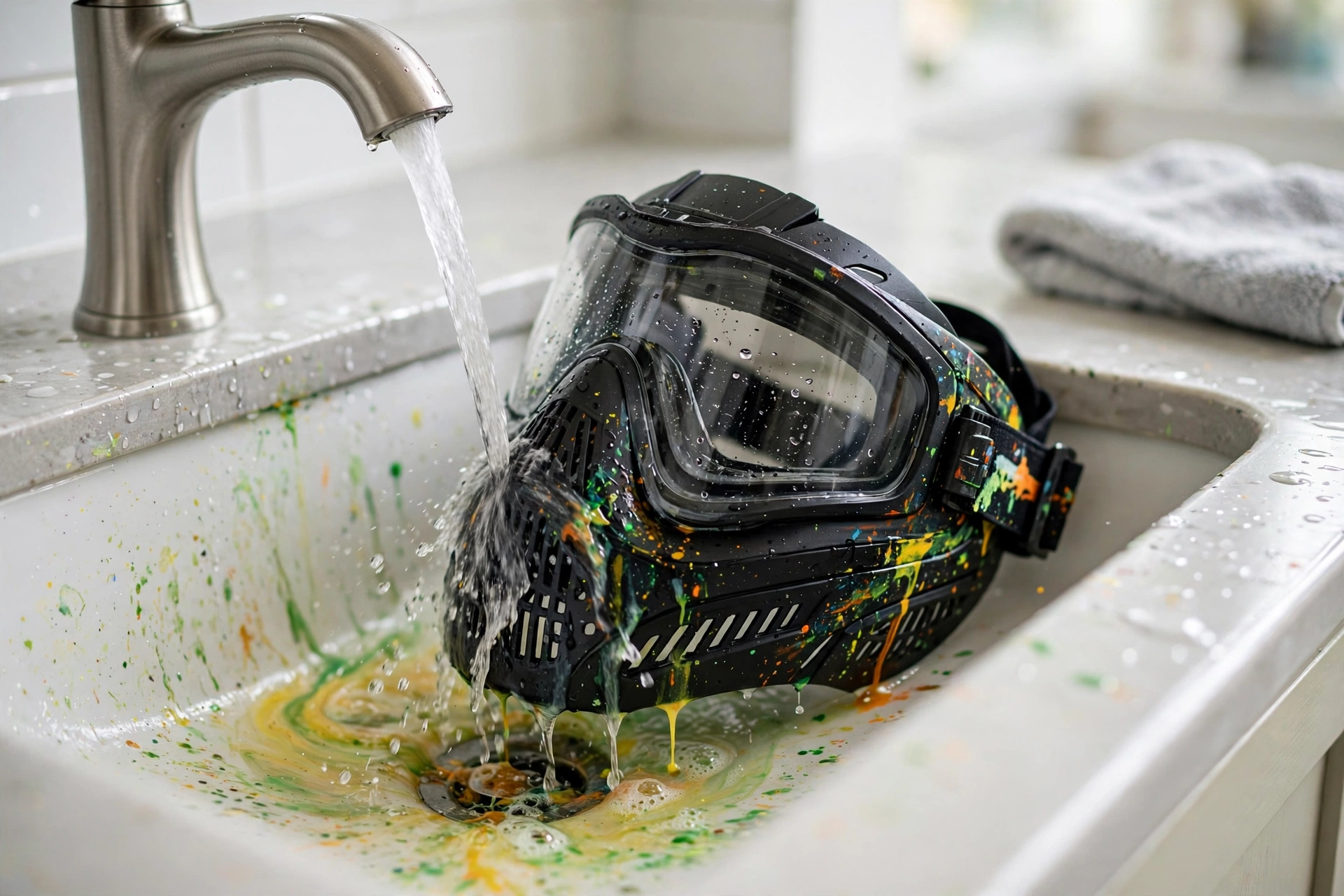
Paintball paint is designed to break on impact, so it gets everywhere: lens, frame, foam, vents, and strap. Left alone, it dries into a film that is much harder to remove, and sweat soaked into the foam starts to smell. This guide walks through a safe post-game clean, step by step, and notes the mistakes that damage lenses and foam.
What Do You Need to Clean a Paintball Mask?
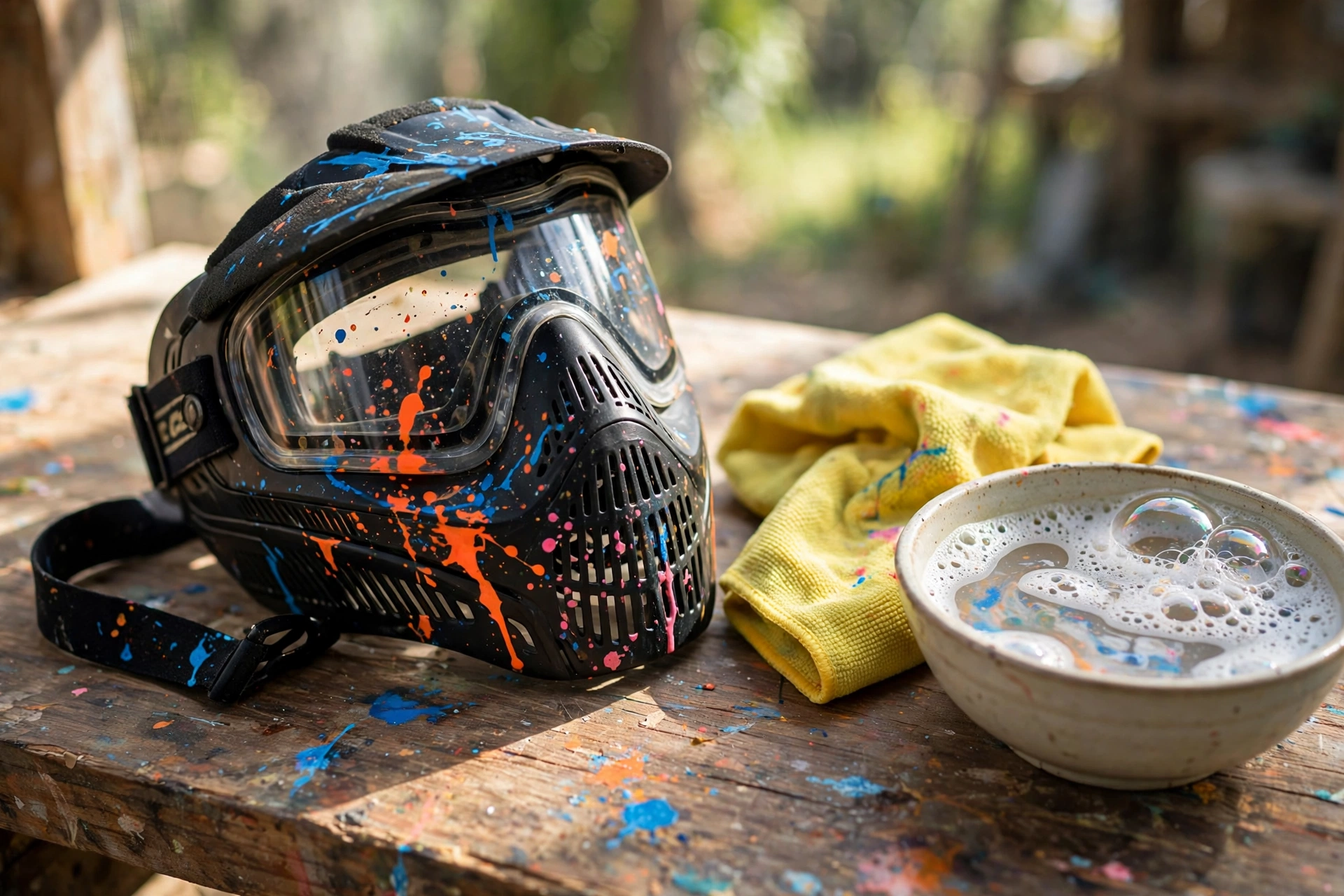
You need very little: a soft microfibre cloth, lukewarm water, a small amount of mild soap, and a dry towel. A soft brush, such as an old toothbrush, helps with vents and frame grooves, and a second cloth kept dry is useful for a final wipe. Avoid paper towels, rough sponges, and household glass cleaners, all of which can scratch a lens or damage its coatings.
It also helps to have a clean surface to work on and a place where the mask can air-dry. Never use hot water on a thermal lens, and never put a mask in a washing machine or tumble dryer. Foam, straps, and lens coatings are not built for that kind of heat or agitation, and a machine wash can ruin a mask that would otherwise have lasted for seasons. Set aside ten minutes after each game day and the routine quickly becomes habit.
How Do You Clean the Lens Safely?
Start with the lens, because it is the most delicate part. If the lens removes from the frame, take it out so you can clean both sides without stressing the frame. Rinse loose paint and dirt off under lukewarm running water first, so grit is carried away rather than dragged across the surface. Then wash gently with a soft cloth and mild soapy water.
For a thermal lens, be especially gentle with the inner pane and never try to separate the two panes. Do not scrub, and do not use solvents, alcohol-based cleaners, or abrasive pads. Rinse the soap off fully, shake off excess water, and pat the lens dry with a clean microfibre cloth. Let it air-dry completely before putting it back in the frame or into a bag, since trapped moisture encourages mould and, on a thermal lens, can threaten the seal over time.
Check the lens as you clean it. Look for scratches that catch the light, chips at the edges, cracks, and any moisture between the panes of a thermal lens. A damaged lens should be replaced, not cleaned harder: no cleaning routine restores a scratched or delaminated lens, and a compromised lens is a safety issue, not a cosmetic one. Keep a spare lens in your kit bag if your mask model allows quick lens swaps, so a damaged lens never forces you to play with compromised protection.
How Do You Clean the Foam, Frame, and Strap?
The foam absorbs sweat, so it needs washing even when it looks clean. Wipe it with a damp cloth and mild soapy water, squeezing gently to work the soap through, then rinse the cloth and wipe again until no soap remains. If the foam removes from the frame, you can wash it separately in lukewarm soapy water, rinse well, and press it gently in a towel to remove excess water.
Clean the frame and vents with the same soapy cloth, using a soft brush for grooves and vent slots where paint collects. The strap can be wiped down or hand-washed in soapy water, then rinsed and laid flat to dry. Avoid stretching the strap hard while it is wet, since elastic recovers poorly from being pulled when soaked. In general terms, a strap that has lost its stretch should be replaced rather than tightened beyond its adjustment range. If the strap still smells after washing and drying fully, wash it once more before deciding it needs replacing.
Never reassemble or bag a mask while parts are still damp. Foam that is stored wet develops odour and mould quickly, and a damp mask in a sealed bag is a common cause of a ruined next game. Air-dry every part fully, ideally in a ventilated room out of direct sunlight, before putting the mask away.
How Should You Store a Clean Paintball Mask?
Store the mask in a bag or case that protects the lens from scratches, with the lens facing away from zips, buckles, and other hard gear. A soft mask bag or a dedicated case works well, and a microfibre cloth left over the lens adds a layer of protection. Keep the mask somewhere cool and dry, away from radiators and car boots in summer heat, which can warp frames and age foam.
Between games, a quick wipe of the lens and a check of the foam are usually enough, with a full wash reserved for after muddy or heavily painted games. It is also worth inspecting the strap and buckles regularly: a frayed strap or a cracked buckle can fail at an awkward moment, and both are cheaper to replace than the mask itself. If you play other helmet sports as well, reading about what MIPS is for helmets can help you understand a protective feature found on many helmets. A few minutes of care after each game day keeps the mask hygienic and ready for the next one.
Frequently Asked Questions
Q: Can I use glass cleaner on a paintball mask lens?
A: In general terms, no. Household glass cleaners can damage lens coatings, especially on thermal lenses. Use lukewarm water with a little mild soap and a soft microfibre cloth instead.
Q: How often should I wash the foam?
A: Wipe it after every game and wash it properly after sweaty, muddy, or paint-heavy games. If the foam smells even after washing, or has gone flat and no longer seals, it is time to replace it.
Q: My lens still looks smeary after cleaning — what is wrong?
A: Usually soap residue, a scratched surface, or a damaged thermal seal. Rinse again and dry with a clean cloth; if smearing remains on a thermal lens or scratches catch the light, replace the lens.

Olivia
Writer at Helmet Today, covering helmet reviews, fit and riding safety.