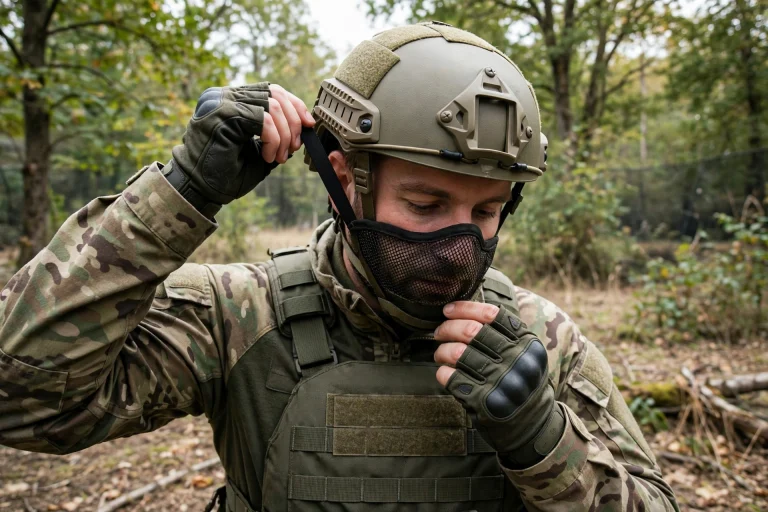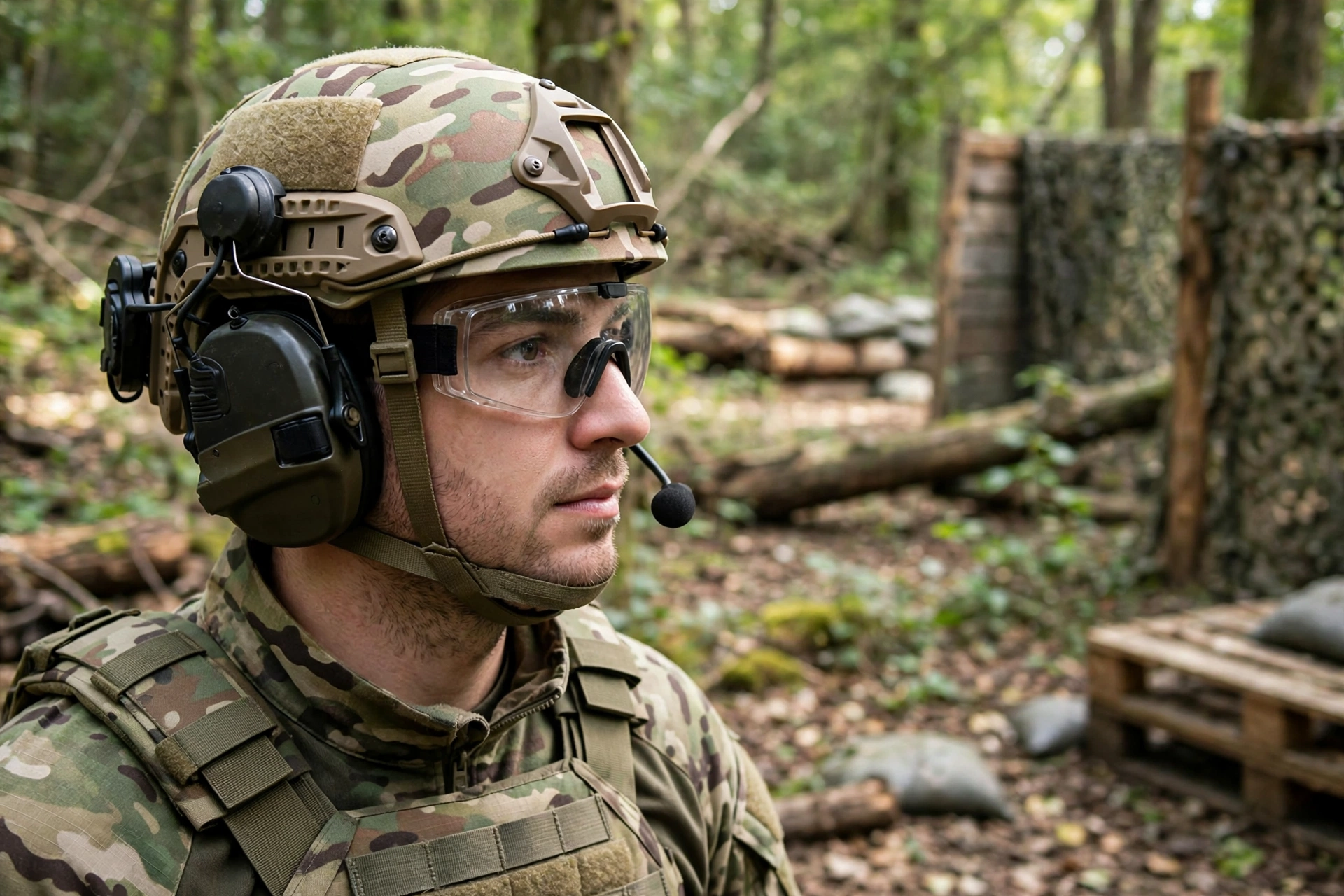
An airsoft helmet with ear protection combines a helmet shell with ear cups or covers that shield your ears from BB impacts and loud noise while still letting you hear calls and movement. In general terms, the ear protection is either built into the helmet or mounted on its side rails, and it ranges from simple padded covers to electronic ear defenders that amplify quiet sounds and cut out sharp cracks. The right setup depends on how you play and how much hearing you need on the field.
Ears are an easy target in airsoft. A BB to an unprotected ear stings, and repeated hits can be genuinely painful, so many players add ear protection even when their site does not require it. This guide explains the main types, how they mount, and what to check before you buy.
What Kinds of Ear Protection Fit an Airsoft Helmet?
The simplest option is a padded ear cover that attaches to the helmet or sits under it, shielding the ear from direct BB hits. These covers are light, cheap, and easy to fit, but they do not reduce noise and they can trap heat. They suit players whose main concern is impact rather than sound, and they work well on helmets that already have good side coverage.
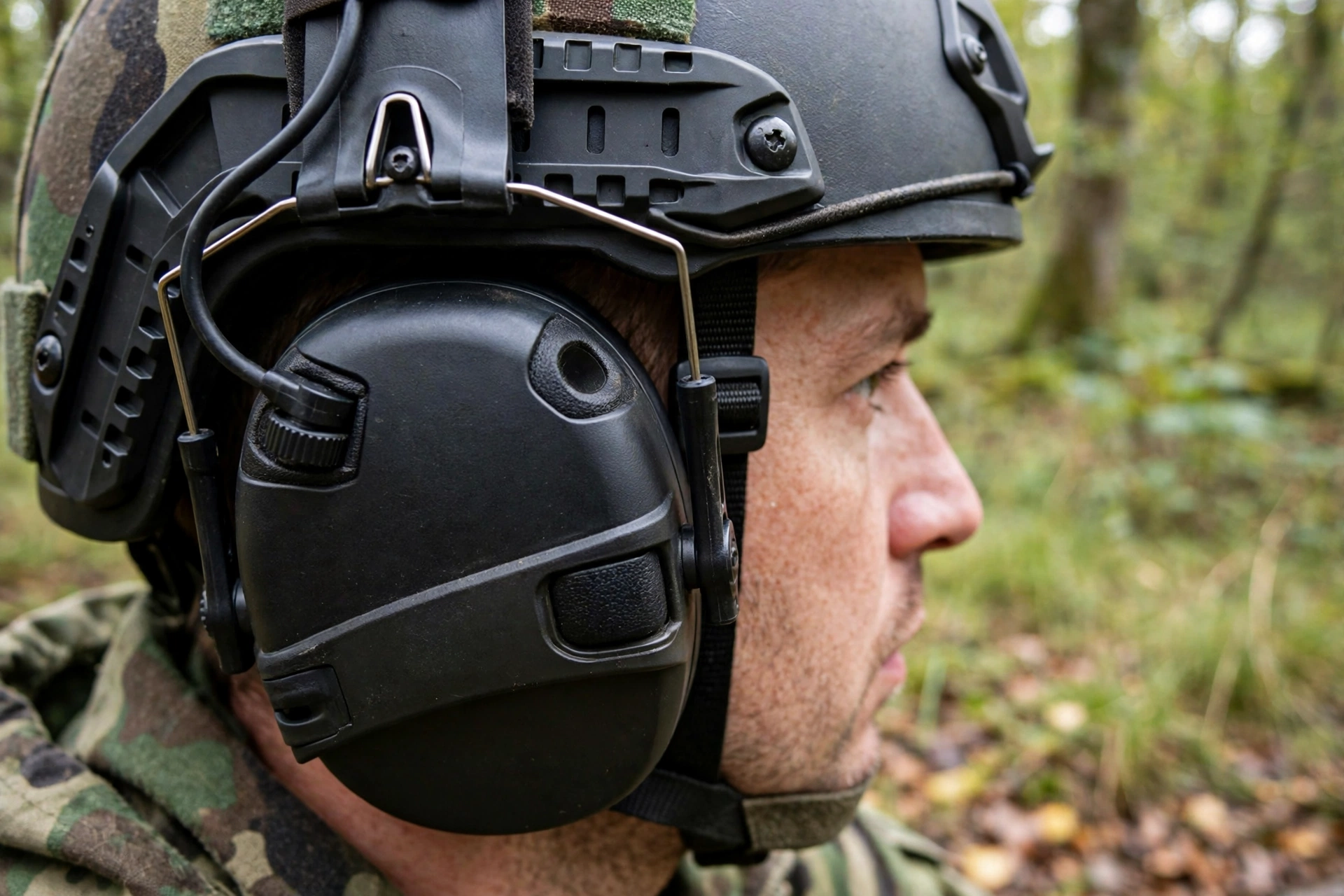
Electronic ear defenders are the more capable option. They use microphones and speakers to let normal sounds through — footsteps, voice calls, rustling — while cutting out sudden loud noises. Many models mount to a helmet’s side rails with adapters, and some have a neckband or headband version that can be worn under a helmet instead. They cost more and need batteries, but for players who rely on hearing, they are the clear upgrade.
Passive earmuffs sit between the two. They reduce noise without electronics and need no batteries, but they also muffle the quiet sounds you want to hear, which can be a real disadvantage in a game built on listening. They are a reasonable choice for target shooting or marshals, but most regular players prefer either simple covers or electronic defenders.
How Does Ear Protection Mount to an Airsoft Helmet?
Most airsoft helmets use side accessory rails, and ear defenders made for helmets clip to those rails with adapters. The adapter matters as much as the defender: the wrong adapter leaves the cups sitting too high, too low, or too far from the ear, and a cup that does not seal against the head protects poorly. Check that the adapter matches both your helmet rail type and your defender model before ordering.
Some helmets have ear covers built into the shell itself, with padding over the ear area and cut-outs that keep the ear accessible. These are lighter and simpler, but they cannot be upgraded to electronic defenders, and their protection depends entirely on the shell design. Other players wear a separate ear defender under a helmet without rails, which works if the helmet has room for the cups, but it can press uncomfortably and shift the helmet’s fit.
Whichever route you take, test the whole setup together before a game. Put the helmet on, fit the ear protection, add your eye protection and any face protection, and check that nothing pushes anything else out of place. Ear cups that lift your goggles or break your mask seal create new problems while solving an old one.
Can You Still Hear Well With Ear Protection On?
With electronic defenders, yes — in general terms, you hear normal sounds clearly and sometimes better than without them, because the microphones pick up quiet sounds. That matters in airsoft, where hearing a call, a footstep, or a magazine change can decide a firefight. Players switching from passive muffs to electronic defenders often report that the game feels easier, not harder, to follow.
With passive covers or muffs, hearing is reduced, and you will miss quiet sounds. Some players accept that trade-off for the simplicity, but it is worth testing in a game before committing. If you play a stealth-heavy style, or you marshal and need to hear safety calls, passive protection may cost you more than it saves.
Comfort affects hearing too. Cups that press hard cause headaches on long days, and players who keep adjusting their ear protection are players who are not watching the field. Look for cups with soft seals, adjustable arms, and a fit that stays put when you run, crouch, and go prone. Testing the setup in a full game, not just in front of a mirror, is the best way to find pressure points before they ruin a game day.
What Should You Check Before Buying?
Start with compatibility: helmet rail type, defender model, and adapter. Then check the seal — the cups should sit flat against your head with no gaps, since a gap lets BBs and sound through alike. Check weight and balance as well, because defenders add weight to the sides of the helmet, and a setup that pulls the helmet sideways will annoy you all day.
Think about power and maintenance for electronic models. Rechargeable batteries save money over a season, but a dead battery mid-game leaves you with passive cups, so carry spares or charge the night before. Removable, washable seals are a practical plus, since ear cups collect sweat quickly.
Finally, remember that ear protection is part of a system, not a standalone purchase. It must work with your eye protection, face protection, and any radio headset you use. If you wear a helmet for other sports too, reading about what MIPS is for helmets can help you understand a protective technology that appears on many helmets, separate from ear protection but relevant to overall head safety. Buy the combination that fits together, not the best individual parts.
Frequently Asked Questions
Q: Do I need ear protection for airsoft?
A: In general terms, it is strongly recommended even where it is not required, because a BB to the ear is painful and repeated hits can cause injury. Many players consider ear covers part of their basic kit.
Q: Can any ear defenders fit any airsoft helmet?
A: No. Rail-mounted defenders need an adapter that matches both the helmet rail and the defender model. Check compatibility before buying, and test the fit with your eye and face protection.
Q: Are electronic ear defenders worth the extra cost?
A: For players who rely on hearing, yes. They protect against loud cracks while letting speech and quiet sounds through, which passive muffs cannot do. For casual play, simple padded covers may be enough.

Olivia
Writer at Helmet Today, covering helmet reviews, fit and riding safety.