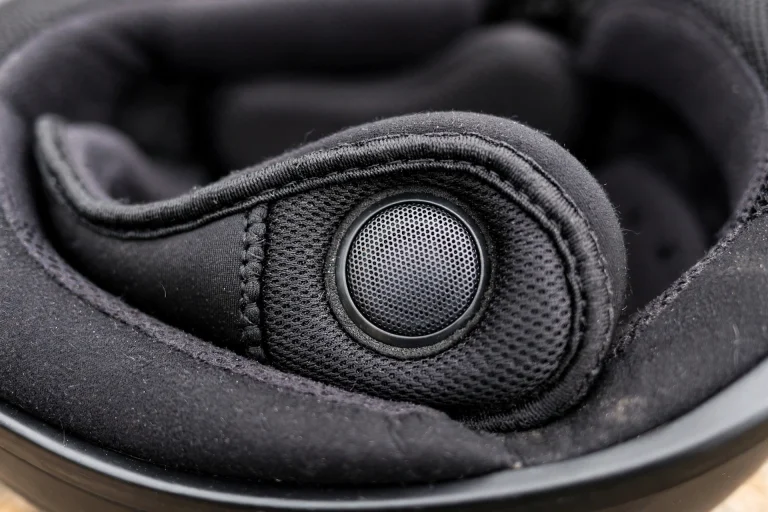
In general terms, a chin curtain on a motorcycle helmet is a soft fabric or foam panel that hangs below the chin bar to block wind, rain, and road noise from entering the helmet from underneath, and it is worth using if you ride in cold, wet, or noisy conditions. It does not change the helmet’s structure, but it can make a long ride noticeably warmer, quieter, and more comfortable. Most chin curtains are removable, so you can take them out in summer and fit them again when the weather turns.
Chin curtains are a small, inexpensive accessory, yet many riders do not know they exist until they try a helmet that already has one fitted. This guide explains what a chin curtain does, when it helps, when it does not, and how to fit and look after one.
What Does a Chin Curtain Do on a Motorcycle Helmet?
A chin curtain works by closing the gap between the bottom of the chin bar and your neck. Without one, wind rushes up from below, especially at motorway speeds, and brings cold air, rain spray, dust, and noise with it. The curtain blocks much of that flow, so the inside of the helmet stays warmer and calmer, and your eyes water less.
Noise is often the most noticeable benefit.
The curtain also helps keep rain and spray out. In wet weather, water thrown up from the road can be driven up under the chin bar and onto your face and the inside of the visor. A chin curtain catches much of that spray before it reaches you, which helps keep your vision clearer in the rain.
When Is a Chin Curtain Most Useful?
A chin curtain is most useful in cold weather, when wind chill is the main problem. On a winter ride, cold air entering under the chin bar can chill your neck and face quickly, and a curtain helps keep that cold air out.
It also helps on long, fast rides, where wind noise builds up over hours and becomes tiring. Touring riders and commuters who spend a lot of time at higher speeds often notice the difference most, because the curtain reduces the constant roar that makes a long ride feel exhausting.
In wet weather, a chin curtain is useful too, for the spray reason above.

Are There Downsides to Using a Chin Curtain?
The main downside is heat. A chin curtain blocks airflow from below, which is exactly what you want in winter, but in summer it can make the helmet feel warmer and stuffier. In general terms, if you ride in hot weather, you may find the curtain traps warm, humid air inside the helmet, which can fog the visor and make you sweat more. Most riders remove the curtain in summer for this reason.
A chin curtain can also make the helmet feel tighter around the chin and neck, especially if you wear a balaclava or a thick neck warmer underneath it. If the curtain presses on your throat or makes it hard to breathe comfortably, it may be the wrong size or shape for your helmet, or it may be fitted incorrectly. It should sit close to your neck without pressing hard on it.
Finally, a curtain can interfere with a breath deflector or a Pinlock insert if your helmet has one. Check that the curtain does not push the deflector out of place or block the vents at the bottom of the helmet. If you are learning about helmet technology, reading about what MIPS is for helmets can help you understand one of the features you may see listed on the box.
How Do You Fit a Chin Curtain Correctly?
Most chin curtains are made for a specific helmet model, and they fit by clipping, snapping, or pressing into place under the chin bar. Start by checking the maker’s instructions for your helmet, because the fixing points vary. In general terms, you should be able to fit a curtain without tools, and it should sit snugly without forcing it.
Fit the curtain with the helmet off your head first, so you can see how it sits. It should hang evenly below the chin bar, with no gaps at the sides where wind can rush in. Then put the helmet on and check that the curtain sits close to your neck without pressing on your throat or chin. Turn your head both ways to make sure it does not pull or catch.
If the curtain is a universal type rather than one made for your helmet, take extra care with the fit. A universal curtain that is too large will bunch up and press on your neck, while one that is too small will leave gaps and flap in the wind. If it does not sit neatly, it is better to buy the model-specific version than to struggle with a poor fit.
How Do You Look After a Chin Curtain?
A chin curtain sits close to your mouth and neck, so it picks up sweat, breath moisture, and road grime. Remove it regularly and wash it as the maker advises, usually with mild soap and lukewarm water, then let it air-dry fully before refitting it. A damp curtain left inside a helmet can develop a musty smell and can make the helmet’s lining damp too.
Check the curtain for wear each time you wash it. Look for frayed edges, torn stitching, or clips that have loosened. A curtain that is falling apart can flap in the wind or come loose while riding, which is a distraction you do not need. Replace it if it no longer sits securely, because a new curtain is inexpensive.
Store a removed curtain flat, in a clean, dry place, so it keeps its shape for next winter. Avoid folding it tightly in the same creases every time, and keep it away from direct heat. If you remove the curtain for summer, note where you stored it, so you can find it again when the cold weather returns.
Frequently Asked Questions
Q: Will a chin curtain make my visor fog up more?
A: In general terms, it can do, because it reduces airflow inside the helmet. If fogging becomes a problem, open a vent slightly, use an anti-fog insert if your helmet takes one, or remove the curtain in warmer weather.
Q: Can I fit a chin curtain to any motorcycle helmet?
A: Most full-face helmets can take one, especially if the maker offers a model-specific curtain. Open-face and flip-up helmets vary more, so check the maker’s guidance for your helmet before buying a universal type.
Q: Does a chin curtain affect helmet safety?
A: In general terms, no, if it is made for your helmet and fitted correctly. It is a soft accessory that sits below the chin bar, and it should not change how the helmet fits or how the strap works. Remove it if it presses on your throat or changes the fit.

Olivia
Writer at Helmet Today, covering helmet reviews, fit and riding safety.