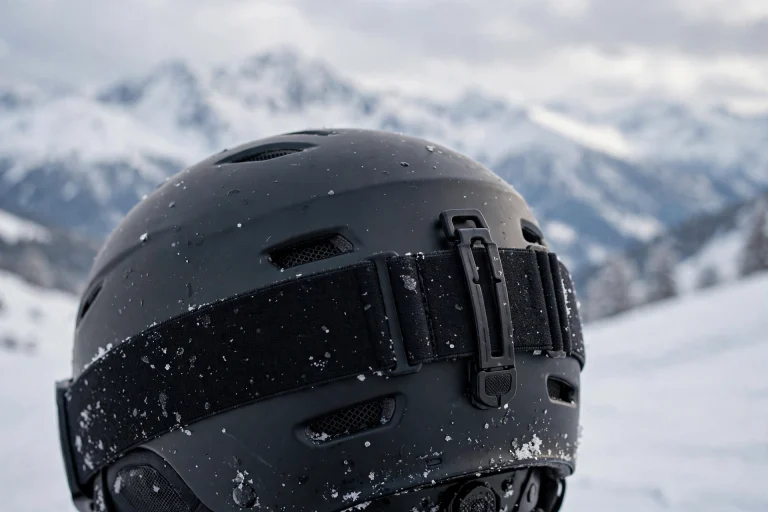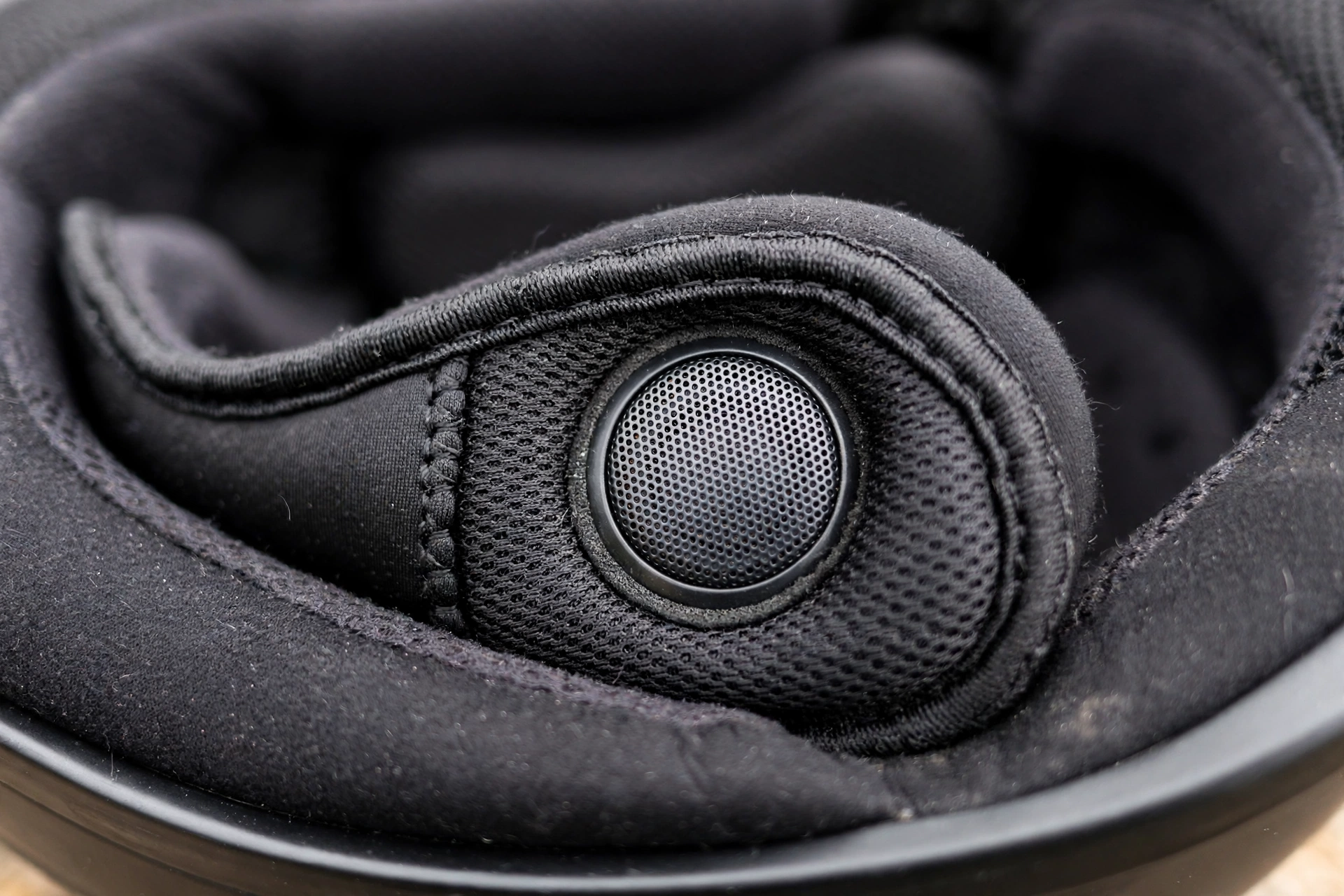
Helmet speaker pockets are small fabric pouches or slots built into the ear pads of a helmet, designed to hold slim speakers so you can listen to music, directions, or calls without wearing earbuds. In general terms, they sit over or just behind your ears, inside the helmet’s padding, and they keep the speakers in place so the sound stays clear and the speakers do not press uncomfortably against your head.
Speaker pockets are common in ski, snowboard, and motorcycle helmets, and they are appearing in more bike helmets too. They matter because they let you hear audio while keeping your ears free of earbuds, which can be uncomfortable under a snug helmet and can block the sounds around you. This guide explains how speaker pockets work, what fits in them, and what to check before you use them.
How Do Helmet Speaker Pockets Work?
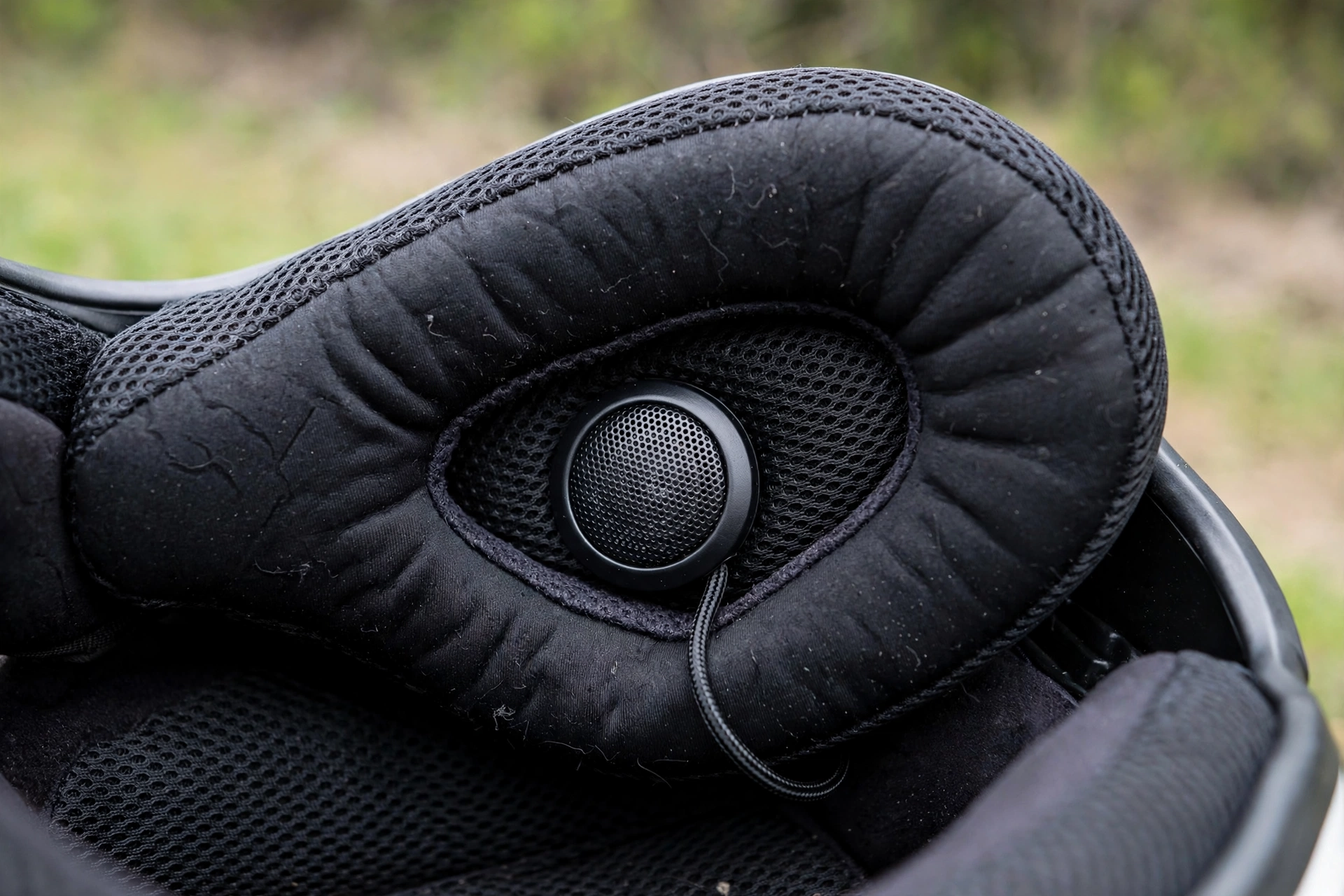
A speaker pocket is usually a flat pouch sewn into the ear pad or cheek pad, with an opening that lets you slide a slim speaker in and out. Some pockets are a simple mesh sleeve, while others are a shaped cavity with a hook-and-loop closure or a small zip. The speaker sits close to your ear but not touching it, so the sound reaches you through the padding without the speaker digging in.
Many helmets with speaker pockets also have a channel or loop for the speaker wire, so a wired set can run neatly to a phone or music player in your pocket. Wireless speakers usually connect by Bluetooth and need no wire at all, though you still need to charge them and pair them before you ride. The pocket itself does not make sound; it simply gives the speaker a secure, comfortable home inside the helmet. Some makers sell their own speaker kits sized for their pockets, while others leave the pocket open so you can use speakers from different brands.
What Size Speakers Fit in Helmet Speaker Pockets?
Most speaker pockets are made for slim, round speakers around 40 millimetres across and only a few millimetres thick, which is the size of the small drivers used in many helmet audio kits. Larger speakers will not fit, and forcing one in can press against your ear and cause discomfort or a pressure point that becomes painful over a long ride. Before buying speakers, measure the pocket or check the helmet maker’s guidance on which speaker kits fit that model.
Thickness matters as much as diameter. A speaker that is too thick will push the ear pad against your ear, which can be uncomfortable and can also change how the helmet fits. In general terms, if the ear pad feels noticeably tighter with the speaker in place, the speaker is too thick for that pocket. Some helmets have removable ear pads with deeper pockets, which give more room, while others have shallow pockets that only suit very slim speakers. If you are unsure, try the speakers in the pocket while wearing the helmet for a few minutes before committing to a long ride.
Are Helmet Speakers Safe to Use While Riding?
Helmet speakers have a safety advantage over earbuds: because they sit outside your ear canal, they usually let in more of the sounds around you, such as traffic, other riders, or a warning shout. That said, any audio can distract you, and loud music can still mask important sounds. The sensible approach is to keep the volume low enough that you can hear what is happening around you, and to turn the audio off entirely in busy traffic or in conditions where you need full attention.
Rules vary by place, and in some areas there are restrictions on wearing headphones or listening to audio while riding or driving, so it is worth checking the local rules before you use speakers on the road. On a ski slope or a trail, the rules are usually looser, but the same common sense applies: if you cannot hear a skier calling out behind you or a rider approaching, the volume is too high. Some speaker kits have a quick mute button or a control on the helmet, which makes it easy to silence the audio without taking the helmet off.
How Do You Fit and Look After Helmet Speakers?
Fitting speakers is usually simple. Remove the ear pad if it is detachable, slide the speaker into the pocket with the sound side facing your ear, and route any wire through the channel provided. Put the ear pad back, then put the helmet on and check the fit: the speaker should not press hard against your ear, and the helmet should feel the same as it did without the speaker. If the fit has changed, try a slimmer speaker or a different position in the pocket.
Look after the speakers by keeping them dry and removing them before washing the ear pads, since most speakers are not made to be washed. Charge wireless speakers before a ride, and check the battery level so they do not die halfway through. If the sound becomes muffled, check that the pocket is clean and the speaker is not blocked by padding. When comparing helmets with speaker pockets, reading about what MIPS is for helmets can help you understand the safety features built into the helmet itself, so you can weigh audio convenience against protection.
What If Your Helmet Has No Speaker Pockets?
Not every helmet has speaker pockets, and that does not mean you cannot listen to audio. Some riders use thin adhesive speaker mounts that stick to the inside of the ear area, though these can be less comfortable and may come loose in heat or sweat. Others use bone conduction headphones, which sit outside the ear and rest on the cheekbone, and these can work under a helmet if there is enough room. A third option is a helmet with removable ear pads that can be swapped for pads with pockets, if the maker offers them for that model.
Before adding anything to a helmet, check that it does not change the fit or press on your ears, and never cut or glue anything into the helmet’s protective foam, because that can weaken it. If audio matters to you, the simplest path is to choose your next helmet with speaker pockets already built in, and to check the pocket size against the speakers you plan to use.
Frequently Asked Questions
Q: Do helmet speaker pockets work with any Bluetooth speakers?
A: In general terms, any slim speaker that fits the pocket will work, but size is the limiting factor. Most pockets suit round speakers around 40 millimetres across and only a few millimetres thick, so check the measurements before buying.
Q: Will speakers in the pockets change how my helmet fits?
A: They should not, if the speakers are slim enough for the pocket. If the ear pad feels tighter or presses on your ear with the speaker in place, the speaker is too thick and you should try a slimmer one.
Q: Can I wash ear pads with the speakers still inside?
A: No, remove the speakers first. Most helmet speakers are not made to be washed, and water can damage them. Wash the pads on their own and let them dry fully before putting the speakers back.

Olivia
Writer at Helmet Today, covering helmet reviews, fit and riding safety.