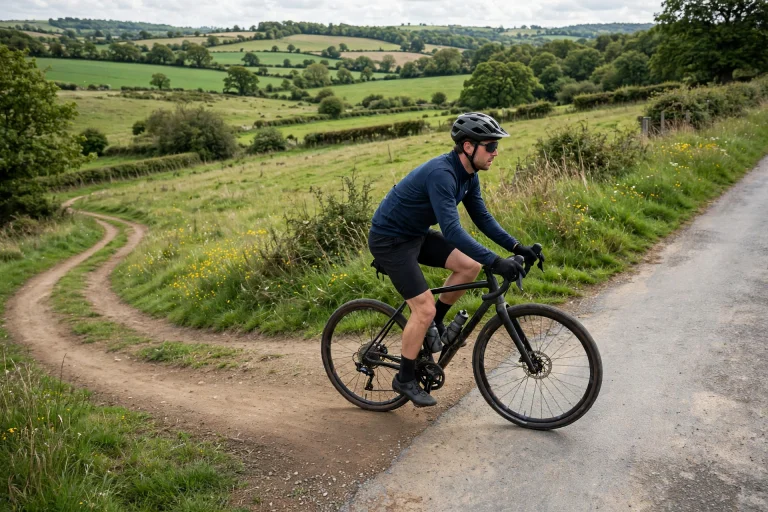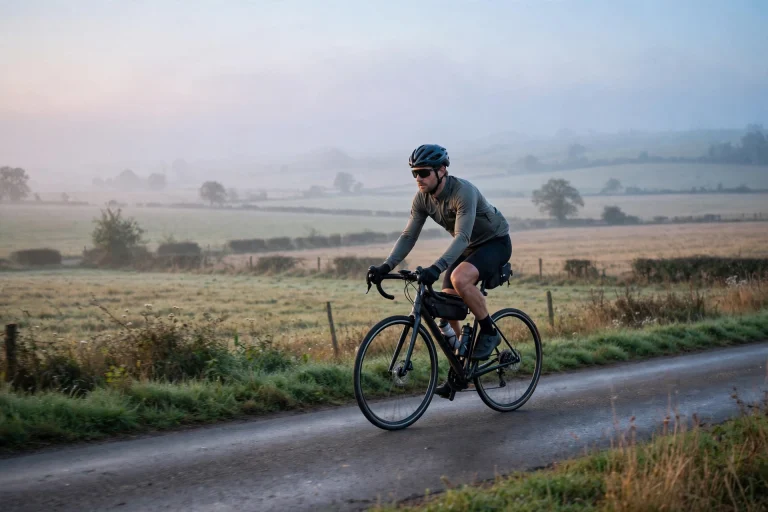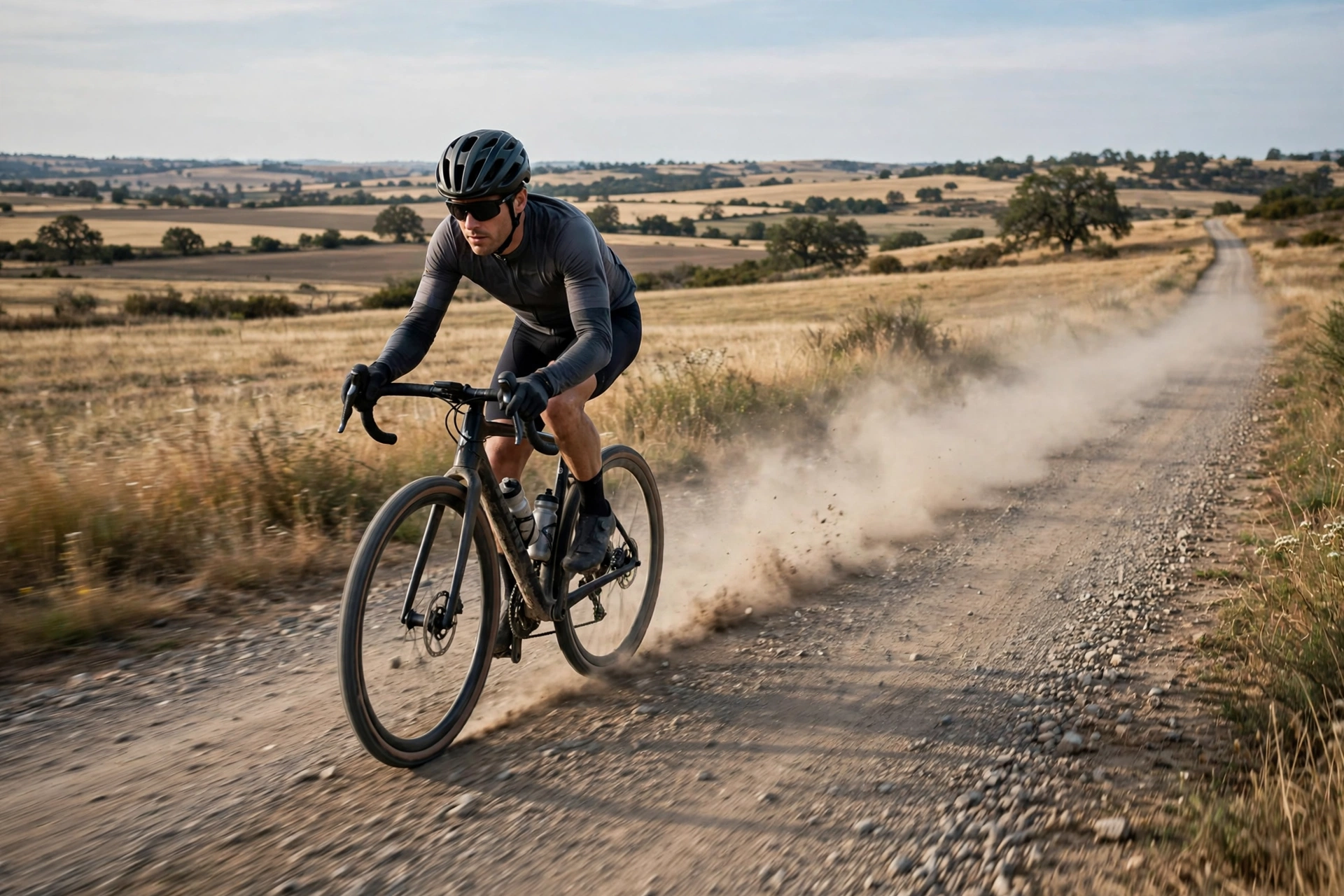
In general terms, a helmet for gravel racing needs to balance protection and ventilation: enough coverage for rough, unpredictable surfaces, and enough airflow to keep you cool through hours of hard effort. Neither extreme works on its own — a helmet that is too hot will wear you down, and a helmet that is too open leaves you exposed on fast, loose descents.
Gravel racing is different from road racing and from mountain biking. The surfaces change constantly, from smooth hardpack to deep loose gravel, ruts, and mud, and a crash can happen at speed on a surface that gives you no warning. This guide explains how to weigh protection against ventilation, and what to look for in a helmet for gravel racing.
What Does Gravel Racing Ask of a Helmet?
Gravel racing asks a helmet to cope with long hours, high effort, and surfaces that change without warning. A race can last several hours, often in heat and dust, with sustained climbing and fast descents on loose ground. Your helmet has to stay comfortable and secure through all of it, because you will be wearing it from the start line to the finish.
The risk profile is different from a road race. On gravel, a fall is more likely to involve loose stones, ruts, or a washout that throws the bike sideways, and you may hit the ground at an angle rather than straight on. That makes coverage at the sides and back of the head more valuable than it is on the road, where most falls are simpler.
Dust and grit are part of the experience too. Fine dust gets into your helmet’s vents and padding, and it can irritate your eyes and skin. A helmet with pads that can be washed and vents that do not clog easily will be more comfortable by the second half of a race.
How Much Protection Do You Need for Gravel Racing?
For gravel racing, more coverage is generally worth having, within reason. A helmet with a little extra protection at the back and sides of the head suits the kind of falls gravel can produce, and many riders choose a helmet that sits between a pure road helmet and a trail mountain bike helmet. In general terms, look for a helmet that meets a recognised bicycle helmet safety standard for your region, and check the label inside the helmet to confirm which standard it meets.
Some gravel racers use a lightweight trail or cross-country helmet rather than a road helmet, because those models often offer more rear coverage without much extra weight. Others stick with a road helmet and accept the lower coverage in exchange for better ventilation and a lighter feel. There is no single right answer — it depends on the courses you race, your speed, and how much you value coverage against cooling.
A full face helmet is not the right choice for gravel racing. It is far too heavy and hot for hours of pedalling, and the extra protection it offers is not matched to the risks of gravel riding. Save full face helmets for downhill and dirt jumping, where the speeds and falls are very different.
How Important Is Ventilation in a Gravel Race Helmet?
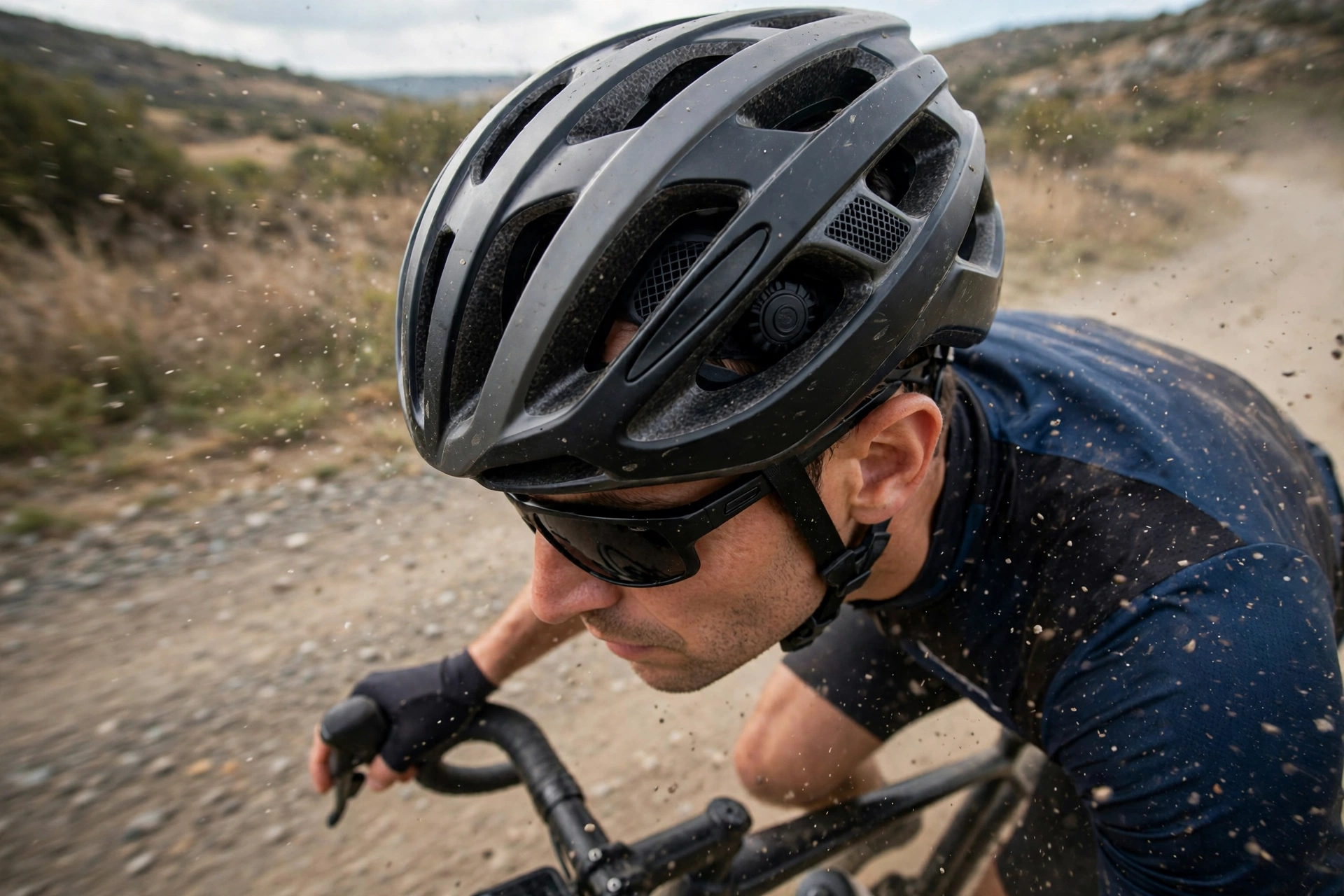
Ventilation is very important in gravel racing, because the effort is sustained and the speeds are often lower than on the road. On a long climb at low speed, there is little wind to push air through the helmet, so the vents and internal channels have to do the work. A helmet with good airflow keeps you cooler, which helps you stay focused and keep your effort up.
Look for a helmet with plenty of vents and channels that run front to back, so air can flow across your head even at low speed. In general terms, larger and more numerous vents usually mean better cooling, but very large vents can let in more dust and small stones.
Padding matters for ventilation too. Pads that are thin and breathable let air reach your skin, while thick, dense pads can trap heat. Removable, washable pads are a practical plus, because gravel race helmets get very dusty and sweaty, and pads you can wash will stay comfortable for longer.
Should You Choose a Road Helmet or a Mountain Bike Helmet for Gravel?
Many gravel racers start with a road helmet, because it is light, well ventilated, and familiar. A road helmet is a good choice if your gravel racing is mostly fast, smooth hardpack with few technical sections. It keeps you cool and it is comfortable for long hours in the saddle.
A cross-country mountain bike helmet is worth considering if your courses are rougher, with more loose descents, ruts, and technical sections. These helmets usually offer more coverage at the back of the head, and many come with a small peak that helps in sun and rain. The trade-off is usually a little extra weight and slightly less airflow, though the best models are very close to road helmets on both counts.
Fit should decide the question if you are torn. Try both styles on, and choose the one that sits most securely and comfortably on your head. A helmet that fits well and stays put is better than a theoretically ideal helmet that shifts around. If you are learning about helmet features, reading about what MIPS is for helmets can help you understand one of the technologies you may see listed on the box.
What Extra Features Help in a Gravel Race?
A small peak or visor can be useful on gravel, where low sun, dust, and rain are all common. Some helmets come with a detachable peak, which lets you use it when conditions call for it and remove it when they do not. If you choose a helmet with a peak, make sure it does not block your view when you are riding in a low position on the drops.
Compatibility with glasses or goggles matters too. Many gravel racers wear clear or photochromic glasses to keep dust out of their eyes, and the helmet should work with them without pressing the frames into your temples. Some helmets have vents designed to hold glasses securely when you push them up, which is handy on long climbs.
Finally, think about the practical details. A helmet with a rear light mount or reflective details is useful if a race runs into the evening. Removable, washable padding matters more on gravel than on the road, because dust gets into everything. And check the weight — over a race of several hours, a heavy helmet becomes tiring, so look for the lightest helmet that still gives you the coverage you want.
Frequently Asked Questions
Q: Can I use a road helmet for gravel racing?
A: Yes, in general terms. A road helmet works well for fast, smooth gravel. If your courses are rougher or more technical, a cross-country mountain bike helmet with extra rear coverage may be a better choice.
Q: Do I need a full face helmet for gravel racing?
A: No. A full face helmet is too heavy and hot for hours of gravel racing, and the risks of gravel riding do not call for that level of protection. A well-fitting open-face helmet is the right choice.
Q: How do I keep dust out of my helmet during a gravel race?
A: A thin cap or liner under the helmet helps, and so do glasses that seal well around your eyes. Wash the pads after the race, and clear the vents of dust so airflow stays good.

Olivia
Writer at Helmet Today, covering helmet reviews, fit and riding safety.