
In general terms, the best helmet for audax and long-distance cycling is the one you forget you are wearing after eight or ten hours in the saddle. Comfort is not a luxury on a long ride — it is what keeps you focused, relaxed, and safe through the later hours, when tiredness makes every small irritation feel much bigger.
Audax rides and other long-distance events can last all day, or several days, with long stretches between controls and changing weather along the way. A helmet that feels fine for an hour can become a real problem by hour six. This guide covers the comfort tips that matter most for long-distance cycling, from fit and padding to managing sweat, rain, and cold.
Why Does Helmet Comfort Matter More on Long Rides?
On a short ride, you can put up with a helmet that pinches slightly or runs a little warm, because the ride is over before it becomes a problem. On a long ride, that same small pressure point will be pressing on the same spot for hours, and it can turn into a headache, a sore patch of skin, or a distraction that wears down your concentration.
Comfort also affects your riding position. A helmet that is uncomfortable often makes riders tilt it, loosen the straps, or push it back on their head — all of which reduce the protection it offers. A comfortable helmet stays where it should, which means it is doing its job properly for the whole ride.
How Should an Audax Helmet Fit for All-Day Riding?
Fit for a long ride follows the same rules as fit for any ride, but with less room for error. The helmet should sit level on your head, low enough to cover your forehead, without tilting back. It should feel snug all around, with no pressure points that throb after a few minutes, and it should not rock from side to side or slide forward when you shake your head.
For all-day riding, pay special attention to the retention system at the back of the helmet. A dial or cradle that you can adjust with one hand is useful, because you may want to loosen the fit slightly as the day goes on and your head warms up.
Think about what else you will wear with the helmet over a long day. You might start in the cold with a skull cap underneath, then remove it as the sun comes up. A helmet that fits well both with and without a thin cap gives you flexibility. Also check that the straps do not rub your ears or jaw, because a strap that chafes slightly at first will be painful after several hundred kilometres.
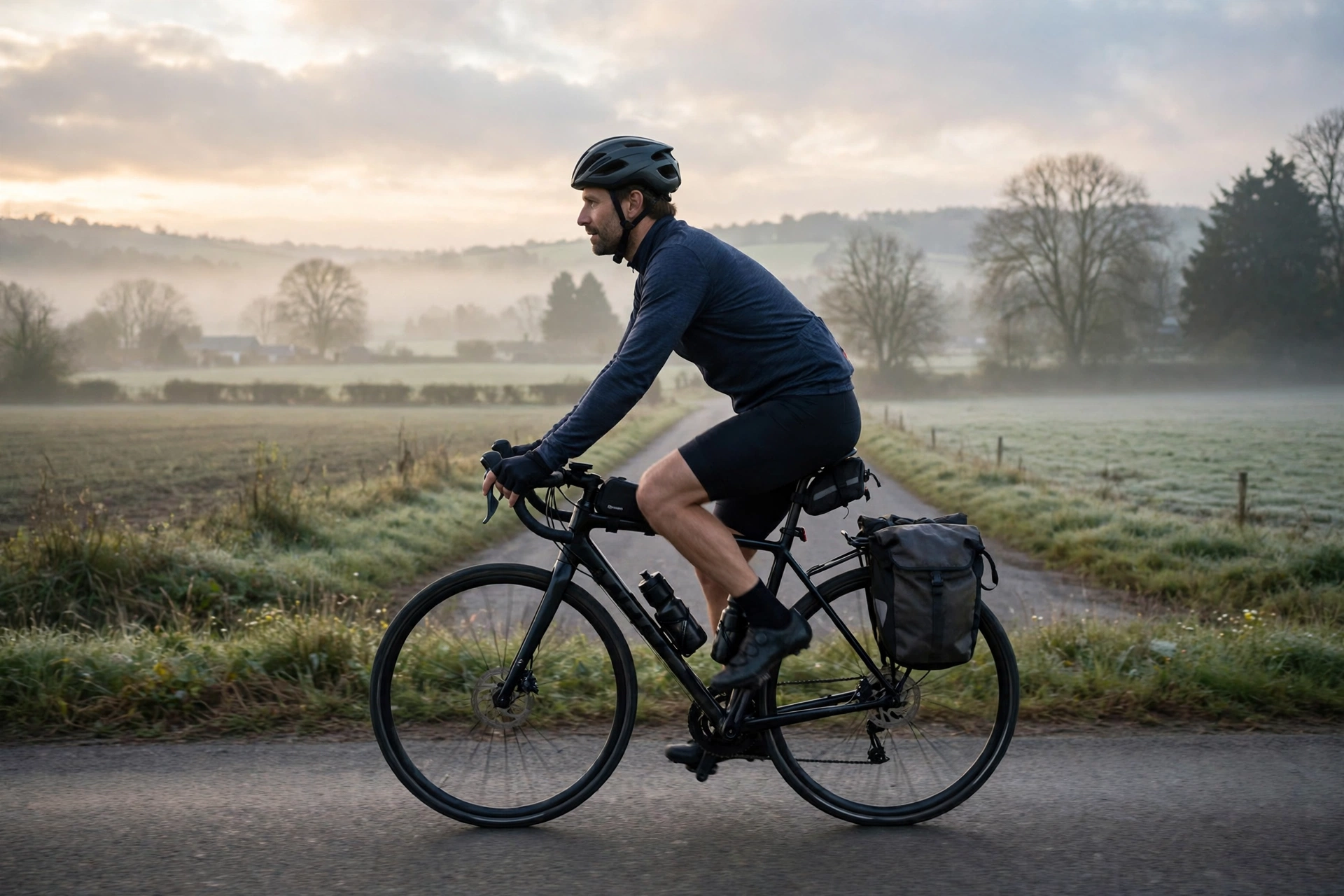
How Do You Stop a Helmet Causing Hot Spots on Long Rides?
Hot spots are the most common comfort problem on long rides, and they usually come from a helmet that fits well in one place and presses too hard in another. The first step is to check the fit carefully: loosen the retention system slightly, and see whether the pressure eases. Sometimes a helmet that feels snug in the shop reveals a pressure point only after an hour or two, so take new helmets on progressively longer rides before an event.
Padding makes a big difference. Thicker pads in the right places spread the pressure more evenly, and many helmets come with spare pads of different thicknesses so you can adjust the fit. If your helmet has pads that press on your forehead, try swapping them for thinner ones, or repositioning them slightly. Pads that are worn flat can also cause hot spots, because they no longer cushion the shell.
Hairstyle and headwear matter too. A ponytail or bun can change how a helmet sits, and a cap worn underneath can add pressure in unexpected places. Test your full setup — helmet, cap, glasses, and hair — on a long training ride, not on the morning of the event. Small adjustments made in training save real discomfort on the day.
What Role Do Padding and Straps Play in Comfort?
Padding is the part of the helmet that touches your skin, so its quality decides a lot about comfort. Look for pads that are soft, breathable, and easy to remove and wash. After a long, sweaty ride, pads can be rinsed and dried ready for the next day, which matters on multi-day events. Check that replacement pads are available for your helmet model, and carry a spare set on longer tours if you can.
Straps deserve the same attention. They should lie flat against your face, form a neat V around your ears, and fasten snugly under your chin without digging in. Straps that twist or bunch up can rub the skin raw over a long day. Before a long ride, check that the strap adjusters sit in the right place and that the buckle does not press against your jaw or throat.
Some riders find that a thin layer under the helmet, such as a skull cap or a cycling cap, improves comfort by reducing friction between the pads and the skin. It also soaks up sweat before it runs into your eyes.
How Do You Manage Sweat, Rain and Cold on Long Rides?
Sweat is the main comfort challenge on a long ride, and ventilation is your best tool against it. A helmet with plenty of vents and internal air channels keeps air moving across your head, which carries sweat away and keeps you cooler. On a long climb in warm weather, good ventilation can be the difference between comfort and misery. If you are learning about helmet features, reading about what MIPS is for helmets can also help you understand one of the technologies you may see listed on the box.
Rain brings a different problem. Water running off a helmet can drip into your eyes, and wet pads can feel cold and heavy. A helmet cover is a simple, light solution that keeps most of the rain off, and many audax riders carry one in a jersey pocket. A cycling cap worn under the helmet also helps, because its peak shields your eyes and its fabric absorbs water before it reaches your face.
Cold weather calls for insulation rather than ventilation. A thin skull cap or a winter cap under the helmet keeps your head warm without adding much bulk, and ear covers can help on cold descents. The key is to keep the helmet fitting properly with whatever you wear underneath — if a thick cap makes the helmet sit high on your head, it is too thick for that helmet.
Frequently Asked Questions
Q: Can I wear the same helmet for audax and racing?
A: Yes, in general terms. A well-fitting, well-ventilated road helmet suits both. For audax, prioritise comfort and the ability to adjust the fit during the ride; for racing, weight and aerodynamics matter more.
Q: How do I stop my helmet giving me a headache on long rides?
A: Check the fit first — a helmet that is too tight or pressing in one spot is the usual cause. Loosen the retention system slightly, reposition or swap the pads, and make sure nothing worn underneath is adding pressure.
Q: Should I carry a spare helmet on a very long ride?
A: Usually not. A spare helmet is bulky and rarely needed. Carry spare pads and a helmet cover instead, and make sure your helmet is comfortable and in good condition before you start.

Olivia
Writer at Helmet Today, covering helmet reviews, fit and riding safety.