A bike helmet for riding in low light is a well-fitting road helmet in a bright or light colour, worn with lights and reflective kit, that protects your head and helps other road users see you at dawn, dusk, and on dark winter roads. Low light is one of the riskiest times to ride, because drivers find it harder to judge your speed and distance, and hazards such as potholes and wet leaves are harder to spot. Your helmet is part of your safety system in those conditions, not just protection in a fall.
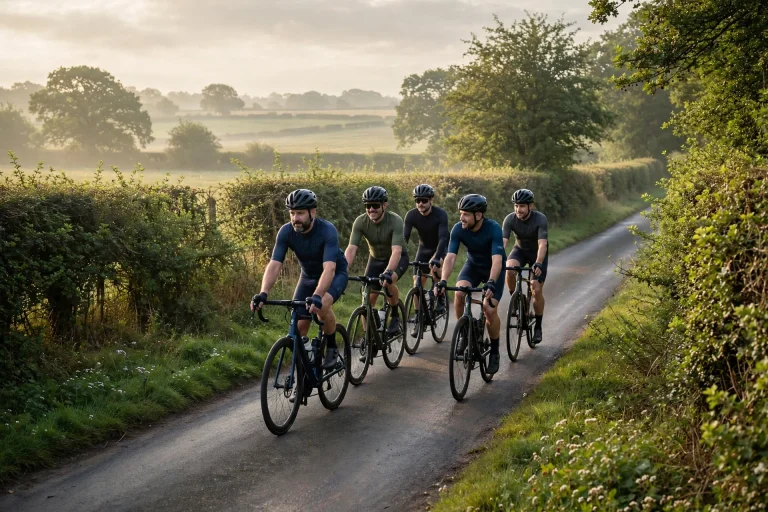
Low-light riding includes early morning commutes, evening rides home, winter afternoons, and overcast days when the light is flat and grey. In all of those, visibility matters as much as fit and comfort. A bright helmet, good lights, and reflective clothing together make you far easier to see than any one of them alone.
What counts as low-light riding?
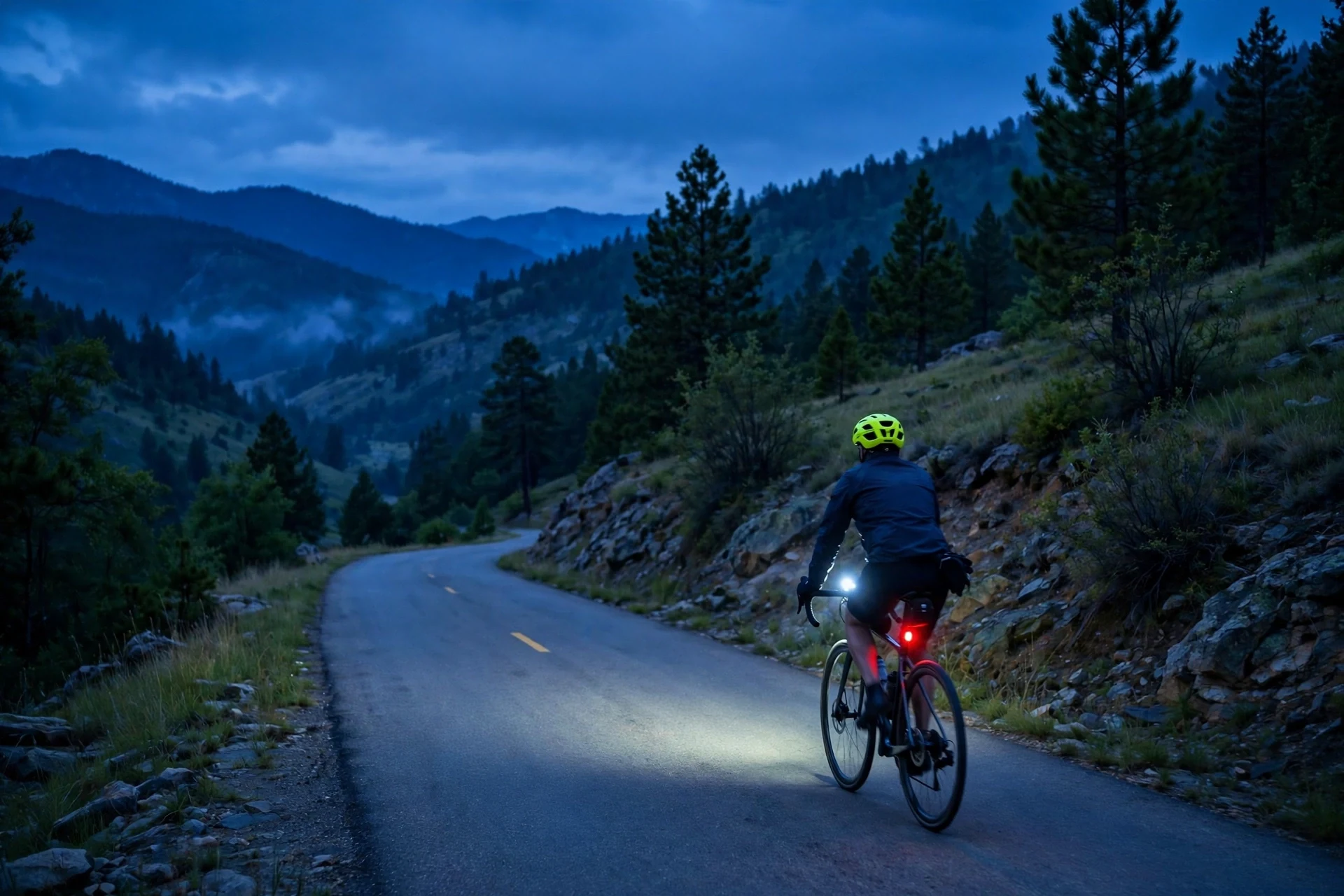
Low-light riding means any ride where natural light is weak: dawn, dusk, heavy cloud, rain, fog, and the dark hours of winter. It also includes riding under street lights, where bright pools of light alternate with dark patches, and riding on unlit country lanes, where your own lights are the only thing lighting the road.
In low light, your eyes take time to adjust, and your depth perception is weaker. You may not see a pothole, a drain cover, or a patch of ice until you are close to it. Other road users also see you later than they would in daylight, and they may misjudge how fast you are moving. That is why low-light riding needs slower speeds, more space, and better visibility.
Why does helmet colour matter in low light?
Helmet colour matters because your head is high up and visible from a long way off, especially to drivers behind you. A bright white, yellow, or orange helmet stands out in low light far better than a black or dark grey one. In general terms, a light-coloured helmet is one of the simplest visibility upgrades you can make, and it costs nothing extra if you choose it when you buy.
Reflective details help even more. Some helmets have reflective logos, strips, or panels that shine brightly in headlights. A reflective sticker or a reflective helmet cover can add the same benefit to a helmet that does not have them built in. Just make sure any cover does not block the vents or change the fit of the helmet.
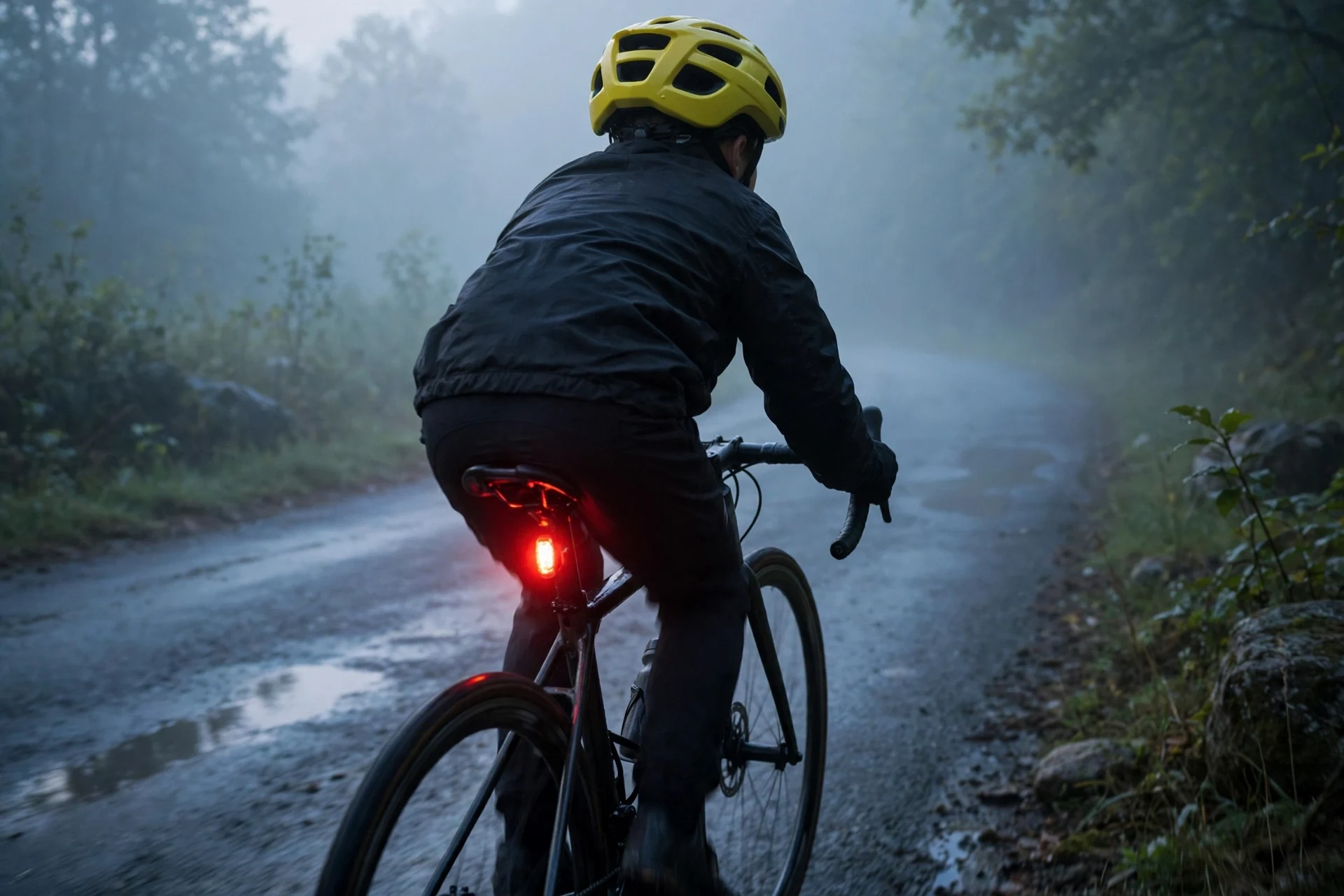
Do not rely on helmet colour alone. A bright helmet helps, but it does not replace lights. You still need a good front light to see the road and a rear light to be seen from behind, plus reflective clothing that moves as you pedal. Together, they give drivers a clear, moving shape to notice.
What lights should you use with your helmet?
Use a bright front light that lets you see the road ahead, not just a small light that lets others see you. On unlit roads, you need a light with a good beam that shows potholes, drains, and corners in time to react. On lit roads, a smaller light may be enough, but a brighter light still helps you stand out.
Use a rear light that is bright and steady, or flashing if that is allowed where you ride. A rear light on your helmet, in addition to one on your bike, is useful because it is higher up and moves with your head, which makes it easier for drivers to spot. Keep both lights charged, and carry a spare if you ride in the dark often.
How do you see clearly in low light?
Seeing clearly in low light starts with your eyes. Clear or light-yellow lenses help on dull days, because they cut glare from headlights and street lights without darkening your view. Dark sunglasses are a poor choice in low light: they make an already dim road darker and hide hazards. Carry clear glasses if you normally ride in tinted ones.
Keep your glasses and your helmet visor, if you have one, clean. Dirt, rain, and condensation scatter light and make it harder to see. Wipe them before you set off, and carry a soft cloth for a mid-ride wipe. A helmet peak can help to shield your eyes from rain and from the glare of oncoming headlights.
How should your helmet fit for low-light rides?
Fit for low-light riding follows the same rules as any ride: level, snug, straps in a neat V below the ears, and a chin strap you can fit two fingers under. But low-light rides often mean winter clothing, so check the fit with the cap, headband, or balaclava you will wear. A thick winter hat under a helmet can make it tight and uncomfortable, so use a thin thermal cap made for cycling instead.
Check that your lights and helmet work together. A helmet-mounted light should be fixed firmly and aimed correctly, not pointing up into the sky or down at your front wheel. If your helmet has a MIPS liner, check that it is fitted correctly. A rear helmet light should be visible from behind and not blocked by a backpack or a high collar. Test the setup in the dark before a long ride, not on the first dark evening of winter.
What else keeps you safe riding in low light?
Reflective clothing is a big help in low light. A reflective jacket, gilet, or ankle bands catch headlights and show drivers where you are and how fast you are moving. Ankle bands are especially useful, because the up-and-down movement of pedalling catches the eye. Choose kit with reflective panels, not just a small logo.
Ride in a position where drivers can see you. Stay out of the gutter, where you are harder to see and more likely to hit drains and debris, and take a clear position in the lane where it is safe to do so. At junctions, make eye contact with drivers if you can, and do not assume they have seen you just because your light is on.
Is a bright helmet enough to be seen in low light?
No, a bright helmet helps, but you also need good front and rear lights and reflective clothing. Together they make you visible from all directions and help drivers judge your speed and position.
Should I wear sunglasses when riding in low light?
No, dark sunglasses make a dim road darker. Use clear or light-yellow lenses in low light, and keep them clean so headlights and street lights do not glare.
Can I mount a light on my helmet?
Yes, many riders mount a front or rear light on a helmet, and it can help you be seen. Fix it firmly, aim it correctly, and make sure it does not change the fit of the helmet or block the vents.

Olivia
Writer at Helmet Today, covering helmet reviews, fit and riding safety.