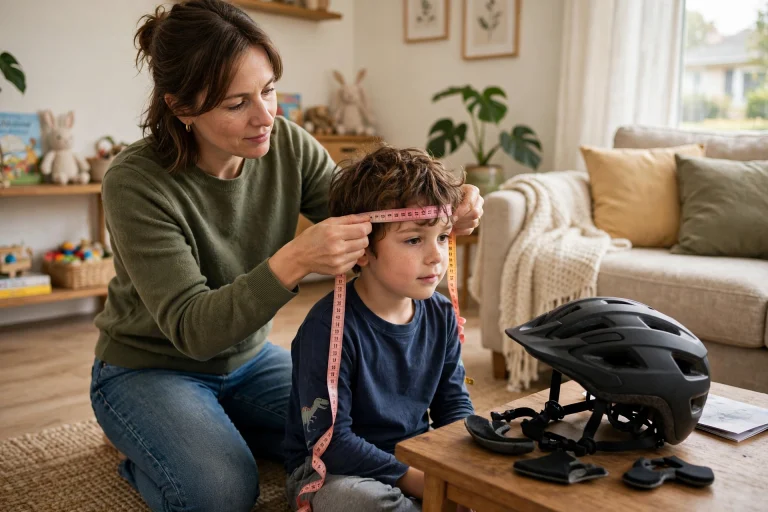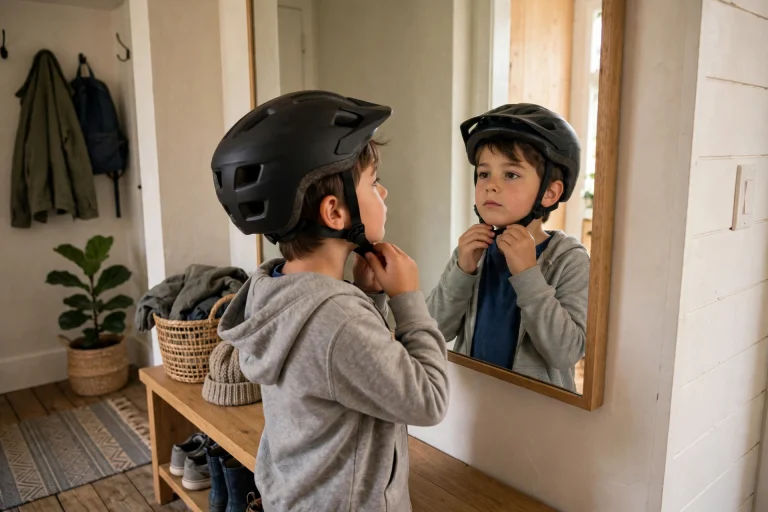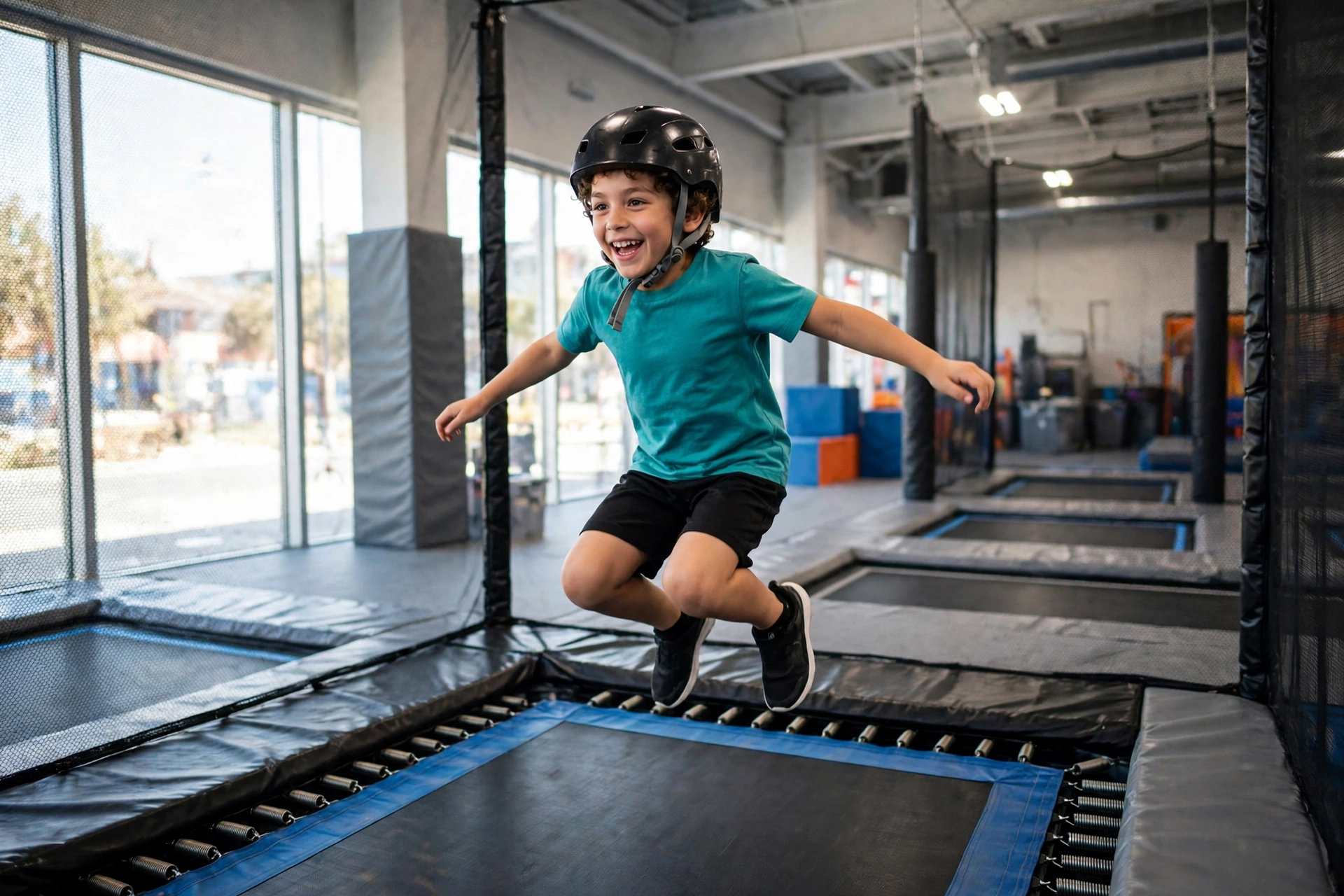
In general terms, children do not usually wear a helmet at a trampoline park, because most trampoline parks do not require one. That does not mean helmets are a bad idea. Trampoline parks involve bouncing, flips, and falls, and parents who want extra protection for their child can ask the park whether a helmet is allowed before their visit.
Trampoline parks are a popular birthday and weekend activity, and most children bounce safely for an hour without incident. The question of helmets comes up because parents know that trampolines involve height and unpredictable landings. This guide explains why helmets are uncommon at trampoline parks, when one might still be worth considering, and what parents should check instead if a helmet is not worn.
Why Don’t Children Usually Wear Helmets at Trampoline Parks?
Most trampoline parks do not require helmets, and many do not allow them. The reason is practical: trampoline parks are designed around soft landings. The trampoline bed, the padded walls, and the foam pits are all built to absorb falls, and the activities are supervised by staff who watch for dangerous behaviour. A helmet can also get in the way on a trampoline, shifting during bounces or making it harder for a child to see and hear instructions.
There is also the question of what a helmet would actually protect against on a trampoline. The main risks at a trampoline park are awkward landings, collisions with other children, and falls off the edge of a trampoline onto a hard floor. A helmet helps with some of these but not with the most common injuries, which are sprains and strains to ankles, wrists, and knees. Parks focus instead on rules that reduce those risks: one child per trampoline, no double bouncing, no flips without supervision, and staff watching the floor at all times.
Is a Helmet Ever a Good Idea at a Trampoline Park?
In general terms, a helmet may be worth considering for a child who is trying more advanced moves, such as flips into a foam pit or tricks on a performance trampoline. These activities involve more height and more rotation, which means a fall is less predictable. Some parks run structured coaching sessions where helmets are worn, particularly for children learning flips or training for trampoline gymnastics. If your child is taking part in a coached session, ask the coach whether a helmet is recommended.
For a casual bouncing session, a helmet is usually unnecessary, and the park may not allow one. A helmet that does not fit well can be a distraction, and a child who is focused on their helmet is not focused on bouncing safely. If you are concerned about your child’s safety, the most useful steps are to choose a well-run park with good supervision, make sure your child follows the rules, and stay to watch the session so you can see how it is managed.
What Should Parents Check Before a Trampoline Park Visit?
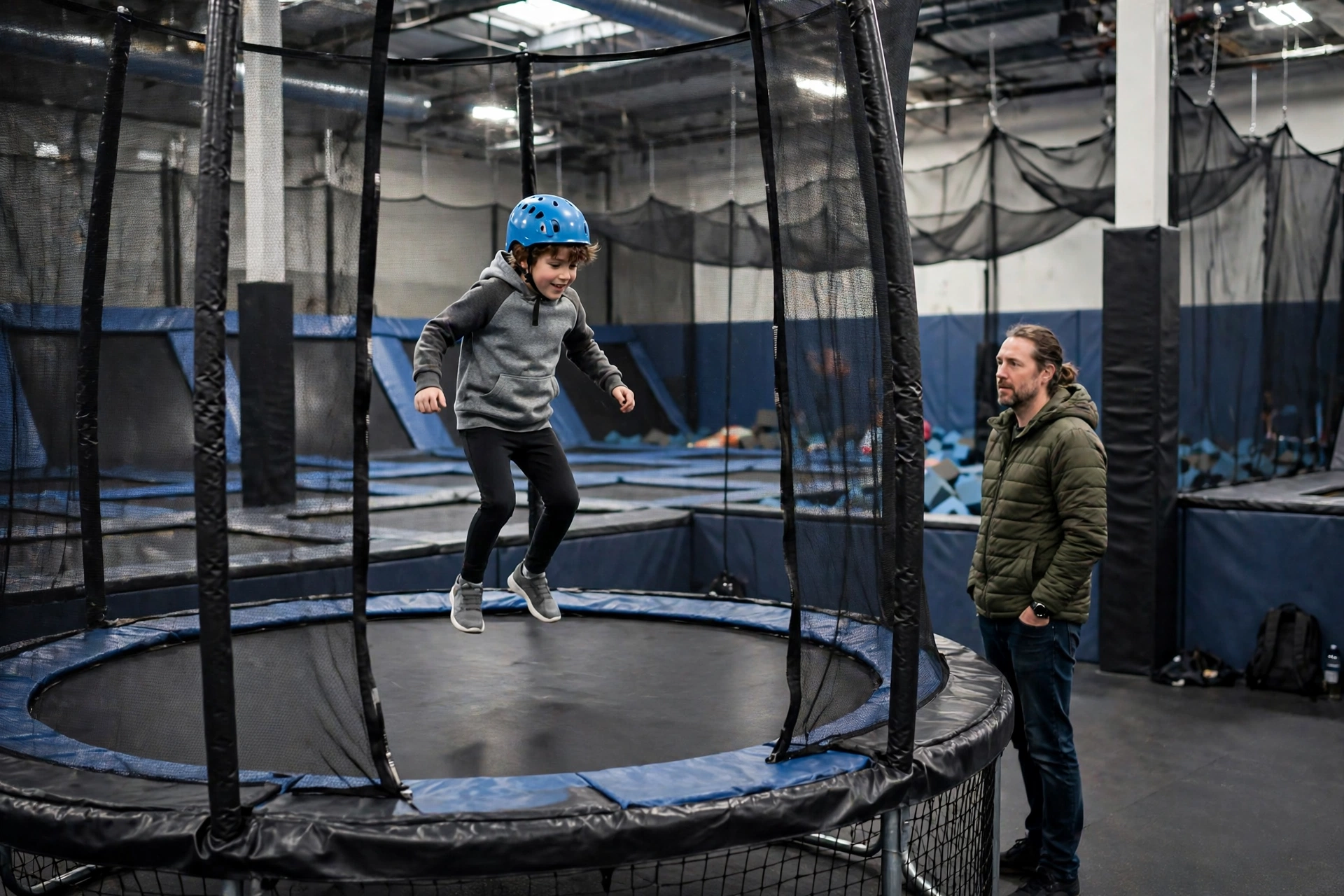
Before you book, check the park’s rules on helmets, socks, and supervision. Most parks require special grip socks, which you can buy at the park or bring from home. Check the age and height limits for each area, since some zones are reserved for older or taller children. If your child is small, make sure there is a dedicated area for younger children, where the risk of collision with bigger, faster bouncers is lower.
When you arrive, watch a session for a few minutes before your child starts. Look for staff who are actively supervising, clear rules displayed around the park, and trampolines and padding that look well maintained. If the park looks crowded or unsupervised, or if children are clearly breaking the rules without being stopped, consider leaving and finding a better-run park. A well-supervised park is the best protection your child can have, helmet or not. If you are learning about helmet technology, reading about what MIPS is for helmets can help you understand one of the features you may see listed on the box.
What Are the Main Safety Rules for Children at Trampoline Parks?
The most important rule is one child per trampoline at a time. Double bouncing, where one child bounces another higher than they expect, is a common cause of injury. Children should also be told not to attempt flips or somersaults unless they are in a coached session or a designated area with staff supervision. Landing on the neck or head from a failed flip is one of the more serious risks at a trampoline park, and it is one that rules are designed to prevent.
Children should bounce in the centre of the trampoline, not near the edges, and should not climb on the padding or the walls. They should also be aware of other children around them and wait their turn rather than jumping onto a trampoline someone else is using. Remind your child that the rules exist to keep everyone safe, not to spoil the fun, and that a child who follows the rules gets to bounce for longer because they are less likely to be hurt or asked to sit out.
How Can You Help a Child Bounce Safely?
Talk to your child before the visit about what to expect and what the rules are. A child who knows the rules in advance is more likely to follow them, especially when the excitement of the park kicks in. Encourage them to start gently, bouncing low and getting a feel for the trampoline before trying anything more adventurous. A child who builds up gradually is far less likely to have a bad fall than one who tries to bounce as high as possible in the first minute.
Stay and watch the session if you can, particularly for younger children. You will be able to see whether your child is bouncing safely, whether the staff are supervising properly, and whether your child is getting tired. Tired children bounce less safely, so an hour is usually enough for younger children, and a break for water and a rest is a good idea partway through a longer session.
Frequently Asked Questions
Q: Will a trampoline park let my child wear a helmet?
A: It depends on the park. Many trampoline parks do not require helmets and some do not allow them, so ask before your visit. If a helmet is allowed, make sure it is a well-fitting sports helmet that will not shift during bouncing.
Q: Is trampolining safe for young children?
A: In general terms, trampolining can be safe for young children in a well-run park with good supervision and a dedicated area for smaller children. Follow the park’s age and height limits, and make sure your child understands the rules before they start.
Q: What is the most common injury at a trampoline park?
A: In general terms, sprains and strains to the ankles, wrists, and knees are the most common injuries, usually from awkward landings. Following the park’s rules, especially one child per trampoline and no unsupervised flips, is the best way to reduce the risk.

Olivia
Writer at Helmet Today, covering helmet reviews, fit and riding safety.