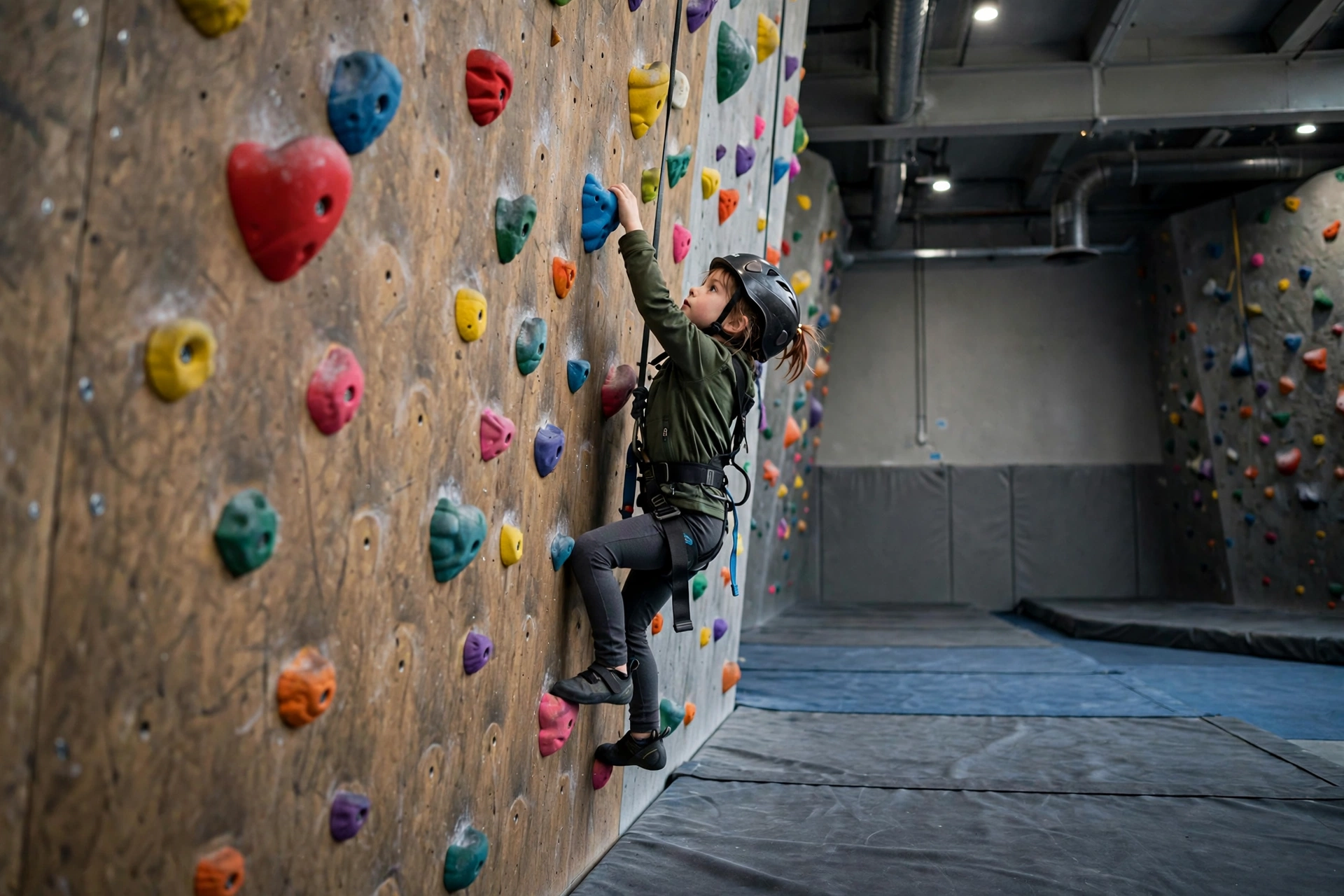
Yes, in general terms, children should wear a helmet for climbing walls. Indoor climbing walls are padded at the base, but a fall from height, a swing into the wall, or a dropped piece of equipment can still cause a head injury. A climbing helmet is light, comfortable, and designed for exactly this kind of activity, and many climbing centres require one for young climbers.
Climbing walls are a popular activity for children because they build strength, confidence, and problem-solving skills in a controlled setting. The risks are real but manageable, and a helmet is one of the simplest ways to manage them. This guide explains what kind of helmet suits a climbing wall, how it should fit, and what parents should look for before their child’s first session.
Why Do Children Need a Helmet on a Climbing Wall?
Climbing walls are safer than outdoor rock, but they are not risk-free. A child who slips can swing back into the wall, and a child who loses their grip near the top can fall further than they expect before the rope or the auto-belay catches them. On a bouldering wall, where there is no rope, a fall onto the crash mat can still end with a bump to the head if the child lands awkwardly. A helmet protects the head in all of these moments.
There is also the risk of things falling from above. On a busy wall, another climber’s chalk bag, a dropped carabiner, or a loose hold can fall onto a child below. Climbing centres inspect their walls regularly, but a helmet is cheap insurance against the unexpected. Some centres make helmets compulsory for children under a certain age, and others strongly recommend them. Either way, a helmet is a sensible choice for any young climber.
What Kind of Helmet Suits a Climbing Wall?
A proper climbing helmet is the right choice for a climbing wall. Climbing helmets are light, well ventilated, and shaped to protect the top and sides of the head without blocking a child’s view upwards. They are built to absorb impacts from falls and from objects dropping from above, which is a different job from the one a bike helmet does. Look for a helmet that meets a recognised climbing helmet safety standard, and check the label inside to confirm which standard it meets.
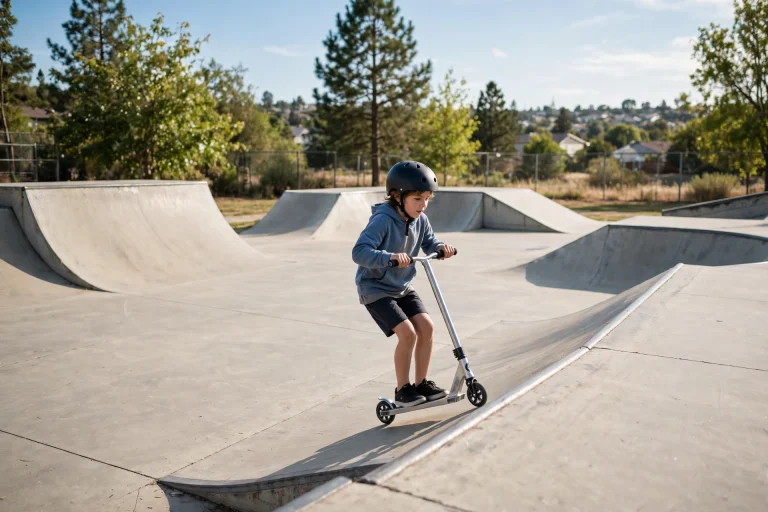
Do not substitute a bike helmet, skate helmet, or hard hat for a climbing helmet. A bike helmet is designed for a single hard impact at speed, a skate helmet for repeated low-speed falls, and a hard hat for falling objects on a worksite. None of them is shaped or tested for climbing in the same way. Many climbing centres lend helmets to young climbers, which is a good way to try the activity before buying one. If your child climbs regularly, their own helmet is worth the investment because the fit will be right every time.
How Should a Kids Climbing Helmet Fit?
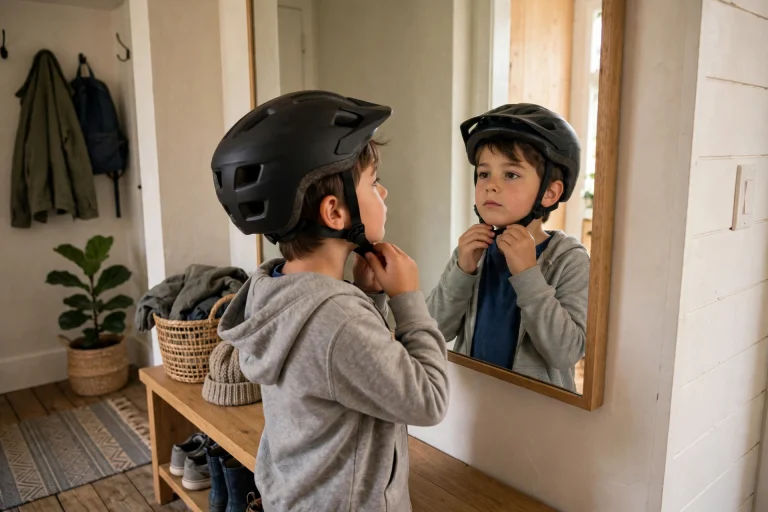
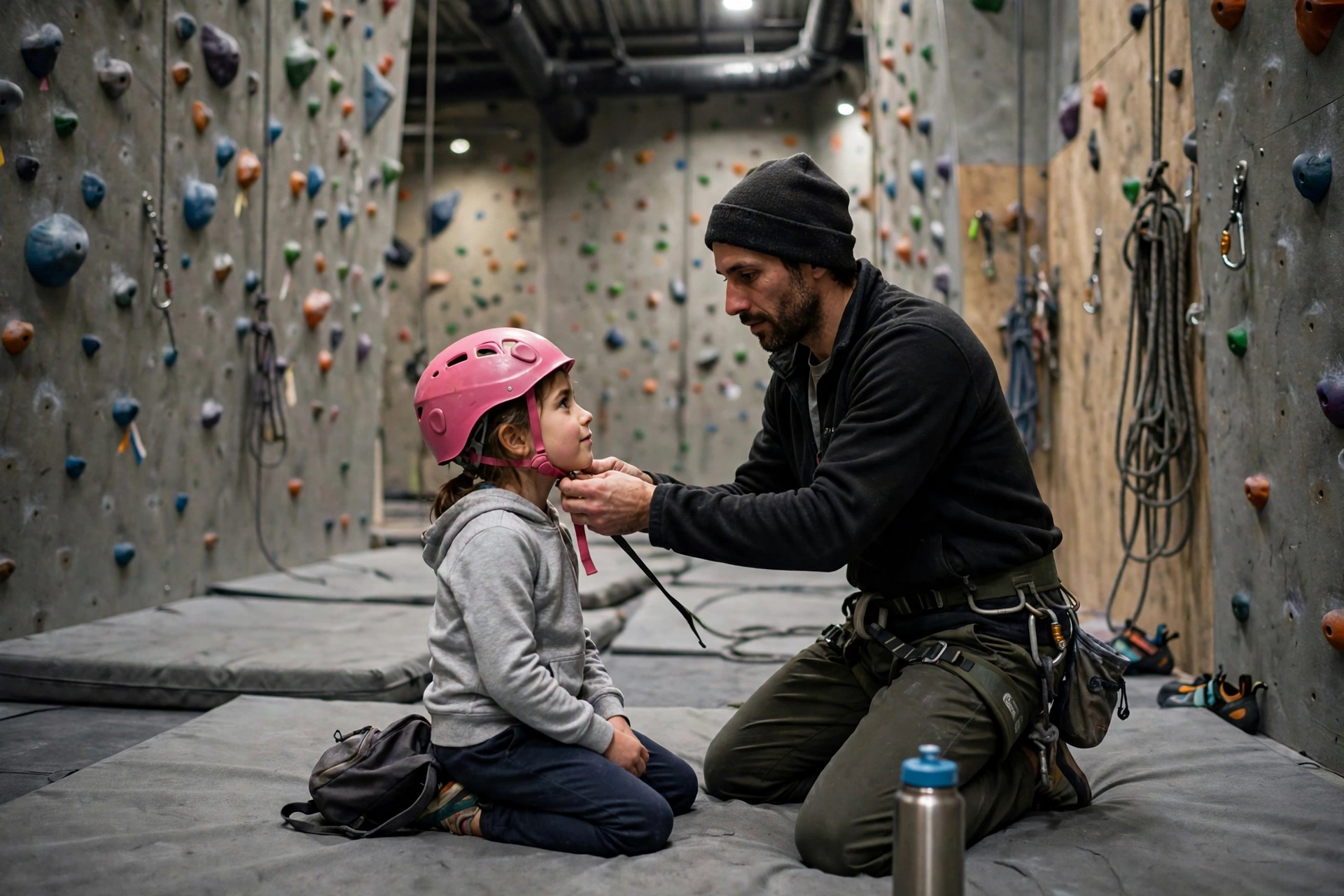
A climbing helmet should sit level on your child’s head, low on the forehead, and snug enough that it does not wobble when they look up or shake their head. The adjustment dial or straps at the back should be tightened until the helmet stays put without pinching, and the chin strap should be snug with only one or two fingers fitting underneath. The helmet should feel comfortable enough to wear for a full session, because a helmet that hurts will be taken off at the first opportunity.
Check the fit with your child’s hair as it will be during climbing. Long hair should be tied back in a low ponytail or plait that does not push the helmet forward or create a lump under the shell. If your child wears a headband or a thin hat under the helmet in a cold centre, check the fit with it on, since extra layers can change how the helmet sits. If you are learning about helmet technology, reading about what MIPS is for helmets can help you understand one of the features you may see listed on the box, although climbing helmets use different impact systems from cycling helmets.
What Else Should Parents Check Before a Climbing Session?
Before the session, check the helmet itself for damage. Look for cracks in the shell, dents, or crushed foam inside, and check that the straps, buckle, and adjustment dial all work smoothly. A helmet that has taken a hard knock should be replaced, even if the damage is hard to see, because the protective foam may already have done its job. Also check that the helmet is the right size for your child now, not the size they were six months ago, since children grow quickly.
Make sure your child knows the basic rules of the wall before they start climbing. That includes staying out of the fall zone below other climbers, not climbing above another person, and coming down in a controlled way rather than jumping from height. The centre’s instructors will cover this in the induction, but a quick chat at home beforehand helps the rules sink in. Comfortable clothing that allows free movement, closed shoes or climbing shoes, and tied-back hair complete the kit.
How Can You Encourage a Child to Wear a Climbing Helmet?
Children sometimes see helmets as something only beginners wear, especially if older climbers at the wall are not wearing one. Remind your child that many experienced climbers wear helmets too, particularly outdoors, and that wearing one is a sign of a serious climber rather than a nervous one. Letting your child choose the colour of their own helmet can also help, because a helmet they picked feels like part of their climbing kit rather than a rule.
Keep the message simple and positive. A helmet lets your child climb higher and try harder moves with confidence, because they know their head is protected if they slip. Praise them for wearing it without complaint, and if you climb yourself, wear your helmet too. Children are far more willing to follow a habit they see adults following than one they are simply told about.
Frequently Asked Questions
Q: Can my child wear a bike helmet on a climbing wall?
A: In general terms, a bike helmet is not the best choice for climbing. A climbing helmet is lighter, better ventilated, and shaped to protect the head while looking upwards. Most climbing centres lend proper climbing helmets, so ask at the desk if you do not have one.
Q: Do children need a helmet for bouldering?
A: Yes, in general terms. Bouldering walls have thick crash mats, but a fall can still end with a bump to the head if a child lands awkwardly. A climbing helmet is a sensible precaution for bouldering as well as roped climbing.
Q: When should a child’s climbing helmet be replaced?
A: Replace it after any hard impact, if the shell is cracked or the foam is damaged, or when your child outgrows it. In general terms, a helmet that no longer fits snugly cannot protect properly, so check the fit regularly as your child grows.

Olivia
Writer at Helmet Today, covering helmet reviews, fit and riding safety.