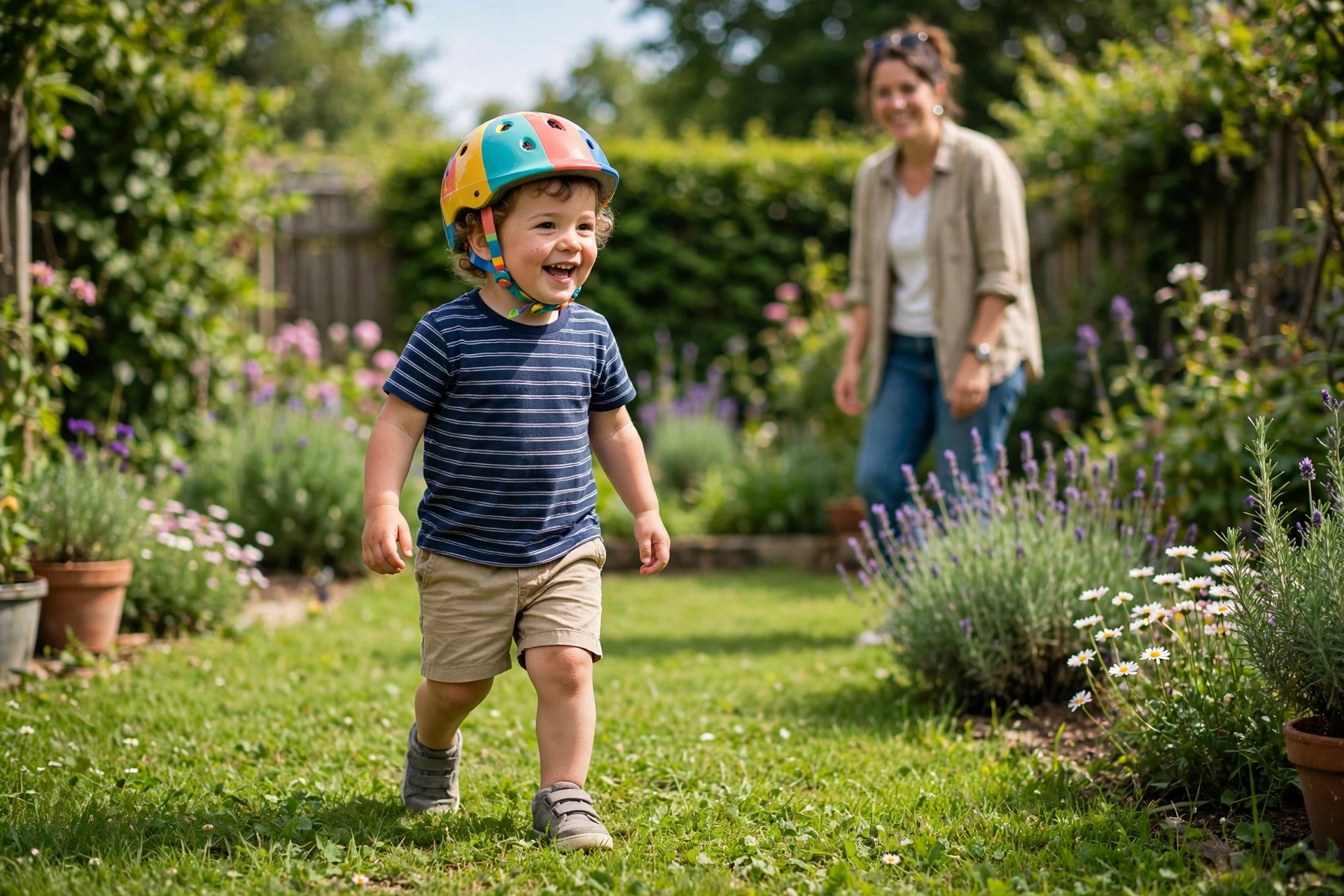
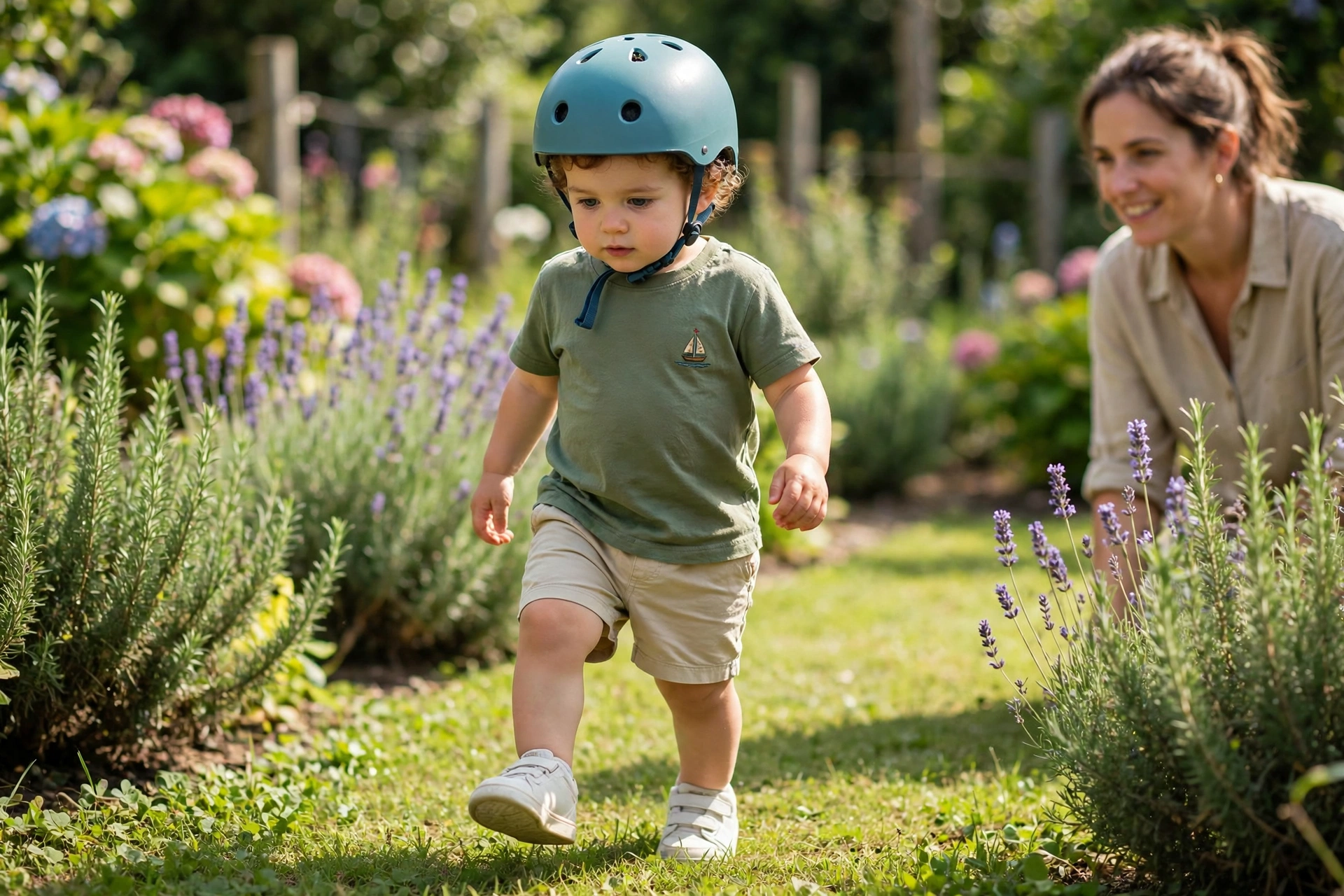
Do toddlers need a helmet for walking? In general terms, no, a toddler does not need a helmet just for walking, because walking is a normal part of growing up and a helmet can get in the way of learning to balance. Toddlers fall over often as they learn to walk, and those small falls onto a soft floor or grass are part of how they learn. A helmet is not usually recommended for everyday walking indoors or in a safe garden, and most health and safety guidance treats it as unnecessary for that stage.
That answer surprises some parents, because a helmet seems like an easy way to protect a small child. But a toddler’s head and neck are still developing, and a helmet adds weight and bulk that can make it harder for the child to hold their head up and to learn balance. A helmet can also catch on furniture or on playground equipment, and it can make a child hot and uncomfortable. For that reason, a helmet should be saved for the activities where it really helps.
When should a toddler wear a helmet?
A toddler should wear a helmet when they are doing an activity where a fall could cause a head injury, such as riding a balance bike, a tricycle, or a scooter, or riding in a bike seat or a trailer behind an adult’s bike. In those activities, the child is moving faster than walking pace, and a fall can mean hitting a hard surface such as a pavement or a road. A helmet that fits well can soften that impact and help to protect the child’s head.
A helmet is also a good idea when a toddler is learning to ride a balance bike on a slope, or when they are riding near a road, because the speed and the surroundings add risk. The helmet should be a child’s helmet that fits the toddler’s head, with a secure chin strap and a fit that does not wobble. A helmet that is too big, or one made for an older child, will not protect a toddler properly, and it may slide over their eyes or come off in a fall.
Why is a helmet not needed for walking?
A helmet is not usually needed for walking because a toddler’s falls while walking are low and slow, and the child is close to the ground. A toddler who trips while walking will usually fall onto their hands and knees, or onto a soft surface, and the impact is far smaller than a fall from a bike. In general terms, the risk of a serious head injury from walking is low, and the benefits of learning to walk freely, without the extra weight of a helmet, are real.
There is also the point that a helmet can make walking harder, not easier. A toddler who is learning to walk needs to be able to see their feet, to turn their head freely, and to feel how their body moves, and a helmet can limit that. A child who is hot and uncomfortable in a helmet may also be less willing to walk and play, and that can slow down the very learning the parent wants to support. A helmet has its place, but everyday walking is not usually it.
How should a toddler’s helmet fit?
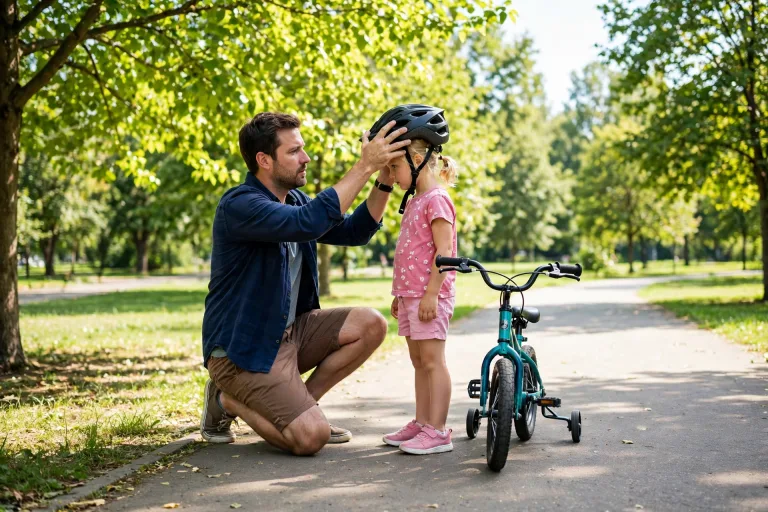
A toddler’s helmet should fit snugly, sit level on the head, and stay in place when the child shakes their head or leans forward. The helmet should cover the forehead and the top of the head, and the chin strap should be fastened securely every time the child rides. A strap that is left loose lets the helmet slide over the child’s eyes, or come off in a fall, and a helmet that comes off is no help at all.
The fit should be checked every time the helmet is put on, because a toddler grows quickly and a helmet that fitted last month may be too small now. The parent should check that the helmet does not pinch, press, or leave red marks on the child’s skin, and that the child can see and hear clearly while wearing it. A child who finds a helmet uncomfortable will pull at it or try to take it off, so comfort matters as much as protection. A helmet that fits well is one a child will happily wear.
What should parents look for when buying a toddler helmet?
When buying a toddler helmet, parents should look for a helmet made for a small child, with a size that matches the child’s head, and a light weight that the child can wear without strain. The helmet should have a smooth shell, a soft lining, and vents that let air in, because a toddler can get hot quickly. A helmet with a simple buckle that a parent can fasten easily, and that a child cannot undo by accident, is a practical choice.
Parents should also check that the helmet meets a recognised safety standard for children’s helmets, and that it is free from cracks or damage. A second-hand helmet should be checked with care, because it may have been dropped or damaged in a way that is hard to see. A helmet that has taken a hard knock should be replaced. Parents choosing a helmet may also want to learn about features that can help in a fall, including a system designed to reduce rotational forces, such as MIPS, which is found in some children’s helmets.
How can parents help a toddler stay safe while walking?
Parents can help a toddler stay safe while walking by making the home and the garden as safe as they can, and by staying close while the child is learning. Soft rugs, clear floors, and furniture with rounded corners can soften a fall, and a safe garden with grass or a soft surface is a good place for a toddler to practise. A parent who is nearby can catch a child who is about to fall, or can guide them away from steps, roads, and other hazards.
It also helps to let the toddler practise walking in bare feet or in soft shoes, so that they can feel the ground and learn balance. A child who is allowed to walk, climb, and explore in a safe place will learn to move with confidence, and that confidence is a kind of safety in itself. A helmet is not a substitute for supervision, and the best protection for a walking toddler is a safe place to walk and a watchful parent close by.
Should a toddler wear a helmet in a pushchair?
No, in general terms a toddler should not wear a helmet in a pushchair, because the helmet can push the child’s head forward and make it hard for them to sit comfortably. A helmet is for riding, not for sitting in a pushchair.
Can a toddler wear a helmet on a balance bike?
Yes, a toddler should wear a helmet on a balance bike, because a fall from a bike can be faster and harder than a fall while walking. A small child’s helmet that fits well is the right choice.
What age can a toddler start wearing a helmet?
In general terms, a toddler can start wearing a helmet when they begin riding a balance bike or a tricycle, usually around the age when they are walking well. The helmet should be made for a small child and should fit snugly.

Olivia
Writer at Helmet Today, covering helmet reviews, fit and riding safety.