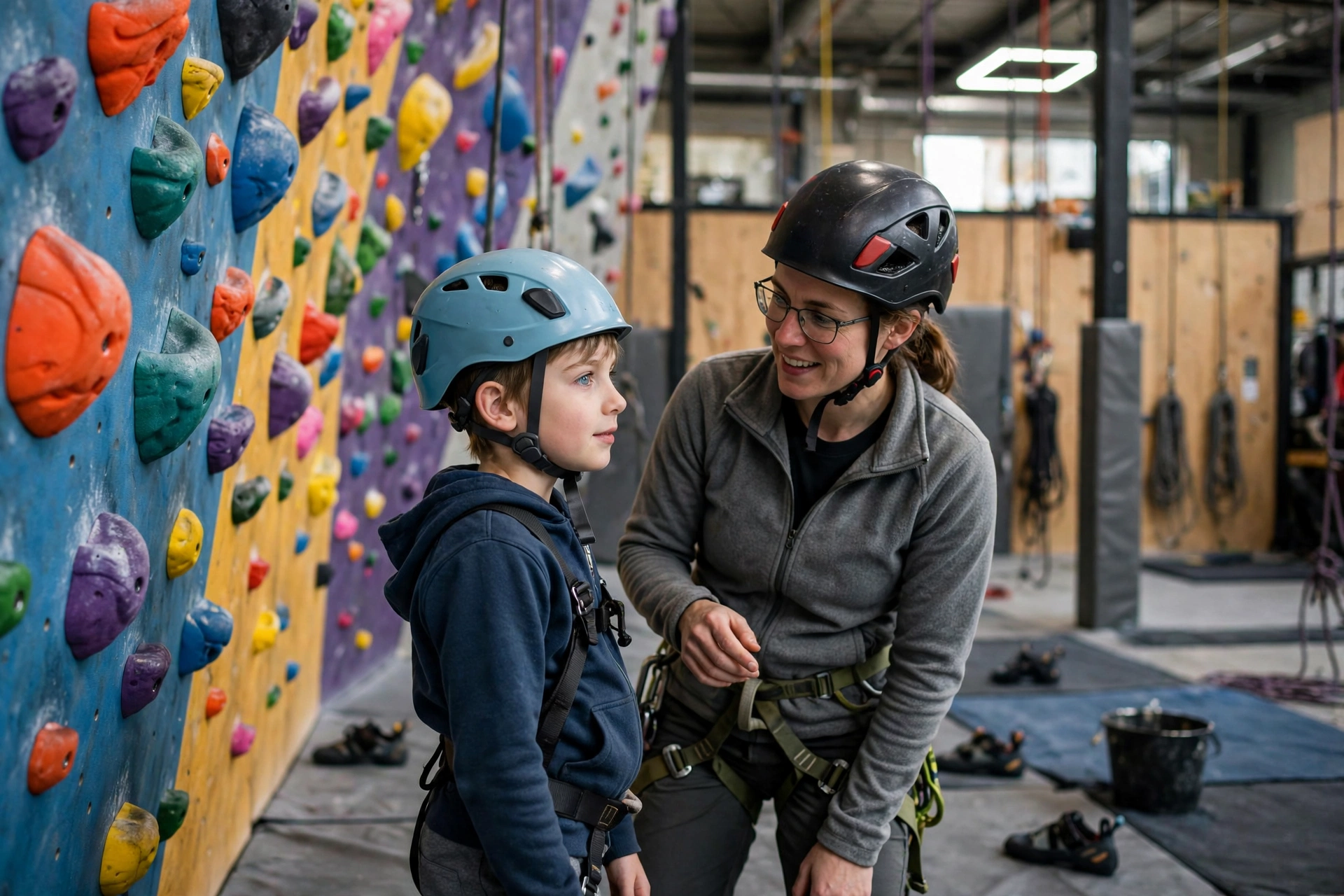
A child needs a light, well-fitting climbing helmet for a first climbing wall session, to protect the head from knocks against the wall, dropped gear, and falls in the early stages of learning to climb. In general terms, a climbing helmet made for children is smaller, lighter, and easier to adjust than an adult helmet, and it should sit snugly without slipping. It is a simple piece of kit that gives a young climber real protection and helps them enjoy their first time on the wall with confidence.
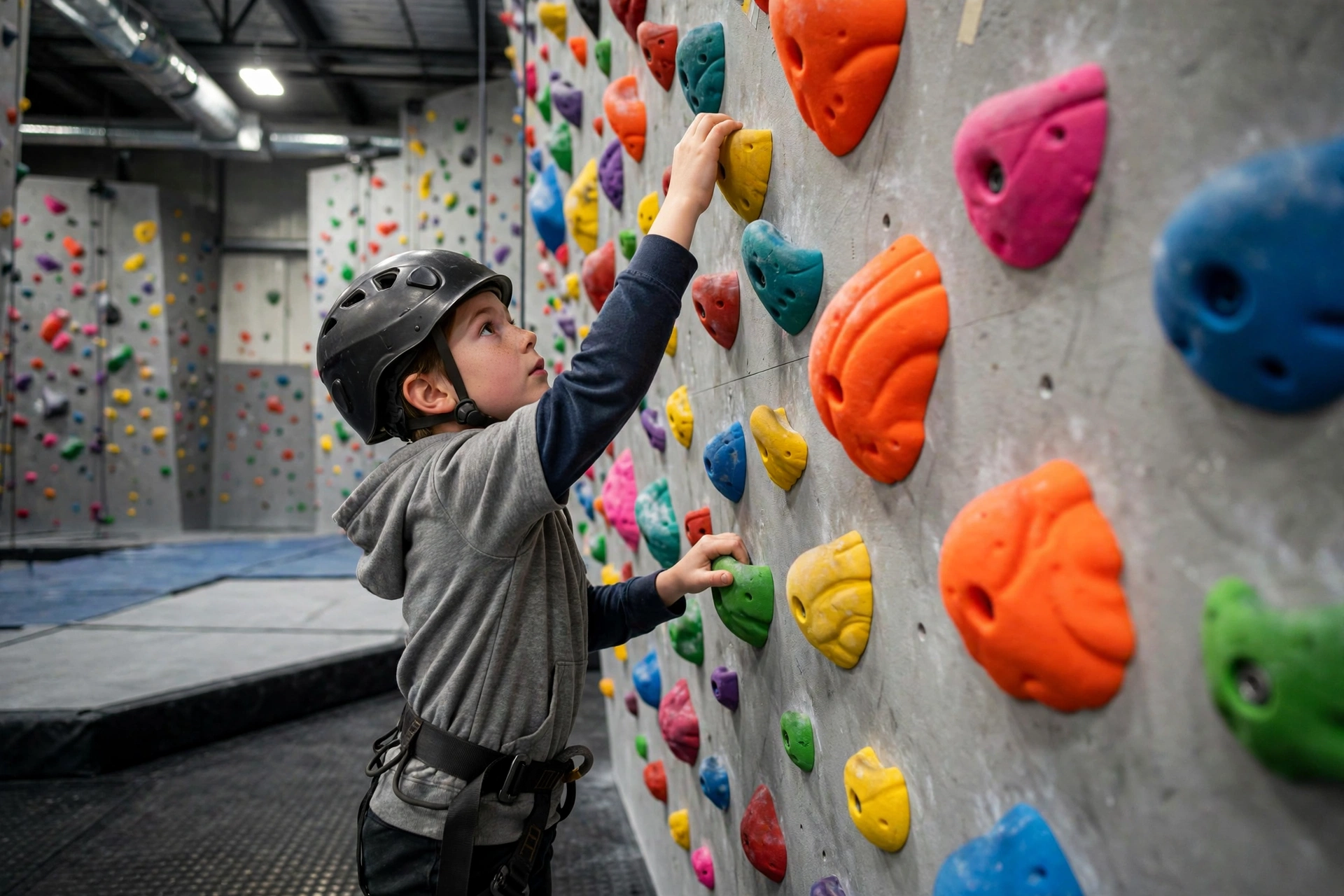
A first climbing wall session is exciting, and it is also new. A child is learning how to hold on, how to move their feet, and how to trust the rope, all at the same time. In that learning process, bumps happen: a foot slips, a hand reaches for the wrong hold, and the head can swing towards the wall. A helmet will not stop a child from falling, and it does not replace a good instructor or a proper harness, but it softens the knocks that are part of learning to climb.
What helmet does a child need for a first climbing wall session?
A child needs a climbing helmet sized for children, with a hard outer shell, a padded lining, and an adjustable fit that can be tightened as the child grows. In general terms, the helmet should cover the top and sides of the head, sit low on the forehead, and be held in place by a chin strap that is easy to fasten. Many climbing walls lend helmets to young climbers, so parents often do not need to buy one before the first session.
It is important that the helmet is made for climbing, rather than for another sport. A bike helmet, for example, is shaped for a different kind of fall and does not protect the top of the head from objects falling from above in the same way. A climbing helmet is designed for the knocks that happen on a wall, and it is the right choice even for a short indoor session. If the wall provides helmets, the staff will usually help the child find the right size.
Why does a child need a helmet on a climbing wall?
A child needs a helmet on a climbing wall because the wall is a hard surface, and a learner’s head can meet it in a slip or a swing. In general terms, a child who loses a foothold may swing gently into the wall, and a child who is being lowered may bump against a hold on the way down. These knocks are usually small, but a helmet turns a painful bump into a minor one, and that matters for a child’s confidence.
The helmet also protects against things falling from above. Another climber can drop a carabiner or a chalk bag, and a loose hold can come away from the wall. A child standing at the base of the wall, watching or waiting for a turn, is in the path of anything that falls, so wearing a helmet on the ground as well as on the wall is a sensible habit. Instructors usually ask the whole group to keep helmets on for this reason.
How should a child’s climbing helmet fit?
A child’s climbing helmet should fit snugly all round, without pressing hard on one spot or sliding around when the head moves. In general terms, it should sit level on the head, covering the forehead down to just above the eyebrows, and the chin strap should be tight enough that the helmet stays put when the head is shaken gently from side to side. A helmet that is too big can slip over the eyes, while one that is too small will press painfully on the head.
Fit should be checked with the child wearing the helmet as they will climb, with hair tied back where needed so that it does not change the fit. The adjustment at the back should be easy to use, so the helmet can be tightened or loosened as the child grows or as a hat is added in cold weather. It is also worth checking that the helmet does not block the child’s vision when they look up at the next hold, since seeing the route is part of climbing safely. Some helmets include a system designed to reduce rotational forces in a fall, such as MIPS, although a good fit and a shell made for climbing remain the most important things for a young climber.
What should parents check before the session?
Parents should check that the climbing wall provides helmets for children, and ask what sizes are available before the session. In general terms, it is worth arriving a little early, so there is time to try a helmet, adjust the straps, and let the child get used to wearing it before the climbing starts. A child who has tried the helmet on at home, or at least had a few minutes to wear it around the centre, will feel more comfortable on the wall.
Parents should also check the harness, the shoes, and the clothing. Clothes should be comfortable and close-fitting, so nothing catches on a hold, and long hair should be tied back. It is worth asking the instructor what the session will involve, so the child knows what to expect.
How can you help a child feel comfortable in a helmet?
A child feels comfortable in a helmet when it fits well, when it is introduced calmly, and when the adults around them treat it as normal. In general terms, it helps to let the child try the helmet on before the session, to adjust the straps together, and to show them that the instructor and other climbers are wearing helmets too. A helmet that is presented as part of the fun, rather than as a warning about danger, is easier for a child to accept.
If the helmet feels uncomfortable, it is worth checking the fit again rather than asking the child to put up with it. A strap that is too tight, a pad that presses on one spot, or a helmet that sits too low can all be fixed with a small adjustment, and a different size may be needed if the discomfort continues. A child who is comfortable in their helmet will forget about it once the climbing starts, which is exactly what a first session should feel like.
Does every child need a helmet at an indoor climbing wall?
In general terms, yes, most climbing walls ask children to wear a helmet, even indoors. It protects against bumps on the wall and against things dropped from above, and it helps young climbers build safe habits from the start.
Can a child use a bike helmet for climbing?
No, a bike helmet is made for a different kind of fall and does not protect the top of the head from falling objects in the same way. A climbing helmet is shaped and made for the knocks that happen on a wall, so it is the right choice.
What if the helmet feels uncomfortable?
Check the fit first, since a strap that is too tight or a helmet that sits too low can usually be fixed with a small adjustment. If it still feels uncomfortable, ask the instructor for a different size, because a helmet that fits well should feel easy to wear.

Olivia
Writer at Helmet Today, covering helmet reviews, fit and riding safety.