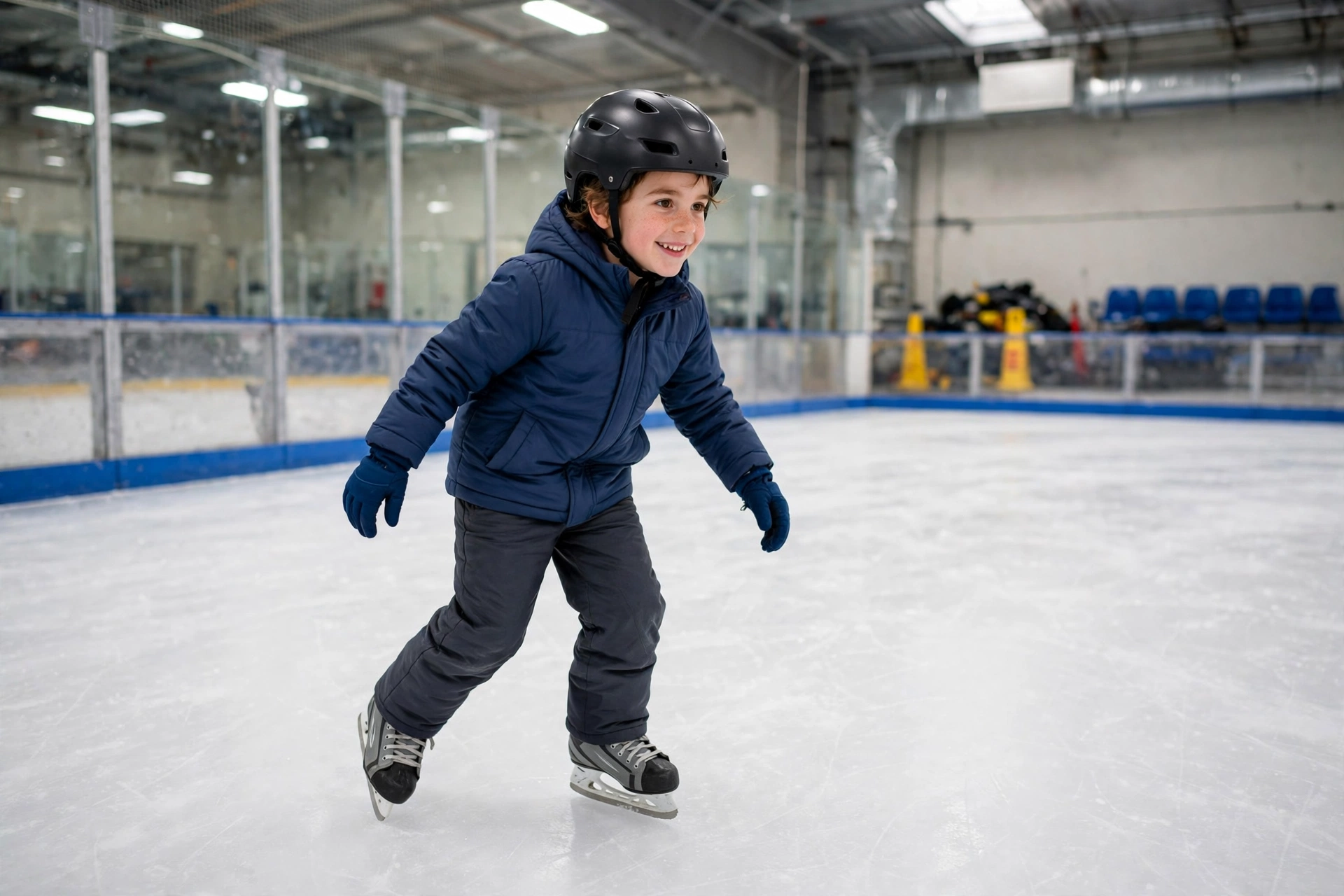
Yes, in general terms, children should wear a helmet for ice skating lessons. Ice is a hard, slippery surface, and beginners fall often while they are learning to balance, glide, and stop. A helmet protects the head in exactly those early falls, and most skating schools and rinks expect young beginners to wear one.
Ice skating is a wonderful winter activity for children, building balance, coordination, and confidence on the ice. The first lessons, though, are when falls are most frequent. A child who is still finding their feet on skates can slip without warning, and a hard ice surface offers no cushion at all. This guide explains what kind of helmet suits ice skating lessons, how it should fit, and what parents should check before the first class.
Why Do Children Need a Helmet for Ice Skating Lessons?
Ice skating is different from most other sports because the surface is both hard and slippery. A child who loses balance on ice can fall backwards and hit the back of their head before they have time to react, and beginners often cannot break a fall with their hands because their arms are busy trying to steady them. A helmet is the simplest protection against the kind of head knock that can happen in an ordinary beginner’s fall.
Ice rinks are also busy places. Other skaters, including faster adults and older children, share the ice, and collisions do happen. A beginner who is moving slowly and unpredictably is more likely to be bumped by someone else, and a helmet helps in that situation too. Many skating schools make helmets compulsory for children under a certain age, and some rinks lend them to young skaters. Even where a helmet is not required, it is a sensible choice for any child who is still learning.
What Kind of Helmet Suits Ice Skating Lessons?
A skate-style or multi-sport helmet is usually the best match for ice skating lessons. These helmets cover more of the back and sides of the head than a typical road cycling helmet, which suits the way skaters tend to fall backwards. They are also light and comfortable enough to wear for a full lesson, and they work well with the warm clothing children wear on the ice. Look for a helmet that meets a recognised safety standard for your region, and check the label inside to confirm which standard it meets.
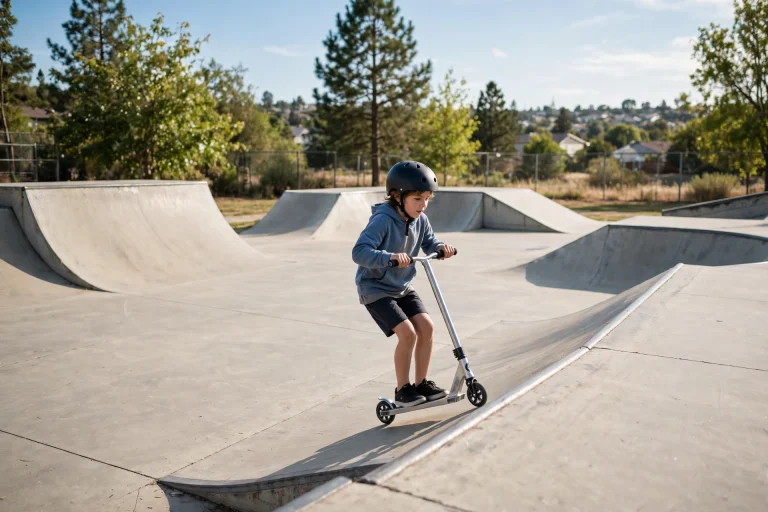
Avoid using a helmet made for a different activity if it does not fit the job. A climbing helmet, for example, is built for falling objects rather than falls onto ice, and a thin novelty helmet offers little real protection. If your child already owns a well-fitting skate-style helmet from scootering or inline skating, that is usually fine for ice skating too, provided it still fits and has never taken a hard knock. When in doubt, ask the skating school what they recommend.
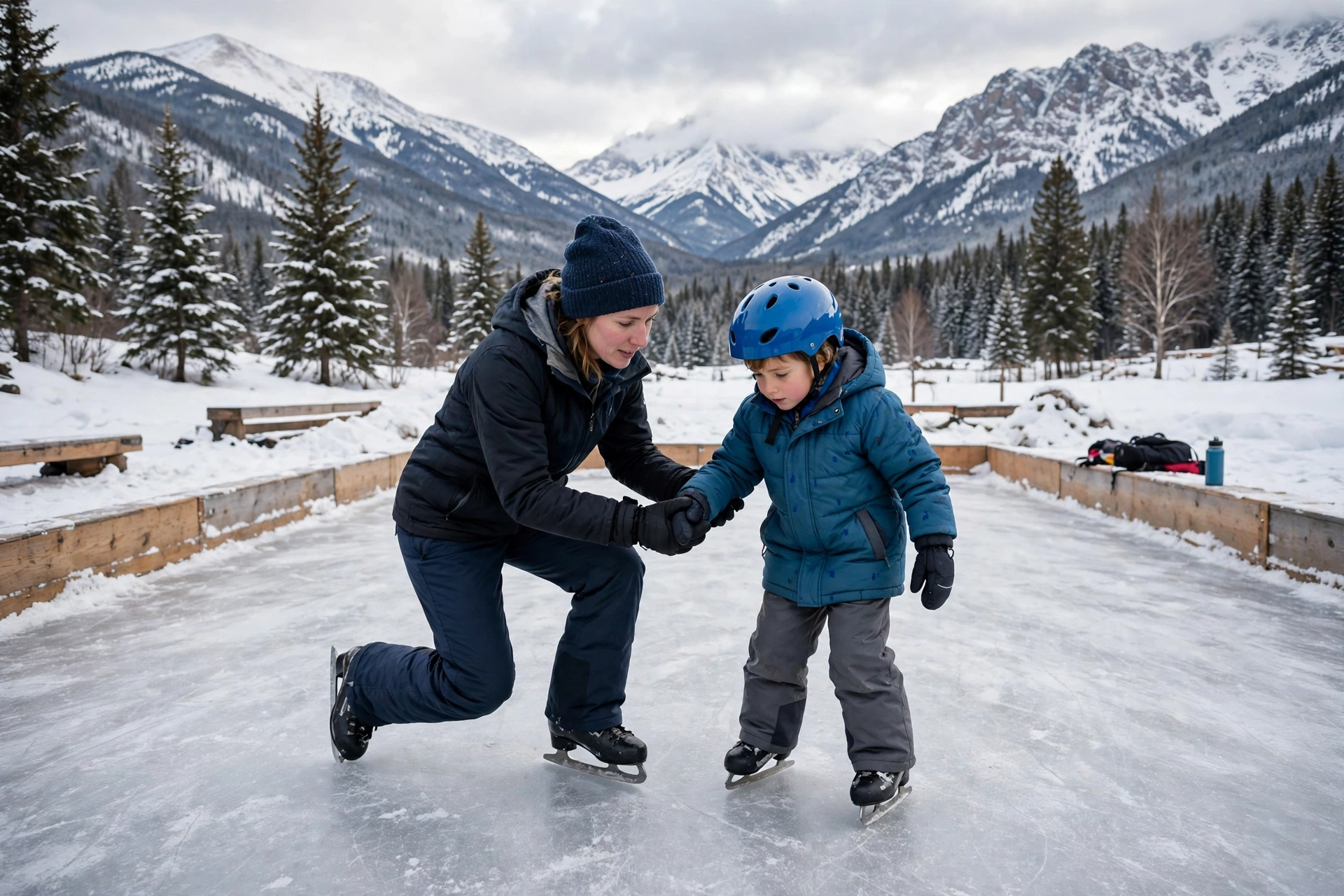
How Should a Kids Ice Skating Helmet Fit?
Fit is what makes a helmet work, so it deserves care. The helmet should sit level on your child’s head, low enough to cover the forehead, without tilting back or sliding forward. It should feel snug all around, with no pressure points that throb after a few minutes, and it should not rock from side to side when your child shakes their head gently. If the helmet moves easily, it is too loose, whatever the size label says.
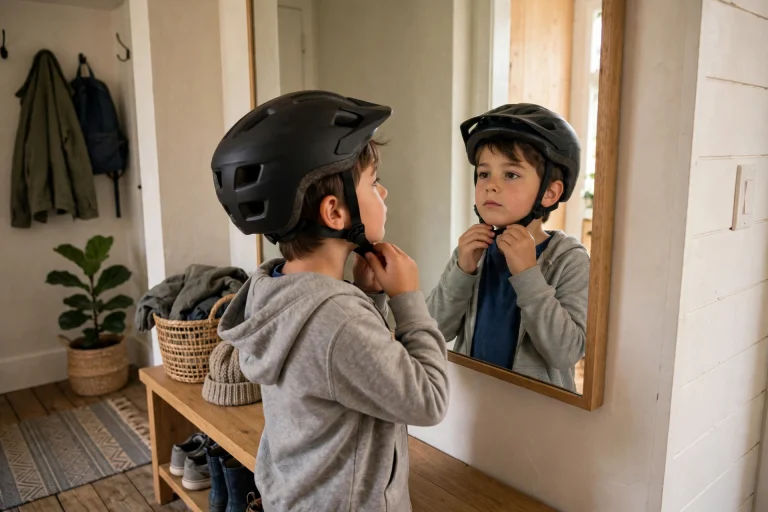
Check the fit with the warm hat or headband your child will wear on the ice, since extra layers can change how the helmet sits. The chin strap should be snug enough that only one or two fingers fit between the strap and the chin, and it should be done up before every session. A helmet with an unfastened strap can come off in the very fall it is meant to protect against. If you are learning about helmet technology, reading about what MIPS is for helmets can help you understand one of the features you may see listed on the box.
What Else Should Parents Check Before the First Lesson?
Before the first lesson, check the helmet for damage. Look over the shell for cracks, dents, or deep scratches, and press the inner foam gently to check it has not gone soft, crumbly, or compressed in one spot. A helmet that has already taken a hard knock should be replaced, even if it looks fine from the outside. Also check that the straps and buckle still fasten firmly and that any fitting pads are clean and in place.
Think about the rest of your child’s kit as well. Warm, flexible clothing that allows free movement is essential on the ice, and gloves are a must, both for warmth and to protect hands in a fall. Make sure the skates fit properly and are laced or buckled correctly, since loose skates make falling far more likely. A child who is warm, comfortable, and well protected is far more likely to enjoy the lesson and want to come back.
How Can You Help a Nervous Child on the Ice?
Many children feel nervous before their first ice skating lesson, and the helmet can become part of that worry if it feels strange or uncomfortable. Let your child try the helmet on at home before the lesson, so the first time they wear it is not in front of a group of strangers. Let them choose the colour or design if you are buying a new one, because a helmet they picked feels like theirs rather than a rule imposed on them.
Reassure your child that falling is part of learning to skate, and that everyone falls, including the instructor. A helmet means a fall is far less likely to hurt, which is a comforting thought for a nervous beginner. Stay to watch the lesson if you can, and praise your child for getting back up after a fall. Confidence on the ice builds quickly once a child realises that falling is normal and that getting up is part of the fun.
Frequently Asked Questions
Q: Can my child use a bike helmet for ice skating lessons?
A: In general terms, a bike helmet offers some protection, but a skate-style helmet usually suits ice skating better because it covers more of the back and sides of the head. If a bike helmet is all you have, check it fits well and ask the skating school whether they accept it.
Q: Does my child need a helmet if the rink provides one?
A: A rink helmet is fine if it fits properly, but a borrowed helmet may not fit well, and fit is what makes a helmet work. Arrive early enough to find a good fit, or bring your own helmet so the fit is settled before the lesson starts.
Q: How often should a child’s ice skating helmet be replaced?
A: Replace it after any hard knock, if the foam inside looks compressed or damaged, or when your child outgrows it. In general terms, a helmet that no longer fits snugly cannot protect properly, so check the fit regularly as your child grows.

Olivia
Writer at Helmet Today, covering helmet reviews, fit and riding safety.