In general terms, a ski helmet is the most important piece of kit for a child’s skiing lessons, after the skis themselves. Children learning to ski fall often, and they fall on snow that can hide ice, hard-packed patches, and other skiers. A properly fitted ski helmet protects the head in those falls, and most ski schools require one for young learners.
Skiing lessons are often a child’s first experience of a mountain, and the excitement is part of the appeal. The learning curve, though, is steep in the early days. A child who is still learning to stop, turn, and control their speed can fall without warning, and a helmet is the simplest protection they can wear. This guide explains what to look for in a child’s ski helmet, how it should fit, and what parents should check before the first lesson.
What Kind of Helmet Suits Skiing Lessons?
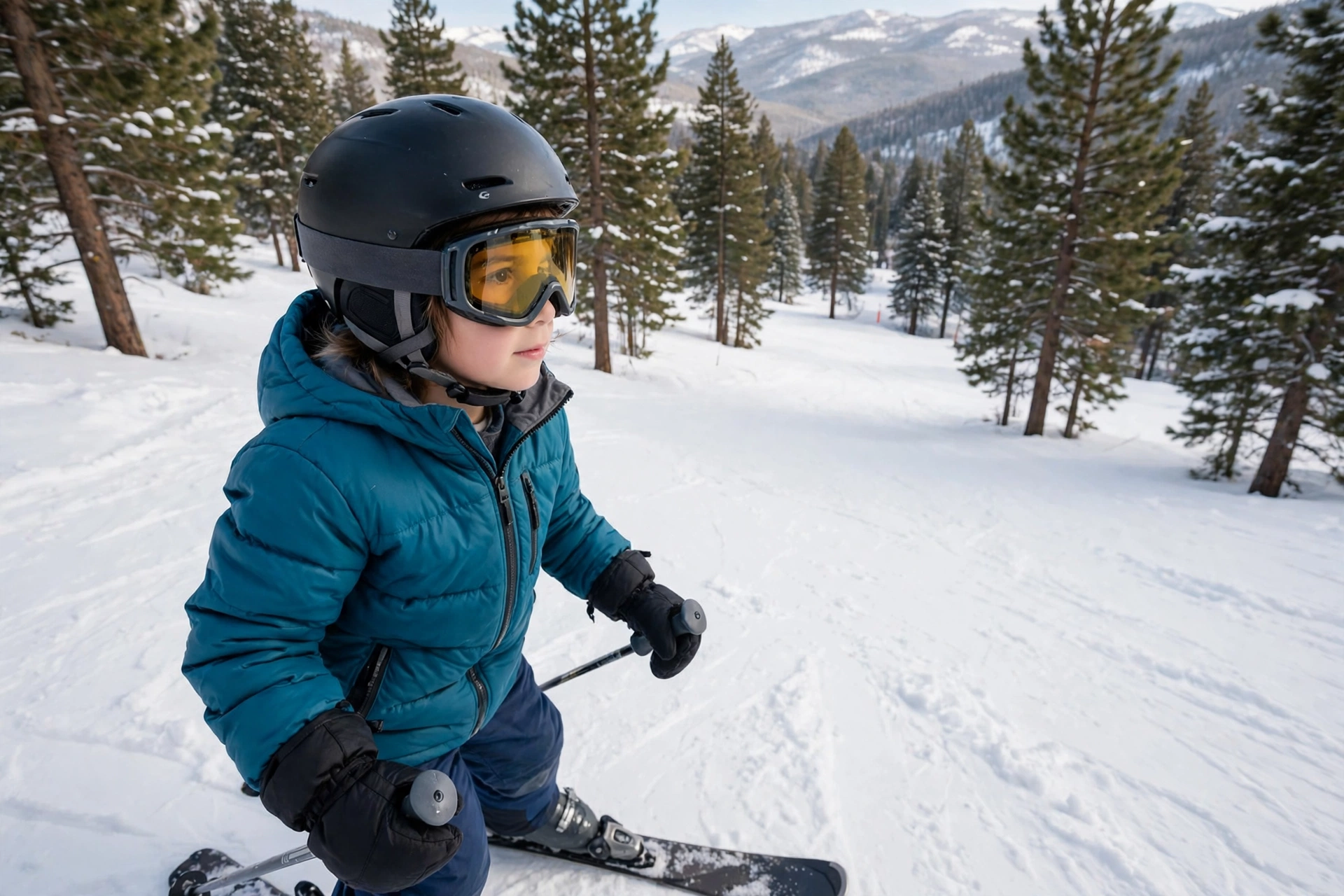
A proper ski helmet is the right choice for skiing lessons. Ski helmets are designed for cold weather, with insulation, ear coverage, and vents that can be opened or closed to manage temperature. They are shaped to work with ski goggles, and many have a clip or strap at the back to hold the goggle strap in place. Look for a helmet that meets a recognised ski helmet safety standard for your region, and check the label inside to confirm which standard it meets.
Do not substitute a bike helmet, skate helmet, or climbing helmet for a ski helmet. A bike helmet is too cold and too open for a mountain, a skate helmet lacks the insulation and goggle compatibility a skier needs, and a climbing helmet is built for a different kind of impact. Many ski schools and rental shops provide helmets with a lesson package, which is a good option for a first trip. If your child skis regularly, their own helmet is worth buying, because the fit will be right every time and the helmet will be in known condition.
How Should a Kids Ski Helmet Fit?
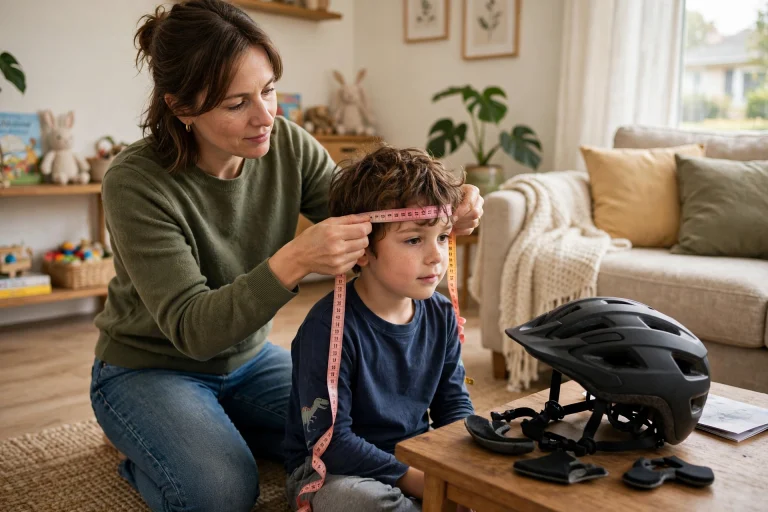
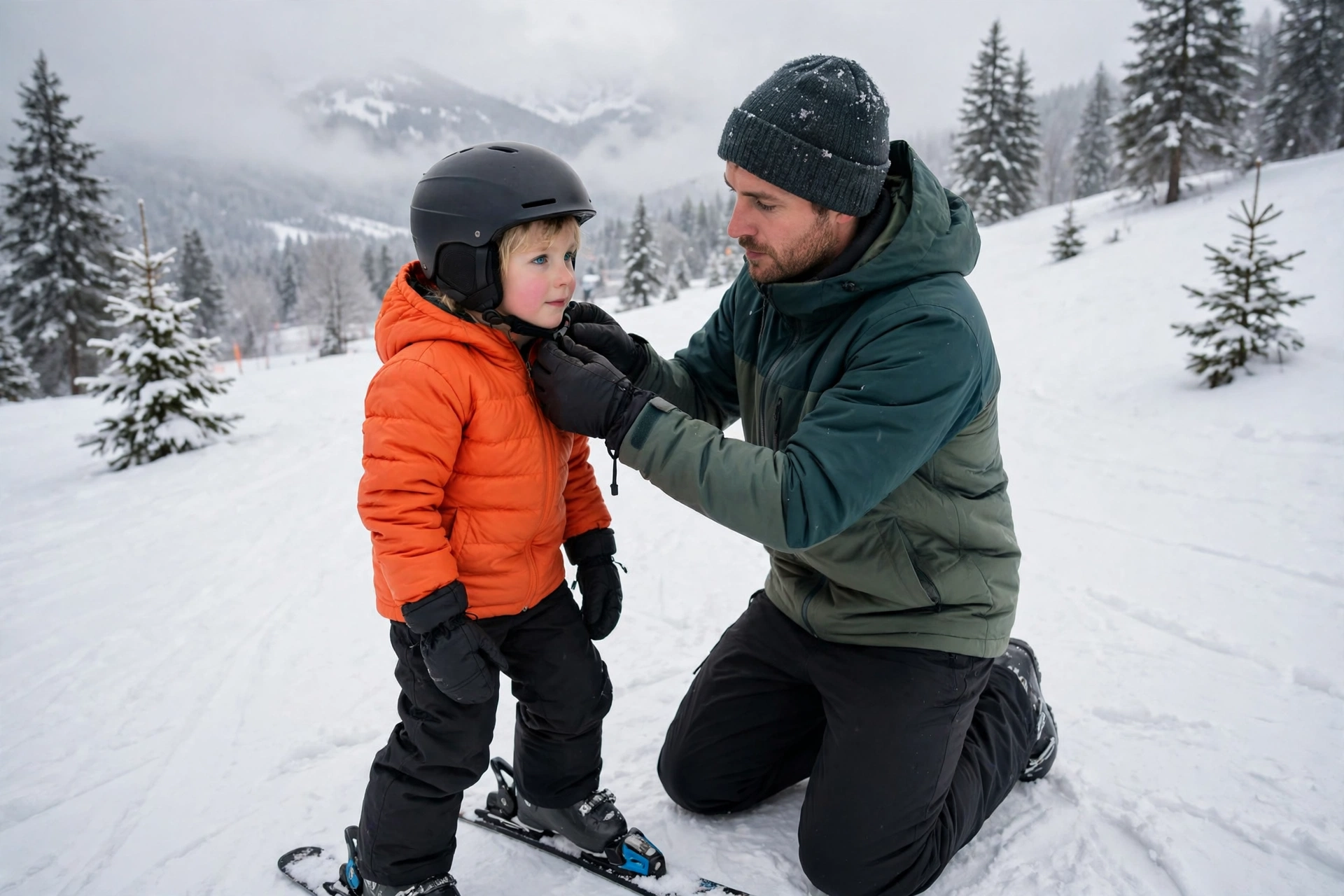
A ski helmet should sit level on your child’s head, low enough to cover the forehead, and snug enough that it does not rock from side to side when they shake their head. It should feel comfortable with no pressure points that throb after a few minutes, and it should stay in place when your child looks up, down, and from side to side. The adjustment dial or fitting system at the back should be tightened until the helmet is secure without pinching.
Check the fit with the goggles your child will wear, since the helmet and goggles need to work together. There should be no gap between the top of the goggles and the front of the helmet, because that gap, sometimes called a goggle gap, leaves the forehead exposed to cold and to impact. Check the fit with any balaclava or thin hat your child will wear underneath, since extra layers change how the helmet sits. The chin strap should be snug, with only one or two fingers fitting underneath. If you are learning about helmet technology, reading about what MIPS is for helmets can help you understand one of the features you may see listed on the box.
What Features Matter in a Kids Ski Helmet?
Ventilation is one of the most useful features in a child’s ski helmet. Children warm up quickly when they are active and cool down quickly when they stop, so vents that can be opened on a sunny afternoon and closed on a cold morning help keep them comfortable all day. Look for vents that are easy to adjust with gloves on, since a child will not want to take their gloves off in the cold to fiddle with a small switch.
Ear coverage matters too, especially for younger children. Padded ear covers keep ears warm and add a little extra protection, and they should sit comfortably without pressing hard. Removable ear pads are a bonus, because they can be taken out on a warm spring day or washed after a week of skiing. A helmet with a washable liner is also worth looking for, since children’s helmets get sweaty and can smell after a few days on the mountain.
What Else Should Parents Check Before the First Lesson?
Before the first lesson, check the helmet for damage. Look for cracks in the shell, dents, or crushed foam inside, and check that the straps, buckle, and adjustment dial all work smoothly. A helmet that has already taken a hard knock should be replaced, even if the damage is hard to see. If you are renting a helmet, check it over at the rental desk before you leave, and ask for a different one if anything looks worn or damaged.
Make sure the rest of your child’s kit is ready too. Warm, waterproof clothing, gloves or mittens, and goggles that fit well with the helmet are all essential. Sunscreen is easy to forget in the snow, but the sun reflects off the snow and can burn exposed skin quickly, so apply it before the lesson. A child who is warm, dry, and comfortable will learn far faster than one who is cold and miserable, whatever the quality of their helmet.
How Can You Help a Child Enjoy Skiing Lessons?
Let your child be part of choosing their helmet, if you are buying one. A colour or design they picked feels like theirs, and a child who likes their helmet is far more likely to wear it without complaint. Try the helmet on at home with the goggles, so the first time they wear the full kit is not on a cold mountain in front of a group of strangers.
Keep expectations realistic for the first few lessons. Most children spend their first day learning to walk in ski boots, slide on flat snow, and stop safely, and that is real progress. Praise effort rather than speed, and celebrate small wins like a first controlled turn or a first ride on a button lift. A child who enjoys the first lesson will be keen for the second, and a helmet that fits well and feels comfortable is part of that enjoyment.
Frequently Asked Questions
Q: Can my child use a bike helmet for skiing lessons?
A: In general terms, no. A bike helmet is too cold and too open for skiing, and it does not work well with ski goggles. Most ski schools require a proper ski helmet, and rental shops will provide one if you do not have your own.
Q: Should the helmet fit over a thick hat?
A: In general terms, no. A ski helmet is designed to be worn with at most a thin balaclava underneath. A thick hat changes the fit and can make the helmet sit too high. Check the fit with whatever your child will actually wear on the mountain.
Q: When should a child’s ski helmet be replaced?
A: Replace it after any hard knock, if the shell is cracked or the foam is damaged, or when your child outgrows it. In general terms, a helmet that no longer fits snugly cannot protect properly, so check the fit at the start of every ski trip.

Olivia
Writer at Helmet Today, covering helmet reviews, fit and riding safety.