Teaching a child to check their own helmet fit is one of the most useful safety habits a parent can pass on. A helmet that fits well protects the head, but a helmet that has slipped back, loosened, or been put on carelessly does far less. Children who can check their own fit will wear their helmet correctly even when no adult is watching.
Most children can learn a simple fit check from around the age of six or seven, and the habit is worth building early. It takes less than a minute, it needs no tools, and it gives a child a sense of responsibility for their own safety. This guide explains a simple three-step check any child can learn, how to practise it at home, and how parents can reinforce the habit without turning it into a chore.
Why Should Children Check Their Own Helmet Fit?
Children ride, skate, and climb in all sorts of places, and a parent is not always there to check the helmet. A child who rides to a friend’s house, takes part in a school cycling session, or joins a club activity needs to be able to check their own helmet. A child who has never been taught to check will often wear a helmet that has worked loose, slipped back, or been put on over a bulky hat, without realising anything is wrong.
Teaching a child to check their own fit also builds independence and confidence. It shows them that safety is something they can take part in, not just a set of rules imposed by adults. A child who understands why a helmet must fit properly is far more likely to wear it correctly, and to speak up if their helmet feels wrong or uncomfortable, than a child who has simply been told to wear one.
What Is the Simple Three-Step Helmet Fit Check?
The simplest fit check a child can learn has three steps: eyes, ears, and mouth. First, eyes: with the helmet on, the child should be able to see the front edge of the helmet when they look up. If they can see it easily, the helmet is sitting low enough on the forehead. If the helmet has slipped back and they cannot see it, it needs pulling forward. This is an easy check a child can do alone, in front of a mirror or simply by looking up.
Second, ears: the side straps should form a neat shape under each ear, meeting just below the earlobe. If the straps are hanging loose in front of or behind the ear, they need adjusting. Third, mouth: when the child opens their mouth wide, they should feel the helmet pull down slightly on their head. If the helmet does not move at all, the chin strap is too loose. If it pulls down hard, the strap is too tight. A child who can remember eyes, ears, and mouth can check their own helmet in under a minute.
How Can Parents Practise the Check with a Child?
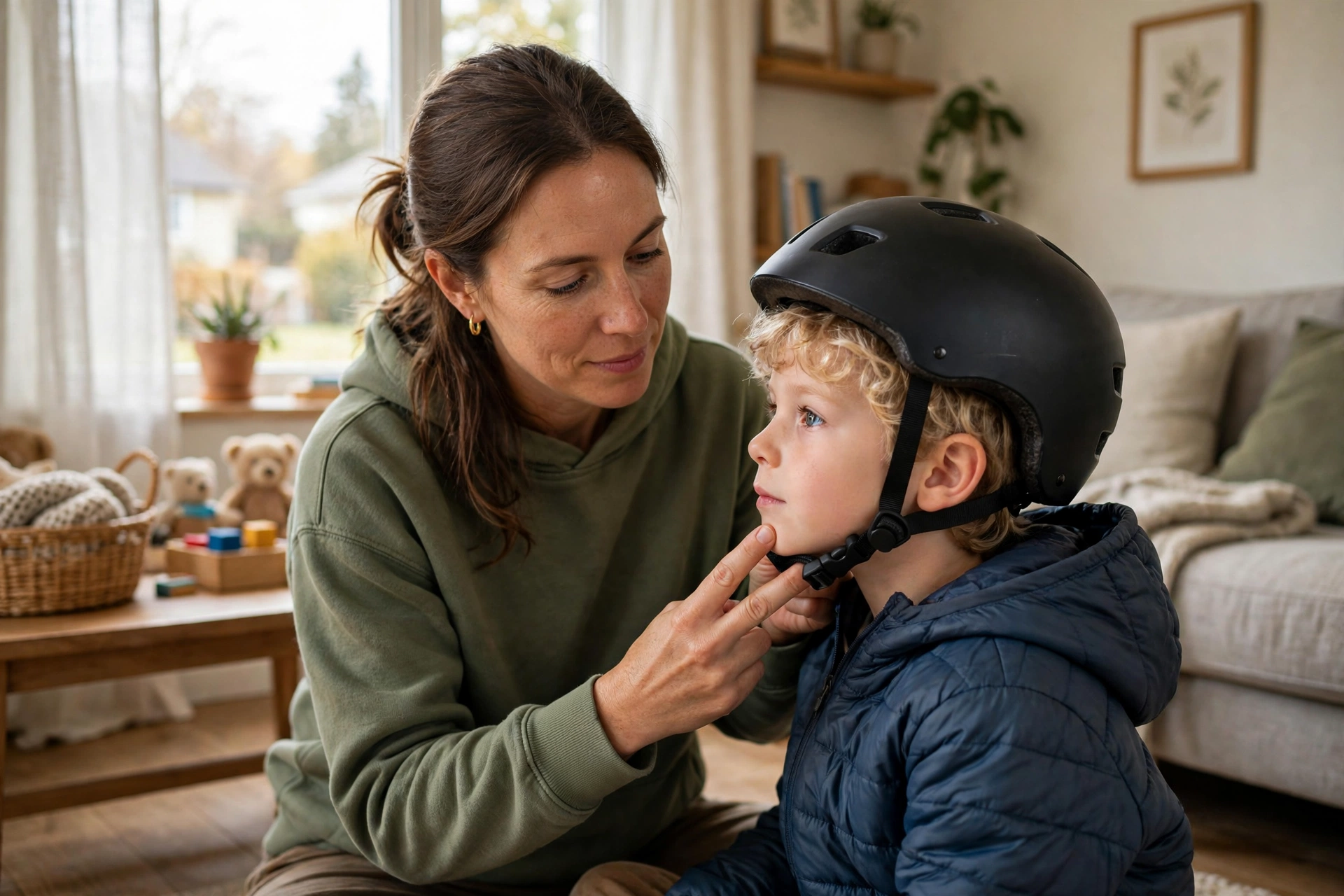
Practise the fit check at home, in a calm moment, rather than in a rush before a ride. Put the helmet on your child, go through the three steps together, and let them do each step themselves. Show them how to pull the helmet forward if it has slipped back, how to tighten the straps, and how to check the chin strap with two fingers. Repeat the practice a few times over a week, so the steps become a habit rather than a one-off lesson.
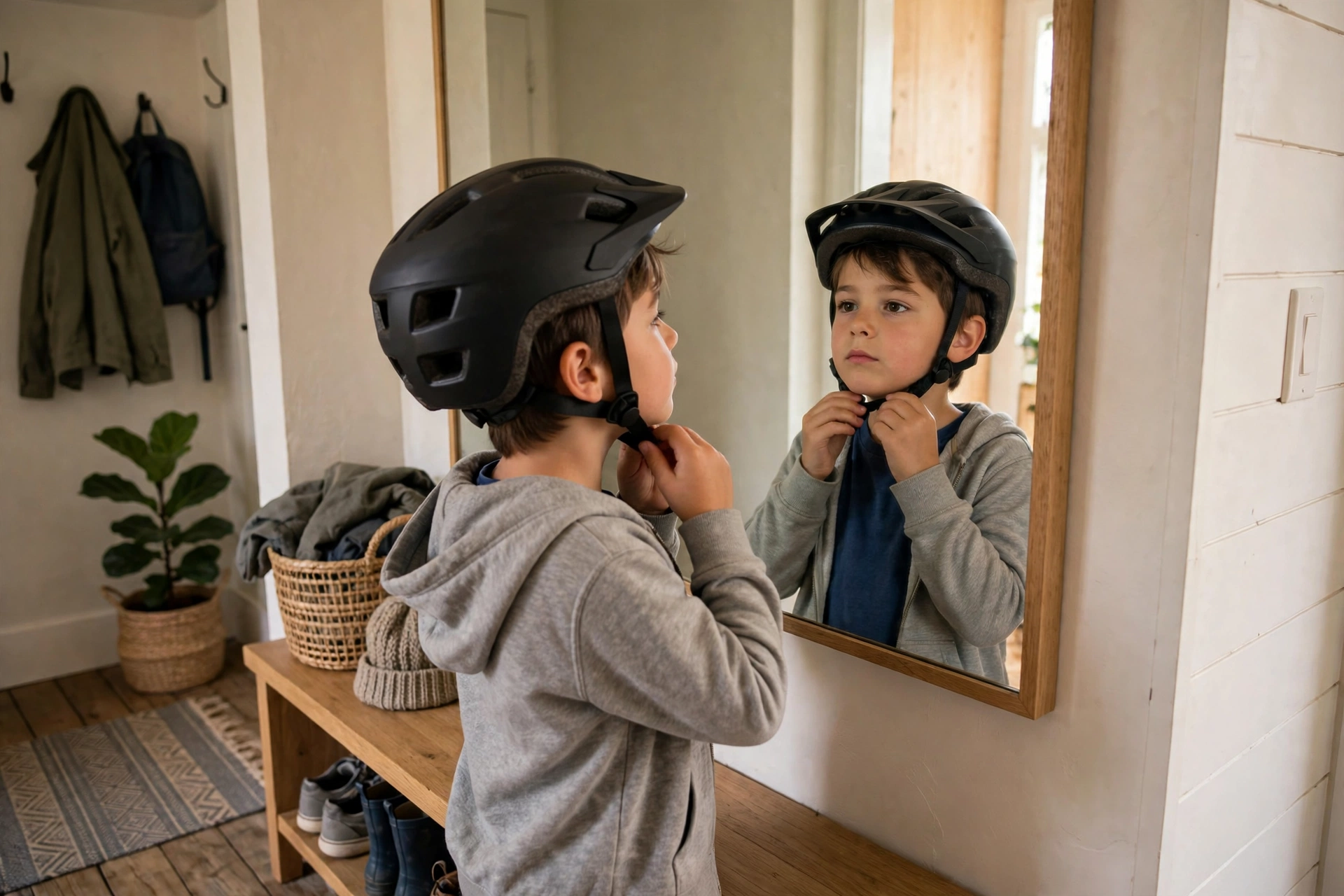
Use a mirror so your child can see what a good fit looks like. A child who can see the helmet sitting level on their head, low on the forehead, will recognise when it is sitting wrong. Let them practise on their own helmet, not a sibling’s, since a helmet that fits one child may not fit another. Praise them when they get it right, and keep the tone light. A fit check should feel like a quick routine, not a test. If you are learning about helmet technology, reading about what MIPS is for helmets can help you understand one of the features you may see listed on the box.
What Should a Child Do If Their Helmet Does Not Fit?
A child who finds their helmet does not fit should know what to do next. If the straps have worked loose, they can often tighten them themselves using the adjusters, and a quick practice at home will show them how. If the helmet is too small, too big, or damaged, they should tell an adult rather than riding with a helmet that does not fit. Make sure your child knows that speaking up about a helmet is sensible, not fussy, and that no ride is so urgent that it is worth riding with a helmet that does not fit.
It is also worth teaching a child to check the helmet itself, not just the fit. Show them how to look for cracks in the shell, check that the straps are not frayed, and make sure the buckle clicks shut properly. A child who can spot a damaged helmet is a child who will not wear one that has already done its job in a previous fall. Keep the checks simple and quick, so they become part of the routine rather than a burden.
How Can Parents Reinforce the Habit?
The best way to reinforce the habit is to model it yourself. Check your own helmet fit before every ride, and let your child see you doing it. A parent who checks their own helmet sends a clear message that fit checks are something everyone does, not just children. Make the check part of the getting-ready routine, alongside putting on shoes and grabbing a water bottle, so it becomes automatic.
Ask your child to show you their fit check before they ride, rather than checking it for them. A quick “show me your eyes, ears, and mouth” takes seconds, and it tells your child that you trust them to get it right. If they miss something, help them fix it rather than taking over. A child who is trusted with their own safety is a child who takes it seriously.
Frequently Asked Questions
Q: At what age can a child check their own helmet fit?
A: In general terms, most children can learn a simple fit check from around six or seven years old. Younger children can still be taught to tell an adult if their helmet feels loose or uncomfortable, even if they cannot adjust it themselves.
Q: What if my child forgets to check their helmet?
A: Remind them gently and make the check part of the getting-ready routine. A quick prompt before each ride, such as asking them to show you their fit check, helps the habit stick without turning it into a lecture.
Q: Should a child check their helmet every time they ride?
A: Yes, in general terms. Straps can work loose, helmets can be knocked in a bag, and a child’s head can grow between rides. A quick check before every ride takes less than a minute and is well worth the effort.

Olivia
Writer at Helmet Today, covering helmet reviews, fit and riding safety.