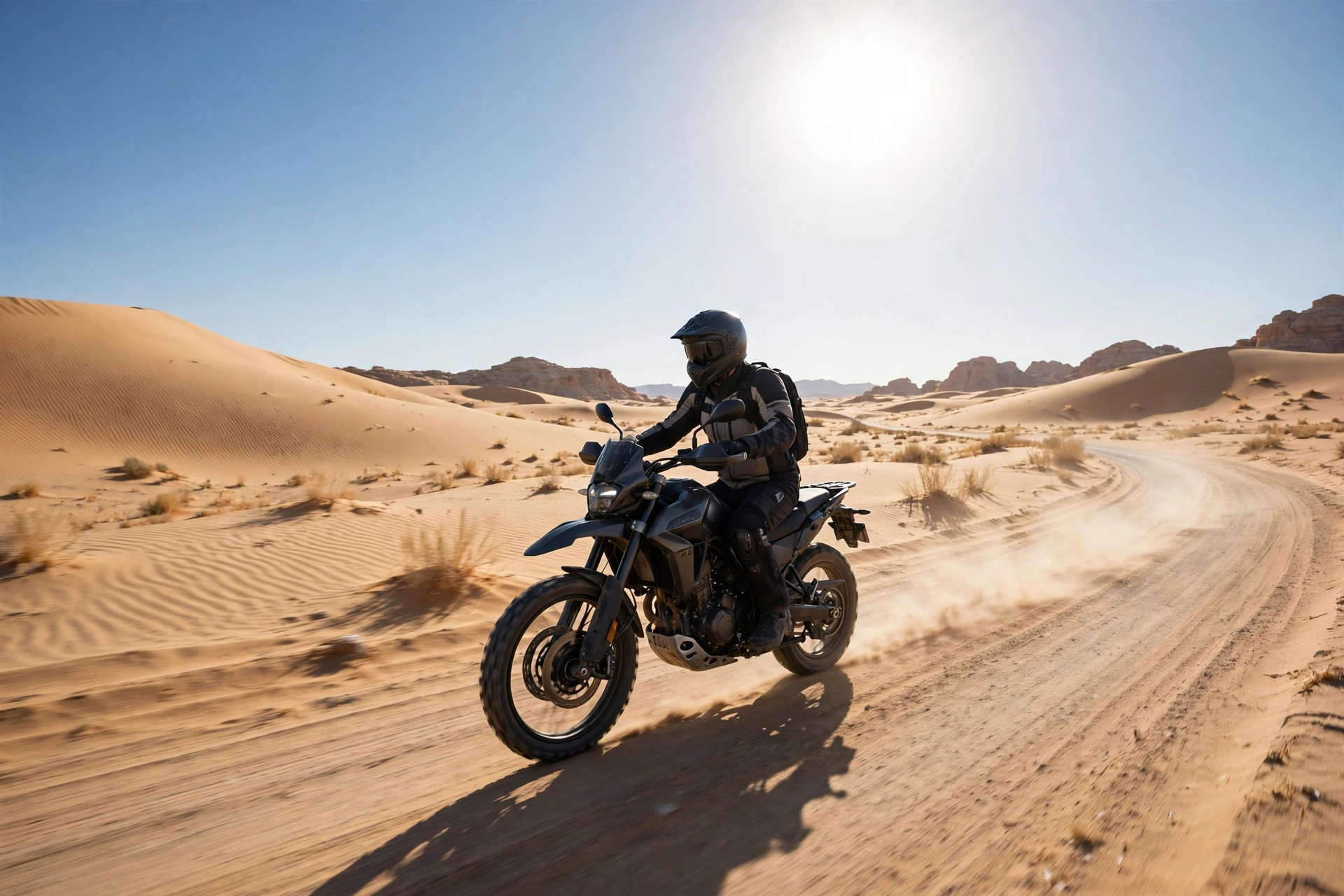
In general terms, riding in desert heat calls for a helmet with excellent ventilation, a light colour, and a fit that stays comfortable as you sweat. Desert riding is not just hot: the sun is fierce, the air is dry, and shade is scarce. A helmet that works well in a mild climate can become a heat trap in the desert, so choosing the right one matters more than usual.
Desert riding attracts motorcyclists, cyclists, and off-road riders who are drawn to the open roads, the dramatic landscapes, and the sense of space. The heat, though, is a real challenge, and it affects both the rider and the helmet. This guide explains what to look for in a helmet for desert heat, how to stay cool and safe, and what to check before a ride in extreme temperatures.
Why Is Desert Heat Hard on Helmets and Riders?
Desert heat is hard on a rider because the body has to work hard to stay cool. Sweating is the body’s main cooling system, but in dry desert air sweat evaporates quickly, which can hide how much fluid a rider is losing. A rider who is dehydrated becomes tired, loses concentration, and reacts more slowly, which makes a fall more likely. A helmet adds to the challenge by trapping heat around the head, which is why ventilation matters so much in the desert.
Heat is also hard on the helmet itself. Prolonged exposure to strong sun and high temperatures can age the materials in a helmet more quickly, particularly the foam liner and the straps. A helmet that is left in direct sun on a bike, or stored in a hot vehicle, can suffer in ways that are not obvious from the outside. In general terms, a helmet used regularly in desert heat should be checked more often and replaced sooner than one used in a mild climate.
What Kind of Helmet Suits Desert Heat Riding?
A light-coloured helmet with large, well-placed vents is the best choice for desert heat. A white or pale helmet reflects sunlight rather than absorbing it, which keeps the shell cooler than a dark helmet in the same sun. Large vents let air flow through the helmet and carry heat away from the head, and a helmet with adjustable vents lets the rider open them fully on a hot day and close them if the wind picks up dust or sand.
For motorcyclists, a helmet with a good visor is important in the desert, both for sun protection and for keeping dust and sand out of the eyes. A tinted visor or sunglasses can help with glare, though a visor that is too dark can be a problem if the ride continues into dusk. For cyclists, a helmet with a small peak can shade the face and help with low sun. Whatever the activity, the helmet should meet a recognised safety standard for your region, and the label inside will say which standard it meets.
How Can You Stay Cool in a Helmet in Desert Heat?
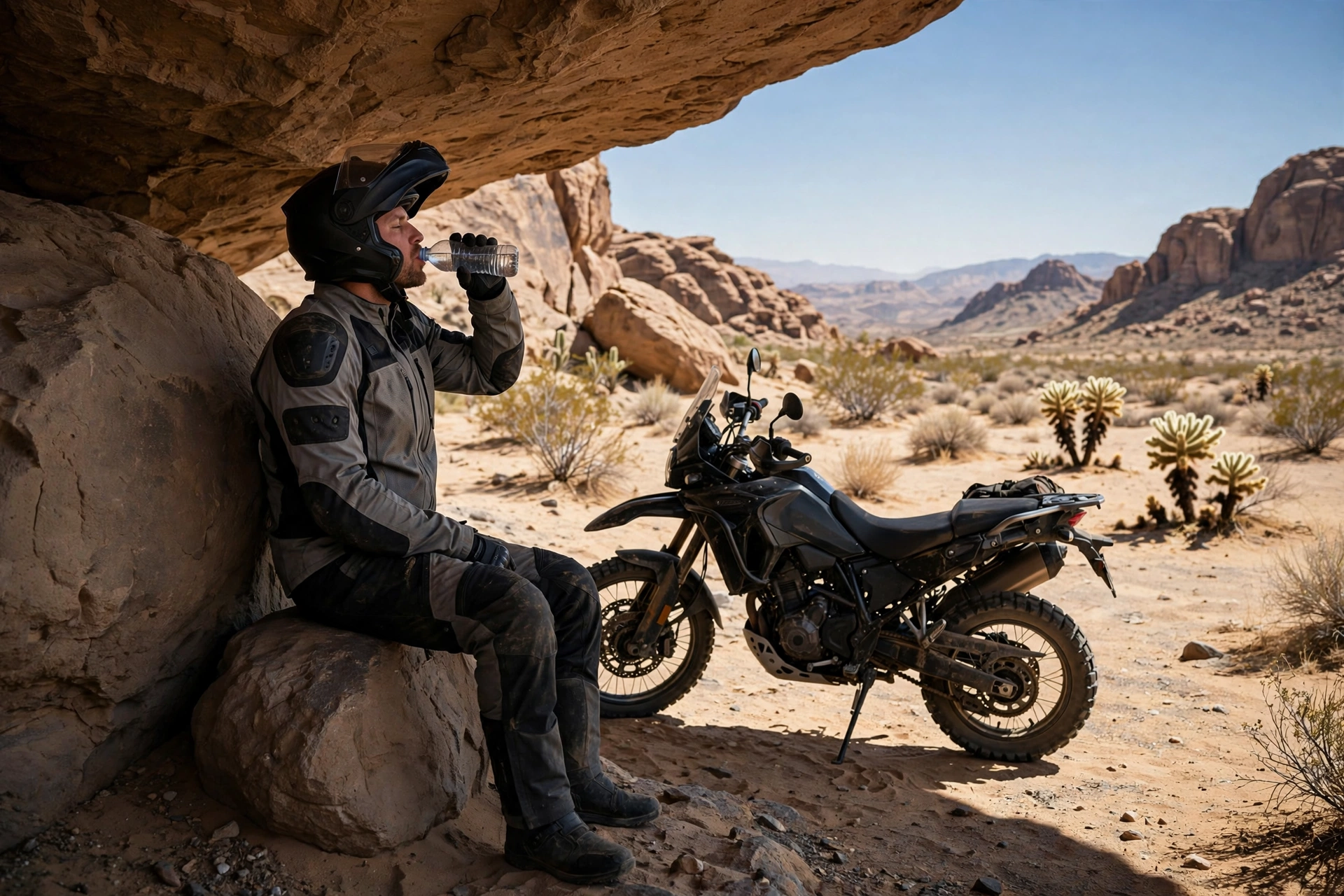
The simplest way to stay cool is to keep moving, since airflow through the vents is what cools the head. Slow riding or sitting in traffic in the desert can be far hotter than riding at a steady speed, because the air stops flowing through the helmet. Plan routes that keep you moving where possible, and take breaks in the shade rather than in direct sun.
Staying hydrated is just as important as ventilation. Drink water regularly, before you feel thirsty, and carry more water than you think you will need. A hydration pack or a water bottle that is easy to reach while riding helps, since a rider who has to stop to drink will drink less often. Wetting a thin skull cap or bandana under the helmet can also help, since the evaporation cools the head, though it should be a thin layer that does not change how the helmet fits. If you are learning about helmet technology, reading about what MIPS is for helmets can help you understand one of the features you may see listed on the box.
What Should You Check Before a Desert Ride?
Before a desert ride, check the helmet for signs of heat damage. Look for a shell that has become brittle or discoloured, foam that feels soft or crumbly, and straps that have gone stiff or frayed. A helmet that has spent a lot of time in strong sun should be checked more carefully, and replaced sooner, than one used in a mild climate. Also check that the vents are clear of dust and sand, since blocked vents cannot cool the head.
Check the rest of your kit too. Light-coloured, loose-fitting clothing reflects the sun and allows air to circulate, while sunscreen protects exposed skin from the fierce desert sun. Sunglasses or a tinted visor help with glare, and gloves protect hands from the sun and from hot handlebars. A rider who is protected from the sun is a rider who can focus on the road rather than on discomfort.
When Should You Avoid Riding in Desert Heat?
There are times when the sensible choice is not to ride at all. The middle of the day in a desert summer can be dangerously hot, and riding in extreme heat puts a strain on the body that no helmet can fix. Plan rides for the early morning or the late afternoon, when temperatures are lower and the sun is less fierce, and avoid riding in the hottest part of the day if you can.
Know the signs of heat exhaustion, which include dizziness, nausea, a headache, and heavy sweating, and stop riding if you feel any of them. Find shade, drink water, and cool down before deciding whether to continue. A ride that is cut short is always better than a ride that ends in a medical emergency, and a rider who knows their limits is a rider who will be able to ride again tomorrow.
Frequently Asked Questions
Q: Does a dark helmet get hotter than a light helmet in the desert?
A: In general terms, yes. A dark helmet absorbs more sunlight than a light one, which makes the shell hotter. A white or pale helmet is a better choice for desert riding, though ventilation matters more than colour on its own.
Q: Can I wear a wet bandana under my helmet in desert heat?
A: In general terms, yes, a thin wet bandana or skull cap can help cool the head as the water evaporates. Make sure it is thin enough not to change how the helmet fits, and that the helmet still sits level and snug.
Q: How often should a helmet used in desert heat be replaced?
A: In general terms, a helmet used regularly in strong sun and high temperatures should be checked more often and replaced sooner than one used in a mild climate. Replace it if the shell, foam, or straps show signs of heat damage, or after any hard knock.

Olivia
Writer at Helmet Today, covering helmet reviews, fit and riding safety.