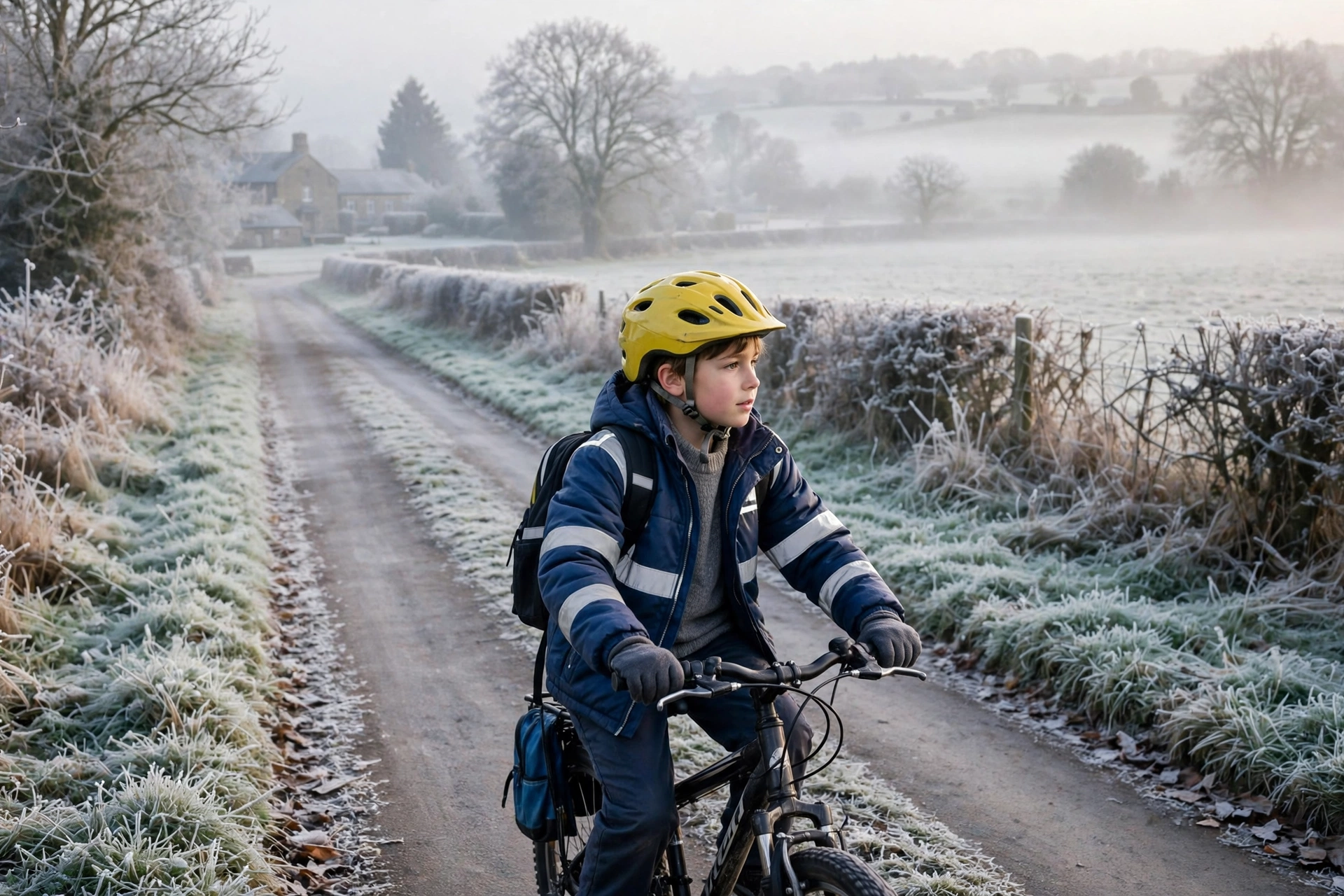
Yes, in general terms, a child cycling to school in winter needs a helmet, just as they do in summer, with a few cold-weather adjustments. Winter roads are darker, wetter, and more slippery, and a child who is cold and uncomfortable is less focused on the road. A well-fitting helmet, worn correctly over a thin layer, is essential kit for a winter school ride.
Cycling to school in winter is a healthy habit, but it brings challenges that summer riding does not. Short days mean riding in the dark or in poor light, cold air means numb fingers and a cold head, and wet leaves, ice, and grit make the roads less predictable. This guide explains how to choose and fit a helmet for winter school cycling, what else a child needs for the ride, and how parents can help the habit last through the cold months.
How Should a Winter Cycling Helmet Fit a Child?
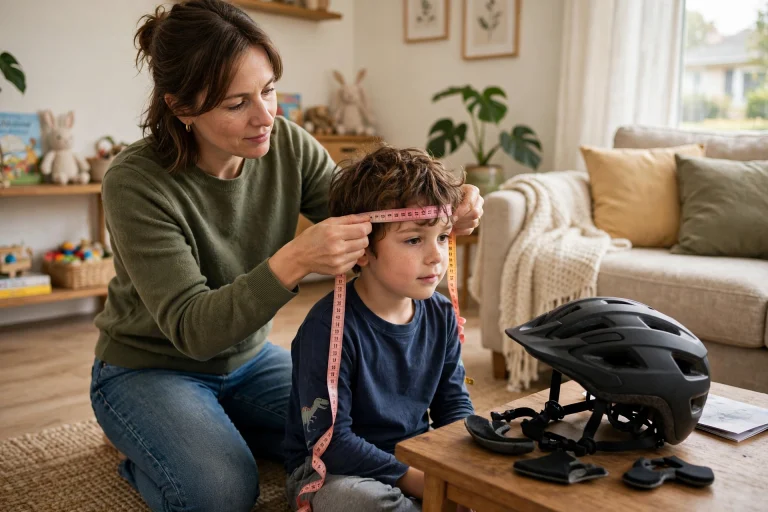
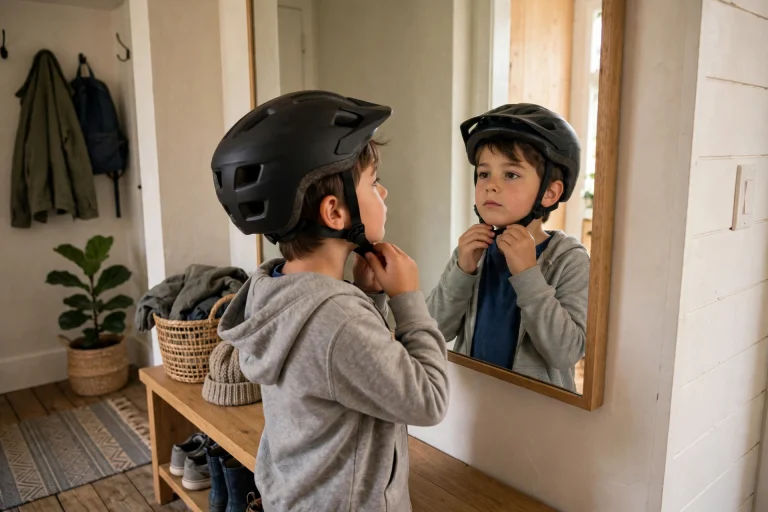
A winter helmet should fit in exactly the same way as a summer one: level on the head, low on the forehead, snug all around, and with a chin strap that allows only one or two fingers underneath. The difference in winter is what goes underneath it. A thin balaclava or skull cap can be worn under a helmet to keep a child’s head warm, but a thick woolly hat should not, because it changes the fit and can push the helmet up so it sits too high on the head.
Check the fit with the balaclava or skull cap your child will actually wear on the ride. If the helmet feels tight with the layer underneath, loosen the fitting system slightly rather than forcing the helmet on. If the helmet still feels tight, it may be time for the next size up. Never let a child ride with a helmet perched on top of a thick hat, since a helmet that sits too high leaves the forehead exposed. If you are learning about helmet technology, reading about what MIPS is for helmets can help you understand one of the features you may see listed on the box.
What Features Help a Helmet in Winter?
Ventilation that can be adjusted is one of the most useful features for winter cycling. Vents that can be closed keep cold air and rain out on a frosty morning, and opened on a milder afternoon when a child warms up on the ride. Look for a helmet with vents that are easy to adjust with gloves on, since a child will not want to take their gloves off in the cold to fiddle with a small switch.
Ear coverage helps too, particularly for younger children. Some cycling helmets have ear covers that can be fitted in winter and removed in summer, which is a practical solution for a child who cycles to school all year round. A helmet with a peak or a small visor can also help in winter, shielding the eyes from low sun and drizzle. Make sure any add-on does not block your child’s view of the road or of traffic.
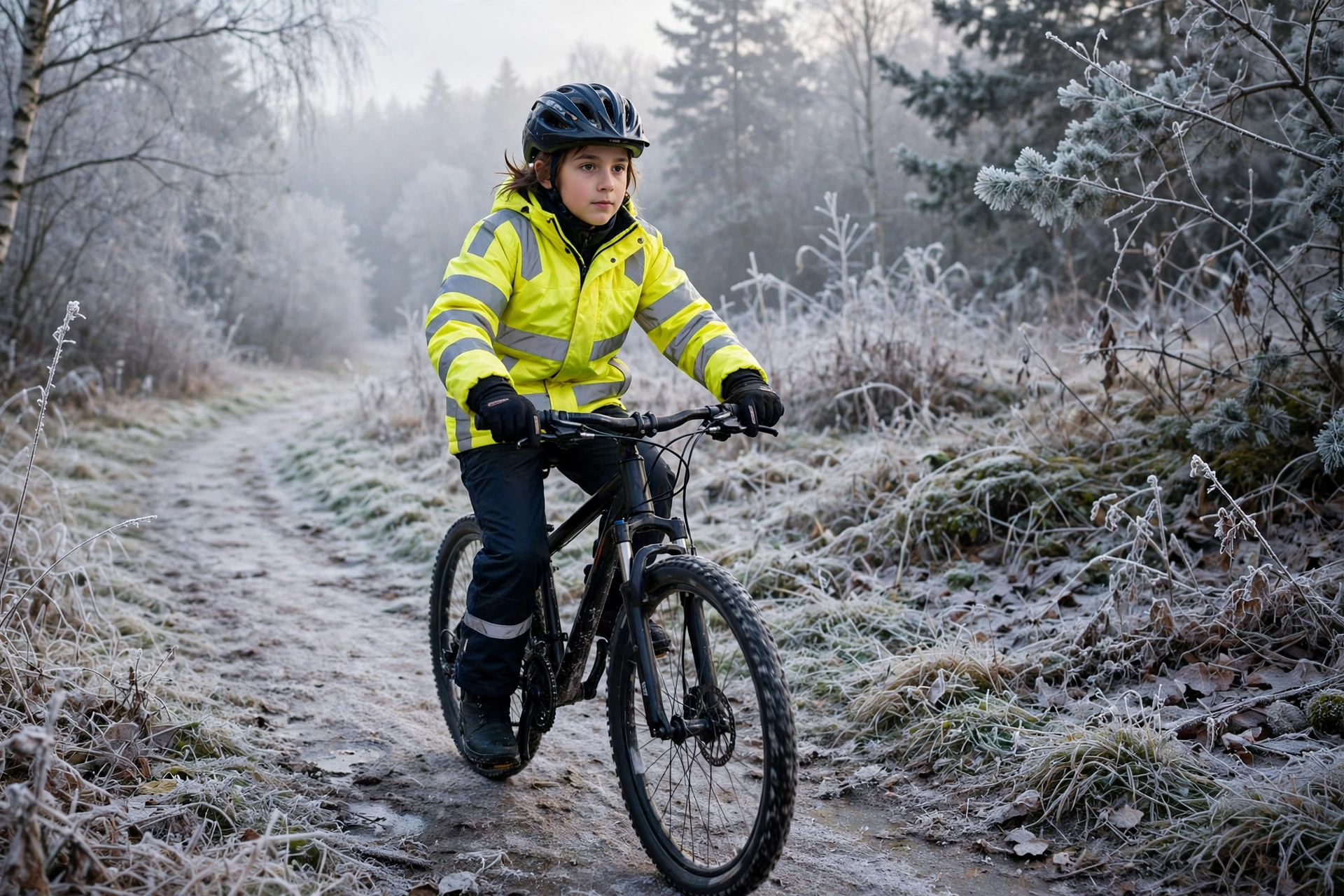
What Else Does a Child Need for a Winter School Ride?
Visibility is the biggest winter safety issue after the helmet itself. Short days mean a child may be riding in darkness or in poor light, so lights and reflective clothing are essential. A front light and a rear light should be fitted to the bike and checked regularly, and a reflective jacket, vest, or backpack cover helps drivers see a small cyclist from a distance. Reflective stickers on the helmet itself are also a sensible addition, and they do not affect how the helmet works.
Warm clothing matters too, because a cold child is a distracted child. Gloves, a warm jacket, and waterproof trousers on wet days keep a child comfortable enough to focus on the road. Make sure clothing is not so bulky that it restricts movement or catches in the wheels, and that scarves and drawstrings are tucked away. A child who arrives at school warm and dry is far more likely to want to cycle again the next day.
How Can Parents Make a Winter School Ride Safer?
Ride the route with your child at the weekend, in daylight, before they ride it alone in winter conditions. Look for the safest route, not necessarily the shortest one, and choose quieter roads, cycle paths, and well-lit streets where possible. Check where the route crosses busy roads, and practise those crossings together until your child is confident. A route your child knows well is a route they can ride safely even in poor light.
Check the bike regularly through the winter. Brakes, lights, and tyres need more attention in cold and wet weather, and a bike that is in good working order is far safer than one that is not. Teach your child to check their brakes and lights before each ride, and to tell you if anything feels wrong. A quick check at home takes a minute and can prevent a problem on the road.
How Can You Keep a Child Cycling Through Winter?
Winter cycling is easier to keep up if it is treated as a normal part of the day rather than a hardship to endure. Let your child choose their own winter accessories, such as gloves or a reflective vest in a colour they like, so the kit feels like theirs. Celebrate the rides, not just the arrival, and acknowledge that cycling in the cold takes effort and deserves praise.
Be realistic about the weather. On days when the roads are icy or the weather is genuinely dangerous, it is sensible to walk, take the bus, or get a lift instead. A child who is allowed to skip a ride on a truly bad day is far more likely to keep cycling on the ordinary winter days. The goal is a habit that lasts all year, not a perfect record that ends in a miserable ride.
Frequently Asked Questions
Q: Can my child wear a thick hat under their helmet in winter?
A: In general terms, no. A thick hat changes the fit and can push the helmet too high on the head. A thin balaclava or skull cap designed to fit under a helmet is a better choice for winter warmth.
Q: Does my child need lights for a winter school ride?
A: Yes, in general terms. Winter mornings and afternoons are often dark or poorly lit, so a front light and a rear light are essential. Check the lights regularly and keep spare batteries at home.
Q: Should a child cycle to school in icy conditions?
A: In general terms, no. Ice makes cycling dangerous, particularly for children. On icy days, walk, take the bus, or get a lift instead, and save the bike for days when the roads are clear.

Olivia
Writer at Helmet Today, covering helmet reviews, fit and riding safety.