A surface mining helmet is, in general terms, a hard hat built for open-pit work above ground, where the main risks are falling rock, moving vehicles, and bright sun and dust. It looks much like other industrial helmets, but it is chosen and fitted for the conditions of a surface mine: wide open spaces, heavy machinery, steep benches, and long shifts in the open air. The helmet itself is only one part of a wider safety system on site.
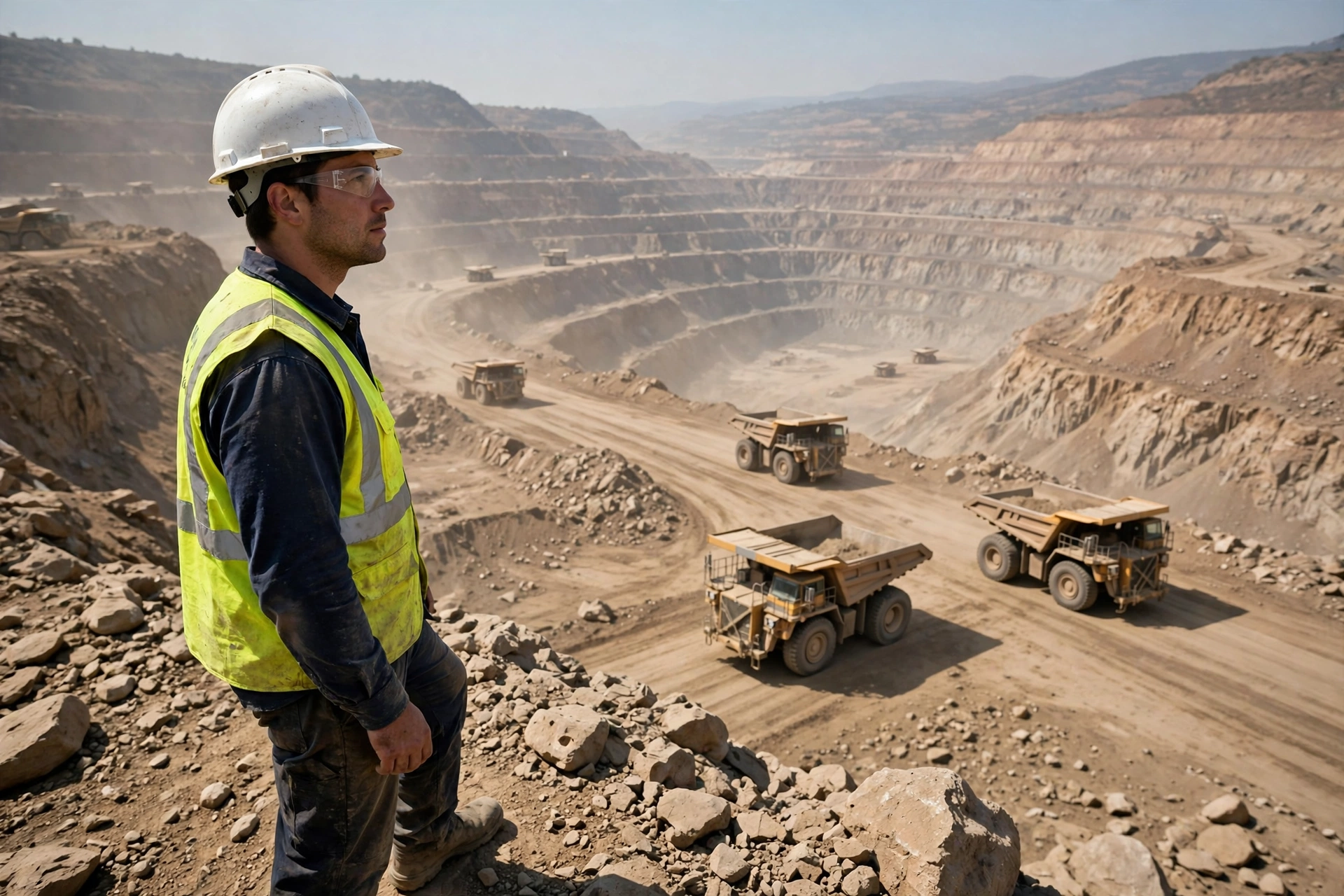
Surface mining covers open-pit mines, quarries, and strip mines, where the ground is dug away in steps called benches to reach the ore or coal below. Workers here face different hazards from underground miners, who work in tunnels with low roofs and limited light. This guide explains what makes a surface mining helmet different and what features matter above ground.
What Is Different About Working on the Surface?
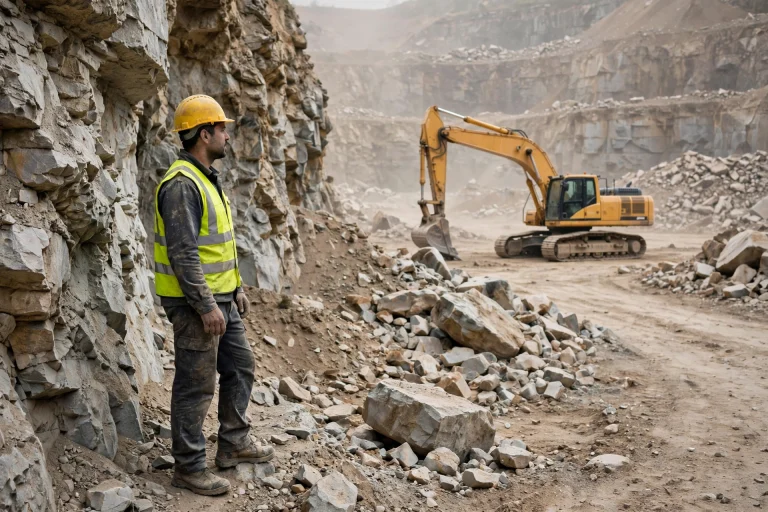
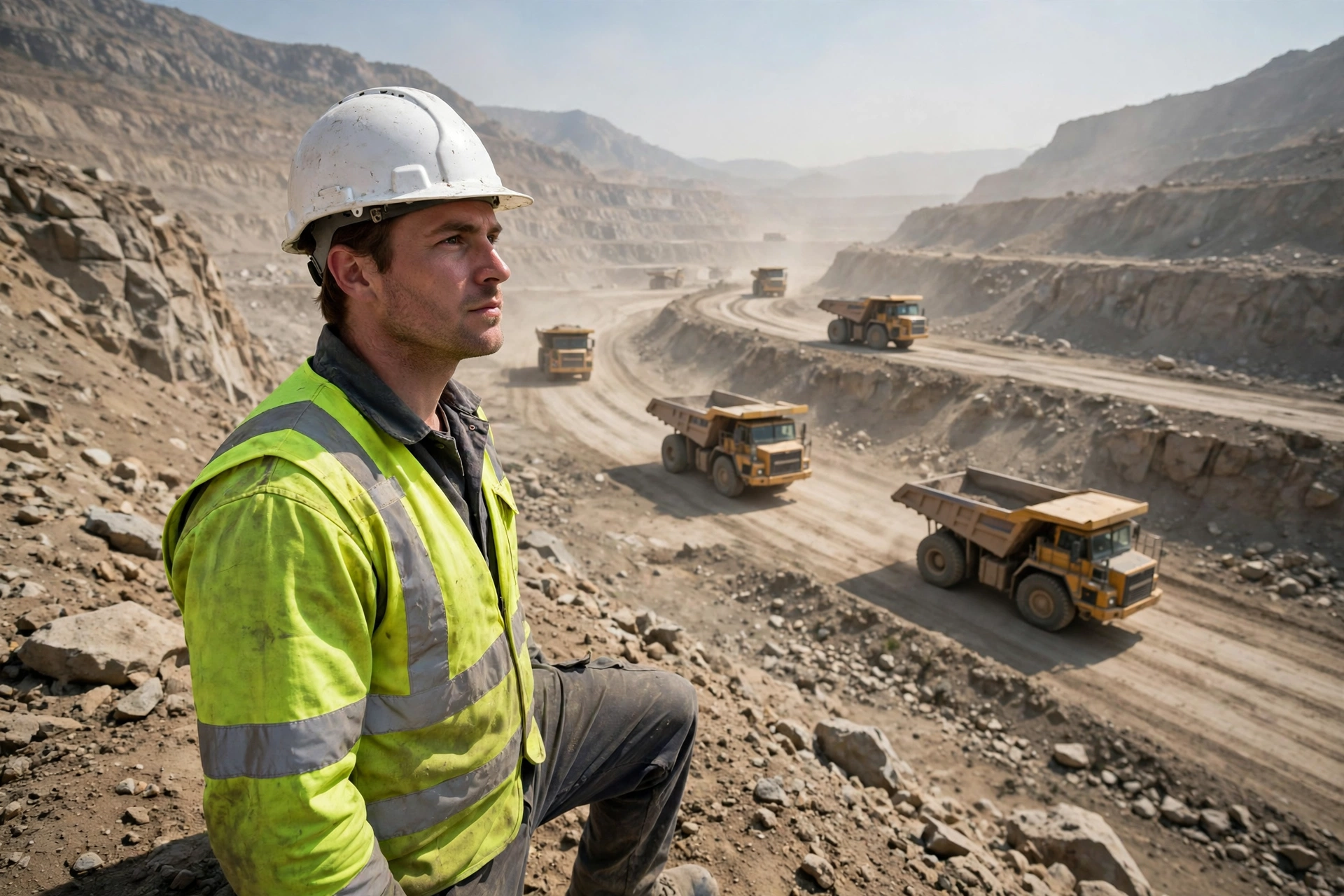
On a surface mine, the sky is open and the scale is huge. Haul trucks can be several storeys tall, shovels and drills work on benches cut into the earth, and rock can fall from the high wall above. Workers move between these areas on foot, so their helmet must protect against falling objects, bumps against machinery, and glare.
Weather matters more above ground. Surface workers spend whole shifts in sun, wind, rain, and dust, often in hot conditions. A helmet that traps heat becomes unbearable by midday, so ventilation and sun protection matter more than they do underground. The helmet must also stay on in wind and when the wearer bends or climbs, so a secure fit and a chin strap are important.
Dust is constant on a surface mine. Haul roads, blasting, and crushing raise dust that settles on everything, including helmets. A helmet used above ground needs to be easy to clean and check, because dust can hide cracks and wear. Regular inspection is part of the routine.
What Features Does a Surface Mining Helmet Need?
The shell is the first feature to look at: hard, smooth, and able to spread the force of a falling object or a knock against equipment. Many surface mining helmets have a small brim at the front, which shades the eyes and keeps rain and grit away from the face. The shell should also resist sunlight damage, as a helmet left in strong sun can become brittle.
Inside, the suspension holds the shell away from the head so an impact is spread and absorbed rather than passed straight to the skull. It should adjust to the wearer’s head size, and the padding should stay comfortable for a full shift. Ventilation holes help air move through and reduce heat, though on very dusty sites some workers prefer fewer vents to keep dust out.
Attachments matter on a surface mine. Many helmets have slots for ear protection, a face shield, or a lamp, and a clip for a radio can help when moving between bright daylight and shade. Bright colours — yellow, orange, or white — help drivers of large vehicles spot workers on foot. Some sites use helmet colours to show a worker’s role, though this varies.
How Is a Surface Mining Helmet Different from an Underground One?
Underground helmets are made for tunnels, where the roof is low, the light is poor, and the main risk is bumping the head on rock overhead. They usually carry a lamp bracket as standard, because a lamp is essential underground, and they may have a lower profile for tight spaces. Surface helmets are used in daylight, so a lamp is useful but not essential, and sun protection matters more.
The risks differ too. Underground, the danger is mainly from the roof and walls close around the worker. Above ground, it can come from higher up and further away: rock falling from a bench wall, material dropped from a loading shovel, or a collision with a vehicle. The helmet must protect against impacts from above in open space, where nothing limits how far things fall.
In practice, many mines use helmets that meet the same broad industrial standard for both surface and underground work, and the difference lies in the accessories and the way the helmet is set up. A surface worker might add a sun brim and a neck shade, while an underground worker adds a cap lamp. The helmet itself may be very similar, but the set-up follows the job.
What Rules Apply to Helmets on a Surface Mine?
Every mine has its own safety rules, and in general terms workers are expected to wear a helmet whenever they are in an active work area. The rules usually cover which areas need helmets, how the helmet should be worn, and when it should be replaced. Visitors to a site are normally given a helmet and a short safety briefing before they are allowed into work areas.
Supervisors check that helmets are worn correctly, with the strap fastened and the helmet sitting level. A helmet worn backwards or tilted back does not protect properly. Workers should report damage and replace a helmet that has taken a hard impact, even if the damage is not easy to see.
If you are learning about how helmets protect the head in different kinds of impact, reading about what MIPS is for helmets can help you understand one of the technologies used in modern helmet design. It is one of several ideas that helmet makers use alongside the shell and suspension system of an industrial helmet.
How Should a Surface Mining Helmet Be Looked After?
Daily checks are the habit that keeps a surface mining helmet working. Before each shift, look at the shell for cracks, dents, or faded and brittle patches, and check the suspension and straps for wear. If anything looks wrong, report it and get a replacement rather than carrying on with a damaged helmet.
Cleaning is simple but important. Wash the shell with mild soap and water, and clean or replace the sweatband and pads regularly. Avoid strong solvents and never paint the shell unless the maker says it is safe, because paint and chemicals can weaken the material. Store the helmet out of direct sun when it is not in use, in a clean, dry place rather than on the dashboard of a hot vehicle.
Replacement is not just about damage. Helmets age, and the material weakens with long exposure to sun, heat, and chemicals. Mines usually set a service life and replace helmets on a schedule, even if they still look fine. Do not keep using a helmet past its expected life.
Frequently Asked Questions
Q: What is different about a surface mining helmet?
A: In general terms, it is set up for open-air work: sun protection, ventilation, high visibility, and protection from rock falling from bench walls and from moving vehicles.
Q: Do surface miners wear the same helmet as underground miners?
A: In general terms, the helmets are often similar and may meet the same standard, but the accessories differ — for example, a lamp is essential underground, while sun protection matters more on the surface.
Q: When should a surface mining helmet be replaced?
A: In general terms, after a hard impact, when it shows cracks or wear, or when it reaches the end of its expected service life, following the site rules and the maker’s guidance.

Olivia
Writer at Helmet Today, covering helmet reviews, fit and riding safety.