The difference is the job: a tree work at height helmet is a climbing-style helmet with a chin strap for working up in a tree, while a forestry helmet is a ground-based helmet with a visor and ear defenders for chainsaw work — and in general terms, they are not interchangeable. Both protect the head, but they are built for different hazards, and using the wrong one leaves a gap in protection. Many tree workers own both and choose between them depending on whether the job is in the canopy or on the ground.
Tree work is one of the few jobs where the same worker may need two different helmets in a single day: one for climbing and pruning in the crown, another for felling and cutting at ground level. This guide explains how the two helmets differ, when each is used, and what to look for when choosing one.
What Is a Helmet for Tree Work at Height?
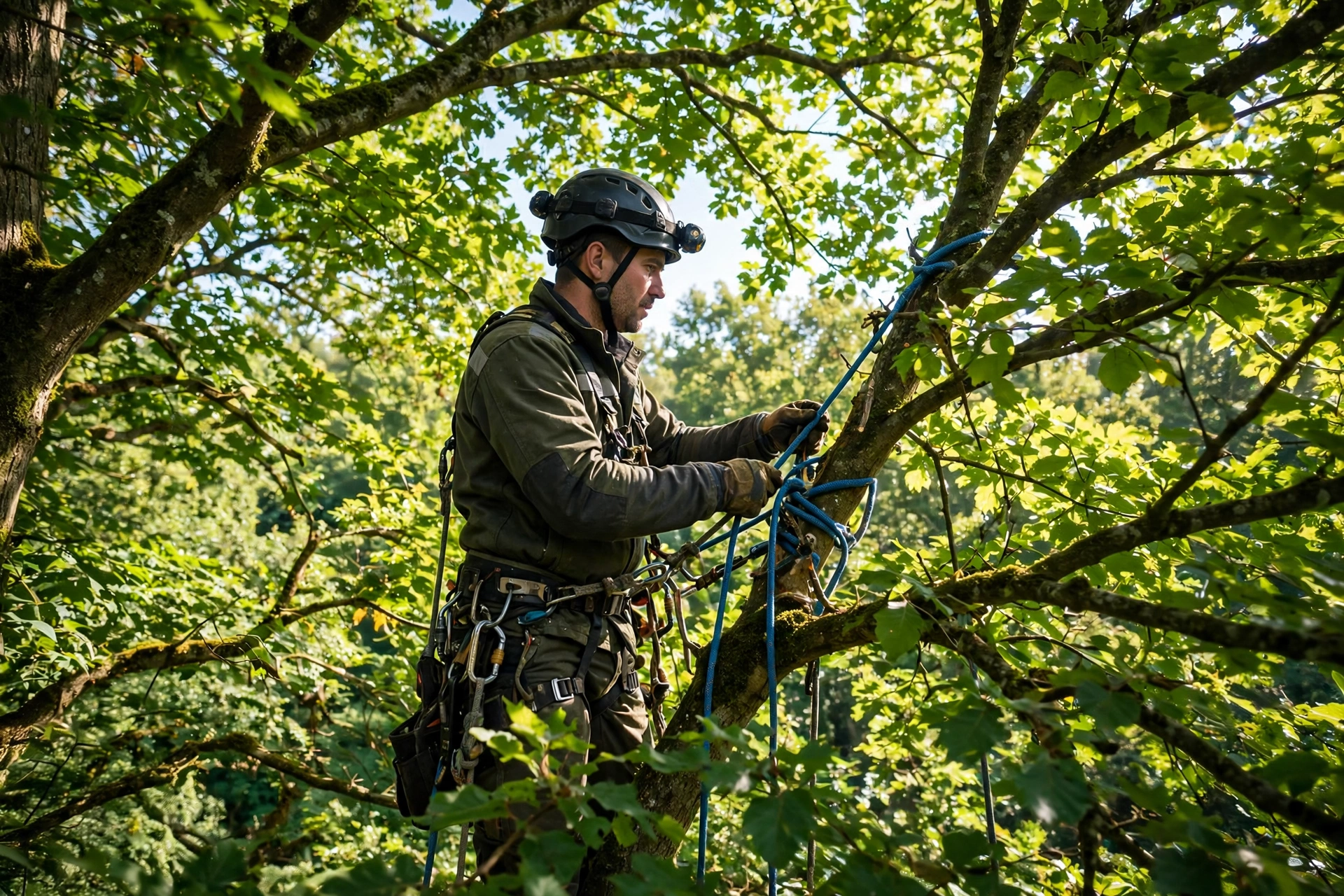
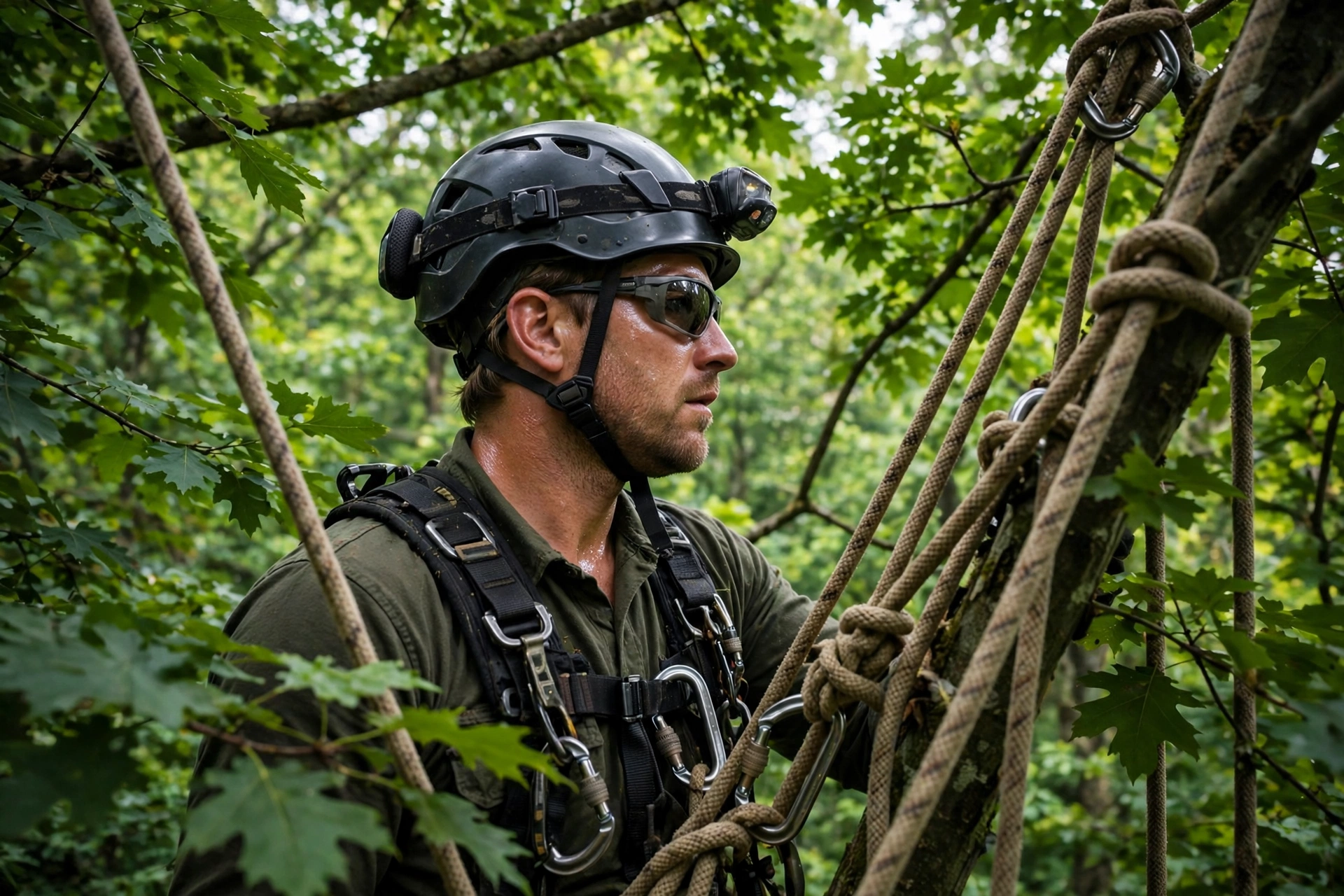
A tree work at height helmet is a lightweight helmet designed to stay on during climbing, swinging, and working in a tree canopy. It has a secure chin strap, usually a four-point strap, that keeps it in place if the climber slips or is jolted by a branch. The shell is shaped to protect the sides and back of the head as well as the top, because a climber can strike their head in any direction.
These helmets are often based on mountaineering or climbing helmet designs, with good ventilation and a low profile that does not snag on branches. They are light, because a heavy helmet causes neck strain during a long climb, and they usually have clips or slots for a headlamp, which is useful for early starts or late finishes.
Fit is critical for a climbing helmet. It should sit level, feel snug all round, and stay put when the wearer looks up, leans back, or shakes their head. A helmet that shifts when you look up at the canopy will block your view of the branches above, and a helmet that comes off in a slip offers no protection at all. The chin strap should be fastened at all times in the tree.
What Is a Forestry Helmet?
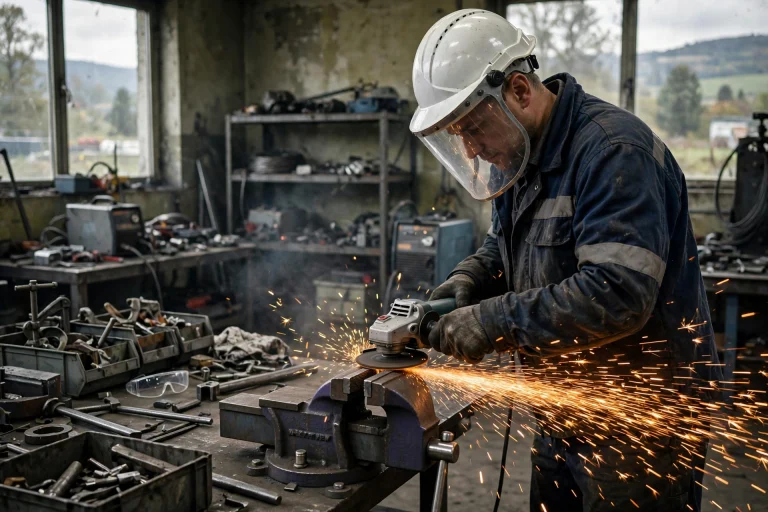
A forestry helmet is a helmet for ground-based chainsaw work, and it is usually sold as a complete system: a hard shell, a mesh or clear visor to protect the face and eyes, and ear defenders to protect hearing from the saw. The visor guards against flying wood chips and sawdust, while the ear defenders cut the noise of the chainsaw to a safer level.
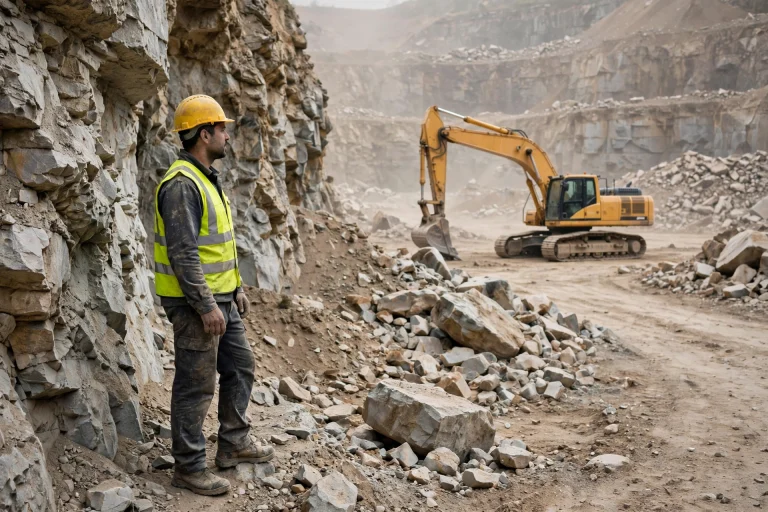
The shell is an industrial-style helmet, built to protect against falling branches and against the saw itself in the event of kickback. It is heavier than a climbing helmet, and it does not usually have a chin strap, because the wearer is on the ground and the main hazards come from above rather than from a fall. The weight is acceptable for ground work, where the wearer is not hanging in a harness for hours.
A forestry helmet is designed to be worn with its visor and ear defenders as a set. Taking the visor off to improve visibility, or flipping the ear defenders up because they are hot, removes part of the protection the system is designed to give. If the visor mists up or the defenders are uncomfortable, the answer is to adjust or replace them, not to work without them.
Why Can’t One Helmet Do Both Jobs?
The two helmets solve different problems. A climbing helmet stays on during a fall and protects the sides of the head, but it has no visor or ear defenders, so it leaves the face and ears exposed to chainsaw chips and noise. A forestry helmet protects the face and ears, but without a chin strap it can fall off if the wearer slips in a tree, and its weight and bulk make climbing harder and more tiring.
The safest approach for most tree workers is to own both helmets and use the right one for the task in hand. Climbing helmet for work in the tree, forestry helmet for chainsaw work on the ground. Switching helmets takes a minute, and it is a small price for protection that actually fits the hazard.
How Do You Choose Between Them for a Particular Job?
Start by asking where the work happens and what the main hazard is. If you will be climbing, pruning, or rigging in the canopy, choose the climbing helmet with the chin strap. If you will be felling, cross-cutting, or clearing on the ground with a chainsaw, choose the forestry helmet with its visor and ear defenders. If the job mixes both, plan the order of work so you can switch helmets at the right point.
Check the standards each helmet meets. A climbing helmet and a forestry helmet are tested against different standards, because they protect against different kinds of impact. A helmet that meets the right standard for one job may not meet the standard for the other, so read the markings inside the shell and keep the maker’s information with the helmet.
Comfort decides whether the helmet gets worn. Try the helmet on with the rest of your kit — harness, eye protection, ear defenders — and move as you would at work: look up, bend, turn your head. If you are learning how helmets handle different kinds of impact, reading about what MIPS is for helmets can help you understand one of the technologies used in modern helmet design. A helmet that is comfortable and fits well is one you will keep on all day.
How Should Tree Work Helmets Be Cared For?
Both types of helmet need regular checks. Look for cracks in the shell, especially after a knock against a branch or a drop to the ground, and check the chin strap, visor, and ear defender mounts for wear. Tree work is hard on helmets: they are scraped by bark, knocked by branches, and exposed to sap, rain, and sun.
Replace either helmet after a hard impact, including a fall in which the helmet struck a branch or the ground. Store helmets in a dry place out of sunlight, and keep them away from fuel and chainsaw oil, which can damage the shell over time. A helmet that has been looked after will last longer and protect better.
Frequently Asked Questions
Q: Can I wear a forestry helmet while climbing a tree?
A: In general terms, no. A forestry helmet usually has no chin strap, so it can fall off in a climb, and it is heavier and bulkier than a climbing helmet. Use a climbing helmet with a chin strap for work at height.
Q: Can I wear a climbing helmet for chainsaw work on the ground?
A: Only if it is fitted with a suitable visor and ear defenders and meets the relevant standard. A bare climbing helmet leaves the face and ears exposed to chips and saw noise.
Q: Do I need both helmets if I only do occasional tree work?
A: In general terms, yes, if you both climb and use a chainsaw. Each helmet covers hazards the other does not, and a combination helmet that meets both standards can be a practical alternative.

Olivia
Writer at Helmet Today, covering helmet reviews, fit and riding safety.