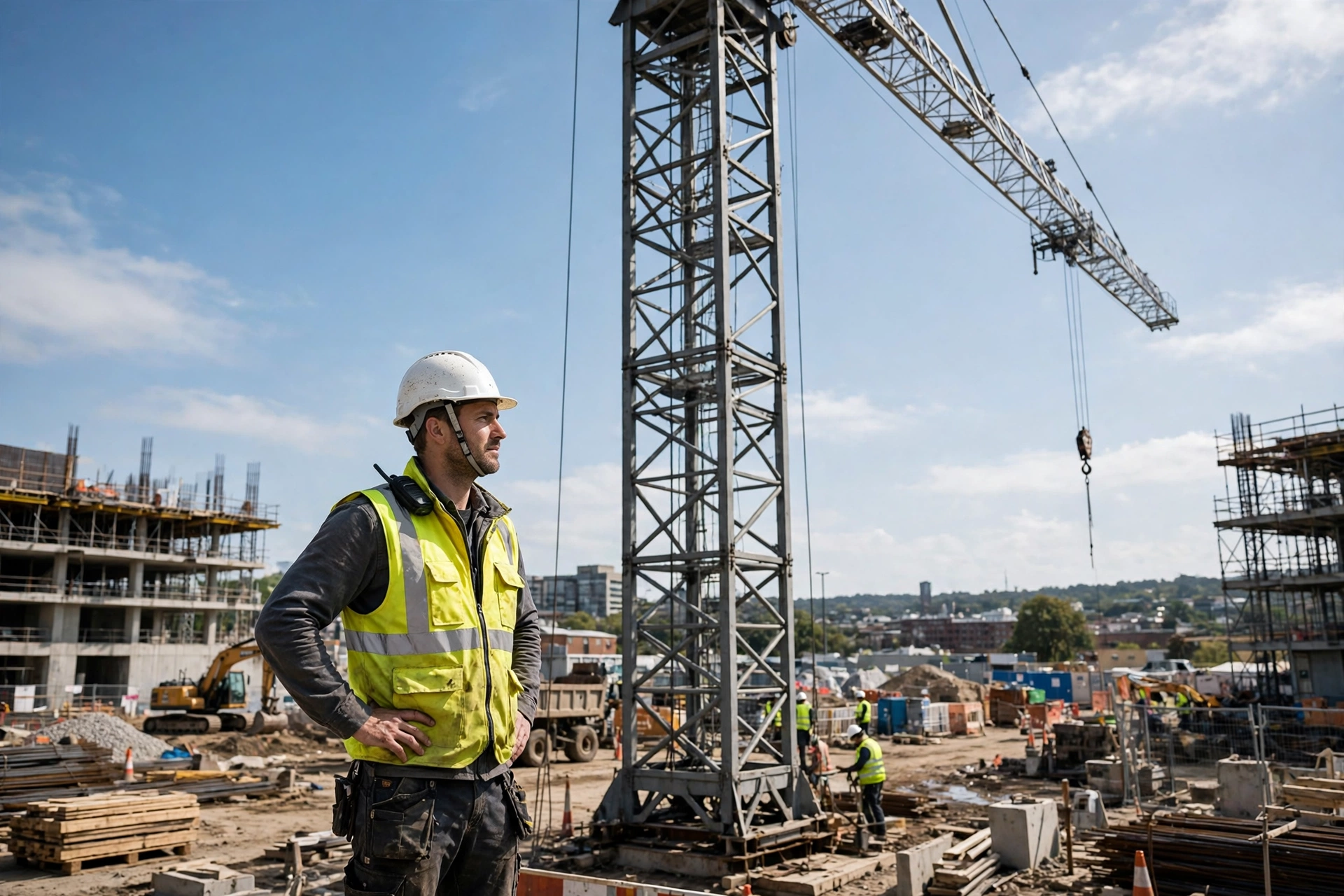
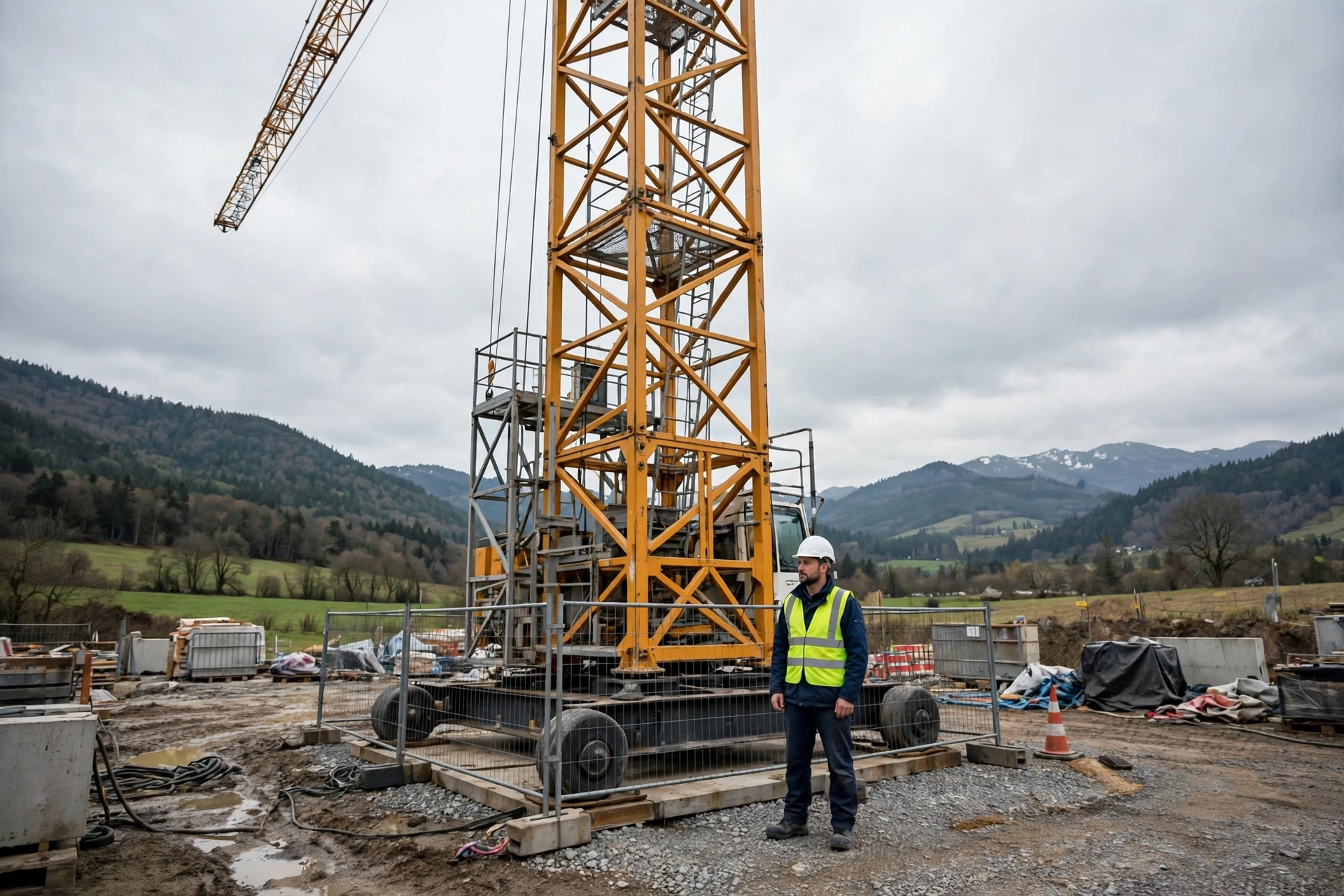
Yes, in general terms, a crane operator needs a helmet — a hard hat is standard personal protective equipment on construction and industrial sites where cranes are used. A crane operator works in an environment where loads are lifted overhead, other workers are moving materials above and around them, and the risk of falling objects is always present. Wearing a helmet is one of the simplest and most effective ways to reduce the risk of a serious head injury on such a site.
Cranes lift heavy loads high into the air, and even on a well-run site, small items can fall: a bolt, a piece of rigging, a fragment of a load. A helmet is designed to absorb and spread the force of an impact like that. This guide explains why a crane operator wears a helmet, what kind of helmet is used, and what else matters about head protection around cranes.
Why Does a Crane Operator Need a Helmet?
A crane operator needs a helmet because the cab, the load path, and the ground below are all places where falling objects are a real risk. The operator may sit in a cab high above the ground, but the cab itself is not a sealed shelter: windows can be open, the operator climbs in and out using ladders and walkways, and they often work on the ground during rigging, inspections, and maintenance. Each of those moments carries a risk of something falling from above.
On a busy site, other trades are working nearby, often at height. A dropped tool from a scaffold, a loose fitting from a structure being assembled, or debris blown by wind can all reach the area where the crane operator works. A helmet protects the head in exactly these situations, spreading the force of an impact across the shell and the suspension inside.
There is also the question of site rules. In general terms, most construction and industrial sites require everyone on site to wear a helmet, with no exceptions for particular roles. The crane operator is part of the site team, and the same rule applies to them.
What Kind of Helmet Does a Crane Operator Wear?
A crane operator wears an industrial hard hat, the same broad type of helmet used by other workers on construction sites. It has a hard outer shell, usually made from a tough plastic, and an internal suspension system that holds the shell slightly away from the head. That gap is important: it gives the shell room to flex and absorb an impact before the force reaches the wearer.
Many crane operator helmets also have a chin strap. A chin strap keeps the helmet in place when the operator is climbing, leaning out of the cab to see a load, or working in windy conditions. A helmet that falls off at the wrong moment is no protection at all, so a secure strap matters more than it might seem.
Some helmets include slots for accessories such as ear protection, a visor, or a lamp. A crane operator working at night, or in a noisy yard, may need those extras. The helmet shell is designed so that these accessories can be attached without drilling holes or weakening the shell, which is a key safety point.
Does the Operator Wear a Helmet Inside the Cab?
In general terms, yes — the operator usually keeps the helmet on even inside the cab. The cab has windows and a roof, but it is not a substitute for a helmet. The operator may need to lean out to watch a load, the cab may be struck by a swinging load or a piece of equipment, and the operator still has to climb up to the cab and back down again. The helmet stays on for the whole working period, not just for the moments that feel risky.
There is also a practical point: taking a helmet off and on repeatedly is how helmets get left behind. Keeping it on from the moment the operator arrives on site until they leave is the simplest habit, and it means the helmet is there for the unexpected moment, not just the expected one.
Some operators worry that a helmet inside the cab is uncomfortable, especially in hot weather or in a small cab. If a helmet feels too hot or too tight, the answer is usually a better-fitting helmet, not going without one.
What Else Protects a Crane Operator’s Head?
A helmet is the main protection, but it works as part of a wider safety system. The crane itself is inspected regularly, loads are rigged correctly, and exclusion zones are marked out on the ground so that people do not walk under suspended loads. Each of these measures reduces the chance that something falls in the first place, while the helmet protects the operator if something does fall.
Training matters too. A trained operator knows how to read a load chart, how to communicate with the banksman or signaller, and how to stop work when something looks wrong. Good communication between the operator and the ground crew is one of the best protections on any site, because many accidents start with a misunderstanding.
If you want to understand how helmets are built to handle different kinds of impact, reading about what MIPS is for helmets can help you see how modern helmet technology works. While MIPS is most common in sports helmets, the same idea — that a helmet should manage the forces of an impact, not just resist them — applies to industrial helmets too.
How Should a Crane Operator Look After Their Helmet?
A helmet only protects if it is in good condition, so looking after it matters. The shell should be checked regularly for cracks, dents, or signs of wear. A helmet that has taken a hard knock should be taken out of service, even if the damage looks small on the outside, because the shell or the suspension inside may be weakened in ways that are hard to see.
Helmets should be stored away from direct sunlight and heat when not in use, because long exposure can make the shell brittle over time. They should be cleaned with mild soap and water, not with harsh chemicals that could damage the material. Small habits like these keep a helmet doing its job for its full working life.
Finally, the fit should be checked each time the helmet is put on. The suspension should be adjusted so the helmet sits level and feels snug without pressing hard on the forehead. A helmet that is too loose will slide around, and one that is too tight will be uncomfortable and may not sit correctly. A quick fit check takes seconds and is worth doing every day.
Frequently Asked Questions
Q: Does a crane operator need a helmet if they work from a cab all day?
A: In general terms, yes. The operator still climbs to the cab, leans out to see loads, and works on the ground during rigging and checks, so the helmet should stay on for the whole site visit.
Q: What is the difference between a crane operator’s helmet and a normal hard hat?
A: In general terms, there is no big difference — a crane operator wears a standard industrial hard hat, often with a chin strap and slots for accessories such as ear protection or a lamp.
Q: When should a crane operator replace their helmet?
A: In general terms, a helmet should be replaced after any hard impact, if the shell shows cracks or wear, or when the manufacturer recommends it. A helmet that has taken a knock should not be kept in use just because the damage is hard to see.

Olivia
Writer at Helmet Today, covering helmet reviews, fit and riding safety.