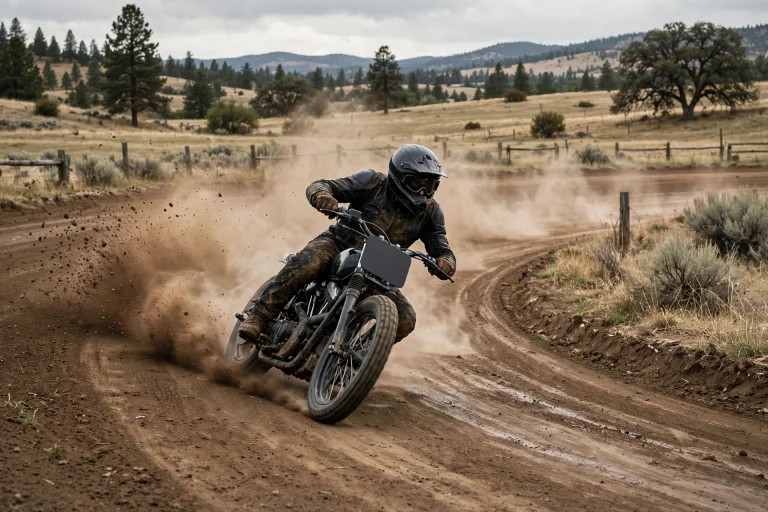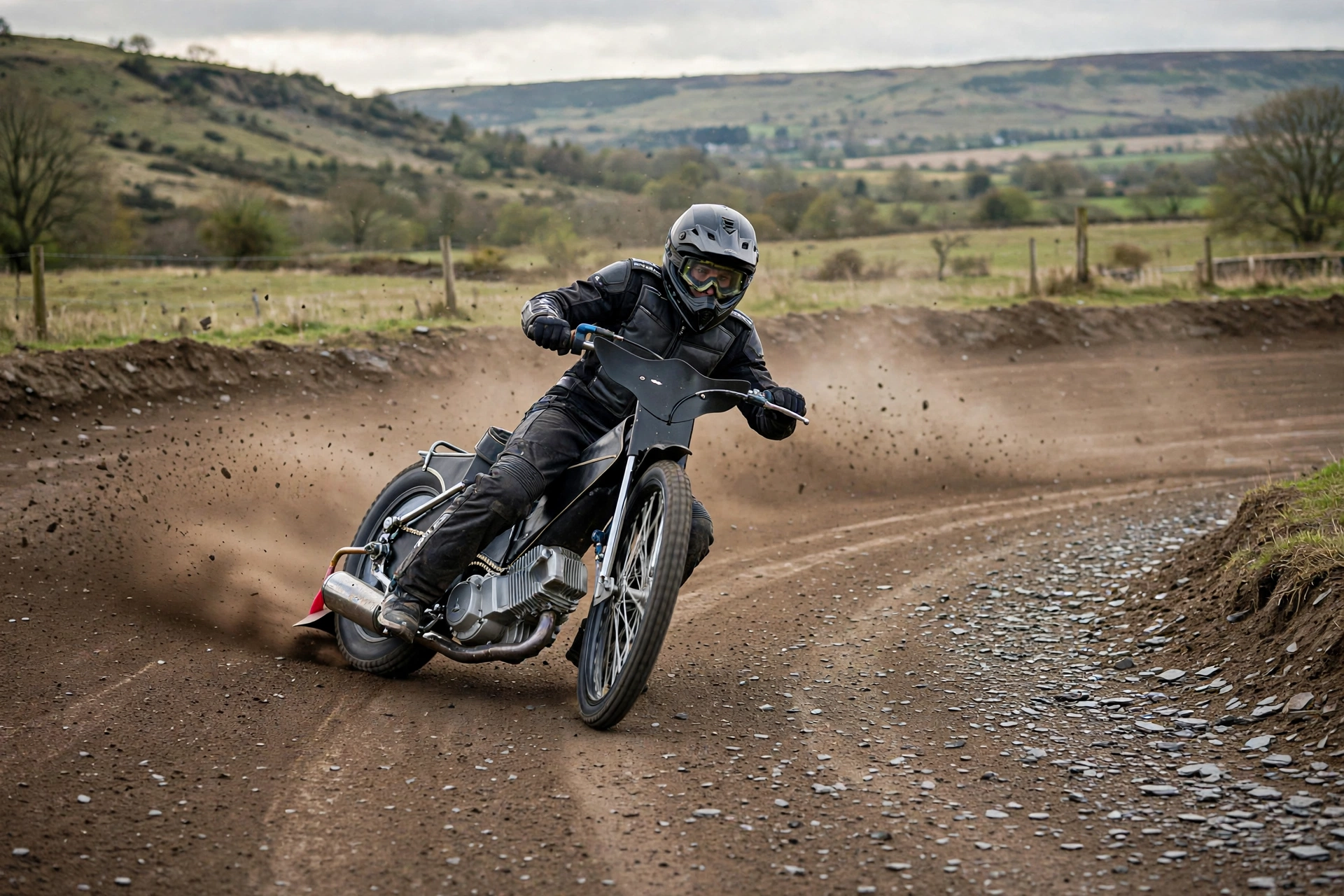
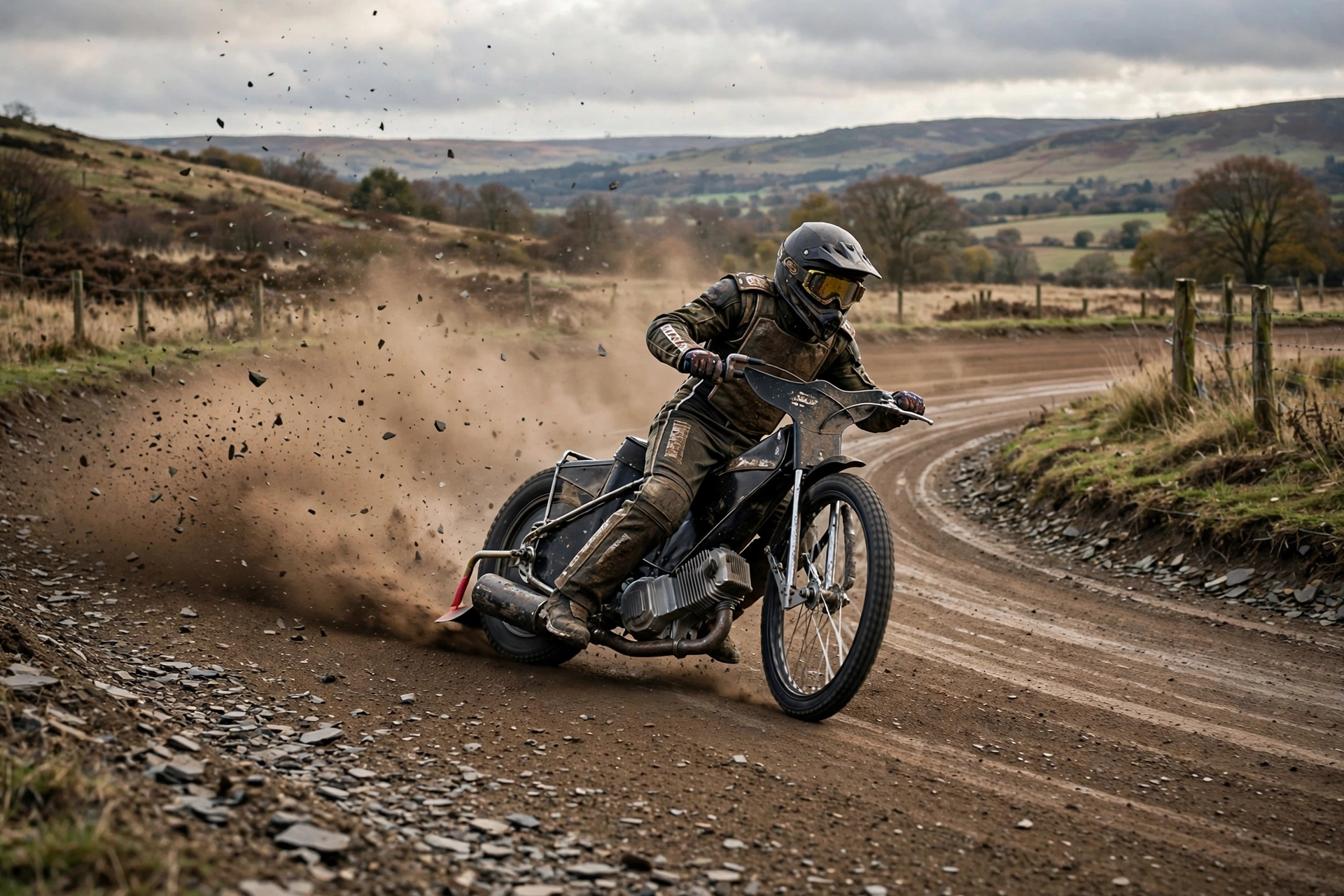
A speedway helmet is a full face motorcycle helmet, worn by riders who race on oval dirt tracks with no brakes and a single gear. Speedway is one of the most dramatic forms of motorcycle racing: four riders slide sideways around a loose dirt oval, their bikes kicking up a constant spray of shale. The speeds are high, the racing is close, and the helmet is the rider’s main protection against falls, flying shale, and contact with other bikes.
Speedway looks unlike any other motorcycle sport. The bikes have no brakes, so riders slow down by sliding the back wheel, and the whole race lasts only a few laps. The helmet has to cope with dust, shale, and the constant vibration of a bike running at full throttle. This guide explains what makes a speedway helmet different, and what riders look for when choosing one.
What Kind of Helmet Do Speedway Riders Wear?
Speedway riders wear full face motorcycle helmets made to a racing standard. The helmet covers the whole head, including the chin and jaw, and has a visor or goggles that protect the eyes from shale and dust. The shell is hard and smooth, built to resist impacts and to slide rather than catch if the rider’s head touches the track.
These helmets are made to a motorsport standard, which means they have been tested for the kinds of impact found in racing. A normal road helmet may look similar, but it is not built for the same conditions. A speedway helmet is designed around the speeds, the loose surface, and the crash risks of oval dirt racing.
Inside the helmet, padding holds it snug so it does not shift at speed. Speedway involves hard acceleration, sideways sliding, and the constant vibration of a bike on a rough dirt surface. A helmet that moves around would be a distraction when the rider needs to focus entirely on the track and the riders around them.
Why Do Speedway Riders Use Goggles or a Visor?
Speedway riders need to protect their eyes from shale. The bikes throw up a constant spray of small stones and dirt, and at racing speed that spray can cause serious eye injuries. Some riders use a visor, while others use goggles with a full face helmet. Both options protect the eyes, and the choice is a matter of personal preference.
Goggles have an advantage on a dirt track: they seal against the face and keep dust out, even when the rider is sliding sideways and the air is full of shale. A visor can let in dust around the edges, especially in a strong crosswind. Many speedway riders prefer goggles for this reason, often with tear-offs so they can clear the lens during a race.
The visor or goggles must also give a clear view in the conditions of a speedway track. The light can change quickly as the sun sets, and the dust in the air can reduce visibility. A clear, scratch-free lens is essential, and riders keep spares close at hand.
How Does a Speedway Helmet Cope with Dust and Shale?
A speedway helmet copes with dust and shale through its design and through the rider’s routine. The shell is smooth, so shale slides off rather than catching. The vents are placed to bring in air without letting in too much dust, and many riders tape over some vents on a very dusty night to keep the inside of the helmet cleaner.
The liner is also important. A liner that can be removed and washed is essential, because a speedway helmet gets covered in dust after every meeting. A clean liner breathes better and lasts longer than one clogged with dirt. Many riders wash their liner after every meeting.
After a race, the helmet should be cleaned carefully. Shale and dust can scratch the shell if they are rubbed, so it is best to rinse the helmet with water first, then wipe it gently. The visor or goggles should be cleaned the same way, because a scratched lens is a safety problem on the next race night.
What Makes a Speedway Helmet Different from a Motocross Helmet?
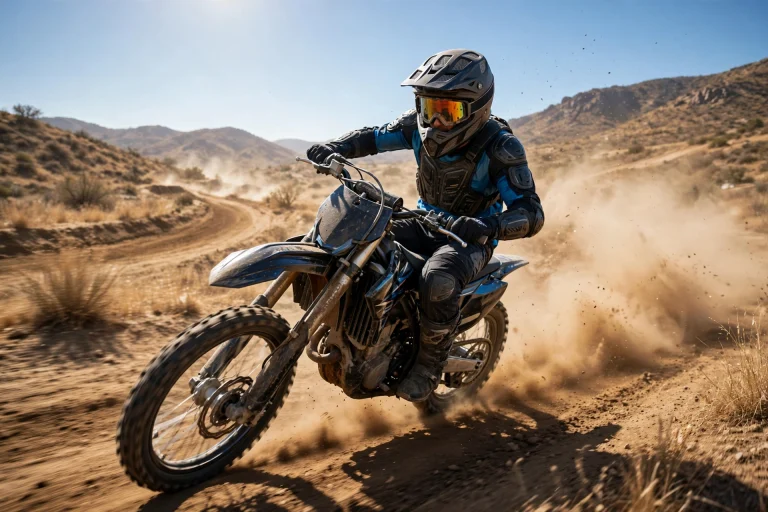
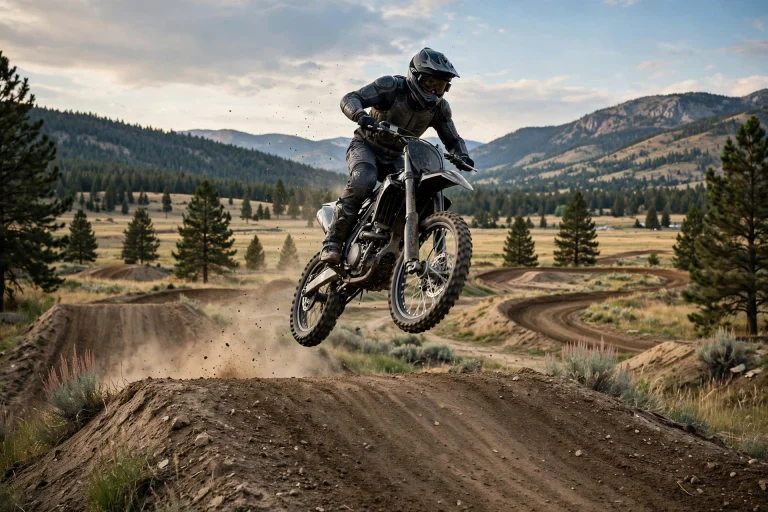
In general terms, the two helmets are similar, because both are full face helmets built for dirt racing. The main differences come from the way the bikes are used. A motocross bike jumps and lands, while a speedway bike slides sideways on a flat oval. The speedway helmet needs to be stable when the rider is leaning hard into a slide, with the head turned to look through the corner.
Another difference is the surface. A motocross track is a mix of dirt, sand, and mud, while a speedway track is loose shale. Shale is harder and sharper than dirt, so the eye protection matters even more in speedway. The goggles or visor need to stand up to a constant spray of small stones.
The peak is a point of difference too. Many motocross helmets have a long peak to shade the eyes and deflect roost. Speedway helmets often have a shorter peak, or none at all, because the rider’s head position is different and a long peak can catch the wind at speed. The choice depends on the rider’s preference and the conditions.
If you want to understand how helmets manage the forces of a crash, reading about what MIPS is for helmets is a useful starting point. MIPS is a technology used in many modern helmets, and the basic idea — that a helmet should manage rotational forces as well as direct impacts — is relevant to speedway riding too.
What Should You Look for When Choosing a Speedway Helmet?
Fit comes first. The helmet should sit level, feel snug all round, and stay put when you shake your head. It should not press hard on your forehead or temples, and the visor or goggles should sit comfortably in front of your eyes. Try the helmet with the goggles you will use, because the two work as a pair.
Next, check the standard. Make sure the helmet meets the standard required by the track or the racing organisation where you will compete. Different organisations have different rules, and a helmet that is fine for one track may not be accepted at another. Always check before you buy.
Finally, think about weight and ventilation. A lighter helmet puts less strain on the neck over a long meeting, and good airflow will keep you cool and keep the goggles clear. In speedway, where the races are short but intense, a helmet that is comfortable and quiet is a real advantage.
Frequently Asked Questions
Q: Can a speedway rider use a motocross helmet?
A: In general terms, yes, if it meets the standard required by the track. Many speedway riders do use motocross-style helmets, often with goggles instead of a visor, and a shorter peak.
Q: Why do speedway bikes have no brakes?
A: Speedway bikes are built without brakes as part of the sport’s rules. Riders slow down by sliding the back wheel, which is a skill that takes practice and makes the racing close and dramatic.
Q: How often should a speedway helmet be replaced?
A: In general terms, a helmet should be replaced after any hard impact, if the shell or liner shows wear, or when the standard it meets is no longer accepted. Regular checks help catch problems early.

Olivia
Writer at Helmet Today, covering helmet reviews, fit and riding safety.