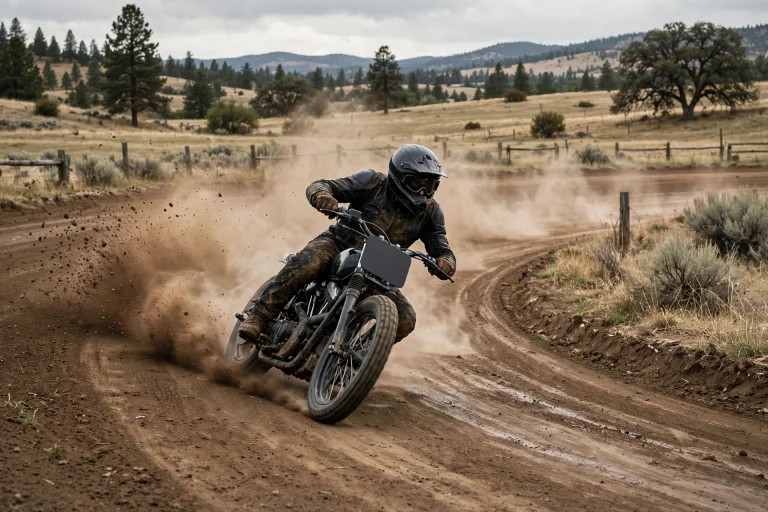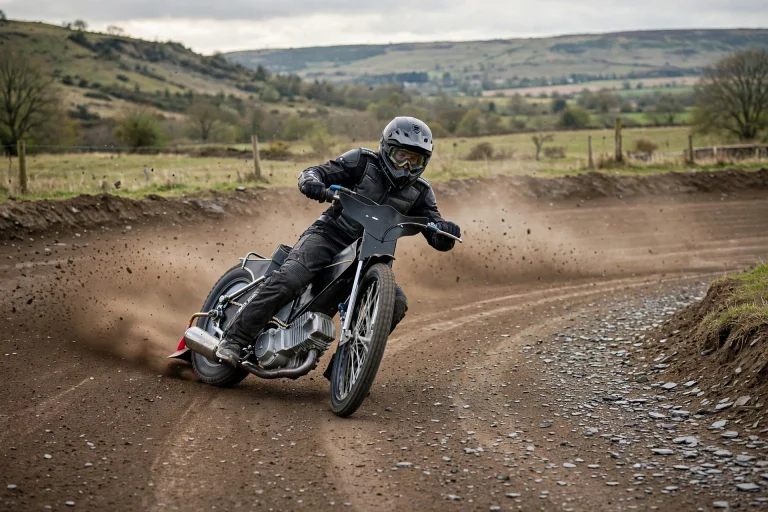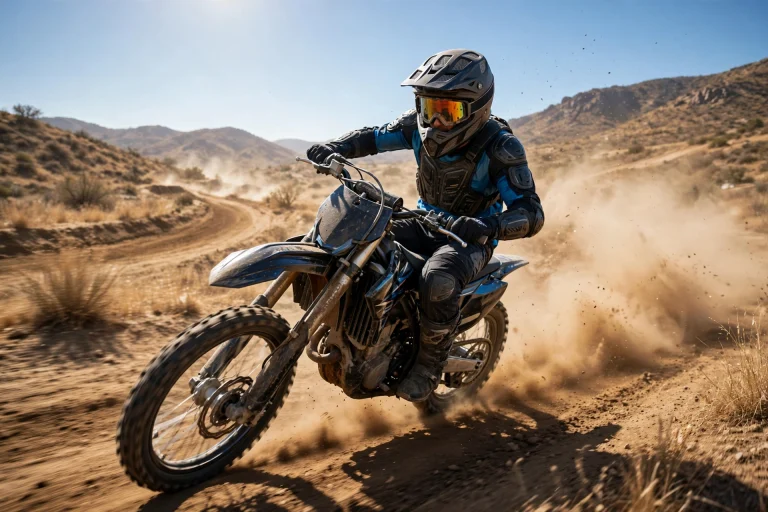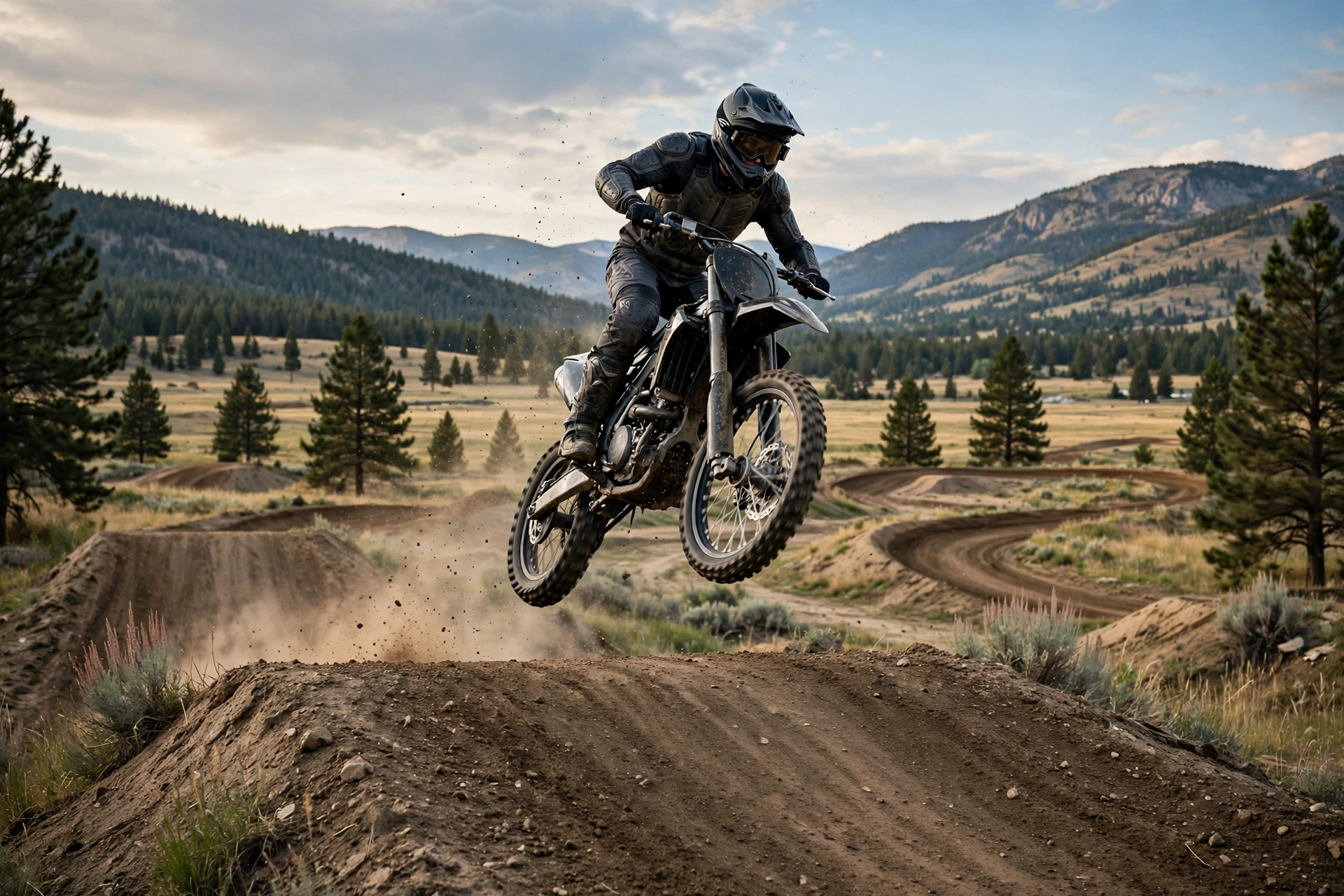
To choose a motocross helmet, start with fit, then check the standard, the ventilation, and the weight — in that order. A motocross helmet is a full face off-road helmet with a peak, a large eye port for goggles, and strong ventilation. It is built for dirt tracks, jumps, and rough terrain, where the rider works hard, gets covered in mud, and needs a clear view at all times. Choosing the right one matters, because a helmet that fits badly or fogs up will distract you when you need to focus on the track.
Motocross looks simple from the outside — a helmet, goggles, gloves, and a bike — but the helmet does a lot of work. It protects against falls onto hard dirt, shields the eyes from roost thrown up by other bikes, and keeps the rider cool through a long, physical race. This guide walks through the choices step by step, so you can pick a helmet that fits, protects, and lasts.
How Should a Motocross Helmet Fit?
Fit is the first and most important thing to get right. A motocross helmet should sit level on your head, feel snug all round, and stay put when you shake your head from side to side. It should not press hard on your forehead or temples, and it should not slide forward when you look down.
Try the helmet with your goggles on. The goggles should sit neatly in the eye port, with no gap between the top of the goggles and the bottom of the peak. A gap lets in dust and mud, while goggles that are squeezed too tight will press on your face and fog up. The helmet and the goggles work as a pair, so always try them together.
Also check the chin strap. It should fasten securely under your chin and hold the helmet firmly in place. A strap that is too loose lets the helmet move, while one that is too tight will be uncomfortable. The strap should be easy to fasten and unfasten with gloves on, because you will be doing it with muddy hands.
What Standard Should a Motocross Helmet Meet?
A motocross helmet should meet the standard required by the track, club, or competition where you will ride. Different organisations have different rules, and a helmet that is fine for practice may not be accepted for a race. Always check the rules before you buy, and look for the standard label inside the helmet.
In general terms, a motocross helmet is tested for the kinds of impact found in off-road riding: falls onto hard dirt, strikes from rocks and other debris, and the forces of a crash at speed. A road helmet is not a substitute, even if it looks similar, because it is built for different conditions and does not have the same ventilation or eye port.
If you are unsure which standard applies, ask at your local track or club. They will know what is accepted, and they can tell you if a particular helmet is suitable. It is better to ask before buying than to discover at the gate that your helmet is not allowed.
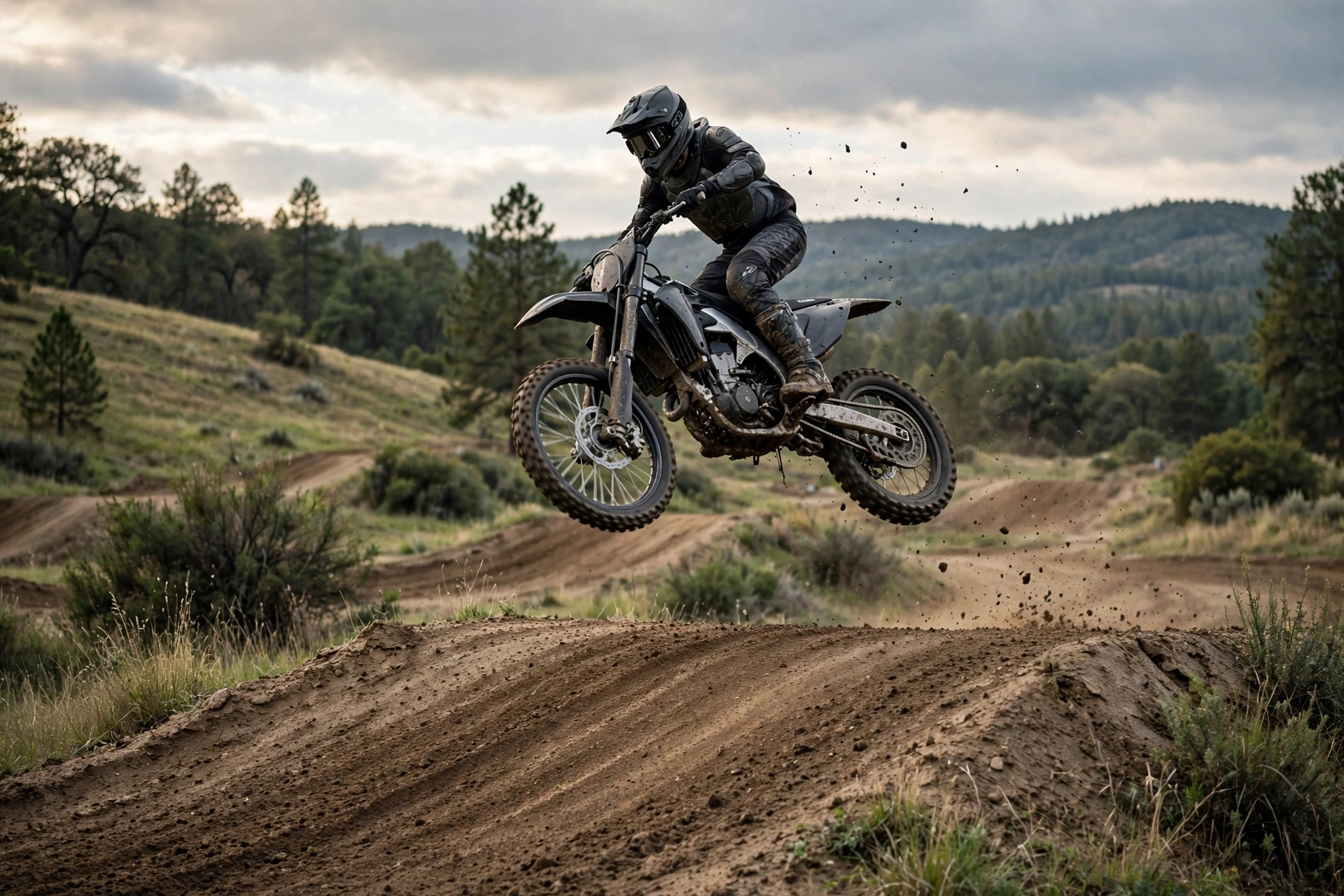
How Important Is Ventilation in a Motocross Helmet?
Ventilation is very important in a motocross helmet, because the rider works hard and the helmet needs to move air across the head. Motocross is a physical sport: the rider is standing, shifting weight, and wrestling the bike through ruts and jumps. Without good airflow, the inside of the helmet gets hot and sweaty quickly.
Most motocross helmets have large vents at the chin, the forehead, and the top, with channels inside that move air across the head. The chin vent is particularly important, because it directs air across the inside of the goggles and stops them from fogging up. Fogged goggles on a dusty track are a serious problem, so ventilation is a safety feature as well as a comfort one.
Some helmets have vents that can be opened and closed, which is useful if you ride in different weather. In cold or wet conditions, you may want less airflow; on a hot day, you want as much as possible. Adjustable vents give you that choice, though many riders are happy with fixed vents that are always open.
What About Weight and the Peak?
Weight matters in motocross, because the rider’s head is moving constantly — looking ahead, checking the track, and absorbing the bumps of a rough course. A heavy helmet adds strain to the neck over a long race, and it can feel tiring by the end of a moto. In general terms, a lighter helmet is more comfortable, as long as it still meets the required standard.
The peak is a distinctive part of a motocross helmet. It shades the eyes from the sun and deflects roost thrown up by the bike in front. It also protects the goggles from mud and stones. Some peaks are adjustable, so you can raise or lower them to suit the light and the track. A peak that is too low can block your view on a steep jump, so it is worth checking the position before you ride.
The peak should be firmly attached but designed to break away in a crash, rather than catching on the ground and twisting the helmet. This is a safety feature, and it is one reason why you should not replace a broken peak with a homemade fix. Use the manufacturer’s spare parts.
If you want to understand how helmets manage the forces of a crash, reading about what MIPS is for helmets is a useful starting point. MIPS is a technology used in many modern helmets, including some motocross helmets, and the basic idea — that a helmet should manage rotational forces as well as direct impacts — is relevant to off-road riding.
What Else Should You Check Before Buying?
Check the liner. The liner should be removable and washable, because a motocross helmet gets sweaty and muddy. A liner that can be taken out and washed will last longer and smell better than one that cannot. Spare liners are available for many helmets, which is useful if you ride often.
Check the shell for any damage before you buy, and keep checking it after every ride. A helmet that has taken a hard knock should be checked carefully, and in general terms it should be replaced if it has been in a serious crash, even if the damage is not visible on the outside.
Finally, think about the colour and the finish. A bright helmet is easier for other riders and marshals to see, which is a small safety advantage. A dark helmet may look good, but it can get very hot in the sun. In general terms, a light-coloured helmet is a practical choice for hot days.
Frequently Asked Questions
Q: Can I use a road helmet for motocross?
A: In general terms, no. A road helmet does not have the ventilation, the large eye port for goggles, or the peak that a motocross helmet has, and it may not meet the standard required by the track.
Q: How do I know if a motocross helmet fits correctly?
A: It should sit level, feel snug all round, and stay put when you shake your head. Try it with your goggles on, and check that the goggles sit neatly in the eye port with no gaps.
Q: How often should I replace a motocross helmet?
A: In general terms, a helmet should be replaced after any hard impact, if the shell or liner shows wear, or when the standard it meets is no longer accepted. Regular checks help catch problems early.

Olivia
Writer at Helmet Today, covering helmet reviews, fit and riding safety.