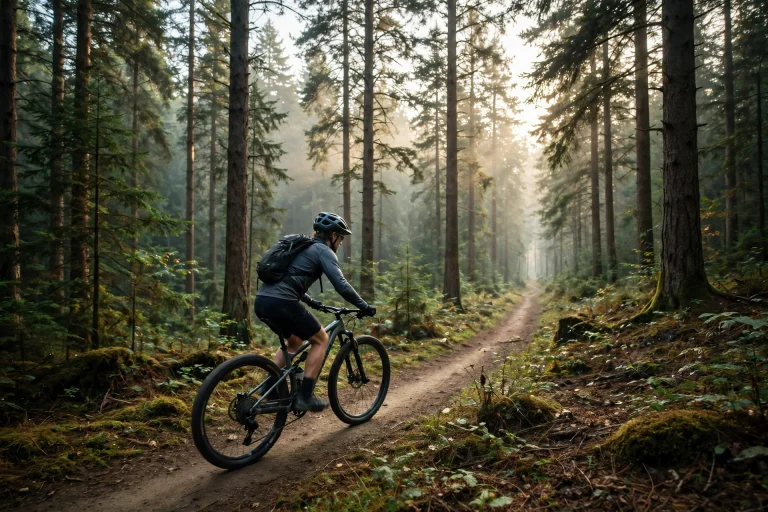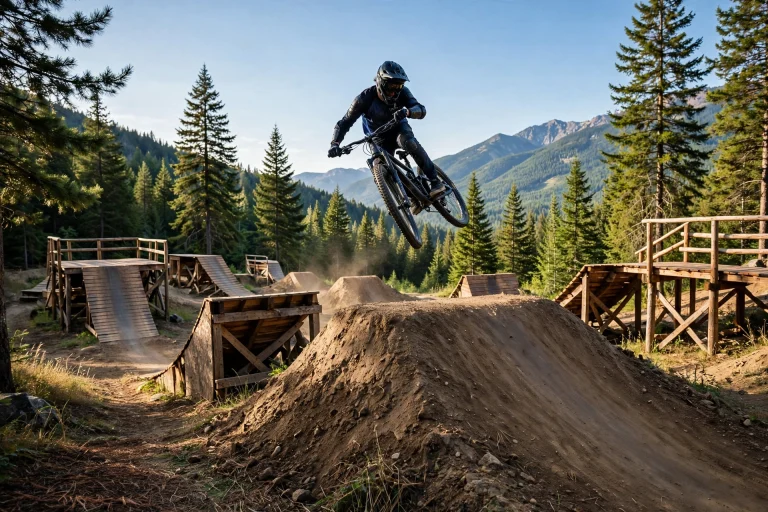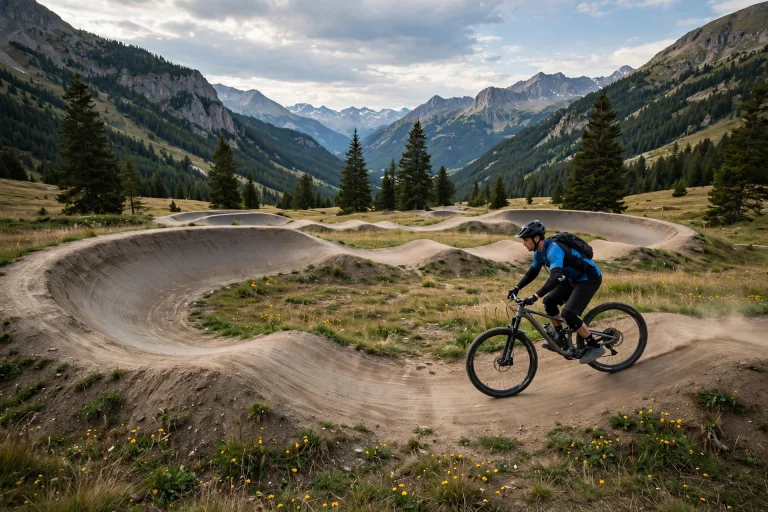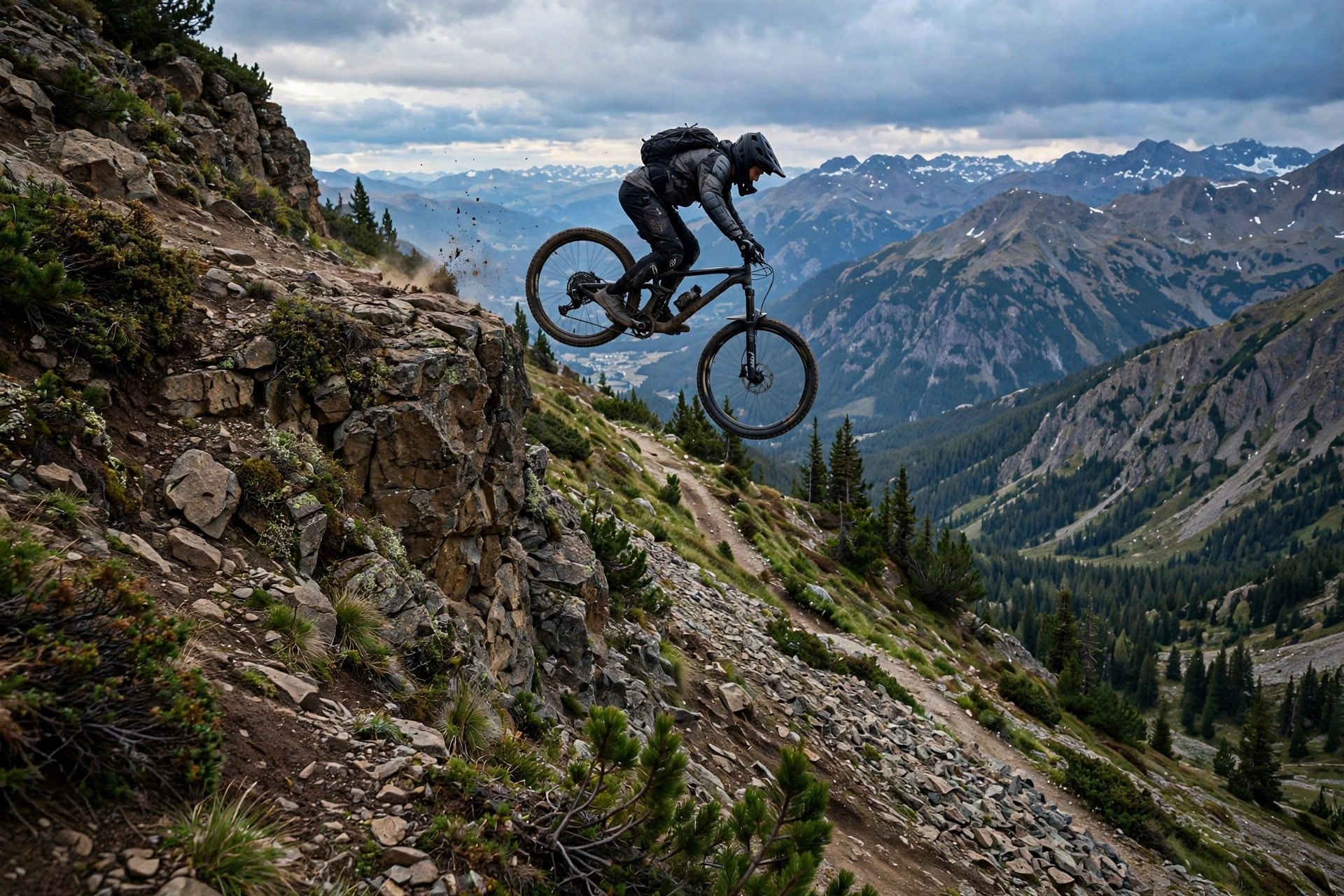
A freeride mountain bike helmet is a full face helmet worn for freeride mountain biking, a discipline in which riders tackle steep, technical terrain, large drops, and natural features, often with jumps and tricks along the way. It is built for hard falls on rock, dirt, and roots, and it is chosen for maximum protection, a secure fit, and a clear view of the trail ahead. Freeride riders wear a helmet for every run, from the first descent to the last.
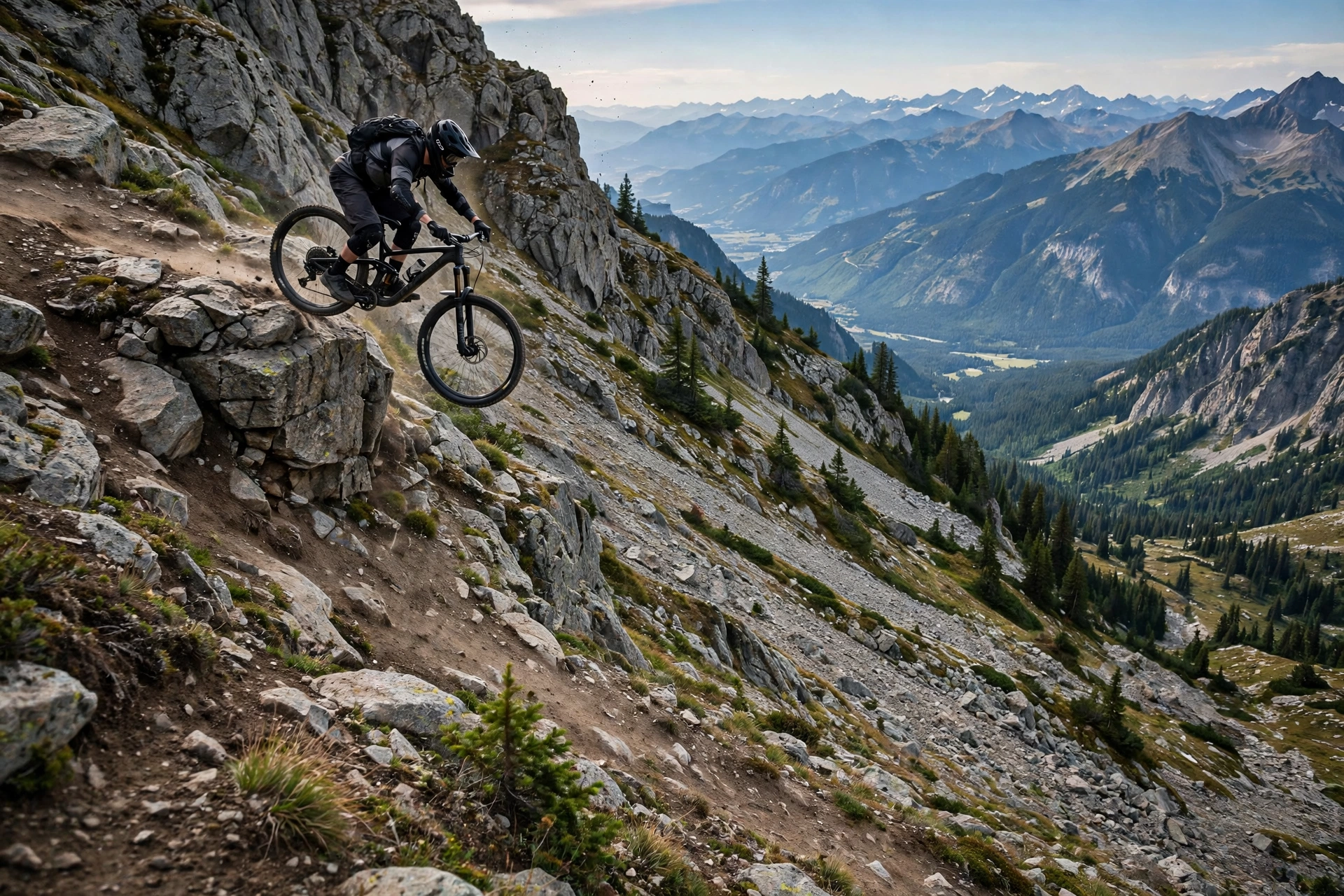
Freeride is one of the most demanding forms of mountain biking. The rider may drop off a ledge, ride down a steep rock slab, jump a gap, or land on uneven ground, all on the same run. The terrain is not a smooth trail: it includes roots, rocks, loose dirt, and natural drops, and the rider must read the ground ahead and react quickly. A fall in freeride can be serious, which is why a full face helmet is standard kit.
What Is Freeride Mountain Biking?
Freeride mountain biking is about riding challenging, natural terrain, rather than racing against the clock. The rider chooses a line down a slope, using the features of the landscape, and may include drops, jumps, and steep sections. Some freeride is done in bike parks, on purpose-built trails with large features, while other freeride is done on natural mountainsides, where the rider must judge the ground as they go.
The bikes used for freeride are strong, with long-travel suspension, wide tyres, and powerful brakes. The rider stands on the pedals for most of the descent, with knees bent and arms ready to absorb the impact of a drop or a landing. The helmet must stay in place through every bump and landing, and it must not block the rider’s view of the next feature.
What Kind of Helmet Do Freeride Riders Wear?
Freeride riders wear a full face helmet, which covers the chin and jaw as well as the top and sides of the head. The shell is strong, the liner is thick, and the chin bar is designed to protect the face in a fall. Many freeride helmets also have a peak that can be adjusted, so the rider can set it to keep sun and mud out of the eyes without blocking the view.
The helmet should be well ventilated, because freeride involves hard physical effort and long descents, and the rider can get hot quickly. Vents in the shell let air flow through, and a washable lining helps keep the helmet fresh. The helmet should also be light enough to wear for a long day, without tiring the rider’s neck on steep terrain.
Fit is critical in freeride. The helmet should sit level, feel snug all round, and stay in place when the rider shakes their head or looks down a steep slope. The chin strap should fasten securely, and the helmet should not rock forward or back. A helmet that moves on a steep descent can block the rider’s vision at the worst moment.
How Is a Freeride Helmet Different from a Downhill Helmet?
In general terms, a freeride helmet and a downhill helmet are very similar, and many riders use the same full face helmet for both. Both are made for steep, fast riding with a high risk of a hard fall, and both have a strong shell, a chin bar, and good ventilation. The difference is mainly in how the rider uses the helmet, not in the design itself.
A downhill helmet is often chosen for racing, where the rider is timed down a set course and the focus is on speed. A freeride helmet may be chosen for a wider range of riding, including jumps, drops, and natural terrain, where the rider may stop to look at a feature or walk a section before riding it. In practice, the same helmet suits both, as long as it fits well and meets the required standard.
A trail helmet, by contrast, is not enough for freeride. A trail helmet is usually an open face helmet with large vents, made for longer rides with less risk of a hard, face-first fall. Freeride involves larger drops and steeper terrain, so a full face helmet is the safer and more sensible choice.
What Should You Look for When Choosing One?
Start with fit and the standard. The helmet should meet the standard for mountain biking or downhill riding, and it should fit snugly without pressing hard on one spot. Try on several helmets to find the shape that suits your head, and check that the helmet stays in place when you move your head quickly, as you would on a steep descent.
Next, think about ventilation, weight, and the peak. A helmet with good airflow will be more comfortable on a long day, and a light helmet will be easier to wear without tiring your neck. Check that the peak can be adjusted and does not block your view when you look ahead to the next drop, and check that the strap fastens easily with gloves on.
If you are learning about how helmets handle different kinds of impact, reading about what MIPS is for helmets can help you understand one of the technologies used in modern helmet design. Some freeride helmets include this kind of system, and knowing about it can help you compare helmets when you shop.
How Do You Care for a Freeride Helmet?
Store the helmet in a cool, dry place, away from sunlight and heat, and keep it in a helmet bag so the shell does not get scratched by other kit. Do not leave it in a hot car, and do not hang it by its chin strap. Freeride helmets get muddy and dusty, so a bag helps keep them clean between rides.
Clean the shell with a soft, damp cloth after a ride, and let it dry naturally. If the lining is removable, wash it according to the maker’s instructions and let it dry fully before you put it back. Do not use harsh cleaners, and do not put the helmet in a washing machine. Check the vents for mud and clear them gently, so the airflow stays good.
Check the helmet before every ride. Look for cracks, dents, or soft spots in the shell, and check that the strap, buckle, chin bar, and peak still work. After any crash where your head hits the ground, a rock, or a tree, have the helmet checked and, in general terms, replace it, even if the damage is not visible. The liner inside can be damaged in ways you cannot see from the outside.
Frequently Asked Questions
Q: Do I need a full face helmet for freeride mountain biking?
A: Yes, in general terms. Freeride involves steep terrain, large drops, and a high risk of a hard fall, so a full face helmet that protects the chin and jaw is the standard choice.
Q: Can I use a freeride helmet for downhill racing?
A: Yes, in general terms. A freeride full face helmet that meets the required standard can be used for downhill racing, as long as it fits well and is in good condition.
Q: How do I know if my freeride helmet fits?
A: It should sit level, feel snug all round without a painful pressure point, and stay put when you shake your head. The chin strap should fasten securely, and the helmet should not rock forward or back.

Olivia
Writer at Helmet Today, covering helmet reviews, fit and riding safety.