A fat biking helmet for winter trails is a warm, well-covered helmet that keeps your head protected and comfortable while you ride a fat bike over snow, ice and frozen trails in cold weather. Fat bikes have very wide tyres that float over snow, but the riding is still cold, slow and often slippery, so the helmet has to balance protection with warmth, wind protection and a fit that works over a thin hat or balaclava.
Fat biking has grown into a popular winter activity, from groomed snow trails at ski resorts to frozen lakes and quiet forest paths. Riders are out for hours in temperatures well below freezing, and a summer helmet with big open vents can leave the head cold very quickly. This guide explains what to look for in a winter fat biking helmet and how to stay warm without giving up protection.
What Is Fat Biking?
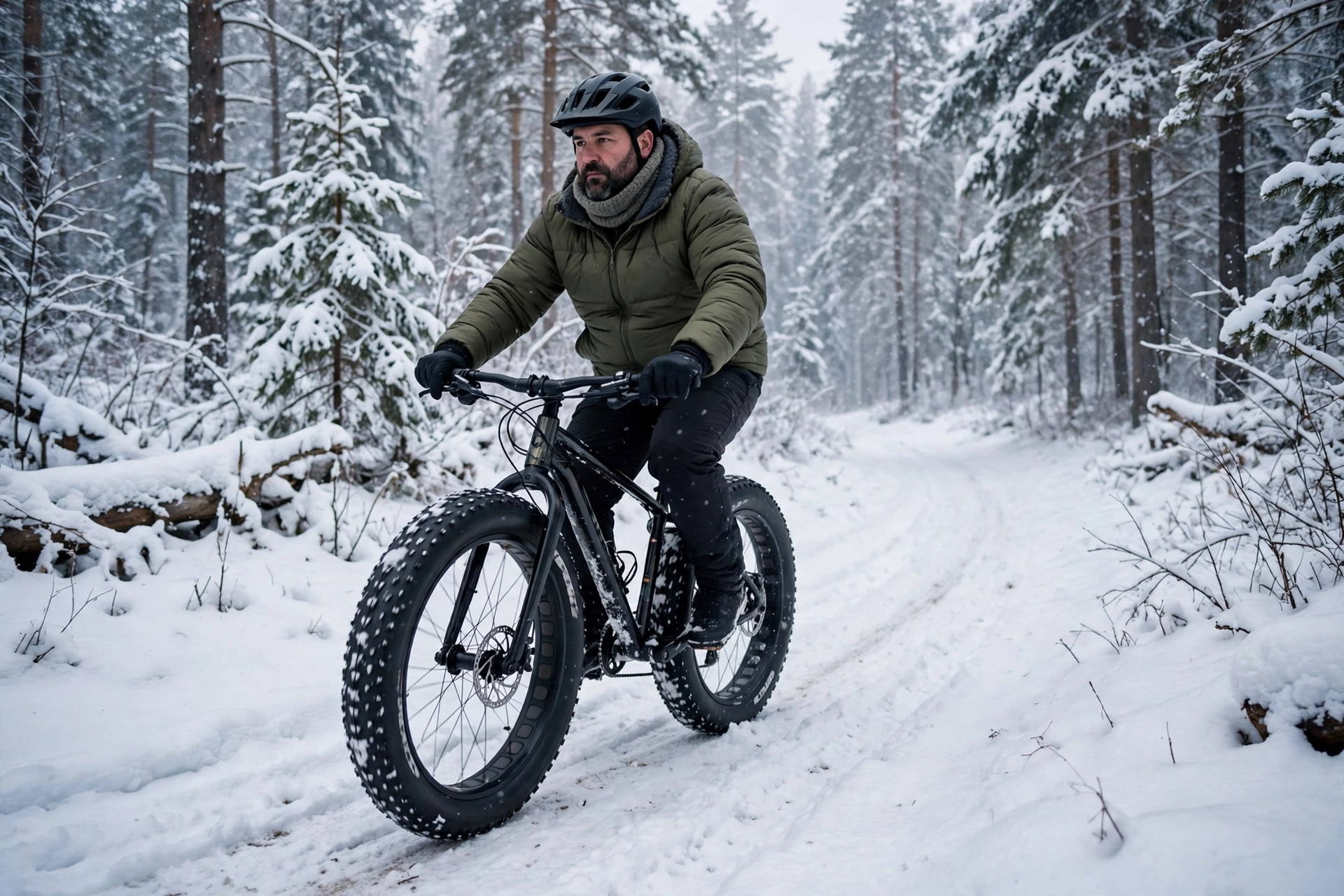
Fat biking is mountain biking on a bike with very wide tyres, usually around four inches across or more, run at low pressure. The wide tyres spread the rider’s weight over a larger area, so the bike can ride over snow, sand and soft ground that would stop a normal mountain bike. In winter, fat bikes are used on groomed snow trails, packed paths and frozen surfaces.
What Kind of Helmet Works Best for Winter Fat Biking?
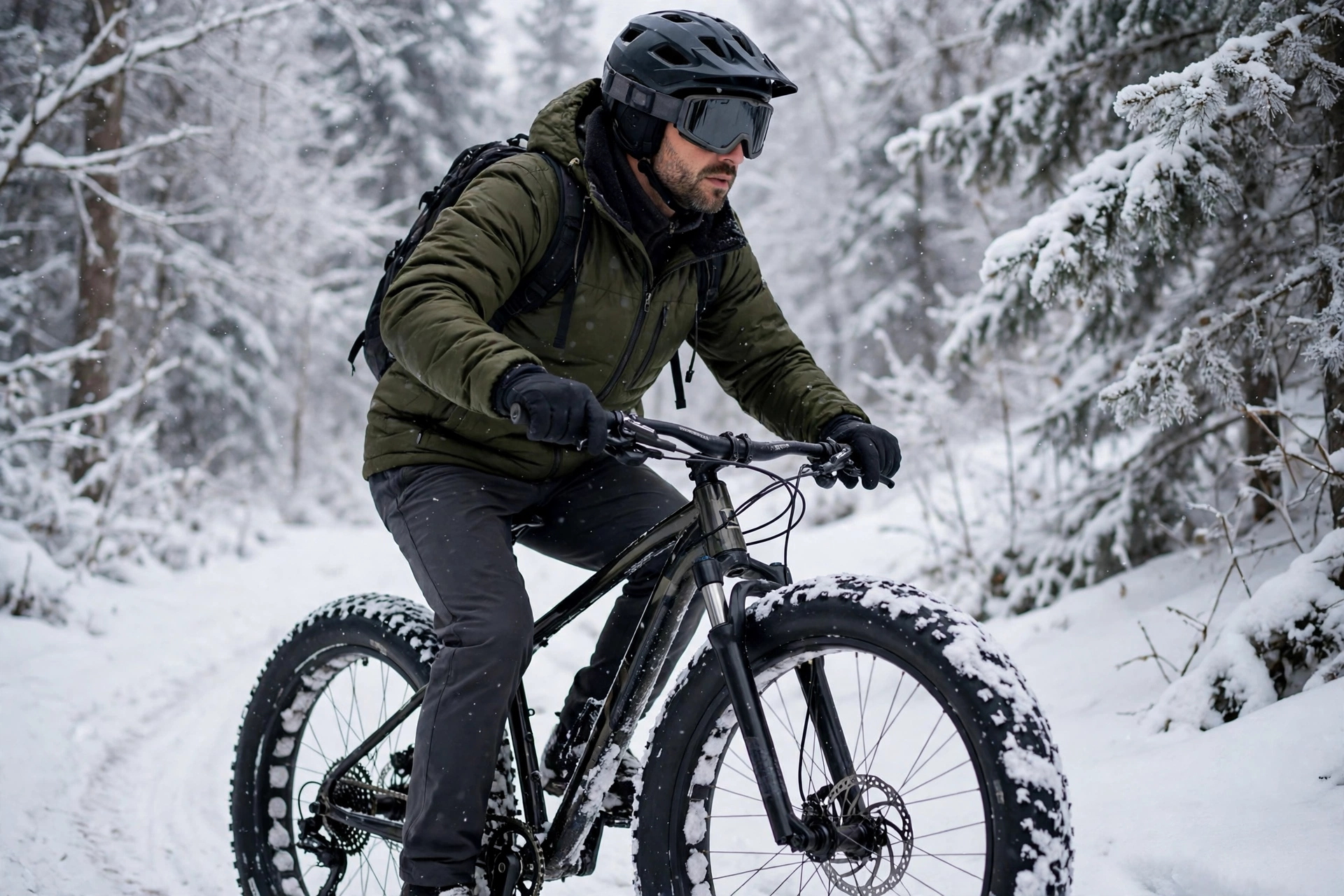
Many fat bikers use a standard mountain bike helmet with fewer, smaller vents, or with vent covers that block the wind. A helmet with large open vents lets cold air flow straight onto the scalp, which is fine on a warm summer day but uncomfortable in freezing weather. A helmet with smaller vents, or one that comes with plugs or covers for the vents, keeps the head warmer.
Some riders choose a ski helmet for fat biking in very cold weather. Ski helmets are made to be warm, with less ventilation, soft ear covers and a fit that works with goggles. In general terms, a ski helmet can work well for slow winter riding, but it is heavier than a bike helmet and may feel too warm if the temperature rises or the riding gets harder.
Another option is a mountain bike helmet worn with a thin skull cap or balaclava underneath. This is a flexible setup, because you can add or remove the layer as the weather changes. The key is to make sure the helmet still fits well with the layer on, and that the layer does not push the helmet up or make it sit too high on the head.
How Do You Keep Your Head Warm Without Overheating?
Keeping your head warm on a winter ride is a balance. If you dress too warmly, you will sweat on the climbs, and that sweat will make you cold on the descents. If you dress too lightly, your head and ears will get cold quickly, especially in wind. The helmet and what you wear under it are part of that balance.
A thin, moisture-wicking skull cap under the helmet is a good starting point. It adds a layer of warmth without much bulk, and it moves sweat away from the skin. A balaclava that covers the ears and neck gives more warmth on very cold days, but it can also make the helmet fit tighter, so try the combination on before you ride.
Vents matter too. If your helmet has vent covers, use them on cold days and take them off if you start to overheat. If it does not, a strip of tape over the front vents can help in a pinch, though it is better to use a helmet made for cold weather. In general terms, you want just enough warmth to stay comfortable, not so much that you are sweating heavily inside the helmet.
What Should You Look for in a Winter Fat Biking Helmet?
Fit comes first, and it needs to work with winter layers. Try the helmet on with the skull cap or balaclava you plan to wear, and check that it still sits level and feels snug all round. It should not press hard on your forehead, and it should stay put when you shake your head. If you wear goggles, try them on with the helmet as well, because the combination needs to work together.
Next, look at coverage and ventilation. A helmet that covers the ears and the back of the head a little more will feel warmer, and smaller vents or vent covers will cut the wind. A peak can help keep snow out of your eyes, but it should not block your view or catch the wind. Look for a helmet with a strap that is easy to fasten with gloves on, because bare hands get cold fast in winter.
Finally, think about goggles and glasses. In snow, glare from the sun can be strong, and cold air can make your eyes water. Goggles that fit the helmet will keep your eyes warmer and clearer than glasses alone. If you want to understand one of the technologies used in modern helmets, reading about what MIPS is for helmets can help you compare different models before you buy.
How Do You Fit and Care for a Winter Fat Biking Helmet?
Measure your head around the widest part, just above your eyebrows and ears, and use the maker’s size guide as a starting point. Try the helmet on with your winter layer underneath, adjust the dial at the back until it feels snug but not tight, and fasten the strap so that two fingers fit snugly between the strap and your chin. Check that the helmet does not rock forward or back.
Test the fit on a short ride before a long day on the trails. A helmet that feels fine indoors can feel different once you are working hard in the cold, and a pressure point will become painful over a few hours. Wear the same goggles, glasses and head covering you plan to use, so the fit you test is the fit you will ride in.
After a ride, wipe the shell with a damp cloth to remove snow and road salt, and let the helmet dry in the open air away from direct heat. Take the pads out now and then and wash them following the maker’s guidance. Store the helmet in a cool, dry place out of strong sunlight, and replace it after a hard impact, even if the shell looks fine, because the liner inside can be damaged in ways you cannot see.
Frequently Asked Questions
Q: Can I use a ski helmet for fat biking?
A: In general terms, yes. A ski helmet is warm and works well for slow winter riding, though it may feel heavy or too warm if the temperature rises or the riding gets harder.
Q: Do I need a special helmet for fat biking in winter?
A: In general terms, no. A mountain bike helmet with small vents or vent covers, worn with a thin skull cap, works well for most winter fat biking. The key is warmth, fit and protection together.
Q: How do I stop my goggles fogging on a winter ride?
A: In general terms, keep air moving through the helmet, avoid overdressing so you sweat less, and lift the goggles briefly when you stop. A helmet with good airflow and goggles that fit well together will fog less.

Olivia
Writer at Helmet Today, covering helmet reviews, fit and riding safety.