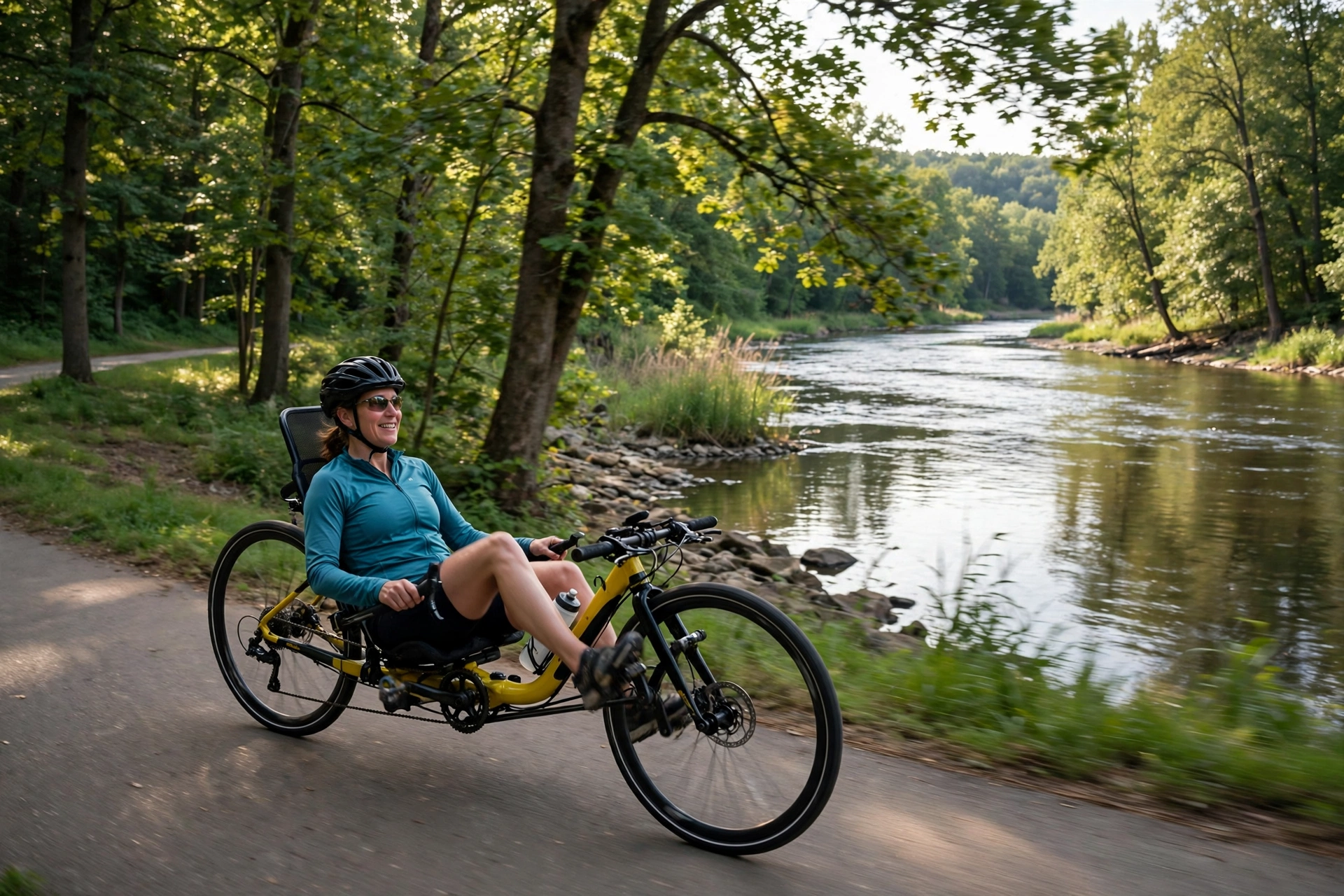
The best helmet option for most recumbent bike riders is a lightweight, well-ventilated standard bicycle helmet that fits securely without a tall rear profile that clashes with the headrest, chosen by head measurement and tried while seated in your actual riding position — because a recumbent rider’s head sits lower, further back, and closer to a seat than an upright rider’s does. Your risks are mostly the same as any cyclist’s, but your position changes what fits, what you can see, and how the sun hits you.
This guide walks through what genuinely differs for recumbent riders, and how to choose between standard, visored, and aero-leaning options.
What Is Different About a Helmet on a Recumbent Bike?
Start with the obvious: you ride reclined. Your head rests near or against a headrest or the top of the seat, which means the back of the helmet becomes a contact area it never is on an upright bike. A helmet with a deep, protruding rear or a low rear retention cradle can push against the headrest, tilt the helmet forward, or simply annoy you for hours.
Your head position changes your view too: reclined, you look slightly upward relative to the helmet, so a low front edge or long visor intrudes into the view more than it would upright, and your upturned face catches more sun and glare.
Your crash profile is a little different too. Recumbents are low, and typical recumbent accidents are low-side slides rather than the classic over-the-bars flight. That puts a premium on a helmet that stays put when knocked from the side or back as you slide.
Which Standard Helmets Work Well for Recumbent Riders?
The good news is that the answer is usually an ordinary certified bicycle helmet — the same standards apply, because the job is the same. In general terms, look for a helmet that meets the bicycle helmet standard where you ride, fits by measurement rather than by guess, and uses a lighter in-moulded construction for long distances, since weight on a reclined neck is felt differently.
Within standard helmets, road-style models often suit recumbents well: they tend to have smoother, more compact rear profiles, lighter weight, and strong ventilation — and ventilation matters more than many recumbent riders expect. A reclined rider’s head sits in the body’s own sheltered air behind the torso and legs, so airflow over the helmet can be less than your speed suggests.
Mountain-bike style helmets bring deeper rear coverage and a visor — but that deeper rear is exactly what may fight your headrest. The only reliable test is positional: put the helmet on, sit on your bike, lean back as you ride, and turn your head as you would at a junction. Any clash, push, or tilt you feel in the driveway will be ten times worse at hour three.
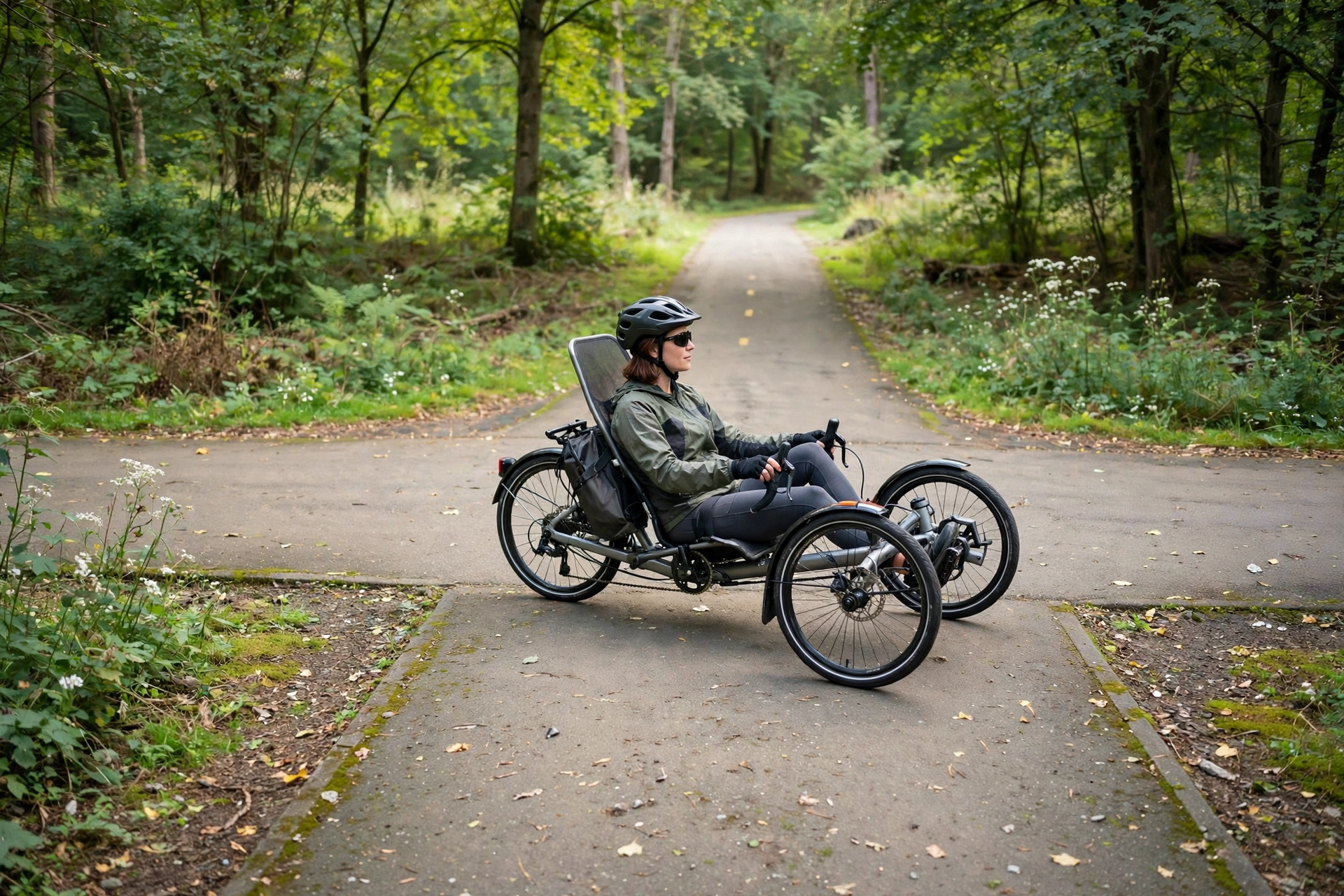
How Do Visors and Sun Protection Work in a Reclined Position?
Sun management is a bigger deal on a recumbent than fit guides for upright bikes suggest. Riding reclined, your face tilts upward and collects direct sun and glare for the whole ride. A helmet visor helps the same way a cap peak does — shading the eyes when the sun is ahead — and adjustable or removable visors let you tune it for the day.
Check the visor from your real position, though. A fixed, low visor that is perfect upright can hang in the top of your view when reclined, and some riders prefer a short visor, a visor tilted up, or none at all plus good sunglasses. Anything that narrows the upper view deserves a proper test ride rather than a shop guess.
Sunglasses, a thin cap under the helmet where the maker allows, and sunscreen handle the rest. Whatever you add under the helmet must be thin and flat — a thick cap changes the fit and can undo the snugness the helmet depends on, so re-check the shake test with your full setup on.
How Should a Helmet Fit and Stay Put on a Recumbent?
The fit rules are the same as always, with one addition. Measure your head, choose the size that matches, and set the helmet level with the straps forming a V below each ear and the chin strap snug — with roughly one to two fingers of slack — so the helmet cannot rock or lift. The addition is the seated test: do all final checks while reclined on your bike, head against the headrest, because straps that feel perfect standing can pull or shift when your neck angle changes.
The retention dial at the rear deserves special attention. On an upright bike it sits against the back of the skull; on a recumbent it may be exactly where the headrest presses. If the dial digs in or the headrest nudges the cradle, the helmet gets pushed out of position all ride — try a model whose rear system sits higher or flatter.
Staying put matters because of how recumbents fall. In a low-side slide your head may meet the ground sideways and keep moving, producing exactly the angled, rotational impacts modern helmet design works on — this guide to what MIPS is for helmets explains how rotational systems try to reduce the twist. A helmet displaced by a headrest before the fall even starts cannot do that job properly, which is why the reclined fit test is not a nicety.
- Rear profile: compact and smooth, no clash with the headrest or seat top
- Retention dial: positioned so the headrest cannot press or nudge it
- Fit check: always done seated and reclined, not standing in the shop
- Ventilation: generous — reclined heads often get less airflow than speed suggests
Are There Recumbent-Specific Helmets, and Do You Need One?
Niche and specialist designs aimed at recumbent and velomobile riders do exist — very light, low-profile helmets, and enclosed velomobile riders sometimes use different solutions again — but a recumbent-specific label is not a requirement. What matters is certification, fit in position, and comfort over your real distances, and a mainstream helmet that passes those tests is a perfectly sound choice.
Velomobile riders are the partial exception: enclosed machines change heat and visibility, and riders in fully faired machines often make different choices. Weigh ventilation and heat above all — an enclosed cockpit in summer is an oven.
For the mainstream recumbent rider, the formula is simple. Take three or four certified helmets to the bike, sit in position, lean back, look around, and buy the one that disappears: no headrest clash, no visor in your eyes, no pressure at the back, straps snug. The right helmet for a recumbent is rarely a special helmet. It is an ordinary helmet, honestly fitted to an extraordinary riding position.
Frequently Asked Questions
Q: Do recumbent trike riders really need a helmet if they cannot fall over?
A: A trike removes the balance topple, but not traffic collisions, slides, or being thrown in a crash — and your head sits low, close to the ground. Treat a certified helmet as standard kit.
Q: Why does my helmet keep tipping forward on my recumbent?
A: Usually the headrest or seat top is pressing on the helmet’s rear or retention dial, levering the front down as you ride. Try a model with a more compact, higher rear profile, adjust the headrest position if you can, and always test helmets seated on your own bike.
Q: Is an aero or time-trial helmet a good idea for a recumbent?
A: Rarely for everyday riding. Long tails are designed around an upright time-trial position, can clash badly with a headrest, and sacrifice ventilation. A compact road helmet suits almost every recumbent rider better.

Olivia
Writer at Helmet Today, covering helmet reviews, fit and riding safety.