A toddler should start wearing a bicycle helmet as soon as they ride anything — from their very first sit on a balance bike, ride in a child bike seat, or trip in a trailer — because the need for a helmet depends on riding, not on reaching a particular birthday. The real tests are whether the child is riding, and whether a properly sized helmet exists that fits their head.
This guide explains the thinking behind that answer, how local rules fit in, and how to know your toddler is ready for that first helmet.
Is There a Minimum Age for Wearing a Bicycle Helmet?
There is no single universal age, and parents searching for one official number will not find it — what exists instead is a practical principle and local rules. The principle: a child who rides needs head protection sized for them, whatever their age. A toddler gliding on a balance bike at walking pace can still topple sideways onto concrete, and toddler heads are proportionally larger and heavier than adults’, which is exactly why they tip headfirst.
Local rules add their own layer. Some places set helmet requirements for child passengers or young riders, and those rules vary and change, so check what applies where you live rather than relying on anything general. Note that maker sizing also sets a floor: a child whose head is smaller than the smallest proper size should wait to ride until a helmet genuinely fits.
That is the real age answer in disguise: the question is not “how old?” but “does a certified helmet fit this head correctly?” When the answer is yes, riding and helmet-wearing can start together.
Why Start the Helmet With the Very First Ride?
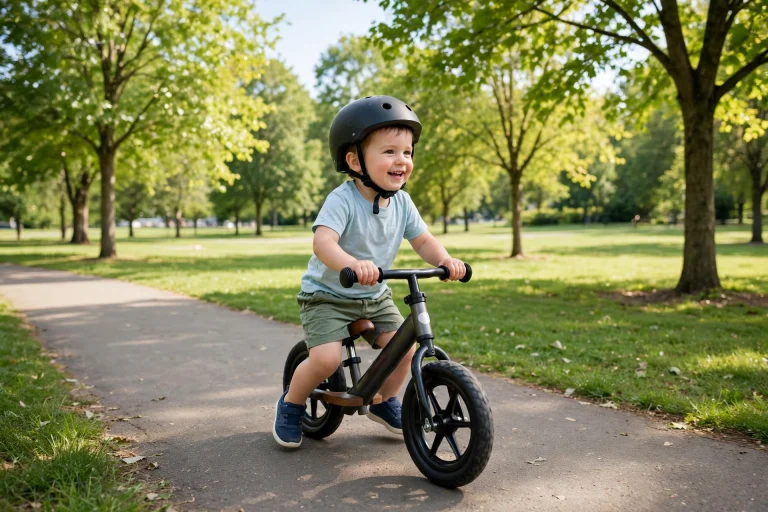
Because falls start with the first ride too. The typical toddler cycling accident is not a high-speed crash; it is a slow topple from a balance bike, a wobble off a ride-on toy with pedals added later, or a tip from a bike seat at a standstill. Low speed does not mean soft landing — pavement is just as hard at three miles per hour, and the distance a small head falls is quite enough.
Starting at the first ride also solves the behaviour problem before it exists. A toddler who has never ridden bareheaded treats the helmet as part of the bike, like the saddle or the wheels. A toddler who has ridden happily without one for months experiences the helmet as a new restriction, and parents then have to win an argument that never needed to happen.
Finally, riding situations escalate quickly at this age. The balance bike on the driveway becomes the bike seat on a family ride, then the trailer, then the pedal bike — and a helmet habit already in place simply carries across all of them.
How Do You Know a Helmet Fits a Very Young Toddler?
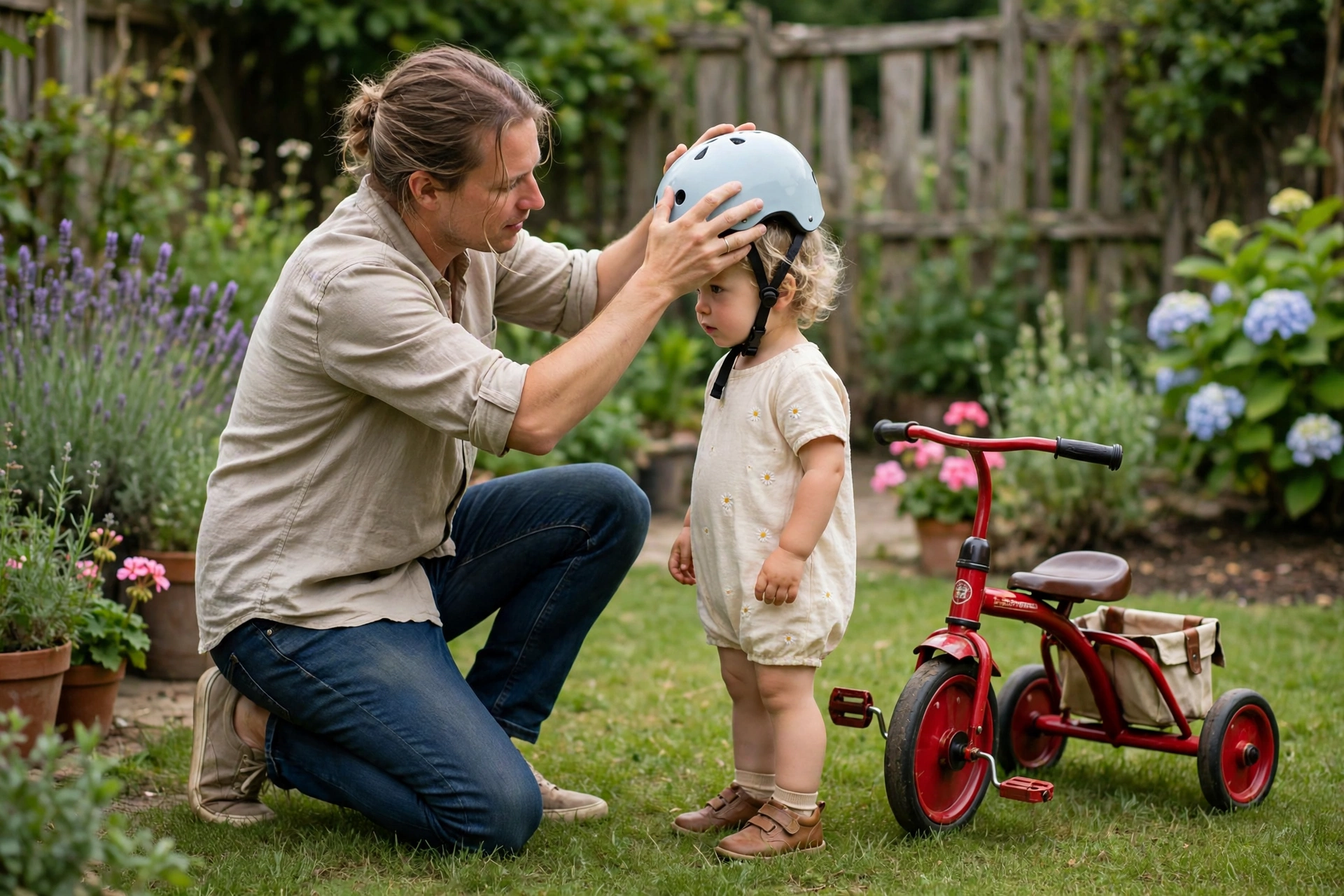
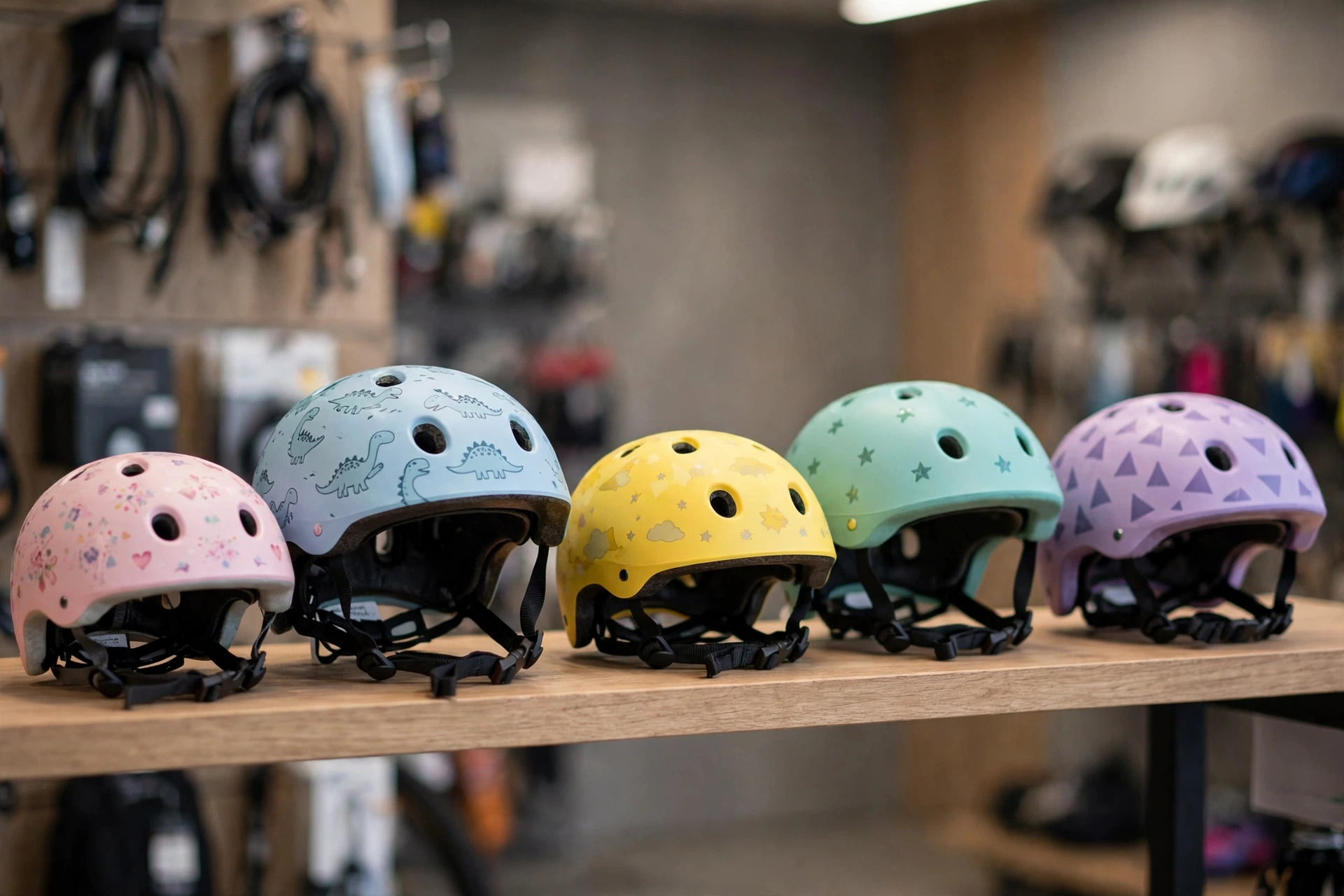
The same way as for any rider: measure first. Wrap a soft tape around the widest part of your child’s head, just above the eyebrows and ears, and compare the measurement with the size range printed for the toddler helmet you are considering. Choose the size whose range contains your child’s measurement now — never a size up for growth, because a loose helmet can shift or come off in a fall.
On the head, the helmet should sit level with the front edge low on the forehead, feel snug all around without squeezing, and stay put when your toddler shakes or tilts their head. Side straps should form a V just below the ears, the chin strap should fasten snugly with about one to two fingers of slack, and the rear dial or pads should take up any remaining looseness without pressure points.
A toddler cannot explain that a pad digs in; they can only refuse the helmet. If one model passes the size test but gets fought every time, try another model in the same size — small heads differ in shape, and the right shape is the one worn willingly all ride long.
What About Babies and Toddlers in Bike Seats and Trailers?
Children riding as passengers — in a child seat on an adult’s bike or in a trailer — should wear a helmet too, for the same reason riders do: if the bike tips, the passenger’s head is at risk, and a passenger has even less ability to brace or react than a rider. This is also an area where local rules sometimes speak directly, commonly requiring helmets for young passengers, so check what applies to you.
One honest caution: a child must be able to hold their head up steadily and sit unsupported before riding as a passenger at all, helmet or not, and passenger helmets need a shape that works with the seat — a flatter back, so the helmet is not pushed forward by the seat’s headrest area. If your baby’s neck is not yet strong and steady, the correct decision is to wait.
Trailers sit lower and are generally stable, but they share roads and paths with everything else, and “enclosed” does not mean impact-proof. The habit to build is uniform: if your child is aboard and the wheels are turning, the helmet is on.
How Long Will the First Helmet Last, and When Is It Replaced?
Expect growth to retire the first helmet, not old age. Toddler heads grow quickly, so check the fit regularly through the season: a helmet that has started to sit high, pinch, or leave marks is outgrown, and sizing up happens by buying the next size that fits correctly.
Replace the helmet immediately after any crash in which the head or helmet struck the ground or another object. Bicycle helmets protect by crushing foam in the impact, and that damage is often invisible from outside — a helmet that has done its job once should be thanked and retired. The same applies to helmets with cracked shells, broken straps, or foam that feels soft or crumbly.
When you shop for each replacement, the basics stay identical: certified for bicycle use where you live, correct size by measurement, level fit, snug straps. Some helmets also offer rotational protection systems, designed to reduce twisting forces in angled falls; this explanation of what MIPS is for helmets covers how they work if you want to weigh them as your toddler moves to faster bikes.
- Start: with the first ride of any kind — balance bike, seat, or trailer
- Size: measured, fitted now, never bought to grow into
- Replace: when outgrown, after any head impact, or when straps or foam wear
Frequently Asked Questions
Q: Is there a legal age when toddlers must wear a helmet?
A: Rules vary by place and change over time; some areas have helmet requirements for young riders or child passengers, others leave it to parents. Check the current rules where you live. Regardless of law, the practical guidance is helmet from the first ride, in a size that truly fits.
Q: My toddler’s head is too small for any helmet I can find. What should we do?
A: Wait to ride. If no certified helmet fits your child’s head correctly, the safe answer is to hold off on balance bikes and bike seats until one does, rather than padding out an oversized helmet, which will not stay in place in a fall.
Q: Does a toddler need a helmet for a balance bike used only indoors or in the garden?
A: It is the sensible habit. Toddlers topple on any surface, furniture and patio edges are unforgiving, and a rule with no exceptions is the easiest rule for a toddler to learn. If the bike is out, the helmet is on.

Olivia
Writer at Helmet Today, covering helmet reviews, fit and riding safety.