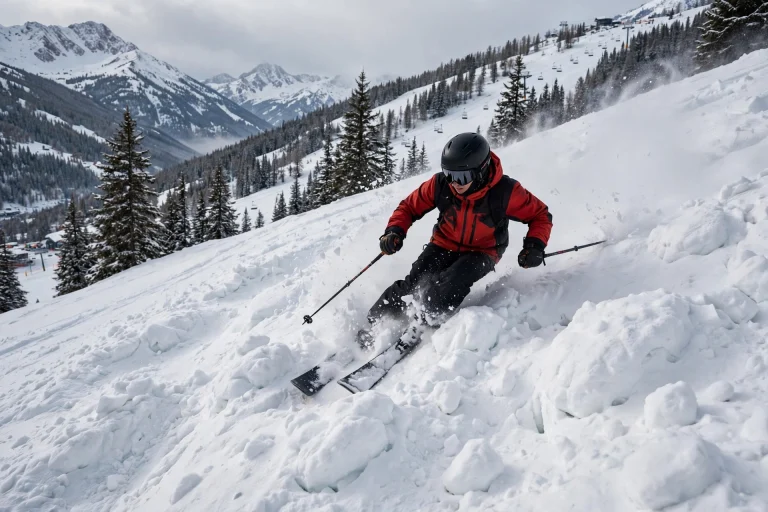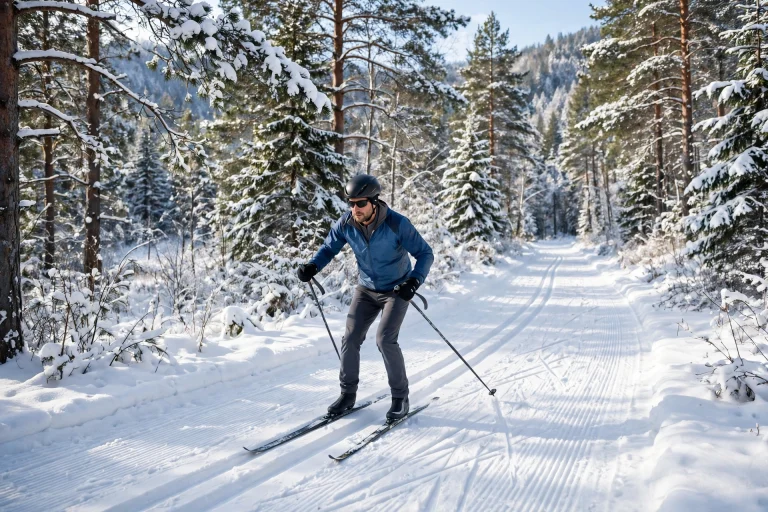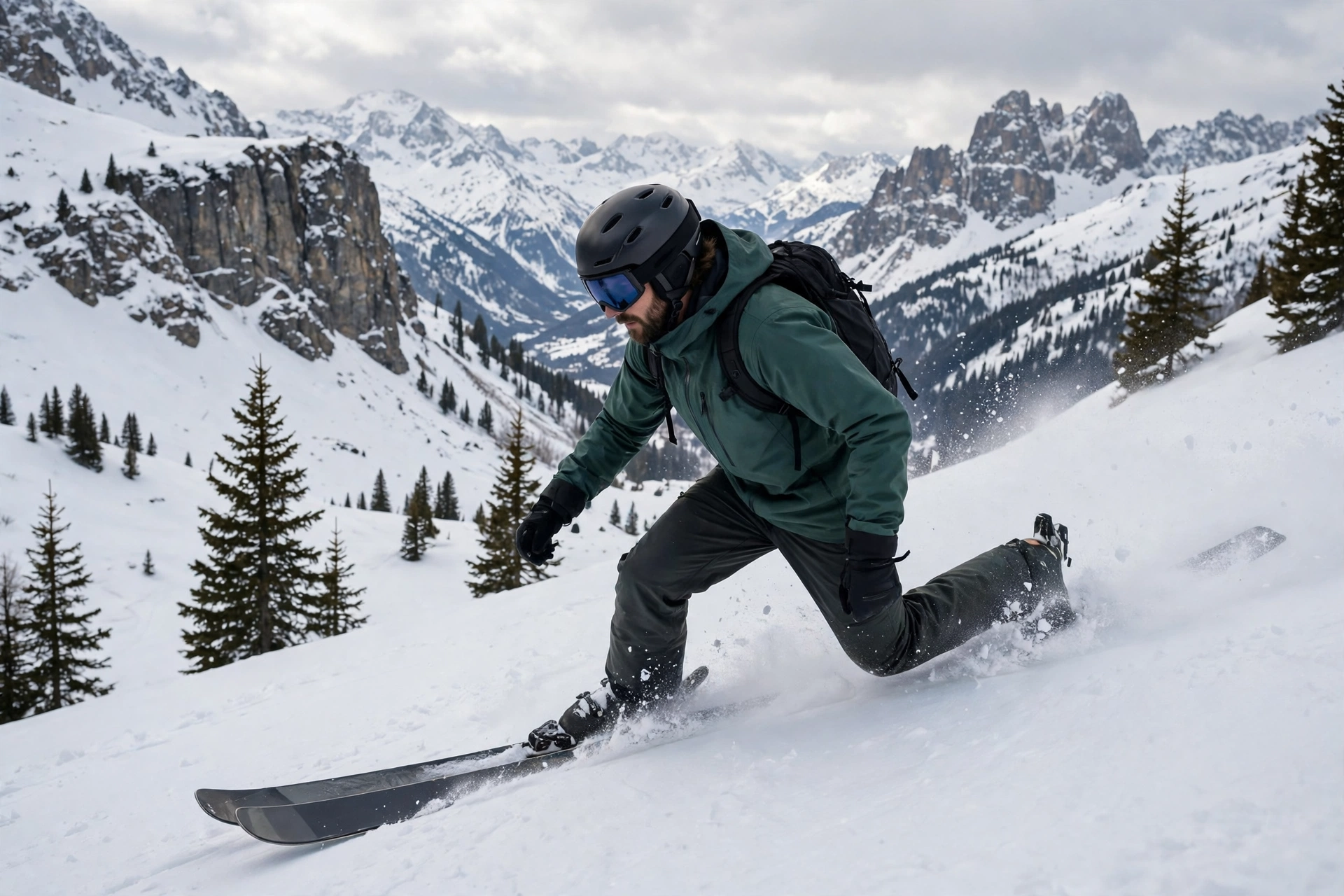
A telemark skiing helmet is a standard ski helmet worn for telemark skiing, the style of downhill skiing in which the heel is free and the skier drops into a deep lunge turn with one knee bent. Telemark skiers face the same downhill risks as alpine skiers — speed, hard snow, trees and other skiers — so a proper ski helmet is the right protection for the sport.
Telemark skiing is one of the oldest forms of downhill skiing, and it has seen a revival in recent years as skiers look for a graceful, flowing style on the mountain. The free-heel binding and the lunging turn make telemark skiing distinctive, but they also make balance more demanding, especially on steep or icy slopes. This guide explains what helmet telemark skiers wear and what to look for.
What Is Telemark Skiing?
Telemark skiing is a style of downhill skiing in which the boot is attached to the ski at the toe only, leaving the heel free to lift. To turn, the skier drops into a lunge, with the inside knee bent and the outside leg extended behind. The movement is fluid and elegant when done well, but it takes balance, strength and practice to learn.
Telemark skiers use the same lifts and pistes as alpine skiers, and they ski the same terrain, from gentle groomed runs to steep, moguled slopes and off-piste snow. The free heel means the skier has less leverage over the ski than an alpine skier, which can make recovery from a mistake harder. A fall is therefore a real possibility, especially while learning or skiing in difficult snow.
The sport is practised at ski resorts around the world, and there are telemark races and competitions as well as recreational skiing. Many telemark skiers also ski tour, climbing up the mountain on their skis before skiing down, which adds long days and changing conditions to the mix.
What Kind of Helmet Do Telemark Skiers Wear?
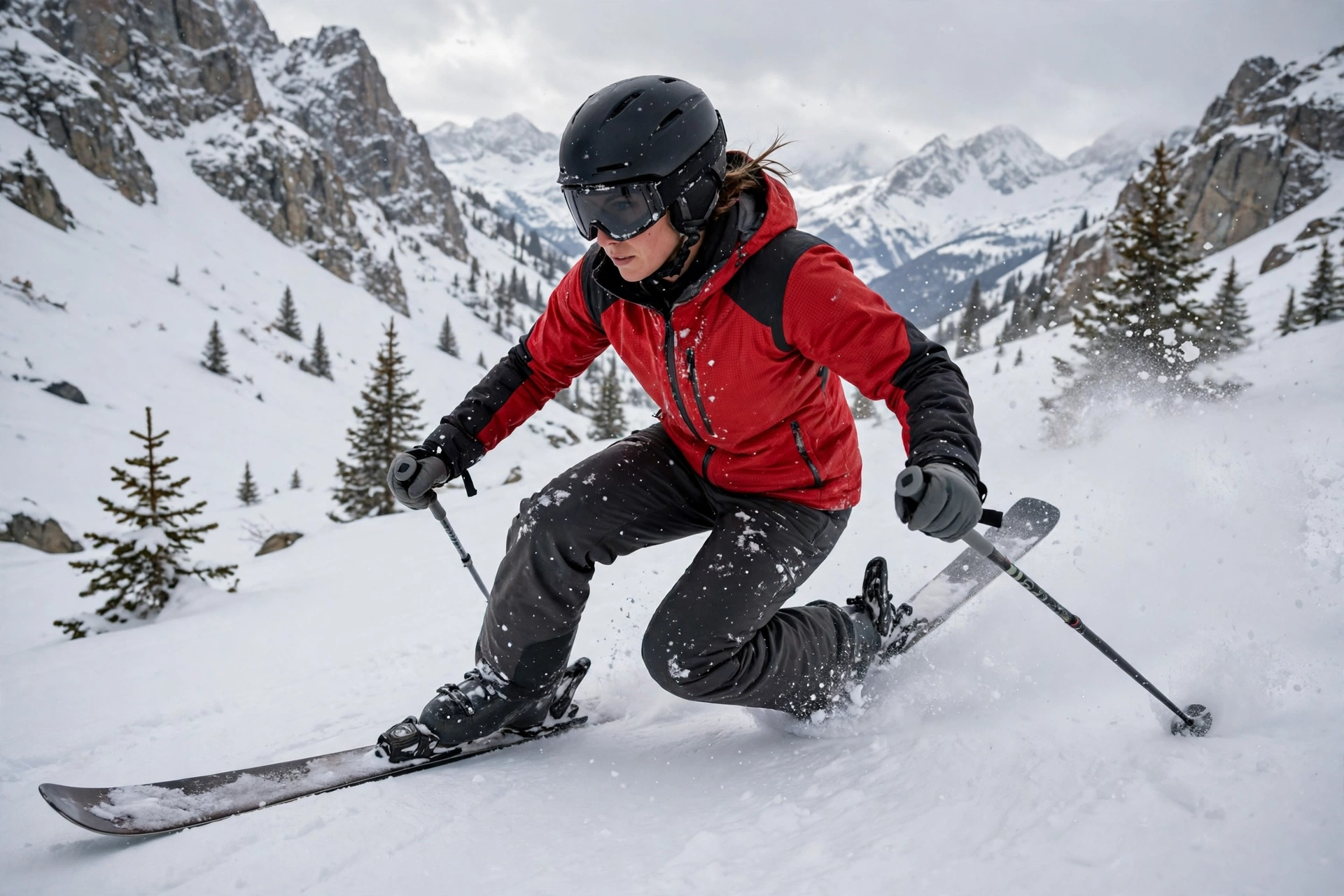
Telemark skiers wear a standard ski helmet, the same kind worn by alpine skiers. These helmets have a hard shell, padding inside, ear coverage and a fit that works with goggles. They are made to protect the head in falls on snow and ice, and they are warm enough for a day on the mountain in cold, windy weather.
There is no special telemark helmet, because the risks are the same as in alpine skiing. The helmet needs to protect against impacts with the snow, with other skiers, and with trees or lift equipment at the side of the piste. A helmet that meets the usual ski helmet standard for the region is the right starting point, and it should be chosen for fit and comfort rather than for a telemark-specific label.
Some telemark skiers who tour a lot choose a lighter ski touring helmet, which has more ventilation for the climb up and still gives protection for the descent. These helmets are a good choice for long days in the backcountry, but for resort skiing a standard ski helmet is usually warmer and more comfortable. In general terms, either type works if it fits well and suits the conditions.
Do Telemark Skiers Need a Helmet?
Yes, in general terms telemark skiers should wear a helmet, just as alpine skiers should. The speeds on a downhill piste are high, the snow can be hard and icy, and a fall can happen at any time, even to an experienced skier. A helmet protects the head in a fall and gives extra warmth and comfort on a cold day.
The free-heel style adds to the case for a helmet. Because the heel is not fixed, a telemark skier has less control over the ski if they lose balance, and recovery from a stumble can be harder than in alpine skiing. Beginners in particular fall often while they learn the lunge turn, and a helmet is a sensible part of their kit from the start.
Many ski resorts and ski schools expect or require helmets, and some competitions require them as well. Even where a helmet is not required, wearing one is the cautious choice, and it costs little in comfort if the helmet is light and fits well. A helmet will not prevent a fall, but it can reduce the harm if you do fall.
What Should You Look for in a Telemark Skiing Helmet?
Fit comes first. The helmet should sit level, feel snug all round, and stay put when you shake your head. It should not press hard on your forehead or temples, and it should fit comfortably with your goggles, with no gap at the forehead where cold air can get in. Try the helmet and goggles together before you buy, because the combination needs to work as a pair.
Next, look at ventilation and warmth. A helmet with vents that can be opened or closed is ideal, because you can let air in when you are working hard on a climb or a warm spring day, and close the vents on a cold, windy day. Ear pads that cover the ears help keep the wind off, and a helmet that fits with a thin balaclava underneath gives extra warmth when it is very cold.
Finally, check the strap and the fit system. The strap should fasten securely under your chin and sit comfortably without rubbing, even with gloves on. The fit system at the back should be easy to adjust. If you want to understand one of the technologies used in modern helmets, reading about what MIPS is for helmets can help you compare different models before you buy.
How Do You Fit and Care for a Telemark Skiing Helmet?
Measure your head around the widest part, just above your eyebrows and ears, and use the maker’s size guide as a starting point. Try the helmet on and adjust the fit system at the back until it feels snug but not tight. Fasten the strap so that two fingers fit snugly between the strap and your chin, and check that the helmet does not rock forward or back when you move your head.
Test the fit with your goggles and any hat or balaclava you plan to wear, because the combination needs to work together. A helmet that fits in the shop but feels loose or tight once your winter layers are on is not the right helmet. If the helmet moves easily, try a smaller size or a different brand, because head shapes vary.
After a day on the mountain, wipe the shell with a damp cloth, remove the pads if you can, and let the helmet dry in the open air away from direct heat. Wash the pads now and then following the maker’s guidance. Store the helmet in a cool, dry place out of strong sunlight, and replace it after a hard impact, even if the shell looks fine, because the liner inside can be damaged in ways you cannot see.
Frequently Asked Questions
Q: Is there a special telemark skiing helmet?
A: In general terms, no. Telemark skiers wear a standard ski helmet, the same kind worn by alpine skiers, because the risks and conditions are the same.
Q: Can I use a ski touring helmet for telemark skiing?
A: In general terms, yes. A lightweight ski touring helmet works well for telemark skiing, especially if you tour a lot. For resort skiing, a standard ski helmet is usually warmer and more comfortable.
Q: Do telemark racers wear helmets?
A: Yes. Helmets are standard in telemark racing, and many races require them. Racers ski fast on set courses, and a helmet is part of their normal competition kit.

Olivia
Writer at Helmet Today, covering helmet reviews, fit and riding safety.