Yes, surf lifesavers wear helmets in some situations — a surf lifesaving helmet is a lightweight water helmet worn for training and competition in surf lifesaving, especially in craft races and rescues in heavy surf. Surf lifesaving is the sport and service built around beach rescue, with lifesavers racing on boards, skis, and in the surf. Helmets are not worn for every task, but they are used where the surf and the craft create a risk to the head.
Surf lifesaving covers a wide range of activities, from swimming and running on the beach to paddling a surf ski through breaking waves. The helmet is most relevant in the craft events, where the rider is moving fast in the surf with a hard board or ski. This guide explains what a surf lifesaving helmet is and when it is worn.
What Is a Surf Lifesaving Helmet?
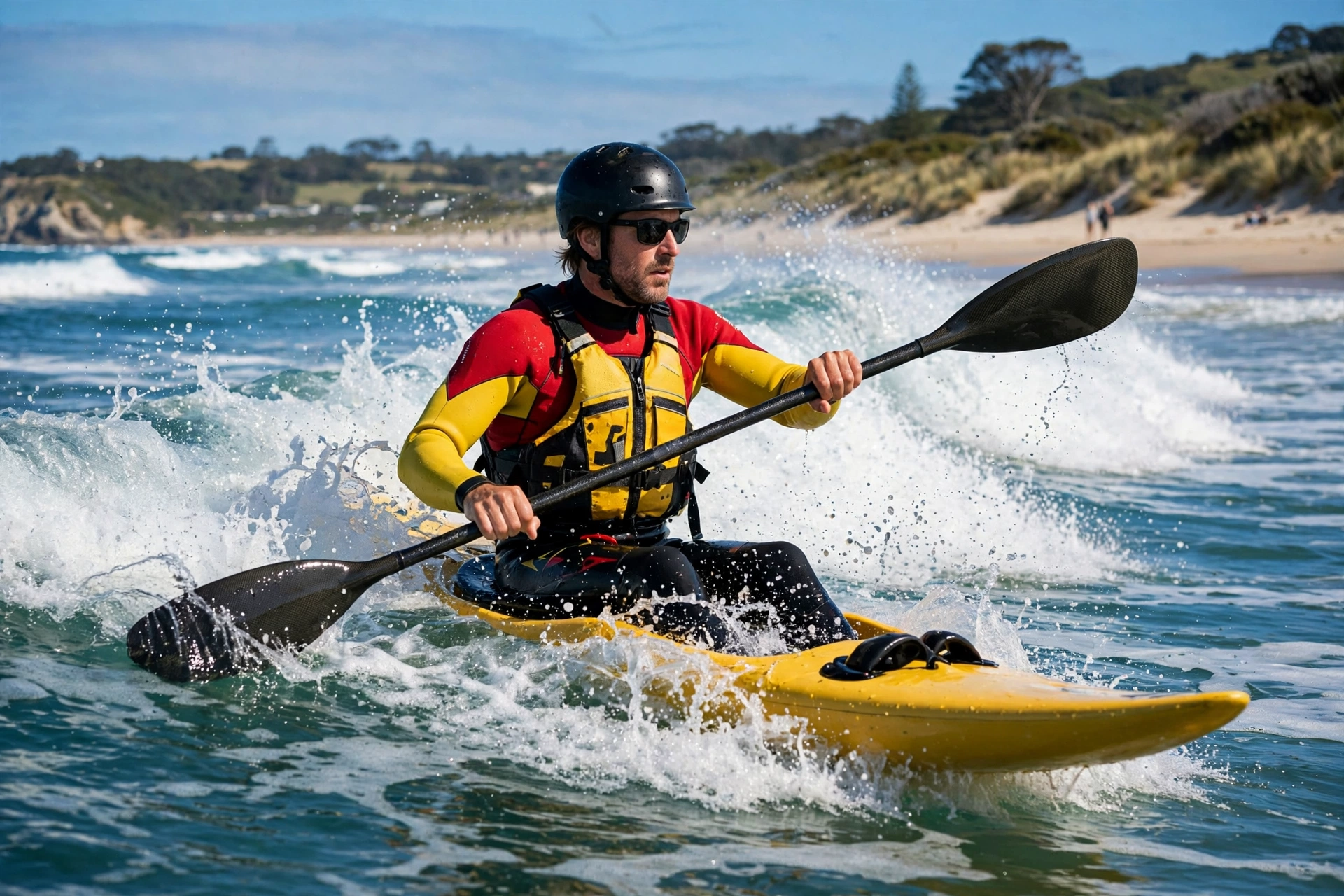
A surf lifesaving helmet is a low-profile water helmet with a hard outer shell and soft padding inside. It covers the top and sides of the head and is held on by a chin strap so it stays in place in the surf. It is designed to be light, to drain quickly, and to cope with salt water and sand.
The helmet is built for the kinds of knocks that happen in surf lifesaving: a fall from a surf ski or board in breaking waves, a knock from the craft itself, or a bump against the sand in shallow water. The shell spreads the force of an impact, while the padding cushions the head. Because the helmet is worn in the surf, it has a smooth shape that does not catch the water.
Unlike a bike helmet, a surf lifesaving helmet is made for water use. Its straps and padding are made from materials that cope with being soaked, and it has few openings that could trap sand. In general terms, it is similar to a surf helmet, but chosen for the faster, more crowded conditions of lifesaving races and training.
When Do Surf Lifesavers Wear Helmets?
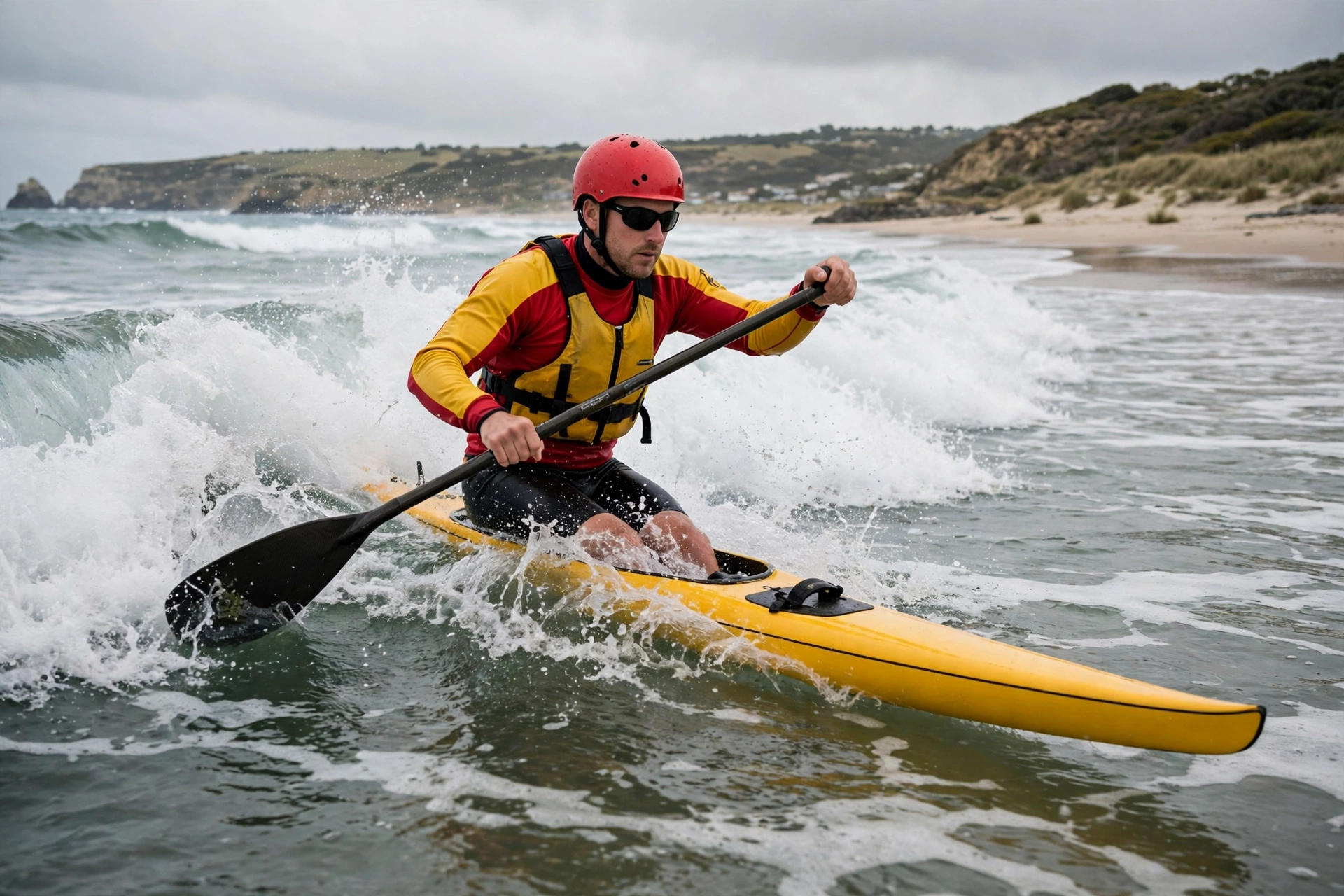
Surf lifesavers wear helmets mainly in craft races and in heavy surf training. In a surf ski race, the paddler rides waves at speed, and a fall can mean being tumbled in the surf with a hard ski nearby. A helmet protects the head during those falls and reduces the risk of cuts from the ski. Board races carry a similar risk, because the board can flip up and strike the rider.
Helmets are also worn in some rescue training, especially when practising in large surf or around rocks. A lifesaver entering the water to reach a swimmer may be knocked about by the waves, and a helmet helps in that case too. In general terms, the rougher the surf and the harder the craft, the more sense a helmet makes.
Helmets are not usually worn for beach sprints, flag races, or calm-water swimming, where the risk to the head is low. The decision depends on the event, the conditions, and the rules of the club or competition. Many clubs ask younger members to wear a helmet for craft events, and some competitions require it.
How Is a Surf Lifesaving Helmet Different from a Surf Helmet?
A surf lifesaving helmet and a surf helmet are both lightweight water helmets, but they are used in different settings. A surf helmet is designed for surfing waves on a surfboard, where the rider is often tumbled in the surf. A surf lifesaving helmet is designed for racing and rescue work, where the rider is on a ski or board in a crowded field, with other craft close by.
The fit is similar in both cases: the helmet must stay firmly in place through falls and tumbles, without shifting or blocking the rider’s view. A lifesaving helmet may be chosen for visibility too, because lifesavers need to be seen in the water, so bright colours are common. Both helmets drain quickly and are made for salt water, but the lifesaving helmet is often picked with racing rules and club requirements in mind.
If you already own a surf helmet, it may serve for surf lifesaving as long as it fits well and meets the rules of your club or competition. In general terms, the best helmet for surf lifesaving is one that is light, snug, and made for the surf, and that complies with any rules that apply to the event.
How Should a Surf Lifesaving Helmet Fit?
A surf lifesaving helmet should sit level on the head, covering the forehead without slipping down over the eyes. It should feel snug all round, without pressing hard on the temples or the back of the head. Shake your head from side to side: the helmet should move with your head, not slide about on its own. The chin strap should be fastened snugly under the chin, with only a small gap, so the helmet stays on in breaking waves.
Try the helmet on with wet hair if you can, because a helmet that fits well when dry can feel loose when wet. Look for padding that can be adjusted or swapped, so you can fine-tune the fit. The helmet should also be light enough that you forget you are wearing it once you are paddling.
Check that the helmet does not block your hearing or your view. You need to hear whistles, shouts, and other lifesavers, and you need to see the surf clearly. If you are learning about how helmets handle different kinds of impact, reading about what MIPS is for helmets can help you understand one of the technologies used in modern helmet design.
How Do You Care for a Surf Lifesaving Helmet?
A surf lifesaving helmet needs regular care because it is used on the beach. Sand gets into straps and padding, and salt water can weaken materials over time. After each session, rinse the helmet with fresh water to remove sand and salt, and shake out any sand trapped inside. Let it dry in the shade, not in direct sun, because strong sunlight can weaken the shell and the straps over time.
Check the helmet often for signs of wear. Look for cracks in the shell, dents, loose padding, and straps that are frayed or have lost their grip. A helmet that has taken a hard knock should be checked carefully and replaced if there is any doubt about its condition, because damage inside the shell may not be visible from the outside.
Store the helmet somewhere cool and dry, away from heavy beach gear that could press on it. Do not leave it in a hot car or in a bag full of wet kit for days at a time. In general terms, a helmet that is rinsed, dried, and checked regularly will last longer and protect better than one that is left sandy and damp after every session.
Frequently Asked Questions
Q: Do all surf lifesavers wear helmets?
A: No. Helmets are worn mainly for craft races and heavy surf training, not for every lifesaving task. The decision depends on the event, the conditions, and club or competition rules.
Q: Can you wear a surf helmet for surf lifesaving?
A: In general terms, yes. A lightweight water helmet made for surfing is usually suitable for surf lifesaving too, as long as it fits well and meets any rules that apply to the event.
Q: Does a surf lifesaving helmet protect against concussion?
A: No helmet can guarantee protection against concussion. A surf lifesaving helmet reduces the risk from falls and craft strikes, but a hard blow can still cause injury, so any head knock should be taken seriously.

Olivia
Writer at Helmet Today, covering helmet reviews, fit and riding safety.