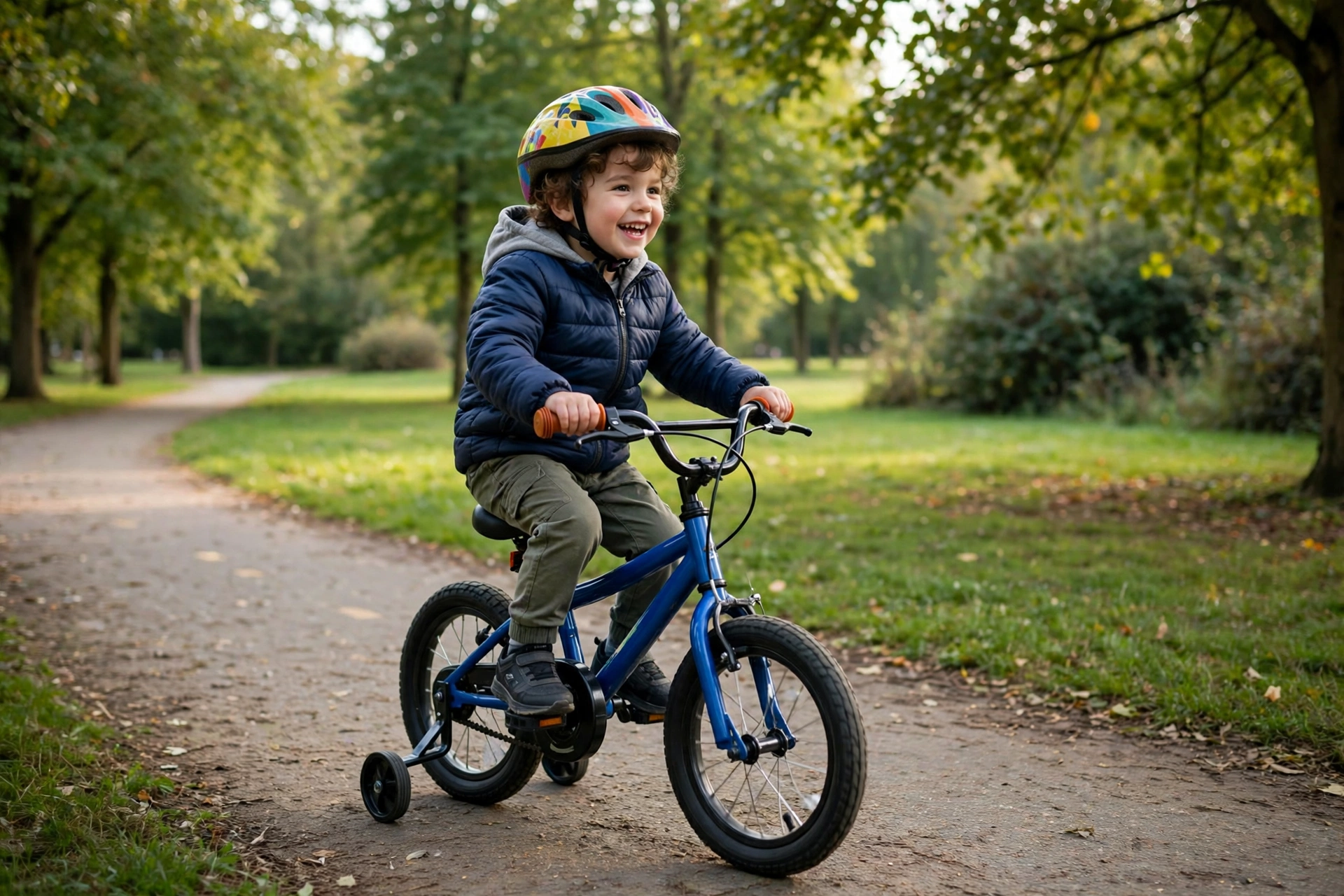
Yes — a four-year-old learning to cycle should wear a helmet every time they ride, even for a short trip around the garden or to the park. A helmet is the most important piece of kit for a young rider, because a fall at low speed can still lead to a head injury. At four, children are moving from balance bikes to pedal bikes, and they are faster, braver and more likely to fall.
Choosing a helmet for a four-year-old is different from choosing one for a toddler. The head is bigger, the child rides faster, and the helmet must cope with longer rides and harder falls. This guide explains what kind of helmet suits a four-year-old, how to get the fit right, and how to make wearing it a habit.
What Kind of Helmet Suits a Four-Year-Old?
A four-year-old needs a small child’s helmet with a hard outer shell and a soft padded liner. The helmet should sit low on the forehead, covering the top and sides of the head, and it should be light enough that the child can wear it for a full ride without getting tired. A small peak or visor can help with sun, but it is not essential at this age.
Weight still matters a great deal. A heavy helmet will pull a small child’s head forward and make them tired, which makes them less steady on the bike. Look for the lightest helmet you can find in the right size, with a smooth outer shell and a comfortable liner. The helmet should also have a chin strap with a soft pad, because a strap that rubs or pinches will make the child want to take the helmet off.
How Do You Get the Fit Right for a Four-Year-Old?
Start by measuring the child’s head with a soft tape measure, just above the eyebrows and around the widest part of the head. Use that measurement to pick the right size, and then try the helmet on. It should sit level, about two finger-widths above the eyebrows, and feel snug all round without pressing hard on one spot. If it rocks from side to side or slides forward over the eyes, it is the wrong size.
Next, adjust the straps. The side straps should meet in a V shape just below the ear, and the chin strap should be snug enough that you can only fit one or two fingers between the strap and the chin. The helmet should stay put when the child shakes their head. In general terms, a helmet that moves around is not protecting the head properly, however good it looks.
Check the fit every few weeks, because four-year-olds grow quickly. A helmet that fitted perfectly in spring may be too tight by autumn, and a tight helmet is uncomfortable enough that a child will refuse to wear it. If the helmet presses on the forehead or leaves red marks, it is time to move up a size.
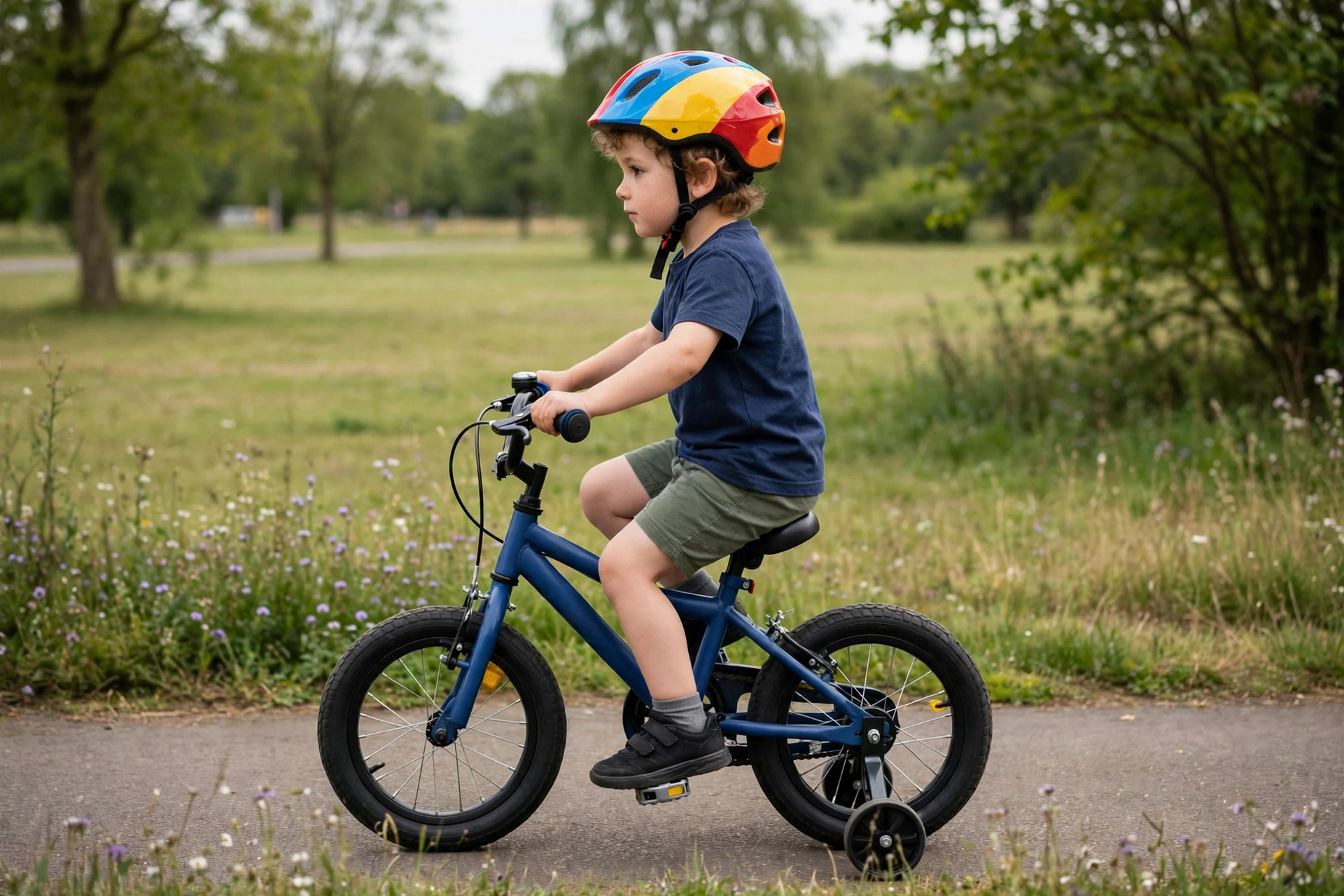
Should a Four-Year-Old Wear a Helmet on a Scooter Too?
Yes. A scooter may look gentle, but a four-year-old can pick up surprising speed on one, and a fall onto a path or pavement can still hurt. The same helmet works for a scooter, a balance bike and a pedal bike, so there is no need for a different helmet for each toy. The rule is simple: wheels mean a helmet, every time.
The habit matters as much as the protection. If a child always wears a helmet from the very first ride, it becomes part of cycling, like putting on shoes. If the helmet only appears sometimes, the child will argue about it, and the parent will have a battle every time they go out. Making the helmet non-negotiable from the start saves arguments for years.
What Should You Look for When Buying a Helmet for a Four-Year-Old?
Look for a helmet made for small children, with a light weight, a simple buckle that a parent can fasten easily, and a fit system that can be adjusted as the child grows. A dial or slider at the back can help fine-tune the fit, but it should not be so fiddly that it takes minutes to adjust. Bright colours and fun patterns help too, because a child who likes their helmet is far more likely to wear it without a fuss.
Check that the helmet is comfortable enough for a full ride. The liner should be soft, the straps should not rub, and the helmet should not press on the ears. A helmet that pinches or itches will end up on the ground, so comfort is not a luxury — it is what keeps the helmet on the child’s head. Try the helmet on in the shop if you can, and let the child wear it for a few minutes before you buy. If you are learning about how helmets handle different kinds of impact, reading about what MIPS is for helmets can help you understand one of the technologies used in modern helmet design.
How Do You Get a Four-Year-Old to Wear a Helmet Happily?
Let the child choose the helmet, or at least the colour. A child who picks their own helmet feels ownership of it, and that makes a big difference at four. Let them wear it around the house for a few minutes before the first ride, so it feels familiar rather than strange. Praise them for wearing it, and wear your own helmet too, so the child sees that helmets are for everyone, not just for children.
Keep the first rides short and fun. A trip to the park, a ride around the garden, or a gentle roll down a quiet path is enough. If the child gets tired or frustrated, stop and try again another day. The goal is to make cycling feel good, so the helmet becomes part of something the child enjoys, rather than a chore they have to endure.
Frequently Asked Questions
Q: Does a four-year-old need a helmet on a balance bike?
A: In general terms, yes. A balance bike can pick up speed, and a fall onto a hard surface can still hurt the head. A helmet protects the head on any wheeled toy.
Q: How often should a child’s helmet be replaced?
A: In general terms, replace it when the child outgrows it, or after any hard knock. Check the fit every few weeks, because young children grow quickly and a tight helmet will not be worn.
Q: What if my four-year-old refuses to wear a helmet?
A: Let them choose the colour, let them wear it indoors first, and wear your own helmet too. Keep rides short and fun, and stay consistent — the helmet is part of cycling, every time.

Olivia
Writer at Helmet Today, covering helmet reviews, fit and riding safety.