No, cheap helmets are not always unsafe — but price alone tells you very little, and the safety standard a helmet meets matters far more than what it costs. A low-priced helmet that meets a recognised safety standard and fits properly can protect your head in a crash, while an expensive helmet that fits badly or has no recognised standard may not. The myth that cheap always means dangerous comes from the idea that safety must cost a lot, yet helmet protection depends on design, materials, and testing rather than on the price tag alone.
This question matters because helmets can vary widely in price, and many riders wonder whether they need to spend a lot to be safe. Some people assume the cheapest helmet on the shelf must be a poor one, while others worry that a high price is just paying for a brand name. This guide looks at what makes a helmet safe in general terms, what a low price can and cannot tell you, and how to judge a helmet on its own merits rather than on its cost.
What Makes a Helmet Safe in the First Place?
A safe helmet starts with a hard outer shell and an energy-absorbing liner that work together in an impact. The shell spreads the force of a blow over a wider area, and the liner compresses to absorb part of that force before it reaches the head. The strap and fastening hold the helmet in place so it stays where it needs to be during a fall, and the overall shape is designed to cover the parts of the head most likely to hit the ground. These are the basics, and they apply to helmets at every price level.
Testing against a recognised safety standard is what turns those design features into something a rider can trust. Safety standards set out the tests a helmet must pass, such as impact tests from different angles and checks on the strap and the coverage of the shell. A helmet that carries a recognised standard mark has been tested in those conditions, and that gives a reasonable basis for confidence. Without a standard mark, there is no independent check that the helmet performs as claimed, whatever its price.
Why Are Some Helmets So Cheap?
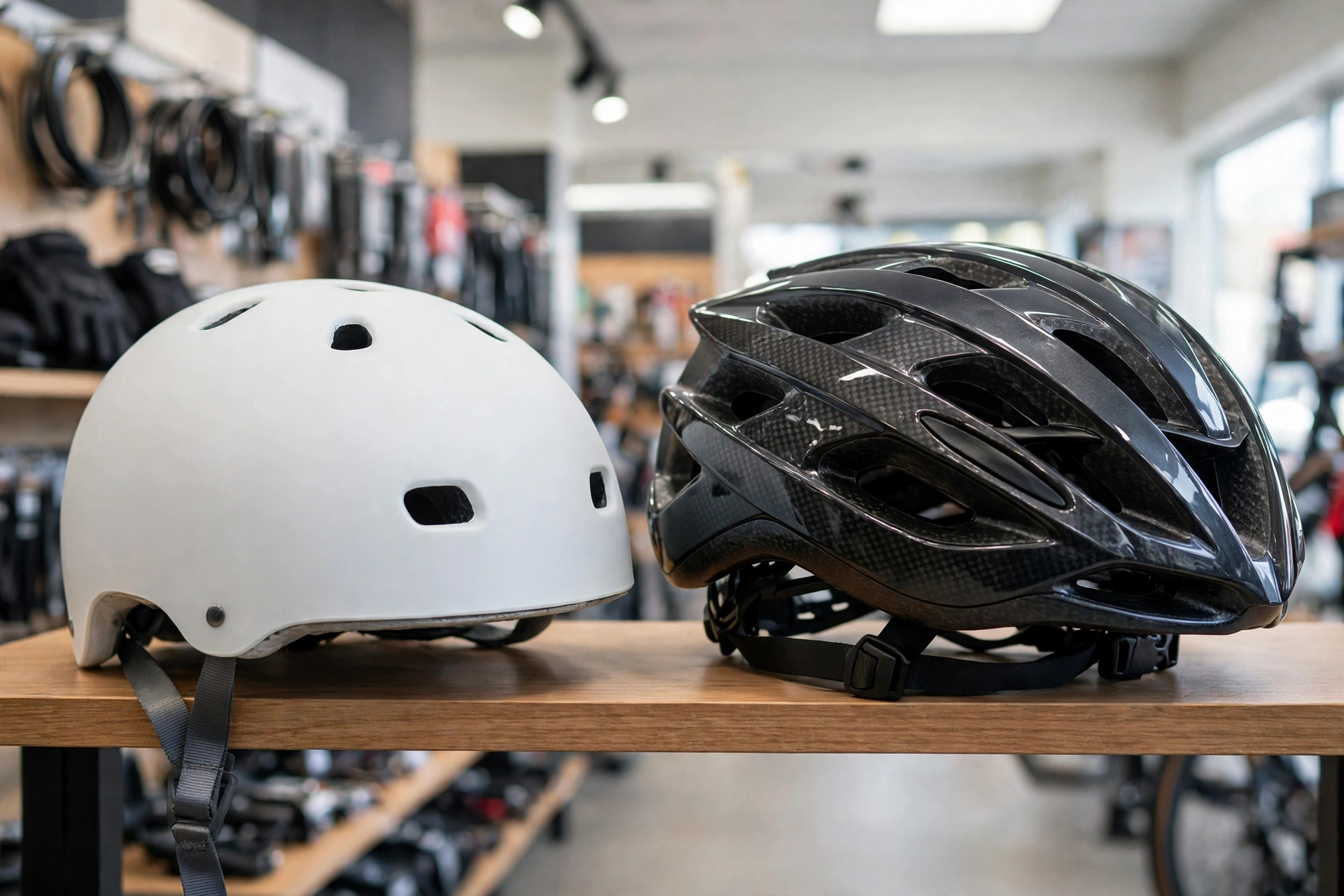
There are several ordinary reasons why a helmet can be cheap without being unsafe. The first is that the manufacturer may use simpler materials and a plainer design. A basic shell and liner that meet a safety standard can be made at a lower cost than a helmet with advanced materials, extra features, and a complex shape. The protection comes from the shell and liner doing their job, and that job does not always need expensive materials.
The second reason is scale. Large manufacturers that make many helmets can spread their costs across a big production run, which can bring the price down. A helmet sold in large numbers through a big retailer may cost less simply because it was made and sold in volume. Discounts and sales can also lower the price, and a helmet bought on sale is not a different helmet from the same model sold at full price a month earlier. If you want to understand one safety technology used in modern helmets, reading about what MIPS is for helmets is a good place to start.
When Should a Low Price Worry You?
A low price should worry you when it comes with warning signs that the helmet may not have been properly tested. The clearest warning sign is the absence of a recognised safety standard mark. If a helmet carries no standard marking at all, or if the marking looks unclear or unfamiliar, there is no independent evidence that it has passed safety tests. In that case the low price may reflect corners cut in testing or in materials, and the helmet is not a safe choice.
Other warning signs include a very flimsy feel, a shell that flexes easily, a liner that feels thin or crumbly, or a strap and buckle that seem weak or hard to adjust. A helmet should feel solid and well made, even if it is plain. If the padding is already coming loose, the strap frays, or the buckle does not hold firmly, those are signs of poor quality that have nothing to do with the price tag and everything to do with how the helmet was made.
How Can You Judge a Cheap Helmet Fairly?
The fairest way to judge a cheap helmet is to check the same things you would check on any helmet, whatever the price. Start with the safety standard mark, and check that it matches a recognised standard for the type of riding you do. Then look at the construction: the shell should be smooth and solid, the liner should be even and firmly attached, and the strap and buckle should adjust easily and hold fast when pulled.
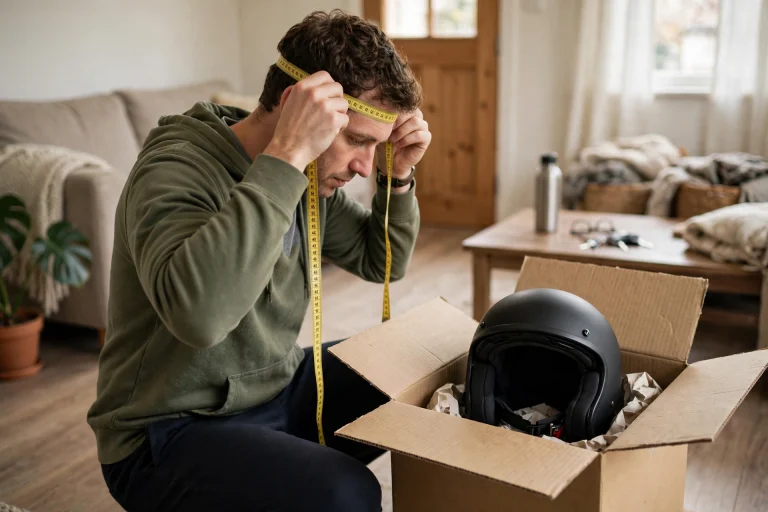
Next, try the helmet on. It should sit level on your head, cover your forehead, and feel snug without pressing painfully anywhere. Shake your head gently: the helmet should move with your head rather than sliding around on its own. Fasten the strap and check that you can fit no more than a couple of fingers between the strap and your chin. If the helmet passes these checks, its low price is not a reason to reject it.
Is an Expensive Helmet Always Better?
In general terms, no. An expensive helmet is not always better, and it is certainly not always safer. A high price can reflect better materials, lighter weight, more vents, or a more refined fit system, and those things can make a helmet more pleasant to wear. Comfort matters, because a helmet you enjoy wearing is one you will actually wear. But none of those features automatically adds protection in a crash.
What matters most in a crash is the combination of a recognised standard, a sound shell and liner, and a good fit. An expensive helmet that fits badly will protect you less well than a cheap helmet that fits properly, because a helmet that shifts or comes off in a fall cannot do its job. Fit is personal: head shapes differ, and a helmet that suits one rider may not suit another, whatever the price.
Frequently Asked Questions
Q: Are cheap helmets always unsafe?
A: No. A cheap helmet that meets a recognised safety standard and fits properly can protect your head in a crash. Price alone does not decide safety; the standard, the construction, and the fit matter far more.
Q: What should I check before buying a cheap helmet?
A: Check for a recognised safety standard mark, a solid shell and liner, a strong strap and buckle, and a good fit. If any of those are missing, the helmet is not a safe choice whatever it costs.
Q: Is it worth paying more for a helmet?
A: It can be worth it for comfort, weight, and ventilation, which make a helmet more pleasant to wear. But a higher price does not automatically mean better protection in a crash.

Olivia
Writer at Helmet Today, covering helmet reviews, fit and riding safety.