In general terms, open face helmets can protect well in many crashes, but they do not protect as much as a full face helmet, because they leave the chin, jaw, and lower face exposed. An open face helmet covers the top, back, and sides of the head, and that coverage can make a real difference in a fall. Yet the face is one of the parts of the head most likely to hit the ground or an object in a crash, and an open face helmet offers no protection there. Whether it protects enough depends on the kind of riding you do and the risks you are willing to accept.
Open face helmets are popular for good reasons: they feel lighter, they give a wider view, they let in more air, and they make it easier to talk and to hear what is going on around you. Many riders choose them for short trips, city riding, or warm weather, and for some types of cycling and scootering they are a common choice. This guide looks at what an open face helmet does and does not cover, when it may be enough, and when a full face helmet is the safer option.
What Does an Open Face Helmet Actually Cover?
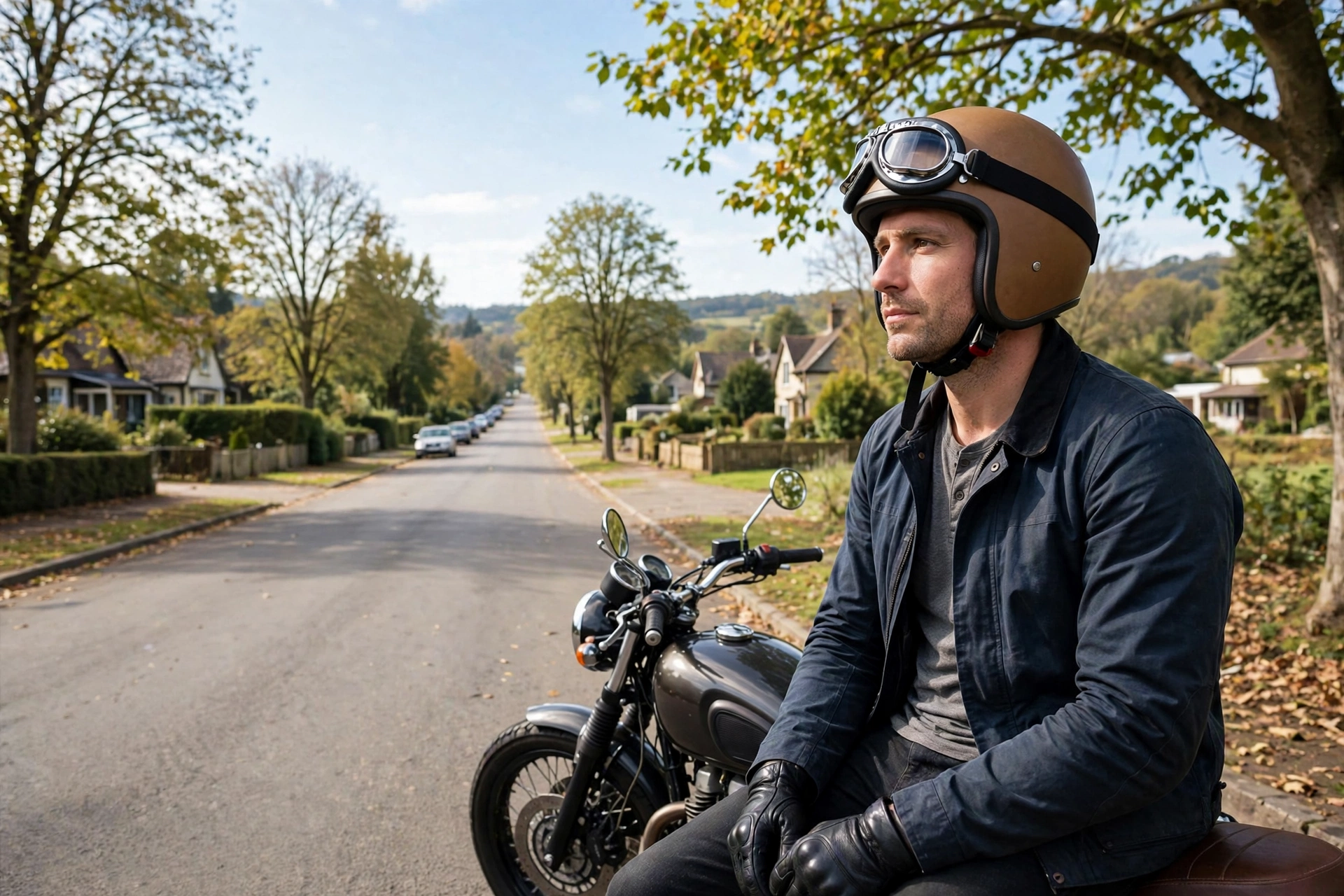
An open face helmet covers the crown, the back, and the sides of the head, down to about the level of the ears. The shell and liner in those areas work in the same way as in any other helmet: the shell spreads the force of an impact, and the liner absorbs part of that force before it reaches the head. For impacts to the top or back of the head, a well-fitting open face helmet that meets a recognised standard can offer solid protection.
What it does not cover is the front of the face. The chin, the jaw, the mouth, and the nose are all left open, and there is no chin bar to take the force of an impact in that area. In a forward fall, the face can strike the ground, a kerb, or another object directly, and without a chin bar there is nothing to spread or absorb that force. This is the main difference between an open face helmet and a full face helmet, and it is a difference that matters in a crash.
How Do Open Face and Full Face Helmets Compare?
The main difference between the two styles is coverage. A full face helmet covers the whole head, including the chin and jaw, with a chin bar that is part of the shell. That extra coverage means that in a crash where the face strikes something, the chin bar can take some of the force instead of the jaw and teeth. In general terms, a full face helmet offers more protection across a wider range of impacts, simply because it covers more of the head.
An open face helmet has advantages of its own. It is usually lighter, which can feel more comfortable on long rides, and it gives a wider field of view and better airflow. It is easier to put on and take off, and it lets the rider hear traffic and talk to others more easily. For slow-speed riding in warm weather, those advantages are real, and they are why many riders prefer an open face design for everyday trips. If you want to understand one safety technology used in modern helmets, reading about what MIPS is for helmets is a good place to start.
When Might an Open Face Helmet Be Enough?
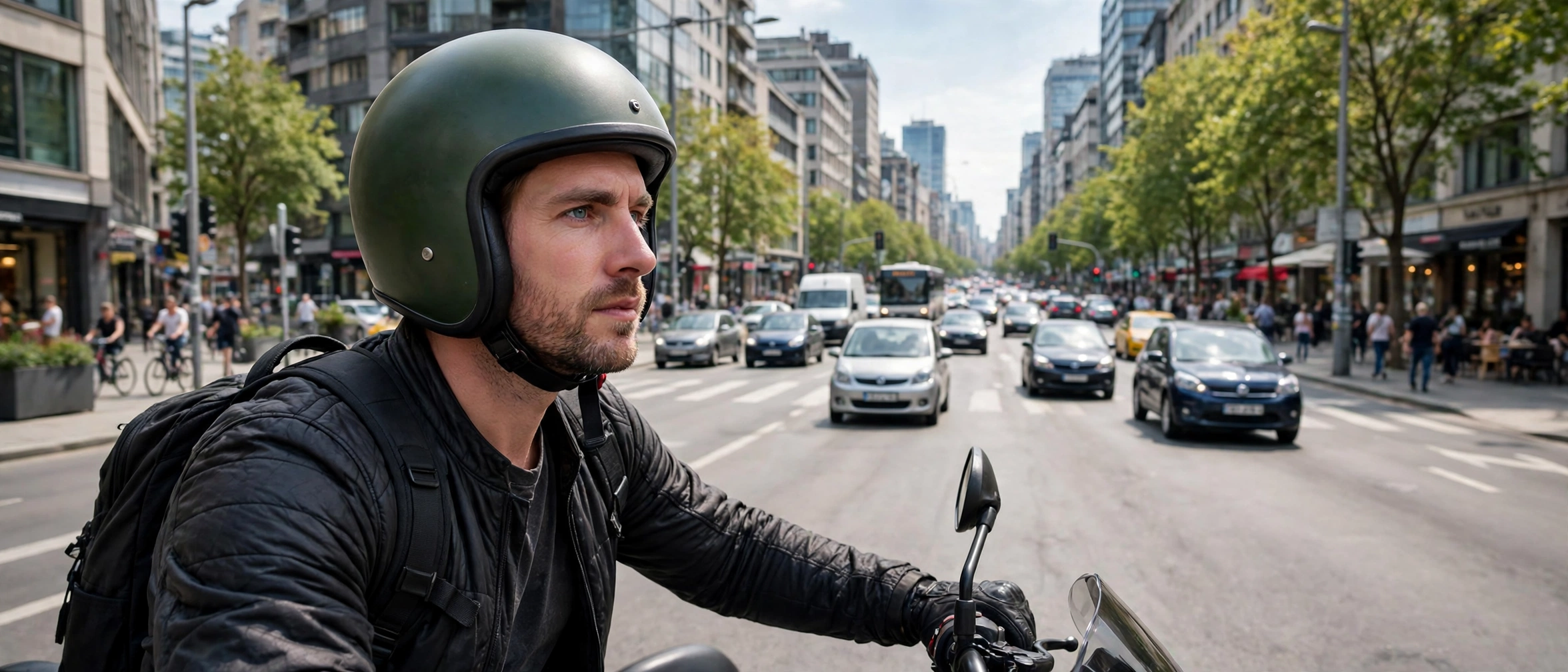
An open face helmet might be enough for slow, short, low-risk riding where the main danger is a low-speed fall rather than a high-speed crash. City cycling at a gentle pace, short scooter trips on quiet streets, or riding in a controlled setting can all be situations where the risk of a serious face impact is lower. In those cases, an open face helmet that meets a recognised standard and fits properly can still offer worthwhile protection for the parts of the head it covers.
It is also worth remembering that any helmet is better than no helmet. A rider who wears an open face helmet consistently is better protected than a rider who wears no helmet at all, because the top and back of the head are still covered. If a full face helmet feels so heavy or hot that a rider leaves it at home, an open face helmet that is actually worn is the better choice in practice. The best helmet is the one you will wear every time you ride.
What Are the Main Risks of an Open Face Helmet?
The main risk of an open face helmet is injury to the face, jaw, and teeth in a crash. A forward fall can bring the chin and mouth into contact with the ground, and without a chin bar there is nothing to absorb that impact. Jaw fractures, broken teeth, and cuts to the face are all injuries that a full face helmet is designed to reduce, and an open face helmet cannot prevent them in the same way.
There is also a risk from objects on the road. Stones, dust, and insects can strike the face at speed, and while these are usually minor, they can startle a rider or affect vision at a bad moment. Rain can also reduce visibility more quickly in an open face helmet, and cold wind on the face can be tiring on longer rides. These are not the same as a crash injury, but they can still affect safety by distracting the rider.
How Should You Choose Between Open Face and Full Face?
Choosing between the two styles starts with the kind of riding you do most. For higher-speed riding, motorway use, busy roads, or off-road riding, a full face helmet is generally the safer choice, because the extra coverage protects the face and jaw in exactly the kinds of impacts those rides can produce. The added weight and warmth are a fair trade for the added protection at higher speeds.
For slower, shorter, everyday riding in warm weather, an open face helmet can be a reasonable choice, as long as it meets a recognised safety standard and fits well. Try both styles on if you can, and notice how each one feels: the weight, the view, the airflow, and the comfort. A helmet that feels good is one you are more likely to wear, and that matters as much as the style on paper.
Frequently Asked Questions
Q: Do open face helmets protect enough for motorcycling?
A: In general terms, they protect the top, back, and sides of the head, but they leave the chin and jaw exposed. For higher speeds or busy roads, a full face helmet generally offers better protection.
Q: Is an open face helmet better than no helmet?
A: Yes. An open face helmet that meets a recognised standard and fits properly still protects the parts of the head it covers, which is far better than riding with no head protection at all.
Q: Can I wear goggles with an open face helmet?
A: Yes, and it is often a good idea. Goggles or a visor can protect your eyes from dust, insects, and wind, which an open face helmet does not cover on its own.

Olivia
Writer at Helmet Today, covering helmet reviews, fit and riding safety.