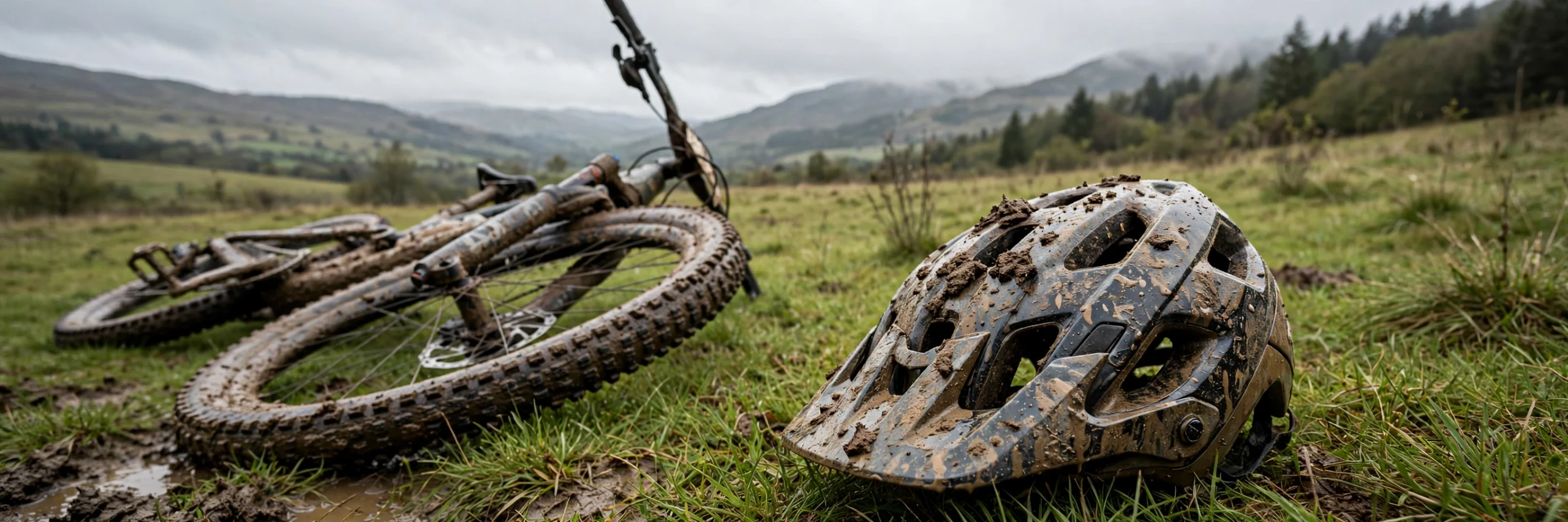
Yes, you can clean a helmet after a muddy race, and the key is to remove the mud while it is still soft, then wash the shell and lining gently and let everything dry fully before the next ride. A muddy race leaves a helmet caked in dirt inside and out, with grit in the vents, mud on the straps, and sweat soaked into the padding. Left to dry, that mud hardens into a crust that is far harder to shift and can scratch the shell if you scrub at it.
The best time to clean a muddy helmet is as soon as you get home, while the mud is still damp. A quick rinse and wipe then will save you a long scrub later, and it stops damp mud from sitting against the padding and straps overnight. This guide explains how to clean a helmet after a muddy race step by step, without damaging the shell, the visor, or the lining.
What Should You Do First After a Muddy Race?
Start by taking the helmet off your head and giving it a gentle shake outdoors to knock off the loosest mud. Then remove any parts that come off easily, such as the peak, the visor, or a removable liner, and set them aside to clean separately. This makes the job easier and stops you from forcing mud into places it does not belong.
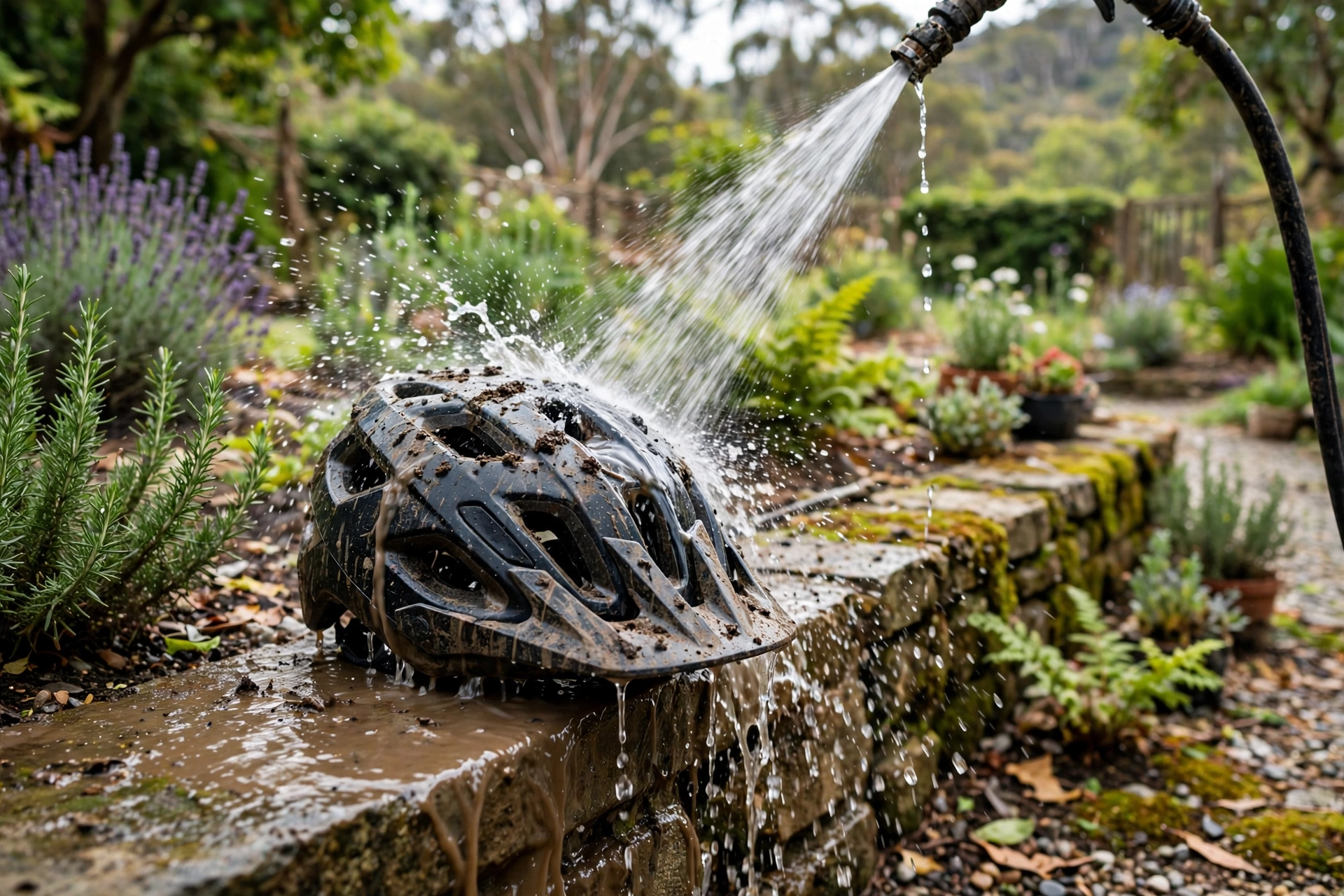
Next, rinse the shell under lukewarm running water or with a gentle hose, letting the water carry the soft mud away rather than rubbing it. Mud is full of grit, and rubbing a muddy shell with a dry cloth is one of the quickest ways to scratch it. Let the water do the work first, and only pick up a cloth once the worst of the mud has washed off.
While the shell is rinsing, check the vents and strap buckles for packed mud. A soft brush or an old toothbrush can clear the openings gently, but do not poke anything sharp into the vents. If you are curious about the protection inside the shell you are cleaning, reading about what MIPS is for helmets can help you understand one of the technologies used in modern helmet design.
How Do You Clean the Shell and Visor?
Once the loose mud is gone, wash the shell with warm water and a small amount of mild soap, using a soft cloth or sponge in gentle circles. Pay attention to the rim, the vents, and the area around the straps, where mud tends to collect. Rinse the cloth often so you are not dragging grit across the finish, and rinse the shell with clean water when you are done.
Clean the visor separately with lukewarm water and a microfibre cloth, using a drop of mild soap if needed. Soak off dried mud with a damp cloth laid over it for a few minutes instead of scraping, and dry the visor with a clean, lint-free cloth to avoid streaks. Avoid paper towels and glass cleaners containing ammonia, which can scratch the visor or damage its coatings over time.
For the peak and any removable trim, wash them the same way and check for mud trapped in screw holes or fixings. A cotton bud is handy for these tight spots. Do not use a pressure washer on any part of the helmet, because it can force water and grit into the lining, the vents, and the seals.
How Do You Clean the Padding and Straps?
If the liner comes out, wash it by hand in lukewarm water with a little mild soap, rinse it well, and press the water out gently without wringing it. If the padding is fixed in place, wipe it down with a damp soapy cloth, working around the brow band and cheek pads, then wipe again with a cloth dampened in plain water to remove soap residue. Muddy padding needs a thorough clean, because dried mud and sweat left inside will smell and can irritate your skin.
Clean the straps with a damp cloth and a little soap, paying attention to the buckles and adjusters where mud collects. Rinse the buckles under running water and work them open and closed a few times to flush out grit. Do not use bleach or strong detergents on the straps or padding, as these can weaken fabrics and foam over time.
How Do You Dry a Helmet After a Muddy Race?
Blot the padding and straps with a dry towel, then leave the helmet in a well-ventilated room to dry naturally, with the opening facing up or to the side so air can circulate inside. A fan on a low setting can help, but never use a hair dryer, radiator, or direct sunlight, because heat can warp the shell and harden the padding. Expect the helmet to take a full day or more to dry completely after a muddy race.
Do not store the helmet in a bag or box while it is still damp, and do not wear it again until the padding is fully dry inside. Damp padding can grow mould and smell far worse than the mud did, so patience matters here. If the weather is cold and damp, a dry room with the helmet near an open window is better than a cold garage.
How Can You Protect a Helmet for the Next Muddy Race?
You cannot keep a helmet clean in a muddy race, but you can make the next clean-up easier. A quick rinse straight after the race, before the mud dries, is the single most useful habit. Keep a bottle of water and a cloth in your kit bag so you can knock the worst off at the venue, and do the full clean when you get home.
It also helps to check the helmet after every muddy race for new damage, such as cracks, loose vents, or frayed straps, because mud can hide problems that need attention. A helmet that has been cleaned properly after each race will last longer and stay comfortable, and you will spot wear and damage far sooner than if the mud is left to build up from one race to the next.
Frequently Asked Questions
Q: Can I hose down a muddy helmet?
A: Yes, a gentle rinse with a garden hose or lukewarm running water is fine and is the best way to remove soft mud. Avoid high-pressure washers, which can force water and grit into the vents, seals, and padding.
Q: Should I remove the liner to clean a muddy helmet?
A: If the liner is designed to come out, yes, wash it separately by hand in lukewarm soapy water. If the padding is fixed in place, wipe it down carefully with a damp cloth instead of forcing it out.
Q: How long does a muddy helmet take to dry?
A: In general terms, at least a full day in a well-ventilated room, and sometimes longer if the padding was soaked. Do not wear the helmet or store it in a bag until it is completely dry inside.

Olivia
Writer at Helmet Today, covering helmet reviews, fit and riding safety.