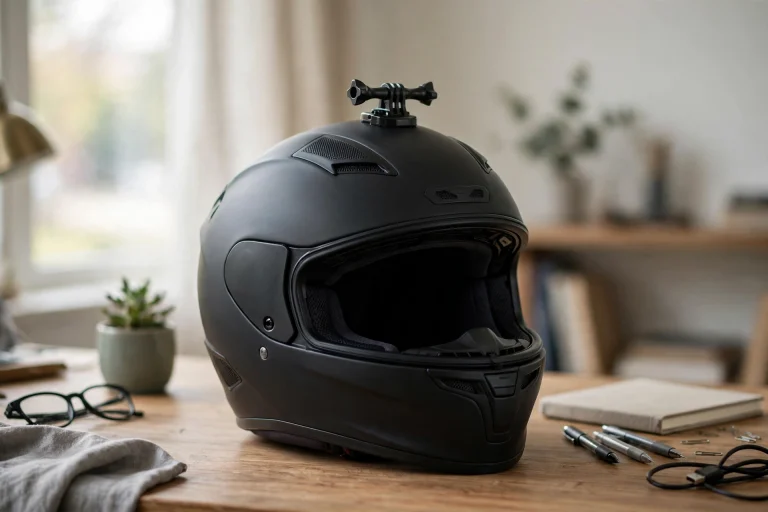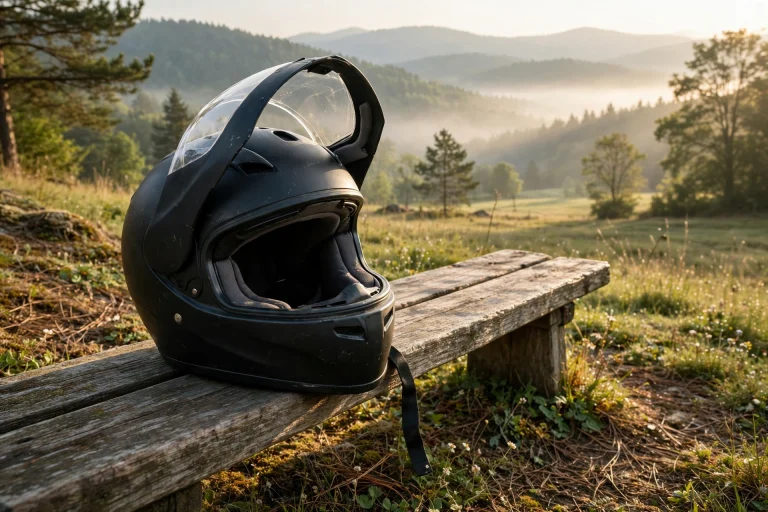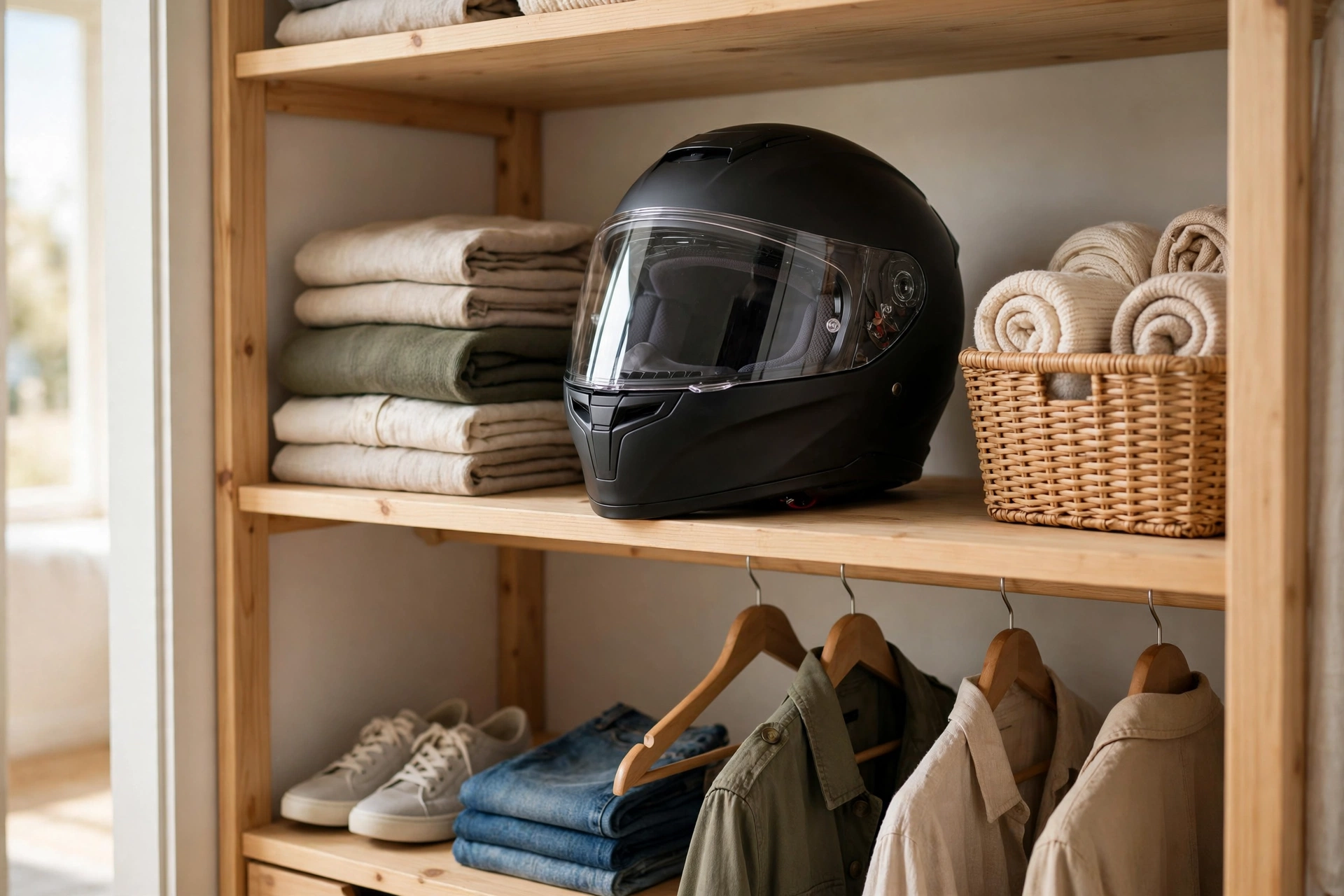
Yes, you can store a helmet with its visor attached — in fact, that is how most riders store their helmets, and it is usually the best choice as long as the visor is clean and the helmet is kept somewhere cool and dry. Storing the helmet with the visor on protects the inside of the helmet from dust, keeps the visor safe from scratches, and means the helmet is ready to use whenever you need it. The only time you might take the visor off is if you are storing the helmet for a very long time or the visor needs replacing anyway.
A helmet is an expensive piece of safety equipment, and how you store it affects how long it lasts. The visor is one of its most delicate parts, and it is easy to damage if it is left loose in a drawer or tossed into a box. This guide explains why storing with the visor attached usually makes sense, how to prepare the visor first, and how to avoid the storage mistakes that cause scratches and damage.
Should You Store a Helmet with the Visor On or Off?
In general terms, storing with the visor on is the better option for everyday use. When the visor is attached and closed, it seals the front of the helmet and stops dust, insects, and damp air from getting inside. That keeps the padding cleaner and fresher, and it also protects the inside of the visor from dust settling on it while the helmet sits unused.
Taking the visor off has some uses, but it also creates new risks. A loose visor is easy to scratch, because it can slide around in a drawer or get knocked against other objects. It is also easy to lose the small screws, washers, or side covers that hold it in place, and those tiny parts can be hard to replace. Unless you have a specific reason to remove it, leaving the visor attached is simpler and safer.
How Do You Prepare the Visor Before Storage?
Clean the visor before you store the helmet. A visor that goes into storage with bugs, road grime, or dried rain spots on it can end up with marks that are harder to remove later, and dried grime can scratch the surface if it is wiped off carelessly after storage. Wash the visor gently with lukewarm water and a soft microfibre cloth, and let it air dry fully.
Check the visor for damage while you clean it. Look for scratches in your line of sight, chips around the edges, and any cracks that might have appeared during your last ride. A visor that is already scratched will not get better in storage, and it is better to replace it now than to discover the damage on your next ride.
Make sure the visor and the helmet are both completely dry before storage. Moisture trapped inside a closed helmet can cause a stale smell and, over time, can encourage mould in the padding. Open the visor slightly or leave the helmet in a ventilated room for a while before you close it up and put it away.
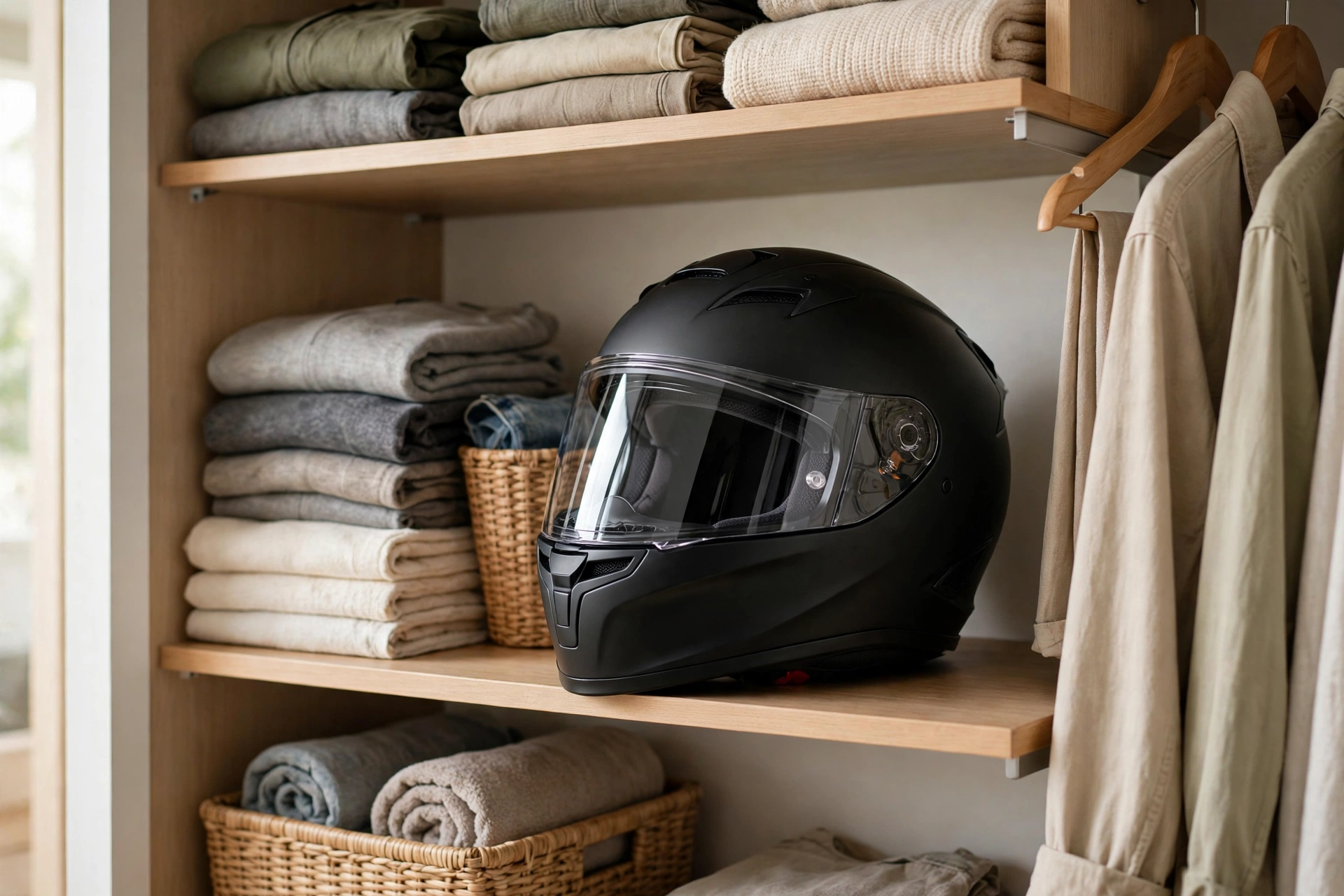
What Is the Best Position for Storing a Helmet with Its Visor Attached?
The best position is upright or upside down on a flat, stable surface, with the visor closed or slightly open. Upright on a shelf is the most common choice, and it keeps the helmet stable and easy to grab. Upside down is also good, because it lets air circulate through the helmet and stops dust from settling inside.
Avoid storing the helmet on its visor or resting it with the visor pressed against a hard surface. That puts pressure on the visor and can scratch it or distort its shape over time. The helmet should rest on its shell or its base, not on the visor, and nothing heavy should be placed on top of it.
How Do You Protect the Visor from Scratches in Storage?
The simplest protection is to keep the visor closed and to keep the helmet somewhere it will not be knocked around. A shelf that is not crowded, a dedicated helmet hook, or a helmet bag all work well. Avoid putting the helmet in a place where other objects can fall onto it or where it can be knocked off a shelf.
If your visor has a protective film or a soft cover, use it. Some helmets come with a thin film on the visor when new, and aftermarket visor covers and sleeves are also available. A soft cloth laid over the visor before you put the helmet in a bag adds another layer of protection against scratches.
Be careful with what touches the visor. Keys, tools, and other hard objects should never be stored in or on top of a helmet, because they can scratch the visor or dent the shell. Keep the area around the helmet clear, and if you hang the helmet by a strap or hook, make sure the hook does not press against the visor. If you are learning about the parts that make up a helmet and how they work together, reading about what MIPS is for helmets can help you understand one of the technologies used in modern helmet design.
What Storage Mistakes Can Damage a Visor?
One common mistake is storing a helmet in a hot place, such as a car boot on a sunny day or a loft in summer. Heat can warp a visor and soften the shell, and a warped visor may not seal properly when you use it again. A cool, dry room is the best place for a helmet, away from radiators, sunny windows, and other heat sources.
Another mistake is storing the helmet with the visor half open and pressed against something. If the visor is left at an angle where it rubs against a shelf or a wall, it can develop scuff marks over time. Either close the visor fully or open it wide enough that it is not touching anything, and check the position before you leave it.
Finally, do not store a helmet with cleaning chemicals, fuel, or solvents nearby. Fumes from strong chemicals can damage the visor and the shell, and a spill could ruin the helmet completely. Keep your helmet away from the garage shelf where you store paints and cleaners, and give it its own clean, dry spot.
Frequently Asked Questions
Q: Is it better to store a helmet with the visor open or closed?
A: In general terms, either is fine as long as the visor is not pressed against anything. Closed keeps dust out, while slightly open lets air circulate. Choose whichever suits your storage spot.
Q: Should I remove the visor for winter storage?
A: You can, but you do not have to. If you remove it, wrap it in a soft cloth and store it flat. If you leave it on, clean it first and keep the helmet in a cool, dry place.
Q: Can storing a helmet with the visor on damage the visor?
A: Not if the helmet is stored properly. Damage usually comes from the visor pressing against a hard surface, from heat, or from other objects knocking the helmet — not from the visor simply being attached.

Olivia
Writer at Helmet Today, covering helmet reviews, fit and riding safety.